Ispahan – pink historic Damask shrub rose
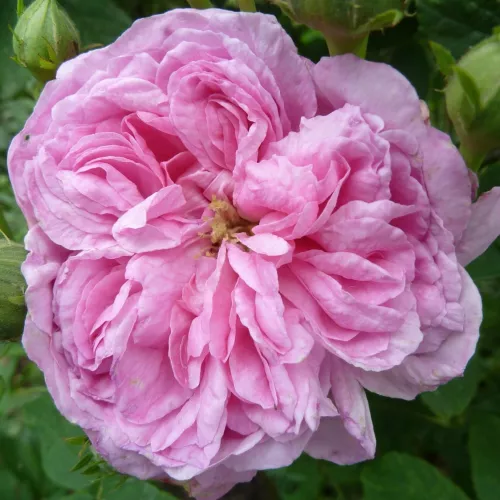
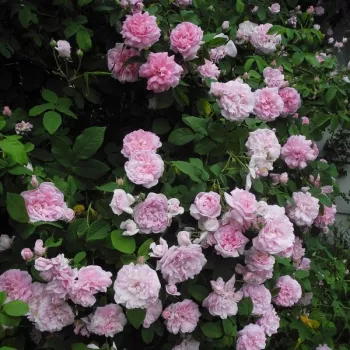
This classic Damask shrub brings a wave of early-summer abundance to cottage-style front gardens, carrying masses of small, very full rosette blooms in a soft, silvery warm pink. Once it has settled, its bushy, arching growth and sparsely thorned stems make it surprisingly manageable for an established historical rose, ideal beside paths, windows and seating areas. The deep, rich damask fragrance is powerful enough to perfume a whole corner of the garden, perfect for relaxed evening strolls and open windows. As an own-root shrub, it develops a naturally stable framework that endures for decades, regenerates well after pruning and maintains reliable ornamental value with modest care. In typical British conditions it copes well with sun, partial shade and periods of summer dryness while still feeling reassuringly robust. Its medium disease resistance is supported by good air circulation, sensible spacing and, where needed, simple seasonal care, so you avoid complicated maintenance. In a typical family plot it works best as a flowering backdrop or informal hedge that matures gradually, giving you time to shape it to your space in line with local soils and a site that may experience strong winds and heavy rain near exposed coasts. Over the seasons, the own-root planting rhythm – first roots, then strong growth, then full display – lets Ispahan settle comfortably into your garden and become a long-lived, characterful feature.
Usage options
| Target area | Reasoning |
|---|
| Informal cottage-style hedge along a front boundary |
Ispahan forms a tall, bushy wall of blossom, creating a generous pink hedge that suits classic British front gardens. Its once-a-year flowering produces a spectacular early-summer show with very strong scent, yet the plant itself is undemanding to live with for beginners. |
| Solitary feature shrub near a window or seating area |
The strong damask scent easily reaches nearby doors, windows and patios, making a single shrub a practical “perfume source” for everyday enjoyment. Medium maintenance means occasional pruning and simple care are enough for busy-owners. |
| Mixed border backdrop in a family garden |
Its mature height and arching habit give a soft, romantic background for perennials and smaller roses, while own-root growth builds a durable, woody framework over time. This creates reliable structure without frequent replacement, suiting long-term-planners. |
| Traditional rose walk or path edging |
Sparsely thorned stems are kinder where people brush past, and the medium self-cleaning means many spent blooms drop away naturally, reducing deadheading work along everyday routes, which helps low-maintenance-seekers. |
| Lightly shaded side garden or north-east aspect |
Ispahan tolerates partial shade, so it can bring colour and scent to side passages or less sunny boundaries where modern roses may struggle, offering reassuring flowering performance for problem-spot-gardeners. |
| Low-input rose area in cooler or exposed sites |
With hardiness down to typical UK winter lows and good tolerance of heat and moderate drought, it suits regions with changeable weather, including gardens that can be windy with heavy rain close to the coast, reassuring more cautious homeowners. |
| Seasonal “festival of scent” bed by the lawn |
Although it blooms once, the flowering period is rich and concentrated, giving several weeks of abundant, perfumed pink display that pairs well with classic shrubs like mock orange, pleasing fragrance-lovers. |
| Large informal group planting in deeper borders |
Planted at the recommended spacing, groups of Ispahan create a unified, softly mounded mass of pink, with medium disease resistance supported by good airflow and simple, occasional plant protection, matching the expectations of hobby-gardeners. |
Styling ideas
- Cottage-Hedge – run a loose line of Ispahan along the front boundary, underplanted with lavender and catmint for a classic, perfumed street presence – ideal for period homes and village-style front gardens.
- Roses-&-Mock-Orange – pair Ispahan with Philadelphus coronarius behind it so the white mock orange flowers take over once the rose finishes, extending the scented season – perfect for those who prize fragrance successions.
- Pastel-Backdrop – use Ispahan at the rear of a border with soft pinks, whites and silvers (campanulas, hardy geraniums, stachys) in front to create a calm, romantic canvas – suited to relaxed family lawns and play spaces.
- Heritage-Focus – give a single shrub pride of place near a bench or bay window, letting its arching frame and historical character stand out against a simple clipped hedge – ideal for homeowners who enjoy one strong focal feature.
- Mature-Shrub-Mix – integrate Ispahan with dogwoods such as Cornus sericea ‘Hedgerows Gold’ or ‘Flaviramea’ to contrast pink flowers with colourful stems and foliage – a good choice for gardeners wanting winter structure as well as summer bloom.
Technical cultivar profile
| Parameter | Data |
|---|
| Name and registration |
Ispahan, historic Damask shrub rose; heritage collection; not formally registered, traded under the traditional name Ispahan in Old Garden Rose and Dowager show classes. |
| Origin and breeding |
Old Damask selection of unknown origin, probably arising by natural selection from a Rosa × damascena population; introduced to cultivation around 1832 and widely distributed since. |
| Awards and recognition |
Royal Horticultural Society Award of Garden Merit (1993); American Rose Society Dowager Rose Queen (1998); Longwood Gardens Certificate of Merit; Montréal Botanical Garden highly disease-resistant designation. |
| Growth and structural characteristics |
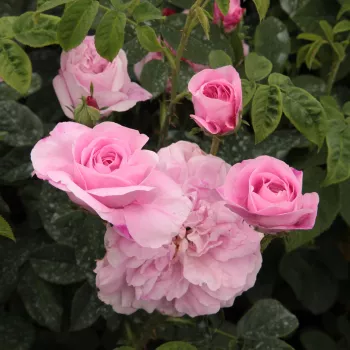
Tall, bushy shrub 160–220 cm high and 130–180 cm wide, with moderately dense, grey-green matt foliage and sparsely thorned canes; forms an informal, arching framework suited to hedges and specimen use. |
| Flower morphology |
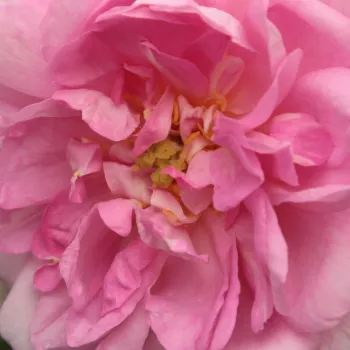
Small, very full double rosette blooms (0.5–1.5 in), cluster-flowered with 40+ petals per head; once-flowering type providing a single but abundant main flush in early summer on established wood. |
| Colour data and phenology |
Warm medium pink with subtle silvery sheen; buds mid-pink, opening to clear light pink, then fading through pastel tones to near silk-white centres edged soft powder pink, with faster fading in strong sun. |
| Fragrance and aroma |
Very strong, garden-filling damask scent with deep, traditional rose character, ideal for seating areas and paths; notable fragrance performance even in cooler summers compared with many modern varieties. |
| Hip characteristics |
Hip set generally sparse due to very double flowers; when present, produces small ellipsoidal orange-red hips around 15–22 mm in diameter, adding a light seasonal accent in late summer to autumn. |
| Resistance and winter hardiness |
Hardy to approximately −32 to −29 °C (RHS H7, USDA 4b, Swedish Zone 5); medium resistance to powdery mildew and black spot, resistant to rust; tolerates heat and moderate drought with watering in prolonged dry spells. |
| Horticultural recommendations |
Best as hedge, specimen or in parks; spacing 130–210 cm depending on use. Prefers well-drained soil; suitable for partial shade. Medium maintenance: occasional pruning and, in humid areas, basic plant protection. |
Ispahan Heritage rose offers a once-a-year cascade of scented pink bloom, long-lived shrub presence and forgiving, own-root reliability; a thoughtful option if you favour characterful, low-fuss roses for your garden.