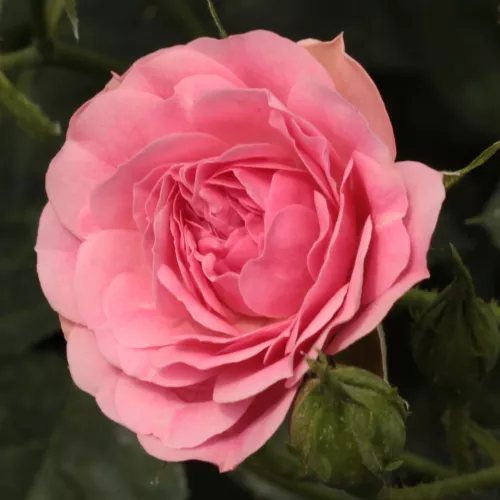
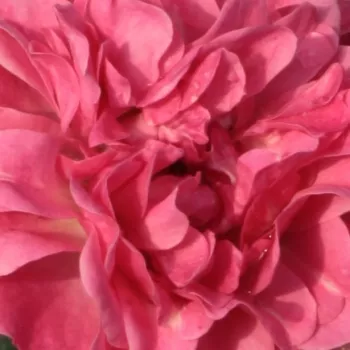
Full, silky-sheen deep pink shade with a slightly warm tone. - polyantha bedding rose - very weak, barely perceptible scented rose - slightly sweet character
– Compact, bushy growth for neat borders
– Abundant, remontant flowering in clusters
– Refined deep pink blooms with silky sheen
– Moderately tolerant of cold, RHS hardiness H7
– Semi-double flowers moderately attract pollinators
– Special feature: Forms charming small red hips in autumn.
Continuous garden growth – Everyday elegance
pharmaROSA® ORIGINAL 2-litre own-root potted rose
18,20 £
Unfortunately, we are currently unable to ship to the United Kingdom; we only deliver to countries within the European Union. For more information, please contact us!
4.5(6723)
INGRID STENZIG – pink bedding polyantha rose
Ingrid Stenzig is a compact polyantha rose designed for front gardens and small beds where you want consistent colour with minimal effort. Its bushy habit and dense, glossy foliage create a neat, low border that works beautifully along paths, drives and cottage-style mixed plantings. Clusters of semi-double, deep pink blooms appear in generous waves all summer, giving reliable flowering even when the weather turns unsettled and breezy near the coast. As an own-root plant, it settles steadily, building a stable, long-lived structure that copes well with typical British soils when planted in well-drained beds or raised spots on heavier clay. You can simply plant and enjoy, knowing that year by year the root system strengthens, the top growth fills out and by the third season the plant shows its full ornamental potential, making this an easy, confidence-building rose for busy family gardens.
Ingrid Stenzig in close-up, showing its very faint, slightly sweet fragrance.
Ingrid Stenzig showing deep pink blooms at different opening stages.
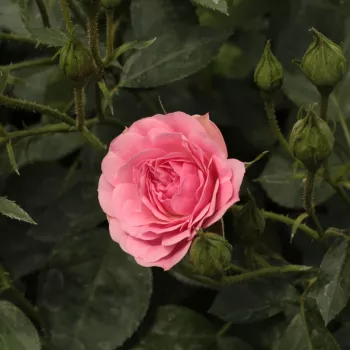
Ingrid Stenzig rose in full bloom, showing deep pink semi-double flowers.
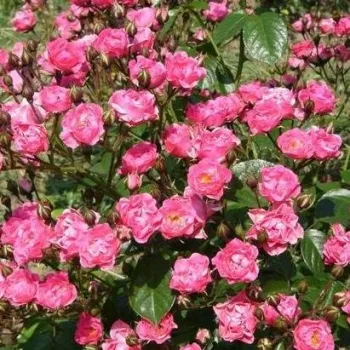
Freshly opened vivid pink blooms of Ingrid Stenzig.
Usage options
Target area
Reasoning
Front garden edging
The compact, bushy growth and 30–45 cm height create a tidy, low edging for drives and paths, giving structure without blocking views from windows or cars. Repeating plants at 25–30 cm intervals forms a soft pink line that looks cared-for with only light pruning – ideal for beginners.
Small flowerbeds by the house
Its dense foliage and clustered blooms quickly fill small beds around porches or terraces, so bare soil is covered and weeds are shaded out. Regular repeat flowering keeps these high-visibility spots colourful through the season without complex feeding regimes – reassuring for a busy gardener.
Cottage-style mixed borders
The warm deep pink clusters blend naturally with perennials such as white verbenas or magenta campions, echoing classic cottage gardens. The semi-double flowers and moderate hip set add texture from summer into autumn, making it easy to weave roses into relaxed, informal schemes for the style-conscious.
Mass bedding and low hedging
Short spacing and its remontant habit make it suitable for ribbons of colour along front boundaries. The plants knit together into a low hedge that reads as one continuous band, handy where you want definition without a high fence – practical for the average front-garden homeowner.
Containers and large pots
The modest height and bushy habit suit patio tubs or large containers of at least 40–50 litres, where the plant forms a rounded dome of foliage and flowers. Regular watering is straightforward on a terrace, making this a simple way to add roses even in paved spaces for the urban balcony-owner.
Partially shaded spots
This variety tolerates partial shade, so it performs reliably beside north-east walls or where fences cast shade for part of the day. Flowering remains regular, giving colour where many roses struggle, which helps make tricky corners look intentional for the time-pressed gardener.
Wind-exposed and coastal gardens
The low, sturdy framework and small, clustered blooms withstand breezy, exposed sites better than large, heavy-flowered roses, staying neat after wind or showers in coastal conditions with good drainage. This makes it a reassuring choice for weather-battered plots.
Long-term low rose borders
As an own-root, moderately hardy shrub, it re-shoots from the base if cut back by frost or age, keeping borders looking even over many seasons. With simple yearly pruning, groups of 1–5 plants stay attractive for the long term, suiting forward-planning gardeners.
Styling ideas
Cottage Ribbon – Plant a curving row along a front path, underplant with low catmint and soft grasses for a relaxed cottage edge – for romantically minded homeowners.
Porch Welcome – Group three plants in a triangular bed by the front door, combine with white verbena for contrast – for those who want instant kerb appeal.
Pink Patio – One rose in a 50-litre terracotta pot, ringed with trailing thyme, brings colour to paved spaces – for flat-dwellers and terrace users.
Family Border – Mix with hardy perennials in a narrow border along the lawn, relying on the bushy habit to hide gaps – for families seeking tidy, low-effort planting.
Soft Boundary – Create a low hedge near a front fence, alternating with small evergreen shrubs for year-round structure – for gardeners wanting subtle separation without harsh lines.
Technical cultivar profile
Parameter
Data
Name and registration
Polyantha bedding rose marketed as Ingrid Stenzig, part of the Bedding rose collection; unregistered cultivar with American Rose Society exhibition name Ingrid Stenzig used in shows.
Origin and breeding
Sport of the polyantha ‘Orange Triumph’, bred by Hassefras Bros. in the Netherlands and introduced in 1951, initially distributed by Bobbink & Atkins in the United States.
Growth and structural characteristics
Low, bushy shrub 30–45 cm high and 35–50 cm wide, with dense, dark green, glossy foliage and moderate prickliness; forms a compact, bedding-style mound suited to edging and mass planting.
Flower morphology
Semi-double clusters of small 0.5–1.5 inch blooms, 13–25 petals, ball to pompon shaped; remontant, with a notably abundant second flush to maintain bedding impact through the season.
Colour data and phenology
Deep pink flowers (RHS 55B outer, 55C inner); buds dark velvety pink with maroon tinge, opening vivid pink then softening to pale pink with a slight silvery cast as they age.
Fragrance and aroma
Very weak fragrance with a slight sweet note, generally unnoticed in the garden; chosen primarily for colour effect, bedding performance and repeat flowering rather than scent value.
Hip characteristics
Produces moderate quantities of small, spherical red hips about 4–6 mm in diameter, adding discreet autumn interest without dominating the plant or requiring special maintenance.
Resistance and winter hardiness
Hardy to about –21 to –18 °C (RHS H7, USDA 6b, Swedish Zone 3); disease resistance moderate to black spot, powdery mildew and rust, with best results under generally good cultural care.
Horticultural recommendations
Suitable for flowerbeds, edging, parks, standards and containers; plant 25–45 cm apart depending on effect, in well-drained soil with regular watering during longer dry spells and light annual pruning.
Ingrid Stenzig offers compact bedding growth, generous repeat flowering and dependable performance from its own-root form, making it an easy, long-lived choice for neat, colourful borders you can confidently add to your garden.
Detailed product attributes
Product Identification Data
Product Name:
INGRID STENZIG – pink bedding polyantha rose - Hassefras
Product Type:
pharmaROSA® ORIGINAL - 2-litre own-root potted rose
Pollinator Attraction:
Semi-double, 13–25-petalled flowers moderately attract pollinators; however, the reduced accessibility of the stamens in this flower form somewhat limits their attractiveness.
Our product is a rose grown with pharmaROSA®’s unique cultivation technology!
2-litre, own-root, potted rose.
With a shoot system appropriate to the season.
With a root system that thoroughly permeates the growing medium.
Quality compliant with the requirements of the E.N.A. (European Nurserystock Association).
Supplied in unique packaging that prevents damage.
Can be planted during frost-free periods.
True-to-variety rose bush with a unique identifier.
The pharmaROSA® own-root potted rose is a well-rooted plant that supports reliable establishment when planted and cared for properly, so it can be planted whenever the soil is not frozen.
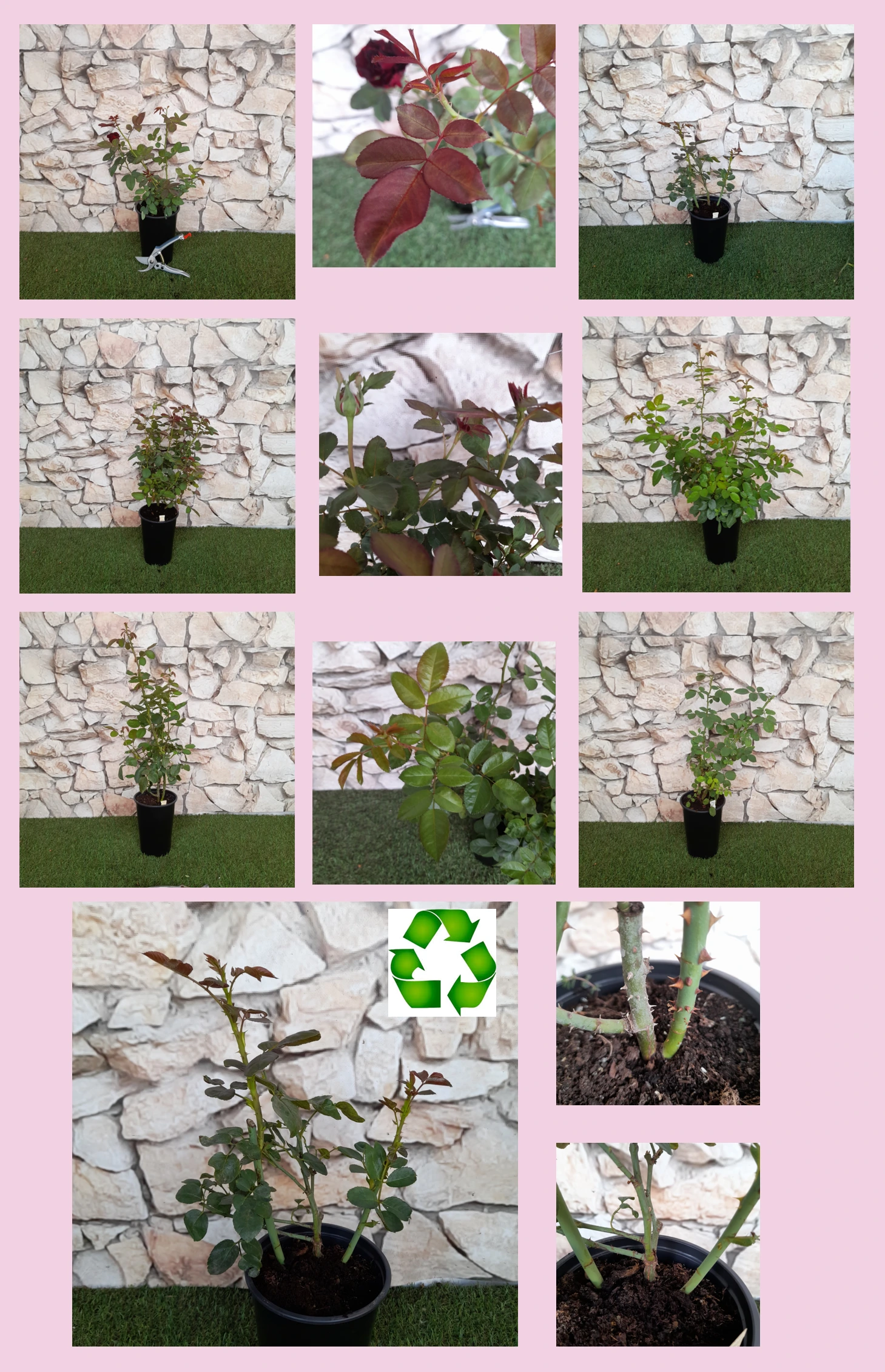
Crop overview: several varieties and growth stages in a short crop section.Shoot system: intensive growth of fresh basal shoots on a young plant.Root system: demonstration of a vigorous root system permeating the growing medium, by removing the pot.Balance: mature plant with root system and shoots in harmony with each other.
Information about the videos
The video series is not a “seasonal showcase”; it illustrates the essence of pharmaROSA® own-root cultivation in a tangible way: how the plant is built up, what the root system is like and how the shoot system regenerates. The recordings were therefore made at different times and with plants at various stages of development, so mixed foliage levels and differing stages of growth may appear in the videos. They are not a ‘sample’ of the batch dispatched, but a visual explanation of how the technology works. The current condition of the rose available to order — typical for the given period and similar to what you can expect to receive in the parcel — is shown in the upper part of the product page.
Pages for private customers Garden roses for the family garden, with minimal care → ORIGINAL® Premium garden roses – instant impact, a truly showpiece garden → EXTRA® Pages for professionals and private customers Roses for public spaces – large areas, sustainable maintenance → NATURAL® Roses for projects – hedge and row planting, fast implementation → RAPID® For professional partners only Production – propagation material for garden roses, wholesale → NEONATAL®
Company details
PharmaRosa Ltd. Company registration number: 01-09-717479 VAT number: 13075314-2-43 Plant health registration no.: HU130721 Bank account (IBAN): HU85117631891388688400000000 BIC (SWIFT): OTPVHUHB Bank name: OTP Bank Nyrt.