Medium lilac, with a slight purplish tint on the inner side and a silvery‑whitish tone on the outer side. - bedding floribunda rose - strong, long-lasting scented rose - classically rose-scented
– Striking purple‑white blooms with silver sheen.
– Strong, long‑lasting classic rose fragrance.
– Reliable repeat flowering with abundant clusters.
– Upright, bushy habit for beds and borders.
– Excellent disease resistance for low maintenance.
– Special feature: Bred by Ronnie Rawlins in the UK for naturalistic, low‑impact landscapes.
Low-impact landscaping – Naturalistic style
pharmaROSA® ORIGINAL 2-litre own-root potted rose
18,70 £
Unfortunately, we are currently unable to ship to the United Kingdom; we only deliver to countries within the European Union. For more information, please contact us!
5(7133)
HUDDERSFIELD CHORAL SOCIETY – purple-white bedding floribunda rose - Rawlins
This floribunda has been selected for easy-care bedding in real family gardens, flowering in harmonious purple‑white clusters on a compact, upright habit that fits comfortably into small borders and classic front gardens. Its strong, long‑lasting fragrance brings a traditional rose scent to paths and windows, while reliable repeat blooming keeps colour coming through the season with minimal intervention. Bred in the UK, it shows reassuring disease resistance that copes well with damp British summers and the kind of persistent humidity that can challenge more delicate roses. Own‑root plants settle steadily, giving long‑term lifespan and the ability to regenerate after harder pruning or weather setbacks. Well‑rooted in a 2‑litre pot, it is easy to establish; think of year one for roots, year two for framework, and year three for full ornamental value, rewarding patient but undemanding care.
Huddersfield Choral Society rose in bloom, showing its double flower form.
Huddersfield Choral Society with cup-shaped, double blooms.
Usage options
Target area
Reasoning
Front garden focal bed
The upright, bushy shape and medium height create an immediate focal point in small front gardens without overpowering the space. This makes it ideal beside paths, gateways or under windows, offering structured colour with simple seasonal deadheading for beginners.
Low-maintenance mixed border
Reliable disease resistance supports low‑intervention planting schemes where you prefer to avoid frequent spraying or complicated routines. It integrates well among shrubs and perennials, giving a steady presence of scented flowers while keeping care down to pruning and feeding suited to busy gardeners.
Classic cottage-style group planting
Clustered blooms in soft purple‑white tones echo cottage‑garden borders and pair naturally with perennials such as daylilies or St John’s wort. Plant in small groups of three to five for a drift of colour that looks full and romantic yet remains manageable for aesthetics‑focused owners.
Repeat-flowering rose bed
Its remontant habit ensures abundant second and subsequent flushes, so beds seldom look bare after the first peak. With light, regular deadheading, you gain months of colour in a modest space, giving reassuring results even where time and attention are limited for occasional gardeners.
Scented seating or patio area
The strong, classic rose fragrance is easily appreciated from nearby seating, making it suitable along patio edges or around a small sitting nook. One to three plants can frame a bench or terrace, providing sensory interest without demanding expert pruning from home gardeners.
Compact hedge or border edging
Recommended planting distances allow you to create a neat, shoulder‑height flowering hedge or edging that defines paths and lawns. Once established, annual pruning and basic feeding keep the line tidy, suiting those who want clear structure combined with simple upkeep for orderly gardens.
Durable own-root planting for long-term beds
As an own‑root rose, it builds its shape gradually in its final position and can regenerate from the base if stems are damaged. This supports long‑lived beds that remain attractive over years, reducing the need for frequent replacements and giving confidence to long‑term planners.
Large containers and courtyard gardens
In a generously sized container of at least 40–50 litres with good drainage, it forms a bushy, upright plant that brings colour and scent to paved or gravelled spaces. This is ideal where soil is poor or space is tight but a classic rose presence is still desired by urban gardeners.
Styling ideas
Cottage Duo – Combine with daylilies and soft grasses for a relaxed cottage feel, letting its repeat flowering carry the display between perennial peaks – suited to romantic, aesthetics‑driven gardeners.
Frontage Frame – Line a short path or front window with a tight row at hedge spacing to give a tidy, scented frame to the house – ideal for owners wanting structure with minimal maintenance.
Patio Perfume – Plant in a large terracotta pot by seating, where its strong fragrance and upright habit create a compact, elegant patio feature – perfect for small‑space and courtyard gardeners.
Colour Chorus – Group three to five plants in a small bed to build a dense, repeat‑flowering block of purple‑white blooms – best for those seeking reliable seasonal impact from limited planting.
Naturalistic Mix – Thread individual plants through mock orange and St John’s wort for a soft, naturalistic shrub border that still feels ordered and easy to manage – appealing to low‑intervention garden keepers.
Technical cultivar profile
Parameter
Data
Name and registration
Floribunda bedding rose marketed as HUDDERSFIELD CHORAL SOCIETY, used mainly in beds and borders; exhibition name recognised by the American Rose Society, breeder designation otherwise not recorded.
Origin and breeding
Bred in the United Kingdom by Ronnie Rawlins, breeding year 2011; parentage and original distributor are not documented, but selection reflects contemporary landscape and bedding requirements.
Growth and structural characteristics
Forms an upright, bushy shrub about 95–125 cm tall and 50–70 cm wide, with moderately thorny stems and medium, slightly glossy mid‑green foliage that fills out typical bedding or border spaces.
Flower morphology
Produces large, double, cup‑shaped flowers with roughly 26–39 petals, carried in clusters on floribunda trusses; remontant, giving an abundant second flush and further flowering under normal garden care.
Colour data and phenology
Blooms open from dark violet buds to medium lilac with purplish inner tones and silvery‑whitish outer petals, gradually lightening to pink‑lilac pastels at the edges before fading, giving nuanced colour changes.
Fragrance and aroma
Classically rose‑scented with a strong, long‑lasting perfume best appreciated near paths, doors or seating; the double form prioritises ornamental display over pollinator access and nectar provision.
Hip characteristics
Where flowers are not deadheaded, it may form sparse, small red ellipsoid hips about 8–12 mm in diameter, though the double blooms tend to reduce fruit set in most bedding and garden situations.
Resistance and winter hardiness
Shows good resistance to powdery mildew, black spot and rust, making it suitable for low‑spray gardens; hardy to approximately −21 to −18 °C (RHS H7), corresponding to around USDA zone 6b or Swedish zone 3.
Horticultural recommendations
Best in full sun with well‑drained soil; spacing 35–60 cm depending on hedge, mass or specimen use, giving 6.3–7.3 plants/m². Responds well to standard pruning, feeding and regular deadheading for repeat bloom.
HUDDERSFIELD CHORAL SOCIETY offers fragrant, repeat-flowering bedding colour on a compact, disease-resilient, own-root shrub that develops into a long-lived feature, making it a thoughtful choice for straightforward, enduring garden planting.
Detailed product attributes
Product Identification Data
Product Name:
HUDDERSFIELD CHORAL SOCIETY – purple-white bedding floribunda rose - Rawlins
Product Type:
pharmaROSA® ORIGINAL - 2-litre own-root potted rose
Flower Colour Description:
Medium lilac, with a slight purplish tint on the inner side and a silvery‑whitish tone on the outer side.
Closed Bud:
Dark violet bud with a delicate silvery tint at the tip.
Newly Opened Flower:
When opening, the petals appear with a vivid purple upper surface and a pale whitish underside.
Full Bloom:
When fully open, mid-lilac petals are visible, with a purplish shade inside and a silvery-whitish sheen on the outside.
Before Fading:
Before wilting, the purple shade lightens, fading to a pinky‑lilac pastel at the edge.
Colour Fading Description:
During opening, the mid purple–crimson hue gradually lightens and, before the bloom fades, the edges pale to a pink‑lilac pastel.
Our product is a rose grown with pharmaROSA®’s unique cultivation technology!
2-litre, own-root, potted rose.
With a shoot system appropriate to the season.
With a root system that thoroughly permeates the growing medium.
Quality compliant with the requirements of the E.N.A. (European Nurserystock Association).
Supplied in unique packaging that prevents damage.
Can be planted during frost-free periods.
True-to-variety rose bush with a unique identifier.
The pharmaROSA® own-root potted rose is a well-rooted plant that supports reliable establishment when planted and cared for properly, so it can be planted whenever the soil is not frozen.
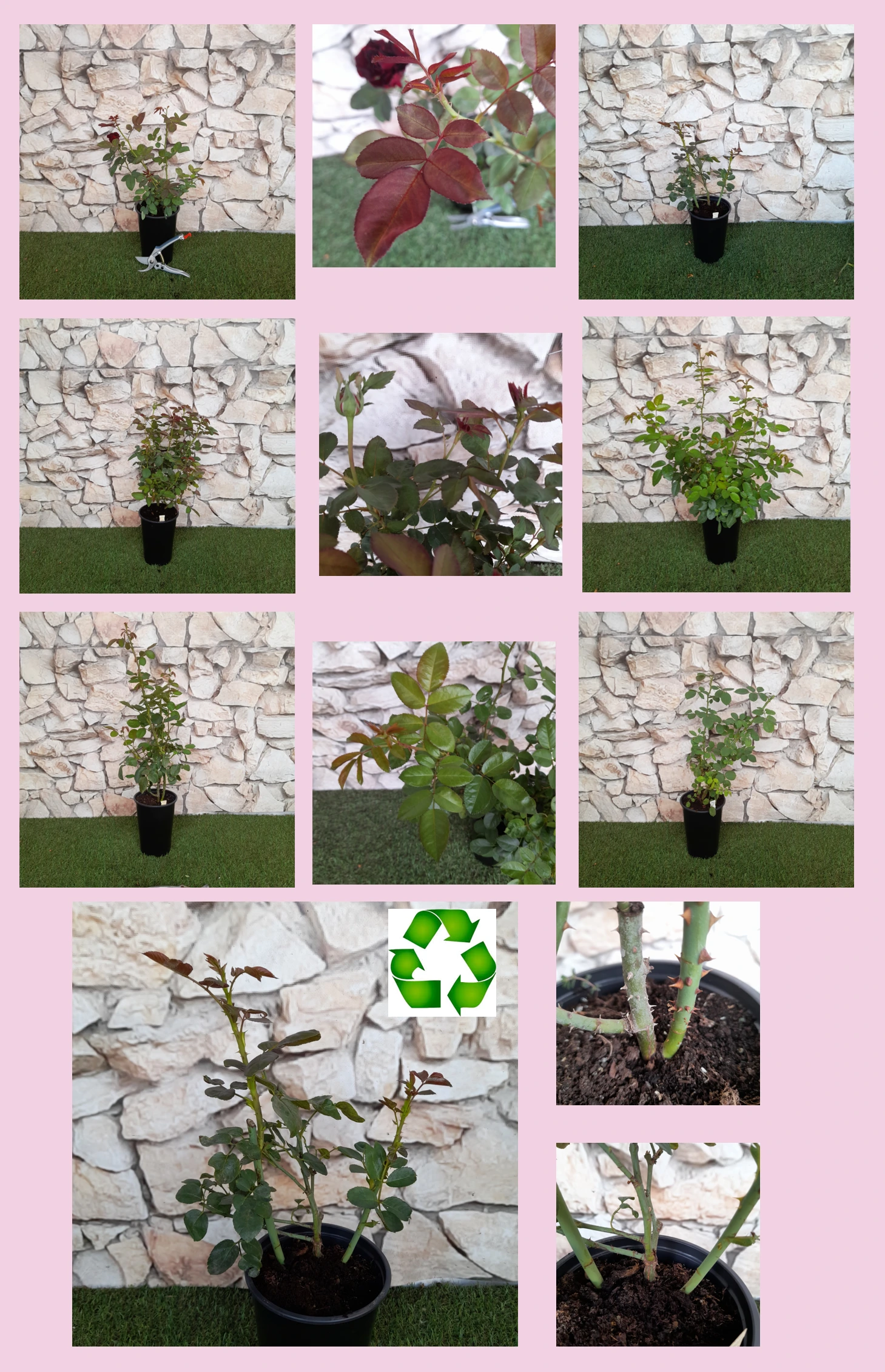
Crop overview: several varieties and growth stages in a short crop section.Shoot system: intensive growth of fresh basal shoots on a young plant.Root system: demonstration of a vigorous root system permeating the growing medium, by removing the pot.Balance: mature plant with root system and shoots in harmony with each other.
Information about the videos
The video series is not a “seasonal showcase”; it illustrates the essence of pharmaROSA® own-root cultivation in a tangible way: how the plant is built up, what the root system is like and how the shoot system regenerates. The recordings were therefore made at different times and with plants at various stages of development, so mixed foliage levels and differing stages of growth may appear in the videos. They are not a ‘sample’ of the batch dispatched, but a visual explanation of how the technology works. The current condition of the rose available to order — typical for the given period and similar to what you can expect to receive in the parcel — is shown in the upper part of the product page.
Pages for private customers Garden roses for the family garden, with minimal care → ORIGINAL® Premium garden roses – instant impact, a truly showpiece garden → EXTRA® Pages for professionals and private customers Roses for public spaces – large areas, sustainable maintenance → NATURAL® Roses for projects – hedge and row planting, fast implementation → RAPID® For professional partners only Production – propagation material for garden roses, wholesale → NEONATAL®
Company details
PharmaRosa Ltd. Company registration number: 01-09-717479 VAT number: 13075314-2-43 Plant health registration no.: HU130721 Bank account (IBAN): HU85117631891388688400000000 BIC (SWIFT): OTPVHUHB Bank name: OTP Bank Nyrt.