HORjasper – red climbing rose – Horner
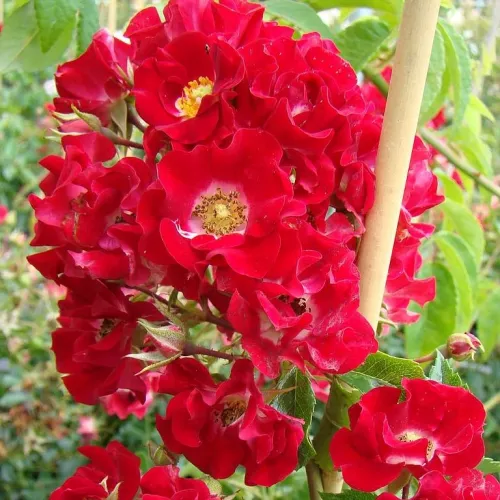
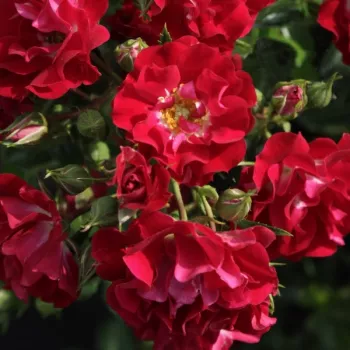
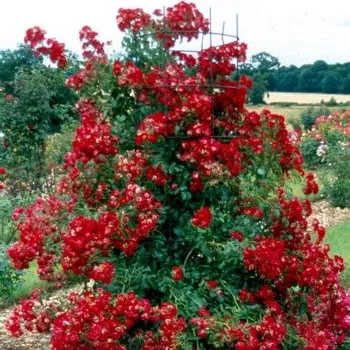
Climbing HORjasper brings a cascade of bright scarlet-red flowers with a white eye, creating a striking vertical accent on walls, fences or arches while its compact clusters repeat freely through summer. Despite needing attentive plant protection, it rewards regular care with an impressive curtain of colour and dense, glossy foliage that gives a mature, decorative look even between flushes. As an own-root rose, it builds long-term stability and can regenerate well from harder pruning, making it a sound long-view choice for those prepared to invest in a feature climber. In typical British family gardens it copes reliably with summer warmth and periods of dry weather, handling heat and moderate drought where soil preparation supports drainage on heavier ground. The pharmaROSA® ORIGINAL 2-litre plant arrives well-rooted and ready to establish, giving you time to enjoy its colour and shape as it integrates into existing cottage-style plantings over the next seasons.
Usage options
| Target area |
Reasoning |
| Front-garden house wall |
Ideal for training against a sunny or lightly shaded house wall where its strong vertical growth quickly clothes brick or render with flowering stems, giving a classic cottage-front feel and a long-term structural feature for beginners. |
| Fence or boundary screen |
Used along a garden boundary, its vigorous climbing habit and dense foliage provide a living screen, softening hard fence lines and adding seasonal privacy while the repeated flushes of red create a bold backdrop for busy-owners. |
| Rose arch or entrance arbour |
Its flexible, flowering canes can be tied over an archway to form a colourful tunnel effect, with clusters of scarlet-red blooms at eye level making everyday entrances or paths feel more welcoming for homeowners. |
| Pillar, obelisk or tall support |
Where garden space is limited, training HORjasper around a pillar or obelisk creates a strong vertical accent without taking much ground area, giving compact gardens height, drama and repeat flowers for urban-gardeners. |
| Part-shade cottage border |
Suited to light or partial shade, it works well at the back of a mixed border with perennials and shrubs, where its colour holds well and flowering remains reliable, extending cottage-style schemes for style-conscious. |
| Feature rose for dedicated care areas |
Best placed where you can easily prune, tie-in and apply regular disease management, it rewards this attention with award-winning garden performance, making it a satisfying project plant for enthusiasts. |
| Large container on terrace or courtyard |
In a substantial container of at least 40–50 litres with good drainage, it can be grown on a trellis or wall, bringing vertical colour to patios or small courtyards while you keep watering and feeding under close control for patio-owners. |
| Exposed but sunny side garden |
Placed where it receives plenty of sun and reasonable shelter, its good tolerance of British summer warmth and moderate dry spells supports dependable growth, even in slightly challenging spots for coastal-gardeners. |
Styling ideas
- Cottage-arch – Train HORjasper over a rose arch with underplanting of fragrant cranesbill to soften the base and echo the romantic, traditional feel – ideal for lovers of classic cottage entrances.
- Brick-backdrop – Fan the climber along a warm brick wall, pairing with ivy kept in check to create year-round depth behind the scarlet blooms – suited to homeowners seeking a mature, layered look.
- Boundary-ribbon – Run HORjasper along fence panels, interspersed with white clematis to weave contrasting colour through summer – perfect for those wanting a strong yet decorative boundary line.
- Pillar-flame – Spiral canes around a tall obelisk, using low perennials at the base so the column of red flowers becomes the focal flame in a small border – good for compact gardens needing height.
- Courtyard-screen – Grow in a large 50-litre container against a trellis to create a floral privacy screen on terraces or balconies – appealing to urban gardeners seeking flexible vertical planting.
Technical cultivar profile
| Parameter |
Data |
| Name and registration |
Repeat-flowering rambler-type climbing rose; registered as HORjasper, marketed as Horjasper – red climbing rose, also known in exhibitions as Rambling Rosie. |
| Origin and breeding |
Bred in the United Kingdom by Colin P. Horner from Super Excelsa × (Baby Love × Golden Future); introduced by Warner’s Roses in 2005. |
| Awards and recognition |
Holds Gold Standard Award (2007), RHS Award of Garden Merit (2012), Glasgow Golden Prize (2010) and Hague Bronze Certificate (2010), confirming strong ornamental merit. |
| Growth and structural characteristics |
Vigorous climbing habit reaching about 300–500 cm high and 100–220 cm spread, with dense, glossy dark green foliage and plentiful prickles on the canes. |
| Flower morphology |
Clusters of small, semi-double blooms, around 0.5–1.5 inches across, with 13–25 petals, flat form and good self-cleaning, repeating with an abundant second flush. |
| Colour data and phenology |
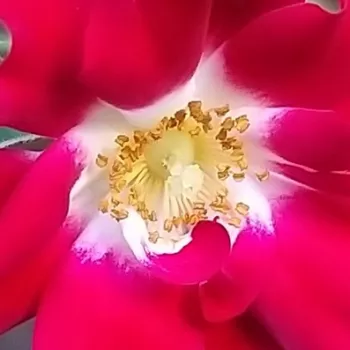
Intense scarlet-red flowers with a clear white eye; colour holds well, fading through carmine-red as the centre lightens to almost white from bud to full openness. |
| Fragrance and aroma |
Light rose scent that is very faint and often barely perceptible; semi-double blooms offer only moderate, occasional appeal to visiting pollinating insects. |
| Hip characteristics |
Forms modest numbers of small, spherical orange-red hips, about 6–10 mm across, providing late-season interest without overwhelming the overall flowering display. |
| Resistance and winter hardiness |
Hardy to around -21 to -18 °C (RHS H7, USDA 6b), tolerating UK winters well but showing susceptibility to rust, powdery mildew and black spot, so needs protection. |
| Horticultural recommendations |
Best on well-prepared soil in sun or partial shade; space 140–240 cm depending on use, train and prune regularly, and maintain a disease-control programme for reliability. |
HORjasper offers award-winning colour, impressive climbing height and reliable repeat flowering on a long-lived own-root framework; if you are ready for regular care, it will repay you as a lasting garden feature worth choosing.