Cream‑white to ivory, semi‑double flower that, when fully open, uniformly fades to a clear pure white with strongly contrasting golden‑yellow stamens. - historic - rambler, climbing - trailing rose - strongly scented, easily noticeable rose - rich, spicy-
– Masses of cream‑white flowers in huge clusters.
– Strong, rich spicy‑musk fragrance in bloom.
– Vigorous rambler, ideal for walls and trees.
– Excellent disease resistance and RHS AGM holder.
– Good heat and moderate drought tolerance.
– Special feature: Spectacular autumn hips that decorate the plant and feed garden birds.
Garden-friendly choice – Gentle landscaping
pharmaROSA® ORIGINAL 2-litre own-root potted rose
19,30 £
Unfortunately, we are currently unable to ship to the United Kingdom; we only deliver to countries within the European Union. For more information, please contact us!
4.5(6654)
Rambling Rector – white historic rambler rose
Historic character and masses of summer flowers make Rambling Rector a dramatic choice for pergolas, walls and tree-training in the classic British garden, while its strong fragrance and pollinator-friendly, open, cream-white to snow-white blooms deliver both romance and wildlife value. This vigorous rambler quickly builds a full green screen yet needs relatively modest care thanks to its good garden resilience and RHS Award of Garden Merit performance. Own-root plants anchor securely and mature into long-lived, regenerating specimens that suit low-intervention gardeners, coping reliably even in exposed, breezy conditions near the coast. Over a few seasons you see roots establish, then strong new shoots, and by about the third year the planting reaches its full ornamental impact.
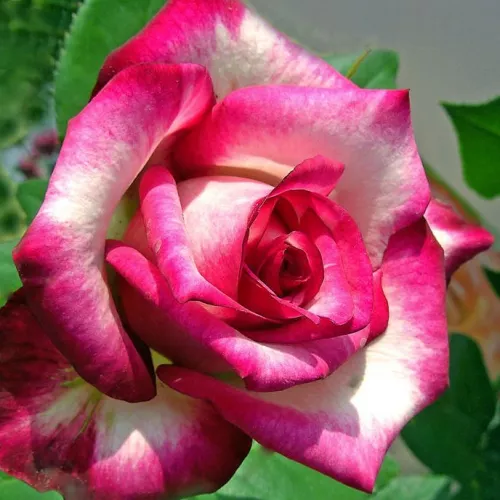
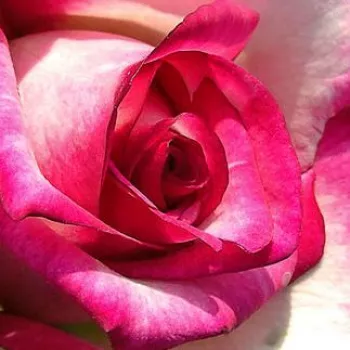
Rambling Rector in close-up, showing its strongly scented white blooms.
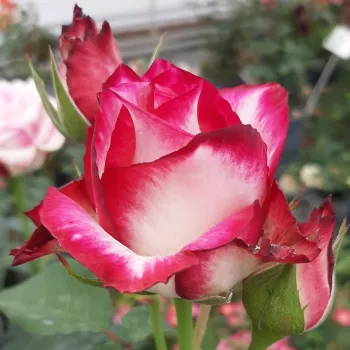
Rambling Rector in full bloom, with creamy white semi-double flowers and golden stamens.
Usage options
Target area
Reasoning
Large wall or house façade
Vigorous climbing growth and dense foliage allow Rambling Rector to cover broad wall surfaces, softening brick or render with a billowing mass of white blossom in early summer. Once established, it needs only occasional tying-in and light pruning, making it suitable for a low-effort long-term screen for busy homeowners.
Pergolas, arches and walkways
The long, pliable canes are ideal for training over pergolas and arches, where the creamy white clusters and strong musky scent create an immersive tunnel of blossom at flowering time. Its robust health and RHS Award of Garden Merit backing mean dependable performance without specialist rose knowledge, giving confidence to beginner gardeners.
Tree-trained “rose in a tree” effect
This historical rambler is classic for scrambling into mature trees, where it weaves through branches and produces a cascade of white from above. Own-root vigour and longevity make it well suited to semi-wild, less-accessible spots that still benefit from seasonal drama, particularly for cottage-garden enthusiasts.
Screening unsightly boundaries or outbuildings
Fast, tall coverage and dense, light to mid-green foliage help disguise sheds, garages or less attractive fences, while the once-a-year floral display adds charm rather than simply forming a green barrier. After establishment, minimal feeding and occasional thinning are enough to maintain an effective, living screen for time-poor gardeners.
Wildlife-friendly and pollinator zones
The semi-double flowers with exposed golden stamens are highly attractive to bees and other insects, and the abundant small orange-red hips in autumn feed birds while extending seasonal interest. This makes it an appealing backbone shrub for wildlife-leaning schemes in family gardens for nature-loving households.
Traditional front gardens and cottage-style mixes
Rambling Rector’s historic character, ivory-to-white bloom and gentle, informal habit suit classic British cottage and period-front gardens, pairing beautifully with catmint or old-fashioned perennials. Good general disease resistance supports low-spray, relaxed plantings sought by aesthetics-focused beginners.
Partially shaded corners and north-facing aspects
Its tolerance of partial shade allows planting in spots with only a few hours of direct sun, such as side passages or the lee of taller buildings, where many roses struggle. Once rooted in, it still produces generous clusters of blossom, anchoring difficult corners for urban garden owners.
Larger country or coastal gardens
Heat and moderate drought tolerance, together with solid winter hardiness, make this rose suitable for broader planting schemes in exposed or country settings, where it can roam over fences or banks with little fuss, coping well with blustery weather and sea breezes in everyday use for practical family gardeners.
Styling ideas
Cottage-arch romance – Train Rambling Rector over a timber or wrought-iron arch, underplanting with Nepeta x faassenii to echo its soft tones and support pollinators – ideal for lovers of nostalgic front gardens.
Tree-canopy cascade – Let the rambler climb into a mature apple or ornamental tree, creating a midsummer white waterfall above the lawn – appealing to gardeners wanting spectacle with minimal maintenance.
Screened retreat – Use it to cloak a pergola beside a terrace, pairing with shade-tolerant perennials for a private outdoor room – suitable for families seeking a calm, sheltered seating area.
Wildlife hedgerow – Integrate Rambling Rector into a mixed wildlife hedge where its flowers and hips boost nectar and winter food – perfect for those aiming to support birds and pollinators.
Period façade softener – Train along wires on a brick house front, combining with clematis such as ‘Rooguchi’ for layered colour – ideal for homeowners restoring traditional character to older properties.
Technical cultivar profile
Property
Data
Name and registration
Rambling Rector is a historic rambler from the Botanical rose group, used as a wall and pergola rose; it is an unregistered, long-known cultivar with verified authenticity for garden use.
Origin and breeding
Discovered in Ireland before 1901 and introduced by Daisy Hill Nursery, its exact parentage and breeder are unknown, reflecting its heritage character and long-standing presence in traditional gardens.
Awards and recognition
Holds the RHS Award of Garden Merit (1993), indicating reliable garden performance, solid health, and ornamental value under typical UK growing conditions when given appropriate support and basic care.
Growth and structural characteristics
Strong, climbing growth with long canes, dense, matt, light to mid-green foliage and moderate thorns; ideal for training over structures or into trees, forming a substantial, long-lived framework over time.
Flower morphology
Semi-double, flat flowers with around 13–25 petals are carried in sizeable, showy clusters; blooms are roughly 3–4 cm across and cover the plant heavily during a single, impressive flowering period.
Colour data and phenology
Cream-white to ivory buds and opening blooms fade to clear white, with prominent golden-yellow stamens; not remontant, but provides a single, abundant summer display, followed by decorative hips into autumn.
Fragrance and aroma
Produces a strong, easily noticeable spicy-musk fragrance that carries on still evenings, contributing a classic rambler scent around terraces, paths and open windows during its main flowering period.
Hip characteristics
After flowering, masses of small, spherical orange-red hips around 6–8 mm develop and persist into autumn, adding fine-textured colour and offering a valuable seasonal food source for local birds.
Resistance and winter hardiness
Shows good overall disease resistance, with noted tolerance to mildew, black spot and rust; winter hardy to about -20 °C (RHS H6), suitable for most UK regions, including colder inland and northern sites.
Horticultural recommendations
Best trained on walls, fences, pergolas, arches or into trees; allow space and strong supports, water in prolonged drought, and prune mainly to remove old canes, keeping maintenance modest for its size.
Rambling Rector offers historic charm, powerful fragrance and wildlife-friendly hips as a vigorous, long-lived own-root rambler that repays simple care with generous coverage, making it a thoughtful choice for your next garden planting.
Detailed product attributes
Product Identification Data
Product Name:
RAMBLING RECTOR – white historic rose
Product Type:
pharmaROSA® ORIGINAL - 2-litre own-root potted rose
Meaning of Cultivar Name:
The name literally means "wandering parish priest" and presumably refers to the variety having been found in a parsonage garden and spread from there.
Self-Cleaning Description:
Masses of small red‑orange rose hips develop in place of the spent flowers and remain on the canes until autumn; due to the plant's large size and vigorous growth the spent clusters are generally not removed by hand.
Flower Colour Description:
Cream‑white to ivory, semi‑double flower that, when fully open, uniformly fades to a clear pure white with strongly contrasting golden‑yellow stamens.
Closed Bud:
The closed buds are creamy white and open into flowers that later fade to white; there is no detailed description of other shades or of the bud surface's sheen.
Newly Opened Flower:
In the freshly opening stage the blooms are distinctly creamy white, with conspicuous golden-yellow stamens clearly visible in the centre; the outer and inner petals remain similarly shaded at this stage, without stripes or spots.
Full Bloom:
The fully open, semi-double, small flowers are cream‑white to white in shade, with a conspicuous deep yellow/golden stamen cluster in the centre; the petals are uniform in colour, without stripes or spots, and the outer and inner petals are of nearly iden
Before Fading:
During opening the flowers gradually fade from an ivory-cream shade to pure white; just before fading the overall effect is more snow-white, the creamy tone barely perceptible, while the golden-yellow stamens remain clearly visible.
Colour Fading Description:
The petals fade moderately as they open: the initial ivory–cream shade lightens slightly to a pure white; beyond that there is no specific data on the colour's behaviour in strong sunlight.
Colour Retention Level:
The petals moderately fade as they open: the initial ivory–cream colour lightens slightly to a pure white; beyond this there is no specific data on the colour’s behaviour in strong sunlight.
Pollinator Attraction:
Semi-double, about 4 cm, cream‑white to white flowers have an open form with conspicuous, pollen‑rich golden‑yellow stamens, and their semi‑double shape together with readily accessible stamens increases attractiveness to pollinators, making them an excel
Heat and Drought Tolerance Description:
Tolerates summer heat well and can endure moderate drought under average garden conditions; however, during prolonged drought it requires irrigation.
Maintenance Requirement:
Maintenance requirement low; vigorous, healthy-growing variety with good overall disease resistance, so generally requires little plant protection.
Primary Uses:
training over walls and fences, pergolas and arbours, arches, roses trained into trees, screening large areas and less attractive parts of buildings
Our product is a rose grown with pharmaROSA®’s unique cultivation technology!
2-litre, own-root, potted rose.
With a shoot system appropriate to the season.
With a root system that thoroughly permeates the growing medium.
Quality compliant with the requirements of the E.N.A. (European Nurserystock Association).
Supplied in unique packaging that prevents damage.
Can be planted during frost-free periods.
True-to-variety rose bush with a unique identifier.
The pharmaROSA® own-root potted rose is a well-rooted plant that supports reliable establishment when planted and cared for properly, so it can be planted whenever the soil is not frozen.
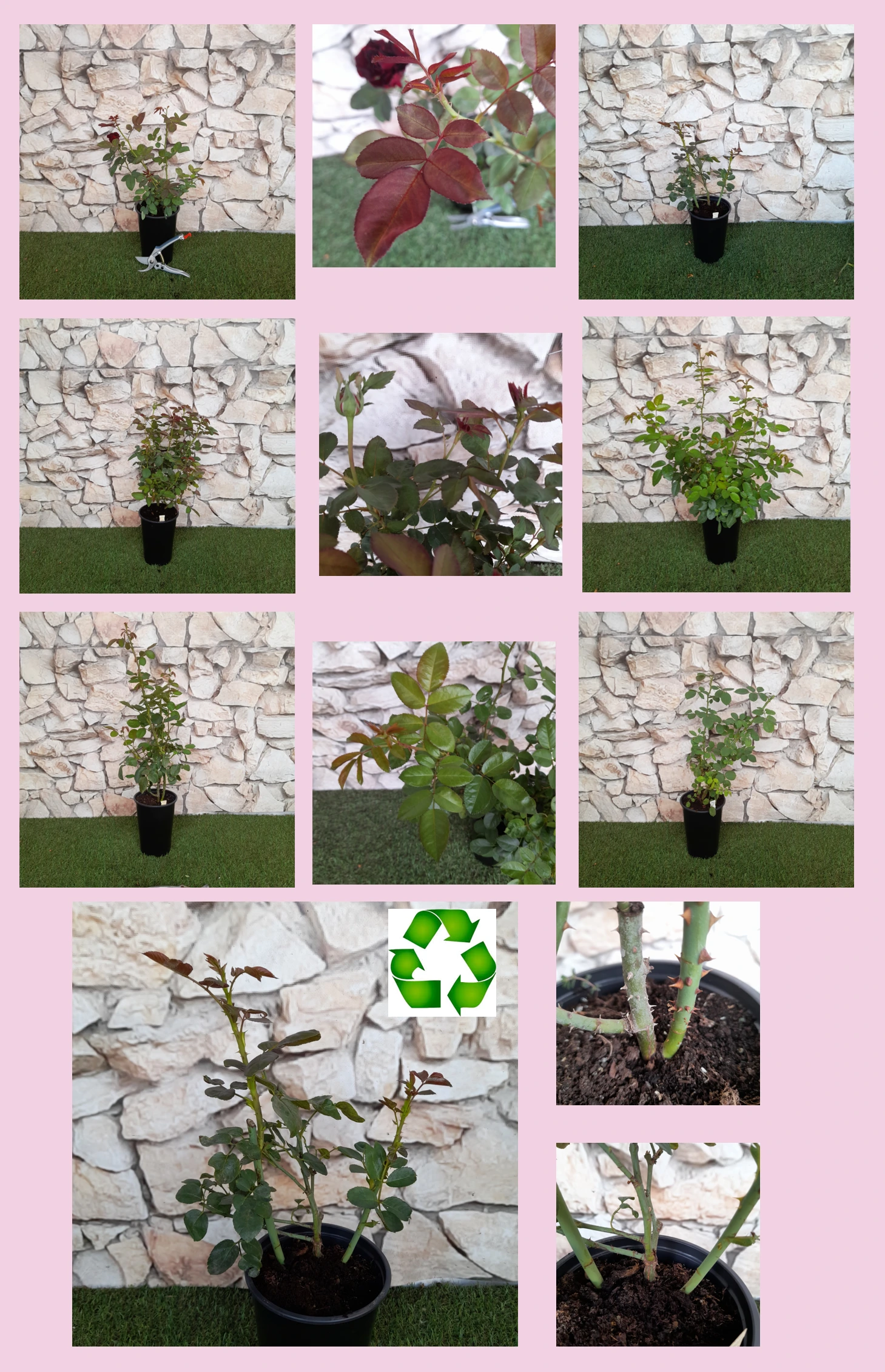
Crop overview: several varieties and growth stages in a short crop section.Shoot system: intensive growth of fresh basal shoots on a young plant.Root system: demonstration of a vigorous root system permeating the growing medium, by removing the pot.Balance: mature plant with root system and shoots in harmony with each other.
Information about the videos
The video series is not a “seasonal showcase”; it illustrates the essence of pharmaROSA® own-root cultivation in a tangible way: how the plant is built up, what the root system is like and how the shoot system regenerates. The recordings were therefore made at different times and with plants at various stages of development, so mixed foliage levels and differing stages of growth may appear in the videos. They are not a ‘sample’ of the batch dispatched, but a visual explanation of how the technology works. The current condition of the rose available to order — typical for the given period and similar to what you can expect to receive in the parcel — is shown in the upper part of the product page.
Pages for private customers Garden roses for the family garden, with minimal care → ORIGINAL® Premium garden roses – instant impact, a truly showpiece garden → EXTRA® Pages for professionals and private customers Roses for public spaces – large areas, sustainable maintenance → NATURAL® Roses for projects – hedge and row planting, fast implementation → RAPID® For professional partners only Production – propagation material for garden roses, wholesale → NEONATAL®
Company details
PharmaRosa Ltd. Company registration number: 01-09-717479 VAT number: 13075314-2-43 Plant health registration no.: HU130721 Bank account (IBAN): HU85117631891388688400000000 BIC (SWIFT): OTPVHUHB Bank name: OTP Bank Nyrt.