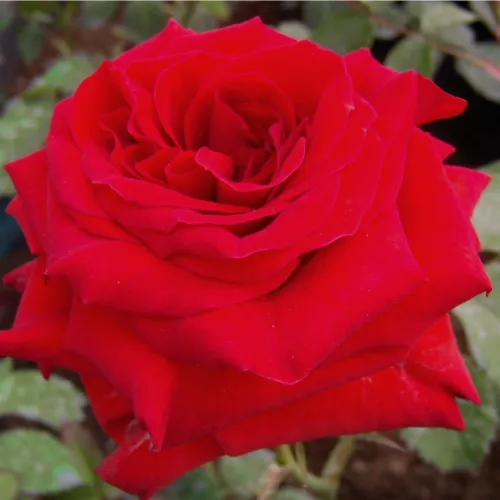
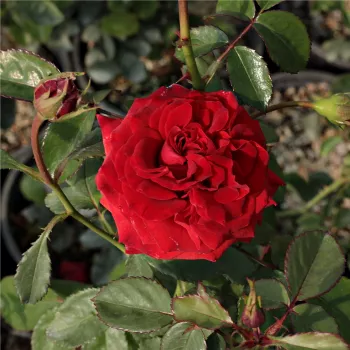
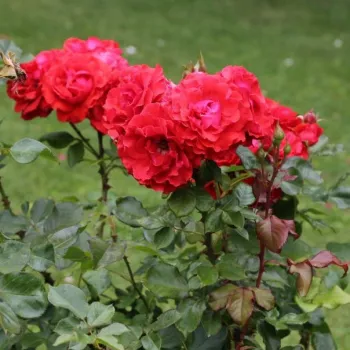
Uniform, rich deep-red shade with a velvety sheen. - flowerbed floribunda rose - very weak, barely perceptible scented rose - classic, rose character
– Rich velvety deep-red flower colour.
– Reliable remontant habit for long display.
– Upright shrub for structured bedding schemes.
– Medium disease resistance, hardy to RHS H7.
– Decorative orange-red hips in late season.
– Special feature: Historically bred by Reimer Kordes, introduced in 1960, ideal for classic park and urban plantings.
Committed owners – Thoughtful garden investment
pharmaROSA® ORIGINAL 2-litre own-root potted rose
18,20 £
Unfortunately, we are currently unable to ship to the United Kingdom; we only deliver to countries within the European Union. For more information, please contact us!
3.5(5767)
HANSESTADT LÜBECK® – red bedding floribunda rose - Kordes
For those who value a well-ordered front garden, this floribunda brings reliable colour and structure with minimal fuss. Its upright, moderately dense habit is naturally tidy, making it ideal for small beds, low hedging and around-the-house planting where you want impact without complicated maintenance. Clusters of semi-double, velvet-red blooms provide continuous interest through the season, with a vivid first flush followed by a generous repeat, so your borders stay lively from early summer well into autumn. The flowers open to reveal pollen, giving a pleasantly wildlife-friendly touch, while modest orange-red hips add a final accent in late season. As an own-root plant, it develops a strong, durable framework for long-lived performance, regenerating well after pruning or weather damage, and settling securely even in breezier gardens that appreciate steady anchoring in wind and rain. In its pharmaROSA® ORIGINAL 2-litre form it is easy to handle and straightforward to plant, then needs only basic care to stay healthy, with solid disease resistance under everyday conditions. Over time it will form a balanced shrub that supports classic cottage-style combinations, delivering colour and shape that integrate naturally into mixed borders. With moderate vigour and a controlled footprint, it stays manageable and family-friendly in typical UK plots, gradually building up from root development in the first year, bushy top growth in the second, to full ornamental value by the third.
Hansestadt Lübeck® showing its rich red flowers in full bloom.
Freshly opened Hansestadt Lübeck® flower in vivid scarlet-carmine red.
Usage options
Target area
Reasoning
Front garden feature bed by the path
The upright, compact habit keeps borders looking organised rather than sprawling, so it works especially well in modest front gardens where space is limited but you still want a clear focal line of red. Clusters of blooms through the season mean the display stays active without constant deadheading, giving a presentable approach to the house for busy homeowners.
Small mixed cottage border
Its repeated flushes of deep red flowers sit comfortably among perennials, providing rhythm and continuity while other plants come and go. Because it forms a durable, own-root shrub, it can act as the long-term backbone of a loose cottage mix, supporting informal planting schemes for aesthetics-focused beginners.
Low flowering hedge along a drive or boundary
The moderate height and planting distances allow you to create a low hedge that defines paths or driveways without feeling overbearing. Once established, the framework is long-lived and responds well to simple annual pruning, giving a neat line of colour that stays structurally sound for practical garden planners.
Urban family garden beds
Medium disease resistance with good tolerance of common problems makes it suited to typical UK town gardens, where spraying and specialist care are often minimal. The semi-double, not overly full blooms shed reasonably cleanly, so beds retain a cared-for look with occasional light tidy-ups for time-pressed families.
Pollinator-friendly corner near a seating area
The semi-double flowers allow access to pollen, giving moderate appeal to bees while still providing the lush look of a floribunda. Grouped with other nectar plants, it contributes to a small wildlife-friendly pocket that feels ornamental rather than wild, ideal for nature-conscious homeowners.
Small cluster planting in a classic red-and-green scheme
Planting three to five together creates a concentrated block of velvety red that reads clearly from the street, echoing traditional British bedding schemes. The colour ages attractively on the bush, so even as individual blooms mature the group effect remains strong and coherent for colour-loving gardeners.
Roses in larger containers on patios or terraces
In a generously sized container (around 40–50 litres or more), its upright, medium-sized framework is easy to balance with underplanting and simple to prune each year. The own-root structure helps it adapt to the potting mix and recover from seasonal stresses, suiting balcony and patio owners.
Structural rose in exposed, wind-prone spots
Once settled, its own-root system and moderate height help it stand firm and steady in more exposed positions that feel the full impact of coastal or open-site weather, providing reliable colour where taller, grafted roses may rock or sulk. This makes it reassuring for beginner gardeners.
Styling ideas
Classic frontage row – line a short front path with a single row of plants for a simple, repeating band of red that stays proportionate to the house frontage – ideal for neat, low-maintenance front gardens.
Cottage weave – interplant with Brunnera, wallflowers and soft grasses so its reliable red clusters thread through looser textures – perfect for those who like informal cottage borders without complex planning.
Patio anchor – grow one in a large 50‑litre pot framed by seasonal bedding at the base to create an easy-care focal point by the seating area – suited to small patios needing a long-lived structural plant.
Driveway edging – repeat at regular spacings along a drive, underplanting with low groundcovers for a restrained hedge of colour that is easy to trim – good for homeowners wanting tidy boundaries with minimal effort.
Family play garden – position a small group at the back of a border, away from main play routes, where the moderate thorns and upright habit stay manageable yet decorative – suitable for families mixing play space and planting.
Technical cultivar profile
Parameter
Data
Name and registration
Hansestadt Lübeck® is a floribunda bed rose from the Border rose collection; ARS exhibition name Lübeck; an older, unregistered variety marketed for garden and bedding use.
Origin and breeding
Bred by Reimer Kordes at W. Kordes’ Söhne in Germany; introduced in 1960 via Kordes and Samuel McGredy & Son, giving it a proven track record in European gardens.
Growth and structural characteristics
Medium-height upright shrub, around 100–140 cm tall and 65–95 cm wide, with moderately dense, mid-green, slightly glossy foliage and moderate prickliness, forming a robust, bushy framework.
Flower morphology
Semi-double, cup-shaped blooms with 13–25 petals, produced in clusters of three to seven per stem; large flower size and remontant habit provide a good first flush followed by a generous repeat.
Colour data and phenology
Rich, velvety deep red flowers (RHS 46A–46B); buds open carmine-scarlet, deepen to burgundy in full bloom, then soften towards brick‑mahogany before fading, giving layered colour effects on the bush.
Fragrance and aroma
Very weakly scented, with only a faint classic rose note detectable at close range; chosen primarily for its visual and structural impact rather than strong perfume in typical garden situations.
Hip characteristics
Produces moderate numbers of small, ovoid hips about 8–12 mm, coloured orange-red; they extend ornamental interest into autumn and may provide light wildlife value in mixed plantings.
Resistance and winter hardiness
Rated to approximately −21 to −18 °C (RHS H7; Swedish zone 3; USDA 6b); good resistance to powdery mildew and rust, medium against black spot, reliable in normal UK winters with basic care.
Horticultural recommendations
Best in sunny beds, parks or urban green spaces; plant at 50–55 cm for hedges or mass bedding, with wider spacing for solos; moderate maintenance with occasional pest control and routine pruning.
Hansestadt Lübeck® offers reliable repeat flowering, a tidy upright habit and long-lived own-root strength, making it a practical choice for dependable red colour in everyday family gardens you wish to enjoy for years.
Detailed product attributes
Product Identification Data
Product Name:
HANSESTADT LÜBECK® – red bedding floribunda rose - Kordes
Product Type:
pharmaROSA® ORIGINAL - 2-litre own-root potted rose
Closed Bud:
Deep carmine–ruby red, with a velvety sheen, darkening towards the tips.
Newly Opened Flower:
Uniform, vivid scarlet/carmine red, with a slight warm (orange-tinged) flush at the petal bases.
Full Bloom:
Compact, velvety burgundy appearance; the inner folds are deeper, and the outer edges shade into a slightly lighter scarlet.
Before Fading:
The red softens and turns to a brick‑mahogany shade, with brownish darkening at the edges.
Colour Fading Description:
On opening the colour deepens from bright scarlet/carmine to burgundy, then before fading it mutes to a brick–mahogany tone with brownish darkening at the edges.
Pollinator Attraction:
Semi-double, 13–25‑petalled flowers are moderately attractive to pollinators, as the semi-double form partially conceals the stamens and reduces access to pollen and nectar compared with single flowers.
Pollinator-Friendly Rating:
Moderately pollinator-friendly due to its semi-double (13–25-petalled) flowers
Our product is a rose grown with pharmaROSA®’s unique cultivation technology!
2-litre, own-root, potted rose.
With a shoot system appropriate to the season.
With a root system that thoroughly permeates the growing medium.
Quality compliant with the requirements of the E.N.A. (European Nurserystock Association).
Supplied in unique packaging that prevents damage.
Can be planted during frost-free periods.
True-to-variety rose bush with a unique identifier.
The pharmaROSA® own-root potted rose is a well-rooted plant that supports reliable establishment when planted and cared for properly, so it can be planted whenever the soil is not frozen.
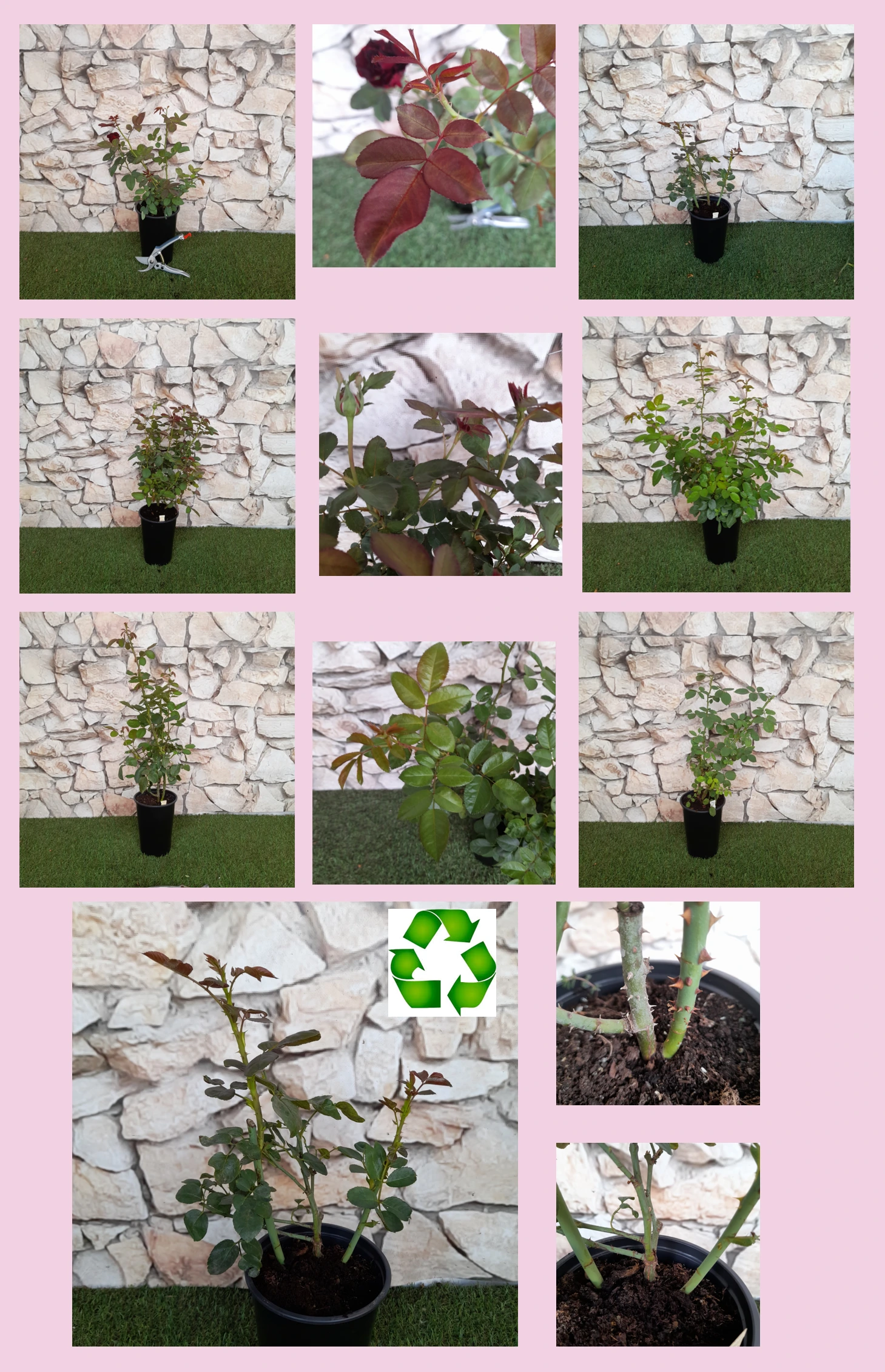
Crop overview: several varieties and growth stages in a short crop section.Shoot system: intensive growth of fresh basal shoots on a young plant.Root system: demonstration of a vigorous root system permeating the growing medium, by removing the pot.Balance: mature plant with root system and shoots in harmony with each other.
Information about the videos
The video series is not a “seasonal showcase”; it illustrates the essence of pharmaROSA® own-root cultivation in a tangible way: how the plant is built up, what the root system is like and how the shoot system regenerates. The recordings were therefore made at different times and with plants at various stages of development, so mixed foliage levels and differing stages of growth may appear in the videos. They are not a ‘sample’ of the batch dispatched, but a visual explanation of how the technology works. The current condition of the rose available to order — typical for the given period and similar to what you can expect to receive in the parcel — is shown in the upper part of the product page.
Pages for private customers Garden roses for the family garden, with minimal care → ORIGINAL® Premium garden roses – instant impact, a truly showpiece garden → EXTRA® Pages for professionals and private customers Roses for public spaces – large areas, sustainable maintenance → NATURAL® Roses for projects – hedge and row planting, fast implementation → RAPID® For professional partners only Production – propagation material for garden roses, wholesale → NEONATAL®
Company details
PharmaRosa Ltd. Company registration number: 01-09-717479 VAT number: 13075314-2-43 Plant health registration no.: HU130721 Bank account (IBAN): HU85117631891388688400000000 BIC (SWIFT): OTPVHUHB Bank name: OTP Bank Nyrt.