Pure, bright white petals without any cool-toned shading. - rambling rose, climbing rose - mild, subtly scented rose - delicately sweet character
– Abundant clusters of pure white blooms.
– Elegant rambling habit for arches and walls.
– Reliable remontant flowering through the season.
– Good heat tolerance, suitable for warmer sites.
– Semi-double flowers gently scented, pollinator‑friendly.
– Special feature: Decorative red hips follow the flower show, adding late-season interest.
Gentle garden landscaping – Built on experience
pharmaROSA® ORIGINAL 2-litre own-root potted rose
18,70 £
Unfortunately, we are currently unable to ship to the United Kingdom; we only deliver to countries within the European Union. For more information, please contact us!
3.5(5879)
GUNSEI – white rambler climbing rose - Kikuchi
This own-root Gunsei is a graceful climbing rambler for arches, pergolas and tall fences, carrying clouds of white semi-double blooms in dense clusters from early summer with a light, sweet fragrance. Its naturally vigorous growth and relatively sparse thorns make it easier to train on supports, while the small flowers drop cleanly to reveal neat, red hips later in the season. As an own-root rose it builds a durable framework with time, giving you a dependable display along walls or tall structures while coping well with breezy, coastal-style conditions. Establish it once and enjoy the way its structure and flowering presence develop steadily over the years without complex pruning techniques.
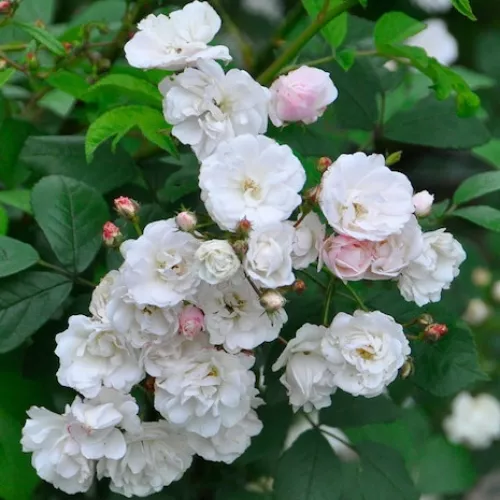
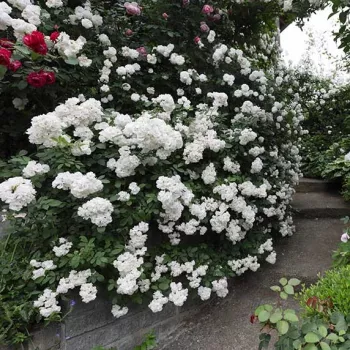
Gunsei climbing rose in full bloom, showing clustered white flowers.
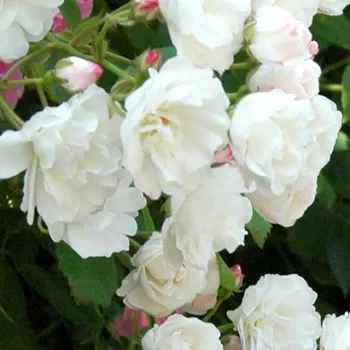
Gunsei shows small, semi-double, cupped white flowers in clustered blooms.
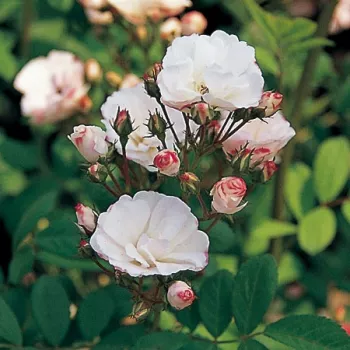
Gunsei rose bud with delicately carmine-pink tip and white sides.
Gunsei climbing rose with a mild, delicately sweet fragrance.
Usage options
Target area
Reasoning
Pergola over seating area
Gunsei’s vigorous climbing habit and long canes allow it to cover a pergola, creating a light, lacy roof of white blossom above seating. The mildly sweet fragrance adds a gentle atmosphere without being overwhelming, ideal where you sit close to the flowers; lovely for those who value a quietly romantic setting for beginners.
Arched garden entrance
The dense clusters of small, semi-double flowers create a “star cluster” effect that works beautifully over an arch by a gate or path. Because the flowers are self-cleaning and fall quickly, the arch keeps a fresh look between flushes, suiting anyone wanting a welcoming focal point with minimal deadheading for homeowners.
Tall fence or boundary screen
Gunsei’s 2–3.5 m height and 0.8–1.5 m spread let it clothe a tall fence with bright green foliage and sheets of white bloom, softening boundaries without needing precise shaping. Own-root growth ensures the framework thickens reliably over time, reassuring those planning for long-term structure in family gardens.
Wall-trained cottage backdrop
This rambler’s translucent white flowers suit traditional brick or stone, giving a classic cottage look when fanned across wires on a wall. Its small clusters echo old-fashioned ramblers, and the later red hips add seasonal interest, appealing to lovers of timeless, decorative planting in cottage spaces.
Part-shaded side passage
Gunsei tolerates partial shade, so it can brighten a side alley or north–east aspect where many roses sulk. The white flowers stand out even in lower light, drawing the eye along a narrow space and making practical paths feel tended and intentional for busy urban gardeners.
Wildlife-friendly rose feature
The semi-double blooms leave stamens partially accessible, giving moderate value to visiting pollinators, and the red hips add autumn food and structure. Trained on an obelisk or support, it introduces wildlife interest without sacrificing classic looks, suiting households wanting discreet ecological value for families.
Large container with support (40–50 L+)
In a substantial 40–50 litre or larger container with a strong obelisk or trellis, Gunsei offers vertical flower interest where borders are limited. Own-root resilience means it can regrow from the base if canes are winter-damaged, giving reassurance to space-conscious balcony and patio owners.
Exposed or breezy front garden
This hybrid multiflora rambler anchors well and copes reliably with blustery, wind-prone conditions when tied to sturdy supports, helping traditional front gardens maintain a composed look even in rough weather. Ideal for those near open aspects or coasts who still want soft, flowering vertical structure for beginners.
Styling ideas
Cottage-arch – Train Gunsei over a metal or wooden arch with foxgloves and hardy geraniums at the base for a soft, layered entrance – for romantic cottage-style front-garden owners.
White-pergola – Let its white clusters spill along a pergola, underplanted with lavender and compact Salvia officinalis for gentle scent and structure – for those seeking a calm seating retreat.
Fence-ribbon – Run tensioned wires along a tall fence and weave Gunsei through, with Carex flacca ‘Blue Zinger’ and low Nepeta edging – for tidy, low-fuss boundary softening.
Courtyard-column – In a 50-litre container with a robust obelisk, pair its airy blooms with clipped box or bay for a formal yet light courtyard accent – for design-conscious small-space gardeners.
Wildlife-screen – Combine Gunsei on a trellis with Ceanothus and herbaceous perennials to create a loose, wildlife-friendly backdrop – for families wanting discreet pollinator and bird support.
Technical cultivar profile
Aspect
Data
Name and registration
Gunsei, a hybrid multiflora rambler marketed as a climbing rose; current trade name Gunsei Climbing rose Kikuchi, exhibition name Gunsei, in the pharmaROSA ORIGINAL own-root 2-litre range.
Origin and breeding
Discovered as a natural Rosa multiflora seedling in Japan and introduced in 1986; breeder recorded as Kikuchi Rikichi, with detailed breeding company data not available.
Growth and structural characteristics
Vigorous climbing rambler reaching about 200–350 cm in height and 80–150 cm spread, with moderately dense, bright green, slightly glossy foliage and relatively sparse thorns for easier handling.
Flower morphology
Bears small, cupped, semi-double flowers with roughly 13–25 petals, produced in large, showy clusters; remontant, although the second flush is less abundant, and petals generally drop cleanly.
Colour data and phenology
Buds show a delicate carmine-pink tip fading quickly to pure white petals, ARS W, RHS NN155D/NN155C; blooms are translucent white, then creamy white before paling further in strong sunlight.
Fragrance and aroma
Lightly and pleasantly scented, with a mild, delicately sweet character that contributes ambience without dominating nearby seating areas, making it suitable for paths, entrances and terraces.
Hip characteristics
Produces moderately abundant ellipsoidal red hips about 6–9 mm across on spent clusters, adding subtle seasonal interest and potential wildlife value into late summer and early autumn displays.
Resistance and winter hardiness
Hardy to approximately −26 to −23 °C (RHS H7, USDA 5b, Swedish zone 4) with good heat tolerance; foliage is very susceptible to powdery mildew and black spot, needing regular protection.
Horticultural recommendations
Best on pergolas, arches, trellises, tall fences or walls in sun or partial shade; plant 130–220 cm apart depending on use, ensuring strong support, monitoring health and providing irrigation in drought.
Gunsei offers graceful white clusters, reliable climbing structure and own-root resilience for long-term pergolas or arches; consider it if you would like a classic rambler look with enduring character.
Detailed product attributes
Product Identification Data
Product Name:
GUNSEI – white rambler climbing rose - Kikuchi
Product Type:
pharmaROSA® ORIGINAL - 2-litre own-root potted rose
Pollinator Attraction:
Semi-double (13–25 petals) flowers moderately attract pollinators, as the semi-double form and reduced accessibility of the stamens limit access to nectar and pollen.
Pollinator-Friendly Rating:
Its semi-double (13–25 petals) flowers moderately attract pollinators, so it can be classified as partially pollinator-friendly.
Our product is a rose grown with pharmaROSA®’s unique cultivation technology!
2-litre, own-root, potted rose.
With a shoot system appropriate to the season.
With a root system that thoroughly permeates the growing medium.
Quality compliant with the requirements of the E.N.A. (European Nurserystock Association).
Supplied in unique packaging that prevents damage.
Can be planted during frost-free periods.
True-to-variety rose bush with a unique identifier.
The pharmaROSA® own-root potted rose is a well-rooted plant that supports reliable establishment when planted and cared for properly, so it can be planted whenever the soil is not frozen.
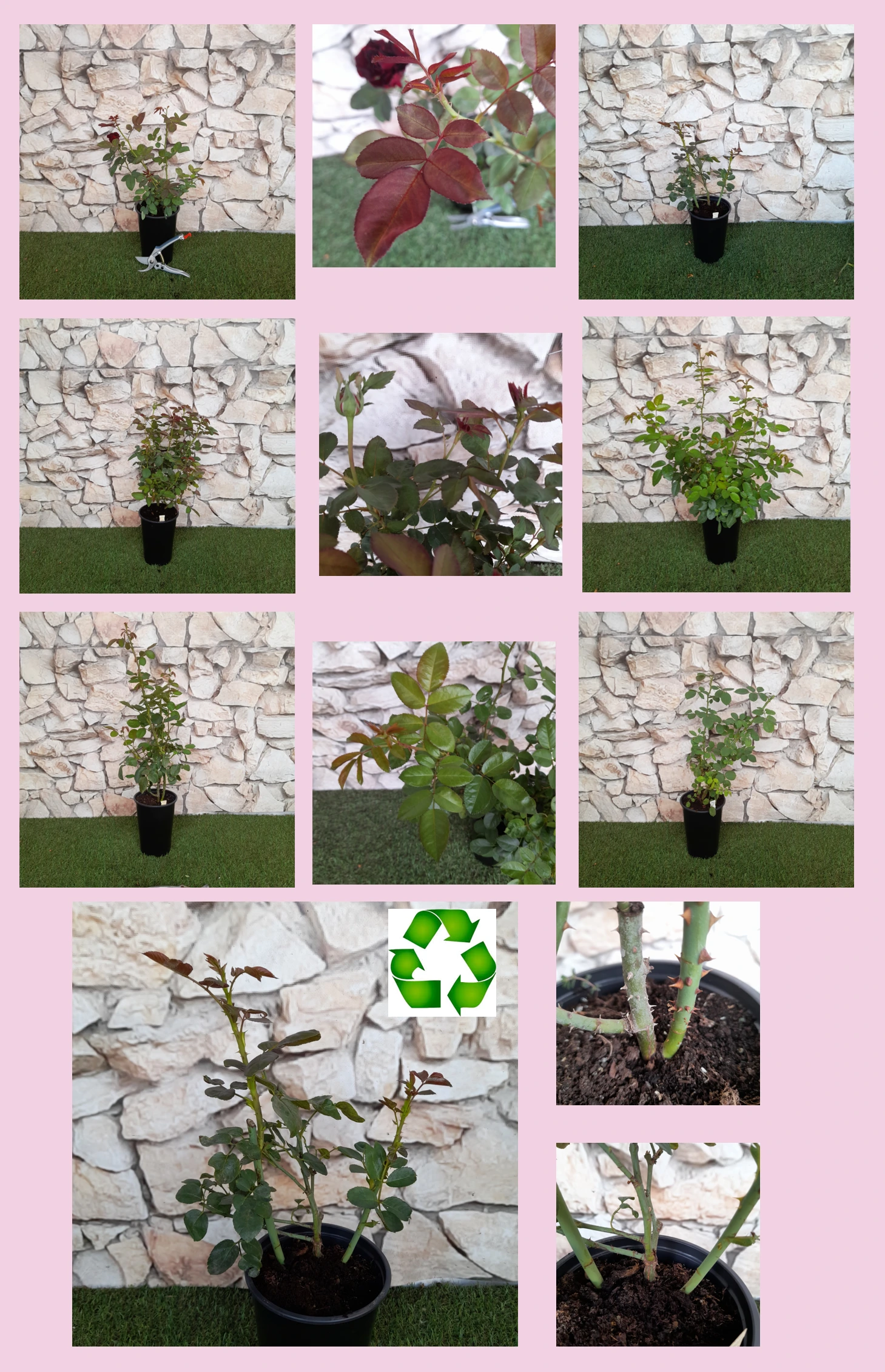
Crop overview: several varieties and growth stages in a short crop section.Shoot system: intensive growth of fresh basal shoots on a young plant.Root system: demonstration of a vigorous root system permeating the growing medium, by removing the pot.Balance: mature plant with root system and shoots in harmony with each other.
Information about the videos
The video series is not a “seasonal showcase”; it illustrates the essence of pharmaROSA® own-root cultivation in a tangible way: how the plant is built up, what the root system is like and how the shoot system regenerates. The recordings were therefore made at different times and with plants at various stages of development, so mixed foliage levels and differing stages of growth may appear in the videos. They are not a ‘sample’ of the batch dispatched, but a visual explanation of how the technology works. The current condition of the rose available to order — typical for the given period and similar to what you can expect to receive in the parcel — is shown in the upper part of the product page.
Pages for private customers Garden roses for the family garden, with minimal care → ORIGINAL® Premium garden roses – instant impact, a truly showpiece garden → EXTRA® Pages for professionals and private customers Roses for public spaces – large areas, sustainable maintenance → NATURAL® Roses for projects – hedge and row planting, fast implementation → RAPID® For professional partners only Production – propagation material for garden roses, wholesale → NEONATAL®
Company details
PharmaRosa Ltd. Company registration number: 01-09-717479 VAT number: 13075314-2-43 Plant health registration no.: HU130721 Bank account (IBAN): HU85117631891388688400000000 BIC (SWIFT): OTPVHUHB Bank name: OTP Bank Nyrt.