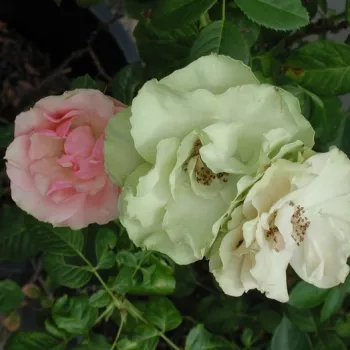
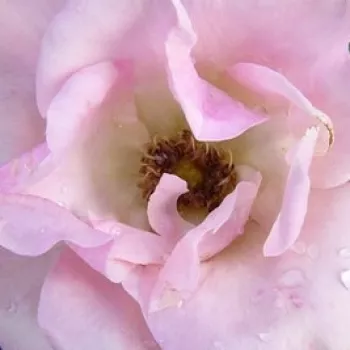
GREENSLEEVES – pink-green bedding floribunda rose - Harkness
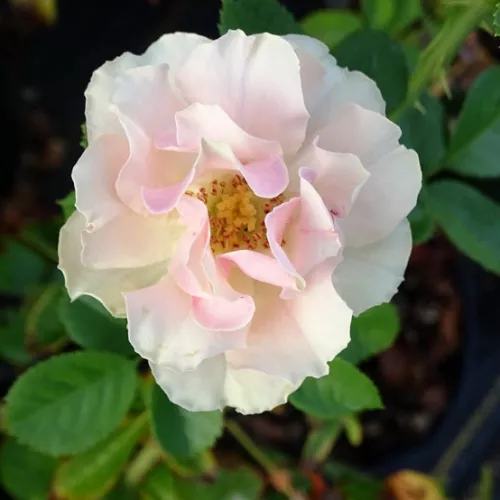
Greensleeves brings an unusually pastel, pink-to-green colour shift to family gardens, combining upright structure with compact spread for easy front-of-house planting. Bred by Harkness, it offers remontant, cluster-flowering display from summer onwards, giving reliable flower cover without complex pruning. Its generally low-maintenance nature and strong disease resistance suit busy gardeners, while the own-root plant establishes steadily, supporting long-term longevity and tidy shape. In many British gardens it copes well with exposure, anchoring itself even where wind and rain are frequent. Single blooms with open centres are highly pollinator-friendly, while moderate self-cleaning and light deadheading keep beds neat. You can expect a natural progression of root establishment, then structural growth, and by the third year a settled, full display that integrates comfortably into cottage-style or contemporary schemes.
Usage options
| Target area | Reasoning |
|---|
| Front garden beds under windows |
The compact, upright habit keeps height in check while filling space, giving a well-framed view from the house without swamping windows. Its unusual pink-green shades provide interest close up and from the pavement, ideal for beginners. |
| Mixed cottage-style borders |
The pastel, shifting colours blend gently with perennials, avoiding harsh contrast in relaxed, cottage-style mixes. Repeat clusters through the season add rhythm among classics such as hardy geraniums and salvias, suiting aesthetics-focused gardeners. |
| Small group plantings (3–5 roses) |
Planting in small groups delivers a more continuous flower carpet, with each bush supporting the others visually. The consistent height and spread help form a tidy, coherent bed that looks planned rather than fussy, reassuring homeowners. |
| Low-maintenance family borders |
Good resistance to common rose diseases reduces spraying and remedial work, while moderate self-cleaning means only occasional deadheading. This allows borders to stay attractive with limited time investment, a relief for busy gardeners. |
| Pollinator-friendly garden corners |
The single, open blooms provide easy access to pollen, helping bees and other insects more than many double roses. Repeated flushes ensure a continuing nectar source through summer, appealing to wildlife-conscious gardeners. |
| Feature plant near paths and seating |
The unusual pink-to-green flower change invites close inspection, rewarding spots where people pass or sit regularly. With minimal pruning required, it remains a talking point without demanding expert care, encouraging tentative starters. |
| Exposed or rain-prone sites |
The sturdy floribunda framework and stable root system suit typical British weather, coping well where wind and rain are frequent. Once established, it stands up to such conditions with little support, reassuring coastal and open-site gardeners. |
| Long-term planting schemes and hedging runs |
Own-root growth allows the plant to mature into a balanced shrub that can regenerate from the base over time. This underpins long-lived hedging runs or repeat patterns in beds, rewarding patient, forward-planning gardeners. |
Styling ideas
- Cottage harmony – Combine with soft pinks, mauve hardy geraniums and airy grasses to echo traditional cottage borders – ideal for romantically minded homeowners.
- Pastel contrast – Pair its pink-green flowers with dusky purple heucheras and pale lavender for a calm yet distinctive frontage – good for busy urban gardeners.
- Pollinator ribbon – Run a line along a path with salvias and catmint to create a low, pollinator-rich border – perfect for wildlife-focused families.
- Structured bed – Use groups of three spaced evenly in a small rectangular bed, underplanted with low groundcovers to keep the layout neat – suited to order-loving beginners.
- Accent island – Place a single plant in a small lawn island with cypress spurge and dwarf coral bells to highlight its unusual colouring – appealing to design-conscious gardeners.
Technical cultivar profile
| Parameter | Data |
|---|
| Name and registration |
Floribunda bed rose, registered as HARlenten, marketed as Greensleeves Bedding rose HARlenten; ARS exhibition name Greensleeves, classification exhibition floribunda (spray). |
| Origin and breeding |
Bred by Jack L. Harkness, R Harkness & Co Ltd, Hitchin, UK; complex hybrid parentage including Rudolph Timm, Arthur Bell, Pascali and others; introduced in the United Kingdom in 1980. |
| Growth and structural characteristics |
Upright shrub floribunda, typically 75–105 cm tall and 85–115 cm wide, with moderately dense, glossy dark green foliage and moderate thorniness; forms a bushy, well-filled structure over time. |
| Flower morphology |
Medium-sized, flat single blooms with 5–12 petals, carried in clusters; remontant with abundant second flush; moderate self-cleaning so some spent flowers benefit from occasional deadheading to stay tidy. |
| Colour data and phenology |
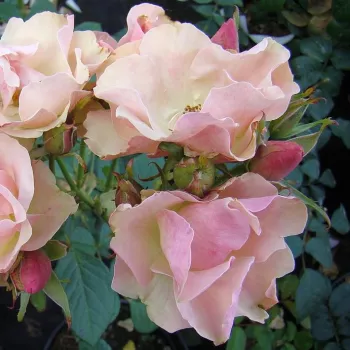
Petals shift from porcelain pink buds to creamy greenish-white, then pastel green with silky cream tones; colour retention is very good, but strong sun hastens fading; ARS code w, RHS 62C and 145C. |
| Fragrance and aroma |
No noticeable fragrance reported; primary ornamental value lies in the distinctive, changing pastel colour range and the clean single flower form, rather than in scent-based garden effects or cut-flower perfume. |
| Hip characteristics |
Produces only a slight crop of small, spherical hips, usually 10–14 mm across; hips are red, RHS 34A, and add modest late-season interest without significantly affecting overall flowering performance. |
| Resistance and winter hardiness |
Good resistance to powdery mildew and black spot, moderate rust susceptibility; reliably hardy to about -21 to -18 °C (RHS H7, USDA 6b, Swedish zone 3), suitable for most temperate UK garden conditions. |
| Horticultural recommendations |
Best in sunny beds or borders with reasonable drainage; recommended spacing 60–100 cm depending on use, with 2.4–2.7 plants/m² for mass planting; moderate drought tolerance but benefits from regular watering in dry spells. |
GREENSLEEVES – pink-green bedding floribunda rose - Harkness offers distinctive pastel colour shifts, reliable repeat clusters and long-term own-root stability; a thoughtful choice if you seek character with modest upkeep.