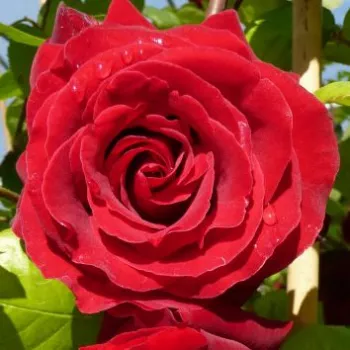
GRANDESSA – deep red climbing rose – Delbard
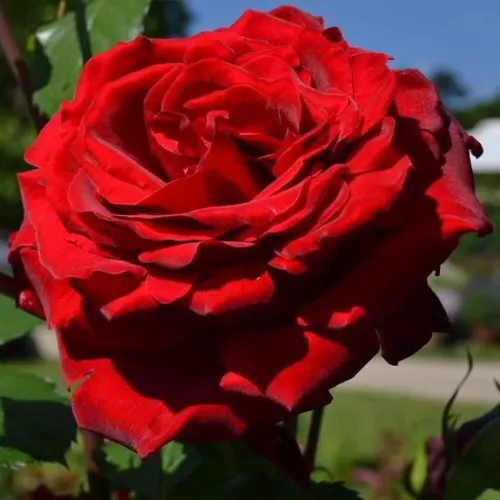
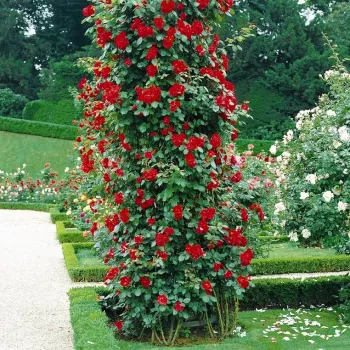
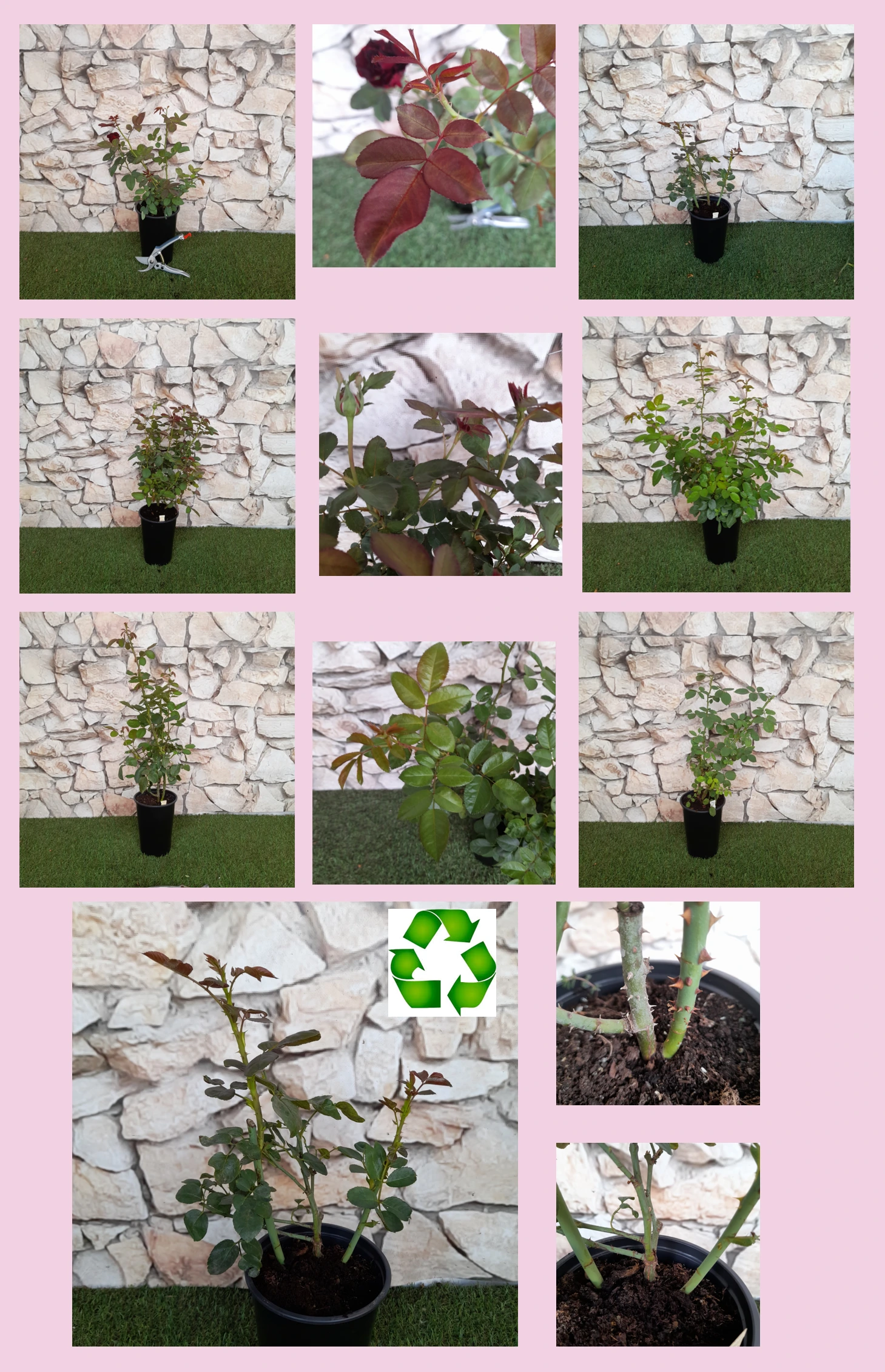
This Delbard-bred climbing rose brings velvety deep-red, high-centred blooms to pergolas, arches and house walls, creating a striking yet manageable feature for typical British family gardens. Its remontant character gives a generous second flush after the first main display, so you can expect repeat colour through the season with relatively simple care. The dense, glossy foliage forms a strong screen, helping to soften fences and structures while remaining tidy and easy to train. As an own-root plant it offers dependable longevity, quietly rebuilding and thickening its framework over the years with minimal fuss. In its first seasons it concentrates on roots, then pushes stronger shoots, reaching full ornamental presence by about the third year. Once established, the firm growth habit provides reliable anchoring even in breezier spots, supporting a long-lived, architectural rose that suits busy gardeners who want drama without complicated regimes.
Usage options
| Target area | Reasoning |
|---|
| Front-garden feature climber on an arch or obelisk |
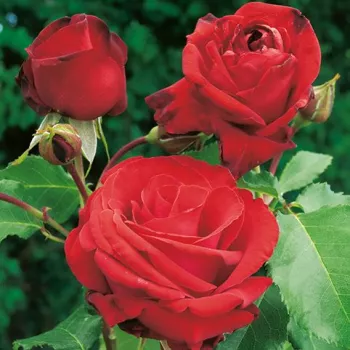
The large, velvety deep-red blooms and pointed buds give a classic cut-rose look in the garden, ideal for framing a path or gate where height is needed without taking much ground space. Best for those who enjoy a strong focal point, especially beginners. |
| Rose up a sunny house wall or garage |
Grandessa’s vigorous yet trainable growth and dense foliage build a leafy, flowering screen that softens brick or render while remaining reasonably easy to tie in and control. Own-root vigour supports long-term structure with modest annual pruning, suiting busy-owners. |
| Pergola or walkway for repeat-flowering colour |
The remontant flowering habit ensures a main flush followed by a plentiful second wave, so a pergola or walkway carries colour for much of summer with simple seasonal feeding and deadheading. Ideal for those wanting lasting impact, including time-poor. |
| Boundary fence or trellis screen in family gardens |
Its height and spreading habit make it effective for vertical screening, while glossy, dark foliage and deep-red blooms create a refined boundary. Own-root plants thicken steadily, giving a stable, durable hedge line that appeals to practical homeowners. |
| Mixed cottage-style border with perennials |
The rich crimson tones pair beautifully with soft pastels and whites, working well with plants like sweet alyssum and obedient plant to achieve an informal cottage look, with the climber providing the vertical accent sought by style-conscious gardeners. |
| Small group planting on a long wall or fence |
Spacing plants along a boundary at the recommended distances creates an even rhythm of flowering pillars that gradually knit together into a continuous display. This simple, repeatable layout is easy to plan and maintain, ideal for starters. |
| Large container by a porch or terrace (40–50 litres+) |
When grown in a sufficiently large container with support, Grandessa offers vertical colour where soil is limited, provided watering and feeding are regular; its own-root nature copes well with careful long-term container culture, suitable for patio-focused urbanites. |
| Coastal or wind-exposed suburban plots |
The sturdy framework, dense leaf cover and reliable anchoring in the soil help it cope with typical British breezes and changeable weather when given well-prepared ground, making it a reassuring choice for slightly challenging sites and cautious newcomers. |
Styling ideas
- Classic-arch – Train Grandessa over a metal or timber arch with white sweet alyssum along the base for a romantic, rose-and-lace entrance – ideal for lovers of traditional front-garden charm.
- Brick-softener – Fan the canes across a warm house wall, underplanted with low mounds of nepeta or hardy geraniums to soften hard surfaces – suited to homeowners wanting refined, easy-care structure.
- Cottage-rhythm – Repeat three plants along a fence, weaving the stems between wires and filling gaps with foxgloves and obedient plant – perfect for those creating a loose cottage border with clear order.
- Pergola-drama – Combine Grandessa on uprights with a pale, scented climber on the opposite posts for contrasting colour and fragrance – attractive for gardeners seeking a showy family seating area.
- Porch-pot – Use one plant in a 50-litre half-barrel with a slim obelisk, surrounded by seasonal bedding, to frame a doorway – a good solution for small urban plots wanting vertical interest.
Technical cultivar profile
| Property | Data |
|---|
| Name and registration |
Grandessa – deep red climbing rose, registered as DELsire; marketed within the Famille Delbard collection, also shown as Messire Delbard in exhibition contexts. |
| Origin and breeding |
Bred by Georges Delbard in France from Danse du Feu × Guinée, with complex pollen parentage; introduced by Delbard in 1978 after registration in 1976. |
| Awards and recognition |
Recognised in major European rose trials with awards at Bagatelle and Geneva in 1976, reflecting garden and exhibition value in its climbing, large-flowered class. |
| Growth and structural characteristics |
Vigorous, creeping climber reaching about 200–330 cm high and 120–200 cm wide, with dense, glossy dark green foliage and notably thorny shoots that anchor securely. |
| Flower morphology |
Large, double blooms with approximately 26–39 petals, high-centred, pointed buds and solitary presentation on stems, giving a cut-rose style suitable for decorative cutting. |
| Colour data and phenology |
Deep, velvety red flowers with darker undertones; colour holds well, then softens to brownish burgundy with a matt finish as blooms age through repeated seasonal flushes. |
| Fragrance and aroma |
Mild but pleasantly perceptible scent, sufficient to notice at close quarters on arches or pergolas without overwhelming nearby seating or small, enclosed garden spaces. |
| Hip characteristics |
Develops moderate numbers of small, bright red spherical hips around 12–18 mm, adding late-season detail where spent flowers are not regularly removed for repeat bloom. |
| Resistance and winter hardiness |
Hardy to approximately −26 to −23 °C (RHS H7), with good black spot resistance and moderate tolerance to powdery mildew and rust under typical garden conditions. |
| Horticultural recommendations |
Best in full sun on a wall, fence or pergola; allow 140–240 cm between plants depending on use, and provide basic pruning, tying-in and occasional plant protection as needed. |
Grandessa Famille Delbard roses DELsire offers velvety deep-red blooms, reliable remontant flowering and long-term own-root resilience; consider it if you seek a striking yet manageable climbing rose for your garden.