GIPSY – red-yellow flowerbed floribunda rose - Suzuki
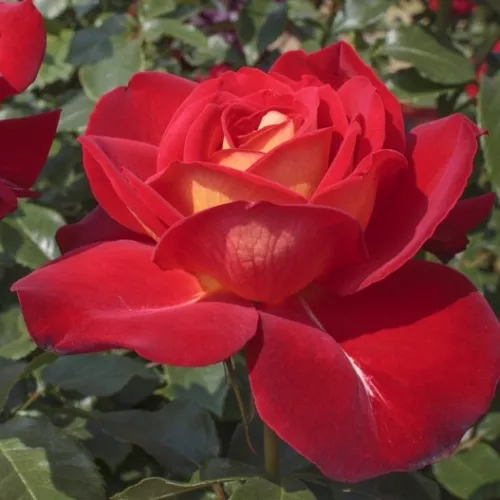
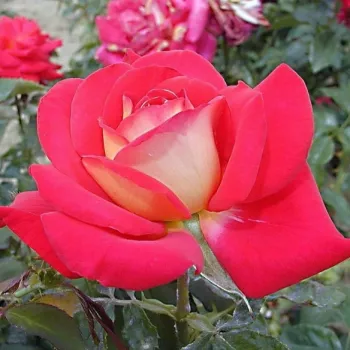
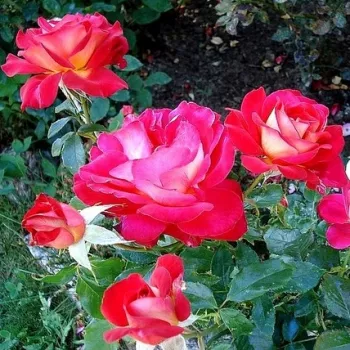
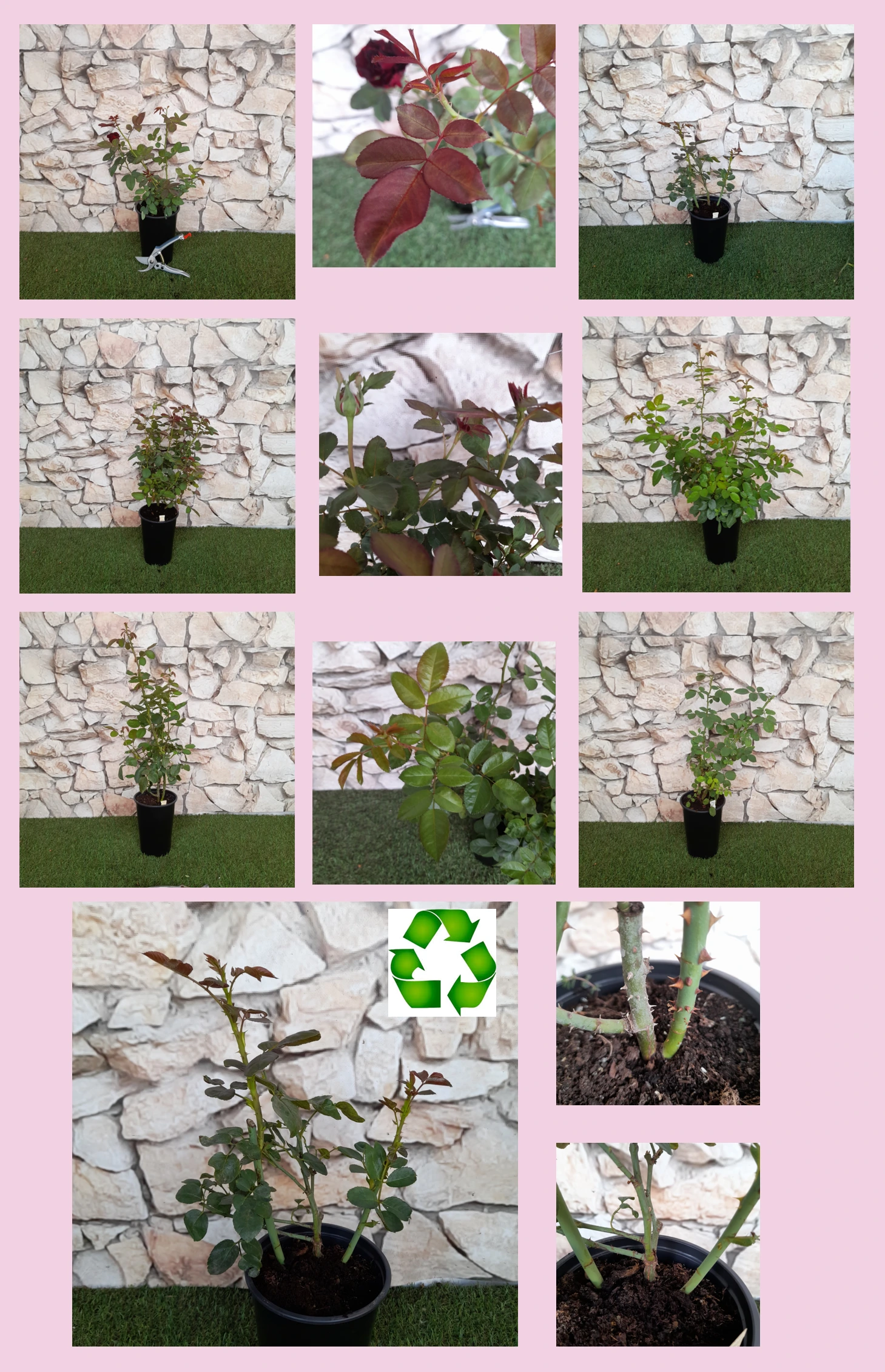
Vibrant clusters of scarlet and golden-yellow blooms make GIPSY (Kiboh) a lively choice for compact British front gardens, while its compact habit keeps beds looking neat with little shaping. This floribunda’s remontant flowering gives generous repeat flushes through the season, so a small group of plants quickly creates a long-lasting display that suits busy gardeners who want colour without fuss. As an own-root rose, it develops a naturally balanced bush that matures steadily for many years, coping well in typical gardens where drainage may be improved with raised beds on heavier soils. Dark, glossy foliage gives a smart, orderly backdrop to the flowers, and the mild, fresh fragrance adds a gentle note you notice up close rather than across the garden. Over time you can expect strong roots in the first year, fuller branching in the second and, by the third, a developed plant delivering stable ornamental value with minimal intervention, suited to family spaces where reliability matters more than complex maintenance.
Usage options
| Target area | Reasoning |
|---|
| Front garden flowerbed by the path |
Compact growth and dense foliage keep this rose neat and contained beside a path, while vivid red and golden-yellow blooms create an immediate welcome from spring to autumn. Spacing at 30–45 cm allows each plant to form a tidy individual mound that is easy to weed and edge, perfect when you want classic rose impact without complex shaping or staking for the beginner. |
| Small mixed border in a family garden |
The reliable, remontant flowering habit gives repeat flushes that thread colour through mixed plantings of perennials and grasses, so the border never looks bare between peaks. With moderate care and routine feeding, it knits into cottage-style schemes and, planted own-root, steadily builds a bush that copes with typical family wear and tear over many years for the homeowner. |
| Low rose hedge along a drive or boundary |
Planted at around 25 cm centres, this variety forms a low, colourful line that defines paths or driveways without dominating the view. The combination of compact height and dense foliage gives a visually solid edging, while repeat flowering ensures ongoing interest that frames the house in a controlled, easy-to-trim strip suited to the time-poor. |
| Feature group of 3–5 roses in a small bed |
A tight group quickly reads as a single, full shrub covered in vivid, bi-coloured blooms, giving you a focal point without needing a large space. The floribunda habit means many medium to large, cupped flowers at once, creating exhibition-style impact in ordinary gardens, ideal for those who value showbench colour but want straightforward care for the enthusiast. |
| Rose bed with formal, tidy character |
The combination of glossy dark-green leaves and measured, compact growth supports a clean, orderly look that works well in rectangular or symmetrically laid-out beds. Regular but uncomplicated pruning maintains shape, and own-root resilience helps plants recover evenly after cutting, delivering a long-lived, harmonious planting rhythm appreciated by the perfectionist. |
| Containers and large pots on patios |
Its compact stature and clustered flowering adapt well to large containers of at least 40–50 litres, where roots can develop fully and support season-long display. In pots, the flower colour shows off beautifully against hard landscaping, and routine watering plus modest feeding are usually enough for dependable performance attractive to the balcony-owner. |
| Bedding schemes in heavier UK soils |
This floribunda suits raised or slightly mounded beds where simple improvements to heavy clay enhance drainage, allowing the own-root system to anchor and spread steadily. Over successive seasons, the bush thickens into a stable framework, maintaining colour and structure even in exposed, changeable weather valued by the coastal-gardener. |
| Cutting patch for informal arrangements |
Long, floribunda-type stems carrying 1–5 large, very full flowers make useful material for casual indoor vases, with the fresh, mild fragrance most noticeable at close quarters. Regular cutting encourages new flowering growth, so a small patch can supply both garden display and simple arrangements through the season for the creative. |
Styling ideas
- Cottage-cluster – Plant 3–5 GIPSY together with Crocosmia and airy grasses for a glowing red-and-gold centrepiece – ideal for romantic cottage-garden lovers.
- Formal-ribbon – Create a low hedge along a path, underplanting with evergreen Ilex crenata balls for structure – suited to fans of crisp, classical lines.
- Patio-showcase – Grow one plant per 50-litre pot with soft trailing herbs around the rim – perfect for balcony and terrace gardeners wanting strong colour in small spaces.
- Warm-bedding – Combine GIPSY in a front bed with Euphorbia ‘Fens Ruby’ for contrasting foliage and a long season – good for those seeking easy, high-impact planting.
- Family-focus – Use a tight group as a focal rose island in lawn, keeping mowing simple while children play around it – great for busy family households.
Technical cultivar profile
| Parameter | Data |
|---|
| Name and registration |
Floribunda bed rose; registered as Kiboh, marketed as GIPSY – red-yellow flowerbed floribunda rose – Suzuki; exhibition floribunda and cut-flower suitability acknowledged. |
| Origin and breeding |
Bred by Seizo Suzuki at Keisei Rose Nursery, Japan, from ‘Liberty Bell’ × ‘Kagayaki’; registered 1985 and introduced 1986 via Meilland International, France. |
| Awards and recognition |
Gold Medals at The Hague and Monza in 1985; Silver Medals at Courtrai (Kortrijk) and Saverne the same year, confirming strong ornamental and bedding performance. |
| Growth and structural characteristics |
Compact, upright bush 70–100 cm high and 35–55 cm wide, with dense, dark green, glossy foliage and moderate prickliness; self-cleaning behaviour not documented in trials. |
| Flower morphology |
Very full, cupped blooms with over 40 petals, XL size from about 3.5 inches; borne in clusters of 1–5 per stem, with remontant habit producing a generous second flush. |
| Colour data and phenology |
Vibrant red upper petals and golden-yellow reverse (ARS RB, RHS 46A/13B); colours soften as blooms age, giving carmine and creamy tones while retaining a predominantly red effect. |
| Fragrance and aroma |
Mild, fresh, lively scent noticeable at close range but not powerful across the garden; dense petalling prioritises visual impact over strong perfume, suiting compact family spaces. |
| Hip characteristics |
Hip set is usually sparse due to very double blooms; where present, hips are small, spherical, orange-red, around 6–10 mm in diameter, adding occasional discreet autumn interest. |
| Resistance and winter hardiness |
Moderate tolerance of powdery mildew, black spot and rust; hardy to around –15 to –12 °C (RHS H6, Swedish Zone 2, USDA 7b) with standard UK winter conditions generally suitable. |
| Horticultural recommendations |
Best in beds at 25–45 cm spacing, 12.8–14.8 plants/m² for mass effect; moderate maintenance with routine feeding and occasional disease control recommended for sustained performance. |
GIPSY (Kiboh) offers compact, long-lived colour with repeat flowering and neat foliage, and as an own-root rose it settles securely for years in ordinary family beds and borders, making it a thoughtful choice for manageable, reliable garden planting.