GESCHWINDS ORDEN – purple-pink historic old garden rose - Geschwind
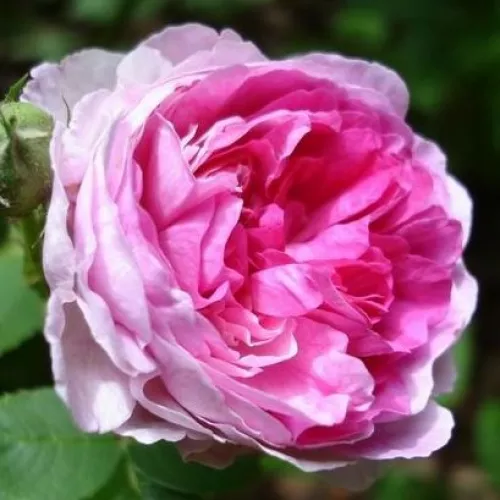
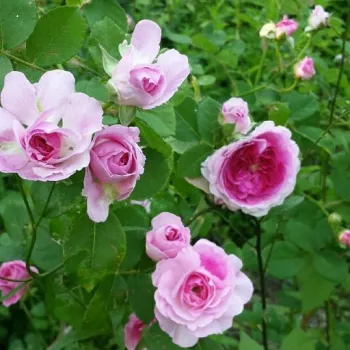
This distinguished heritage climbing rose offers a romantic, once-a-year summer spectacle of richly double, rosette blooms in shifting shades of crimson-pink to lilac, ideal for arches, arbours and classic cottage-style front gardens. With sparsely thorned canes and very hardy growth, it copes reliably even in exposed sites where strong winds and heavy rain can test taller climbers, while its medium maintenance needs remain manageable for time-pressed families. Planted as an own-root, container-grown young plant, it settles in steadily and forms a durable framework that develops year by year into a long-lived, well-anchored structure. The tall, climbing habit lets you make the most of vertical space in smaller plots, covering fences or pergolas with nostalgic colour without demanding complex pruning routines. A non-remontant, once-flowering rose, it repays simple winter pruning and seasonal feeding with one memorable main flush that defines the early summer border. Over time, the dependable woody framework and adaptable root system support a stable display that suits traditional planting schemes, from restrained, architectural lines to looser cottage-garden mixes. Offered in the pharmaROSA® ORIGINAL 2-litre own-root format, it arrives already rooted and ready to establish, making it easier for you to place, plant and enjoy a beautiful historic climber that will reward patient, steady care.
Usage options
| Target area | Reasoning |
|---|
| Arbour or pergola centrepiece |
Ideal for training over an arbour or pergola, this tall, vigorous climber builds a long-lasting woody framework that carries masses of once-a-year blooms, creating a striking focal point without constant fuss, especially suited to the patient romantic gardener homeowner. |
| Fence and boundary softening |
Its 3,5–5,5 m height and good spread allow you to clothe plain fences or boundaries with a traditional, flower-laden screen that matures steadily, giving structure and privacy while demanding only moderate annual pruning for the busy property holder gardener. |
| Vertical accent in small family gardens |
The climbing habit makes excellent use of vertical space, freeing ground for lawns or play areas while still bringing classic rose character at eye level, a practical solution where families want flowers without sacrificing usable ground for the compact-plot owner. |
| Historic or cottage-style mixed border |
The richly double, old-fashioned blooms and changing crimson-pink to lilac tones blend well with perennials and shrubs in a traditional border, giving a once-a-year seasonal highlight with a restrained maintenance burden for the style-conscious cottage-plot enthusiast. |
| Cool-climate and exposed-site planting |
With hardiness rated to approximately –37 °C and a proven capacity to withstand harsh winters, it is a dependable choice for colder UK areas and more exposed gardens where long-term survival and a stable framework are essential for the climate-aware planner. |
| Family-friendly, lightly thorned climber |
Sparsely thorned canes make training, tying-in and occasional pruning less hazardous, a practical advantage near paths or seating areas where children and pets pass close by, easing day-to-day care for the safety-conscious household customer. |
| Easy-care once-flowering feature |
Flowering in one main flush rather than repeatedly, it needs only straightforward winter or post-flowering pruning and basic feeding, keeping tasks predictable and limited across the year for those preferring simple routines and clear seasons in the garden beginner. |
| Long-term own-root investment planting |
As an own-root climber it gradually forms its mature shape in situ, building a resilient, well-anchored plant that can regenerate from the base after damage, providing a durable, value-conscious choice for gardeners wanting reliable structure with moderate input buyer. |
Styling ideas
- Cottage-arch – Train along a wooden arch, underplant with lavender and catmint, to frame a front path in soft purple and pink tones – ideal for lovers of romantic cottage entrances.
- Classic-pergola – Cover a simple pergola and combine with white climbing clematis for layered summer colour – suited to homeowners seeking a traditional seating-area backdrop.
- Wild-hedge – Let it scramble along a rustic fence with daylilies and ornamental grasses at the base – perfect for those wanting a relaxed, naturalistic boundary.
- Formal-panel – Tie onto tensioned wires on a courtyard wall, underplanted with clipped box or low evergreen shrubs – a good choice for neat, structured small gardens.
- Mixed-heritage – Plant with other historic roses and coneflowers in a broad border for a period feel and a strong early-summer highlight – appealing to heritage-rose collectors and traditionalists.
Technical cultivar profile
| Parameter | Data |
|---|
| Name and registration |
Geschwinds Orden, historic Hybrid Multiflora climbing rose from the Heritage rose collection; unregistered cultivar with verified authenticity for garden use under this trade name. |
| Origin and breeding |
Bred by Rudolf Geschwind in Hungary around 1880, introduced by Ketten Frères in 1885; parentage (Rosa rugosa × Rosa multiflora) × Rosa rugosa ‘Alba’, combining species vigour and hardiness. |
| Growth and structural characteristics |
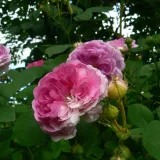
Strong, climbing growth 3,5–5,5 m high, 2,4–3,8 m spread, moderately dense dark green matte foliage, sparsely thorned canes; support required on arches, fences, pergolas or similar structures. |
| Flower morphology |
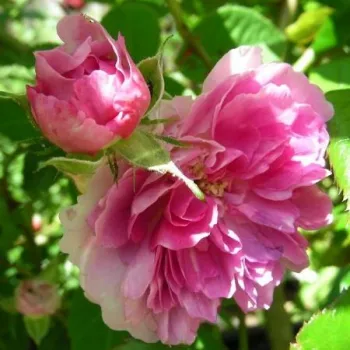
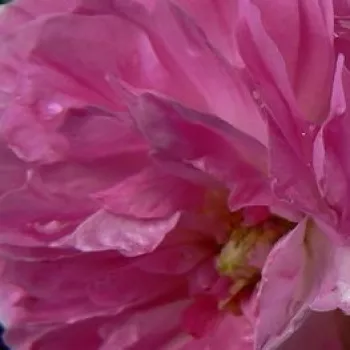
Medium-sized, very double, rosette blooms with more than 40 petals, carried in clusters; non-remontant, producing one main flowering period per season, typical of many traditional once-blooming climbers. |
| Colour data and phenology |
Crimson-pink to purplish lilac flowers; buds dark crimson, opening vivid crimson pink within paler outer petals, then fading to silvery dusty pink with whitish edges, giving a softly variegated, vintage effect in full bloom. |
| Fragrance and aroma |
Fragrance very weak and barely noticeable, grown mainly for its visual and structural impact rather than scent; double blooms also offer limited nectar access, so it is not a primary pollinator plant. |
| Hip characteristics |
Rose-hip formation generally sparse due to the very double flowers; when present, hips are small spherical orange-red fruits, around 10–14 mm in diameter, adding a modest late-season decorative note. |
| Resistance and winter hardiness |
Rated to approximately –37 to –34 °C (RHS H7, Swedish Zone 6, USDA 3b); disease resistance medium to powdery mildew, black spot and rust, benefiting from basic preventative care in humid seasons. |
| Horticultural recommendations |
Best on pergolas, fences or as a solitary climber; plant 1,8–3,3 m apart depending on effect; provide sturdy support, moderate feeding and occasional pest and disease checks for reliable long-term performance. |
GESCHWINDS ORDEN offers a once-a-year display of nostalgic blooms on a hardy, sparsely thorned climber that develops into a durable own-root framework, making it a thoughtful long-term choice for your garden.