GENERAL MACARTHUR™ – deep pink hybrid tea rose – Hill
Classic deep-pink blooms, vigorous growth and reliably healthy foliage make GENERAL MACARTHUR™ a reassuring choice if you want structure and colour in a modest family garden without complicated care routines. This early 20th‑century hybrid tea offers remontant flowering, producing elegant, medium-sized, semi-double flowers on a bushy framework that fits neatly into beds and borders. Its fragrant character is ideal if you enjoy cutting roses for the house, while its own-root form gives a naturally long-lived, regenerating shrub that matures steadily in its final position. With good disease resistance that copes well in typical British humidity and a root system that helps it cope even where improved drainage is needed on heavier soils, you can expect solid garden impact as roots establish, then top growth fills out, before full ornamental value develops over the first three seasons. Once settled, ongoing tasks remain pleasantly manageable and pruning can be kept flexible for busy gardeners.
Usage options
| Target area |
Reasoning |
| Front garden focal bush |
The upright, bushy habit builds a clear vertical accent without taking over a small front garden, while the deep pink colour reads strongly from the pavement. Low maintenance needs and reliable structure give you a well-kept look with modest effort, ideal for the style-conscious beginner. |
| Classic mixed border |
Repeat flowering through the season means this rose carries colour between perennials, helping to bridge gaps when other plants pause. Its semi-double, medium-sized blooms do not overwhelm nearby planting, suiting informal cottage-style mixes and compact borders for the time-poor homeowner. |
| Small cutting patch |
Sturdy stems and strong, lasting scent make this variety very satisfying for cutting, even from just a few plants in a small bed. Regularly harvesting flowers naturally encourages fresh growth and further blooms, giving easy rewards for the enthusiastic but busy gardener. |
| Low-input family rose bed |
Good resistance to black spot, mildew and rust supports dependable flowering without complex spraying routines, so a simple feeding and watering regime is usually enough. This makes it well suited to family gardens where children play and you prefer straightforward, low-intervention planting as a practical choice. |
| Feature rose in lawn or gravel |
Planted as a solitary shrub with generous spacing, the moderately tall, bushy form reads as a small ornamental feature tree, especially when underplanted with low perennials. Its own-root longevity means the structure improves year after year, rewarding the patient owner. |
| Container near seating area |
In a large 40–50 litre container, the compact footprint and strong fragrance bring colour and scent right to a seating area or terrace. Regular watering and feeding are straightforward tasks, so you can enjoy a rose garden atmosphere even in a small urban space as a balcony-friendly solution. |
| Small group planting for impact |
Planting three to five bushes together at the recommended distances creates a rounded, colour-dense block that looks deliberate yet easy to manage. The development from establishing roots, to building top growth, to full display over successive seasons fits well with patient, long-term planning by the thoughtful planner. |
| Resilient border in challenging spots |
This rose’s general toughness and disease resistance make it a good candidate where wind and rain are frequent, provided drainage is improved on heavier ground. Once established, it anchors visually and physically in the border, offering stability for the practically minded gardener. |
Styling ideas
- COTTAGE TRIO – Combine GENERAL MACARTHUR™ with low heucheras and catmint for a soft-edged, cottage look that stays tidy and low care – ideal for relaxed front-garden owners.
- STRUCTURED BED – Use three roses in a triangle, edged with dwarf box or low grasses, to create a formal yet easy-to-manage flower bed – suitable for design-conscious beginners.
- SCENTED SEATING – Place a large-container specimen by a bench, with trailing thyme and lobelia at the base, to enjoy fragrance at close quarters – perfect for small-terrace homeowners.
- COLOUR DRIFT – Mix with white blazing star and soft pink perennials to let the deep pink blooms punctuate a pastel drift – appealing to lovers of gentle, romantic borders.
- PARK-STYLE FEATURE – Set a single shrub in a gravel circle with muted blue caryopteris behind for a simple, long-lived focal point – suited to low-maintenance family gardens.
Technical cultivar profile
| Characteristic |
Data |
| Name and registration |
GENERAL MACARTHUR™ is a hybrid tea rose marketed for garden and cutting use; an unregistered, historically established cultivar with verified authenticity for reliable, true-to-type performance. |
| Origin and breeding |
Bred by Edward Gurney Hill in the United States around 1904, introduced by E. G. Hill Co. in 1905, reflecting early hybrid tea development with classic flower form and garden reliability. |
| Growth and structural characteristics |
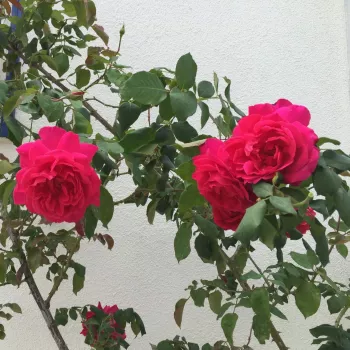
Bushy, upright shrub reaching about 120–160 cm in height and 70–90 cm spread, with moderately dense, slightly glossy mid-green foliage and moderate thorniness for a balanced garden presence. |
| Flower morphology |
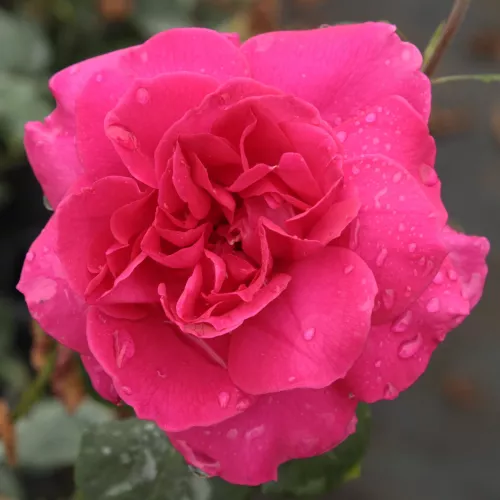
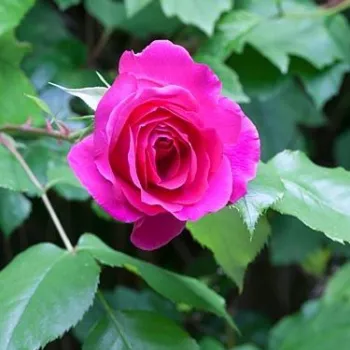
Semi-double, medium-sized (about 4–7 cm) spherical to pompon blooms, usually borne singly on stems, with 13–25 petals and a remontant habit that gives a strong second flush of flowers. |
| Colour data and phenology |
Rich deep carmine-pink flowers, darker at the petal edges; colour lightens slightly to a softer mauve-pink as blooms age, yet overall colour retention is good across the flowering period. |
| Fragrance and aroma |
Marked, strong and long-lasting scent typical of traditional hybrid teas, giving good value both in the garden and as a cut flower where fragrance is a primary selection criterion. |
| Hip characteristics |
Produces spherical orange-red hips in moderate numbers, around 12–16 mm diameter, providing additional late-season interest and modest wildlife value if dead-heading is reduced. |
| Resistance and winter hardiness |
Shows good resistance to key rose diseases such as black spot, powdery mildew and rust; hardy to about -15 to -12 °C (RHS H6), suitable for much of the UK with normal winter care. |
| Horticultural recommendations |
Prefers sunny positions with well-drained soil; spacing from 55–100 cm depending on use, and benefits from regular watering in drought, annual feeding and light pruning to shape and renew. |
GENERAL MACARTHUR™ offers reliable repeat flowering, strong fragrance and long-lived own-root growth in an easy-care hybrid tea form, making it a thoughtful choice if you want a dependable rose to settle into your garden over time.