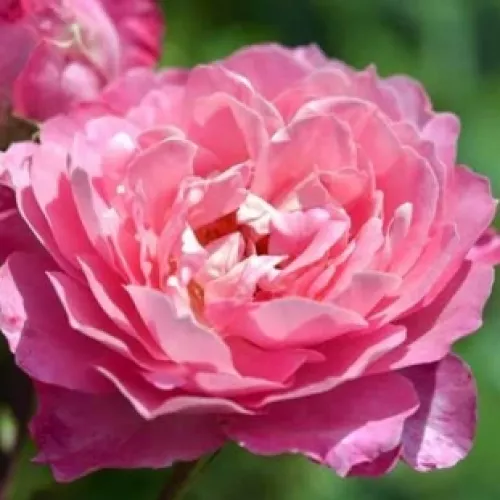
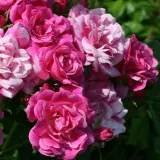
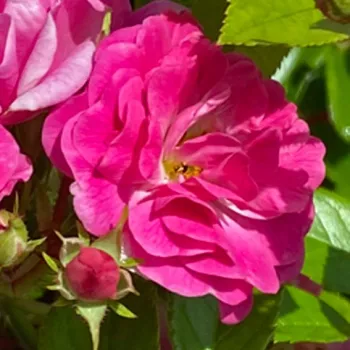
Gallerandaise Bedding rose EVEpoldane – pink bedding polyantha rose
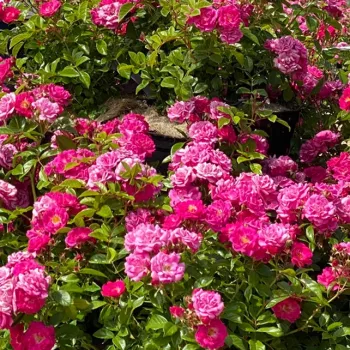
If you would like a compact rose that simply gets on with the job, Gallerandaise offers tidy, low rose borders and edging with very little fuss. Its naturally compact, bushy habit and dense, mid‑green foliage keep it looking neat even between flushes, while clusters of small, cup‑shaped flowers bring a continuous haze of pink across the season. Bred for modern gardens, it combines reliable repeat flowering with disease resistance, ideal where you want colour without constant spraying or complex care. As an own‑root plant it matures steadily for a long‑lived, stable shrub, coping well even where heavy soils need thoughtful drainage after rain. In its first years you will notice roots establishing, then stronger shoots, and by the third season the rose settles into its full ornamental value. Easy to place in small beds, front gardens and entrance plantings, it works particularly well for busy gardeners seeking dependable, low‑maintenance structure.
Usage options
| Target area | Reasoning |
|---|
| Front garden edging |
The compact, bushy habit and modest height make Gallerandaise ideal for defining paths and driveways without overwhelming the space, creating a tidy pink edging that is easy to keep in shape – a reassuring choice for the time‑pressed beginner. |
| Small mixed bed in a family garden |
Its mid‑green foliage and soft, mid‑pink clusters sit comfortably with cottage‑style perennials, providing a repeat‑flowering backbone that looks full even in smaller beds and works well where you want a relaxed but orderly look – perfect for design‑conscious homeowners. |
| Low-maintenance rose and shrub border |
Good overall disease resistance and modest care needs mean this variety will hold its own in a mixed shrub border, keeping a structured line of colour with little more than an annual prune and basic feeding – well suited to busy urban gardeners. |
| Entrance and around-the-house planting |
The neat growth and reliable flowering make it ideal by front doors or windows, where you want a welcoming, orderly impression without regular deadheading; it stays compact, so it will not block light or views – a practical fit for family‑home gardens. |
| Small groups for continuous colour |
Planted in groups of three to five at the recommended spacing, the plants knit together into a low, pink carpet that flowers repeatedly through the season, giving good impact from a modest footprint – attractive for compact‑plot owners. |
| Raised beds or improved clay soil sites |
Its own‑root form establishes a stable, well‑anchored shrub that adapts gradually to local soil conditions; in raised beds or improved heavy clay it builds a durable framework and copes well where persistent rain makes good drainage important – reassuring for UK front‑garden users. |
| Large containers on patios and terraces |
In a 40–50 litre or larger container the compact proportions remain well balanced, giving a rounded, flowering mound that is easy to water and feed; it brings structured colour close to seating areas without demanding complex pruning – ideal for balcony and patio owners. |
| Long-term, low formal edging |
The combination of compact stature, repeat flowering and own‑root longevity makes it suitable for low, semi‑formal edging that you expect to keep for many years, requiring only light annual trimming to maintain a level line – appealing to long‑view garden planners. |
Styling ideas
- Cottage-edge – Line a front path with Gallerandaise interplanted with soft Campanula persicifolia for a pink and blue cottage look – suited to lovers of traditional front gardens.
- Compact-carpet – Use tight groups at 30 cm spacing to create a low pink carpet at the front of a mixed border – ideal for those wanting strong colour from limited space.
- Entrance-duo – Plant two large containers of Gallerandaise by the front door for a neat, welcoming display that stays in scale with steps and porches – good for busy homeowners.
- Perennial-partner – Combine with airy Gaura lindheimeri and Echinacea purpurea to contrast fine textures and stronger stems against the compact rose mounds – attractive to design‑minded beginners.
- Family-border – Run a low line of Gallerandaise along a lawn edge for a clear boundary that children can see and avoid, while adults enjoy easy‑care structure – practical for family gardens.
Technical cultivar profile
| Parameter | Data |
|---|
| Name and registration |
Polyantha bedding rose registered as EVEpoldane, marketed as Gallerandaise Bedding rose EVEpoldane; compact front‑border bush rose from the pharmaROSA ORIGINAL 2‑litre own‑root range. |
| Origin and breeding |
Bred in France by Jérôme Rateau (2013) for Pépinières et Roseraies André Eve; introduced and registered in 2022, reflecting contemporary breeding for compact habit and dependable garden performance. |
| Growth and structural characteristics |
Compact, bushy shrub 30–50 cm high and 35–55 cm wide, moderately thorny, with dense, slightly glossy mid‑green foliage forming a low, rounded mound suited to edging and small beds. |
| Flower morphology |
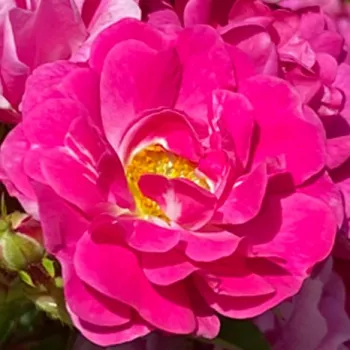
Semi‑double, cup‑shaped blooms with 13–25 petals, produced in clusters of small flowers (approximately 0.5–1.5 inches), repeating well with a notably abundant second flush in season. |
| Colour data and phenology |
Vibrant mid‑pink flowers; dark buds open to glossy mid‑pink then soften to pastel pink with lighter edges, showing moderate fading yet maintaining overall pink effect through successive flowering flushes. |
| Fragrance and aroma |
No noticeable scent; classified as an unscented rose, with semi‑double flowers that offer partial, though limited, appeal to pollinators due to reduced access to stamens. |
| Hip characteristics |
Hip set generally poor because of semi‑double to double flower form; where present, small spherical orange‑red hips about 5–9 mm in diameter contribute modest late‑season interest. |
| Resistance and winter hardiness |
Rated H7 with approximate hardiness between −21 and −18 °C (USDA 6b, Swedish Zone 3); shows good resistance to powdery mildew, black spot and rust under standard garden conditions. |
| Horticultural recommendations |
Best in sunny positions for bed, border, container or entrance use; low maintenance with little intervention needed, plant 25–45 cm apart depending on hedging, mass planting or specimen effect. |
Gallerandaise Bedding rose EVEpoldane offers compact structure, repeat pink flowering and reliable disease resistance on a long‑lived own‑root plant, making it a thoughtful choice if you prefer roses that quietly earn their place.