Gaard um Titzebierg – lilac-pink park shrub rose (VELverd)
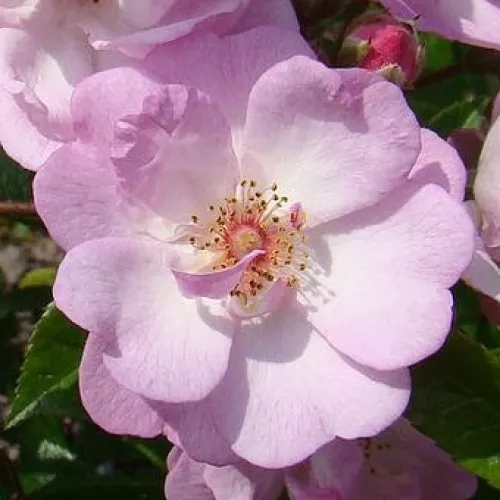
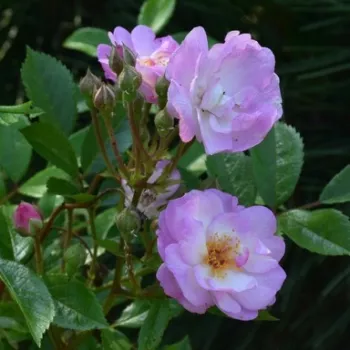
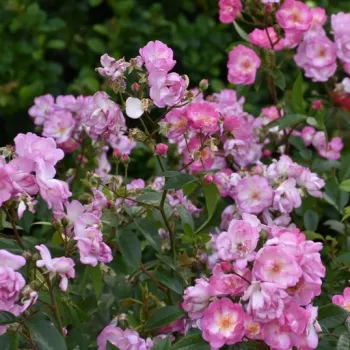
Effortless charm meets enduring structure in Gaard um Titzebierg, a refined lilac‑pink park shrub rose that settles steadily into the family garden and copes well with typical British conditions, even where drainage-improved heavy clay and brisk winds need consideration. Its upright habit builds a well‑proportioned shrub of around 1,5 m, giving reliable height for borders and boundaries without overwhelming a smaller plot. Clusters of semi‑double blooms appear in soft lilac‑rose shades, remontant from early summer into autumn, then handing over the display to plentiful orange hips that draw in birds and seasonal interest. Lightly musky fragrance and accessible stamens make it a gentle presence for people and pollinators alike, while the own‑root form promises longevity and recovery after pruning or harsher winters. With only moderate maintenance needs and adaptable planting options from beds to large containers of at least 40–50 litres, it is a reassuringly dependable choice for busy gardeners who want a rose that simply fits in and improves year by year as roots deepen, top growth strengthens, and the full ornamental effect comes through by the third season. This moderately thorned, gracefully branching shrub offers a quietly elegant way to echo classic cottage and front‑garden planting in contemporary plots, and its partially pollinator‑friendly, bird‑feeding character adds a subtle wildlife dimension without complicating everyday care.
Usage options
| Target area |
Reasoning |
| Front garden focal shrub |
Planted near the entrance or beside a path, the upright habit and lilac‑pink clusters create a welcoming, elegant presence without demanding constant shaping. Moderate maintenance needs suit busy households wanting reliable structure and colour with simple annual pruning – ideal for the beginner. |
| Mixed cottage border |
In a traditional border with perennials and grasses, the remontant flowering keeps soft colour weaving through the display after early perennials are over. Its repeat flushes pair well with catmint, daisies, or low sedums, avoiding gaps and giving long visual interest – perfect for the stylist. |
| Low, informal hedge |
Spacing plants at about 90–100 cm forms a loose, upright line that marks boundaries without feeling harsh or formal. Moderate disease resistance and own‑root resilience help the hedge recover evenly after trimming, keeping a consistent look over many seasons – reassuring for the planner. |
| Wildlife‑friendly family corner |
The semi‑double flowers allow bees access to pollen, while the autumn hips provide food and cover for birds. This softens fence lines or play‑area edges with a living backdrop that supports nature yet remains easy to look after – appealing to the nature‑lover. |
| Large patio container (40–50 L+) |
In a generous container of at least 40–50 litres with good drainage, it offers height and colour close to seating areas without taking over the terrace. Own‑root growth adapts to the pot over time, giving a durable planting that responds well to basic watering and feeding – convenient for the urbanite. |
| Around-the-house ornamental strip |
Ideal along sunny house walls or fence lines, where its upright habit and moderate spread fit narrow borders. It copes reliably in typical British gardens, even where drainage‑improved heavier clay and wind exposure are factors, building structure with minimal intervention – suitable for the homeowner. |
| Feature in small group planting |
Groups of 3–5 plants at recommended distances form a soft, cloud‑like mass of lilac‑pink blossom, giving impact from a modest footprint. Over three seasons roots establish, top growth fills out, and the display becomes steadily more impressive with little extra effort – motivating for the improver. |
| Cut stems for informal arrangements |
The airy clusters and pastel tones suit relaxed jugs or cottage‑style vases, especially when cut in mixed bunches with daisies or catmint. Regular picking encourages further flowering, linking indoor and outdoor decoration without needing complex floristry skills – inspiring for the creative. |
Styling ideas
- Cottage Cluster – Plant 3 shrubs in a loose triangle with Erigeron and low catmint at their feet for a soft, billowing cottage border – for nostalgic front‑garden enthusiasts.
- Pastel Screen – Create an informal hedge under windows, spacing evenly and underplanting with goldmoss stonecrop to hide bare soil – for homeowners wanting gentle privacy.
- Wildlife Ribbon – Run a curved line of shrubs along a fence, leaving space for grasses and pollinator perennials between clumps – for families encouraging birds and bees.
- Patio Anchor – Use a single plant in a 50‑litre terracotta pot as a vertical accent beside seating, softened with trailing herbs at the rim – for urban balcony and terrace users.
- Entryway Pair – Flank a path or gate with two well‑spaced shrubs, combining them with lavender for scent and definition – for those seeking a simple, welcoming approach.
Technical cultivar profile
| Parameter |
Data |
| Name and registration |
Gaard um Titzebierg – park shrub rose, Hybrid Musk group; registered as VELverd, ARS exhibition name Gaard um Titzebierg, referencing a private garden in Calmus, Luxembourg. |
| Origin and breeding |
Bred by Ann Velle Boudolf at Lens Roses, Belgium, from Hybrid Musk and Rosa × moschata lines; introduced and registered in 2005, distributed originally by Lens Roses and Pépinières Louis Lens. |
| Growth and structural characteristics |
Upright shrub reaching approximately 120–170 cm in height and 80–130 cm in spread, with moderately dense, mid‑green, slightly glossy foliage and relatively sparse prickles along the canes. |
| Flower morphology |
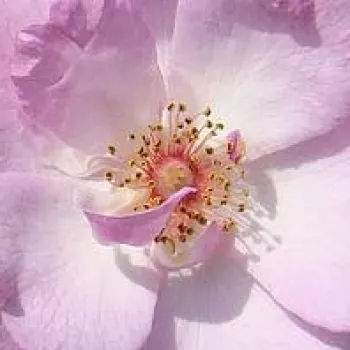
Semi‑double, cup‑shaped clusters of small flowers (about 0.5–1.5 inches), carrying roughly 13–25 petals per bloom, remontant through the season with a particularly abundant second flush of flowers. |
| Colour data and phenology |
Pale lilac‑rose‑pink overall, opening from purplish‑pink buds; flowers lighten towards a silvery pink with an almost white centre, showing very good colour retention across the blooming period. |
| Fragrance and aroma |
Mild yet distinct honeyed, musky fragrance, more noticeable in still, warm weather and at close range; lends a gentle scent to paths and seating areas without becoming overpowering nearby. |
| Hip characteristics |
Produces numerous small, spherical hips in autumn, around 6–9 mm in diameter; hips are orange, add seasonal colour to the shrub, and provide an additional food source and interest for birds. |
| Resistance and winter hardiness |
Moderate resistance to common rose diseases including powdery mildew, black spot, and rust; reliably hardy to around –18 to –21 °C, corresponding to RHS H7 and roughly USDA Zone 6b, Swedish Zone 3. |
| Horticultural recommendations |
Best in sunny positions with well‑drained soil; suitable as a solitary shrub, in groups, borders, hedging, or large containers, with planting distances of about 90–180 cm depending on the intended effect. |
Gaard um Titzebierg combines dependable remontant flowering, an upright shrub form and wildlife‑friendly hips with the long‑lived stability of an own‑root plant, making it a thoughtful, low‑effort choice for many British gardens.