Botanical rose

40-128-1
40-128-2

Frühlingsduft

Botanical rose

- – Wilhelm J. H. Kordes II.

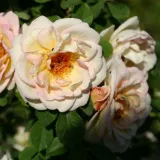
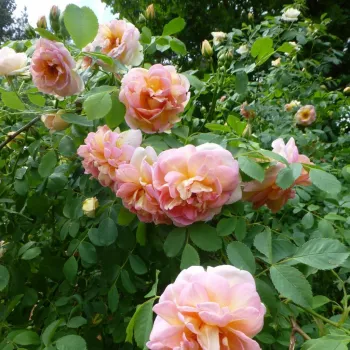
Pale creamy-yellow base with a delicate pink hue and a buttery-yellow tone at the centre. - wild rose - very strong, room-filling scented rose - classic, rosy character

– Very strong, room-filling fragrance.
– Spectacular creamy-yellow to pink-tinted blooms.
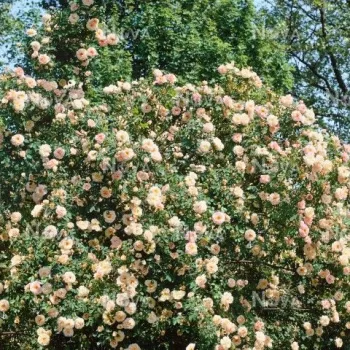
– Tall, arching shrub for hedges and walls.
– Good heat and drought tolerance outdoors.
– Hardy to around –29 °C, reliable garden rose.
Special feature: Once-a-year spring display with masses of scented clusters.
Breathable garden concept – Reduced chemical use
Frühlingsduft
pharmaROSA® ORIGINAL 2-litre own-root potted rose
22,90 £
Unfortunately, we are currently unable to ship to the United Kingdom; we only deliver to countries within the European Union. For more information, please contact us!
3 (3224)
facebook   twitter

FRÜHLINGSDUFT – cream-yellow wild rose – Kordes

This classic botanical shrub rose brings a sweeping sense of springtime into family gardens, combining elegant, arching growth with a once-a-year flush of abundant, fragrant bloom. Its creamy colour shifts from pale lemon buds to near-white petals edged in delicate pink, set around a soft butter-yellow centre, creating a gentle cottage-garden mood around paths, walls and boundaries. The very strong, room-filling fragrance can drift through open windows on mild evenings, offering the “spring fragrance” that inspired its name. As a tall, bushy, own-root shrub it develops a durable framework that ages gracefully, ideal where you want long-term structure with relatively simple seasonal care suited to typical British conditions with heavier soils and cool, damp spells. Once planted in a suitable spot with reasonable drainage, it concentrates first on rooting, then on building strong shoots, before showing its full ornamental effect in its third season. With good heat and frost hardiness and moderate disease resilience, it fits well into relaxed, lower-input front gardens, and its strong architectural presence makes it a natural choice for hedges, pergolas or as a standout specimen.


Usage options

Target areaReasoning
Feature shrub in a front garden bed Ideal where you want one impressive shrub anchoring a small to medium front bed, its tall arching habit and dense foliage giving structure all year and a single, spectacular spring display; suits homeowners seeking classic impact with limited ongoing intervention for beginners
Cottage-style mixed border Blends naturally with perennials like peonies, lady’s mantle and feverfew, the soft cream-yellow and pinkish tones harmonising with pastel schemes and traditional cottage planting while its once-a-year mass flowering adds a seasonal highlight; well suited to style-conscious gardeners
Informal flowering hedge Its bushy, densely thorned structure and generous height lend themselves to loose hedging along boundaries, offering privacy, seasonal blossom and a breathable, lower-chemistry garden concept through moderate disease resistance and own-root resilience; ideal for wildlife-minded households
Pergola or archway support Can be guided over a pergola or arch where its arching stems and large, fragrant clusters create a romantic walkway in late spring, making the most of its very strong scent and generous flower size without demanding complex pruning; appealing to time-poor owners
Wall-trained shrub near seating areas Works well trained against a sunny or lightly shaded wall, where reflected warmth enhances scent and height allows flowers to sit near nose level, creating a seasonal “fragrance panel” with manageable pruning and tidy self-cleaning; ideal for scent-focused enthusiasts
Focal point in a park-style back garden Placed as a specimen in lawn or at a border junction, it forms a robust, long-lived framework that copes with British heat and winter cold, and with sensible drainage manages heavier soils and wetter spells, maturing into a stable, low-fuss centrepiece for relaxed families
Partial-shade side garden or passage Tolerates partial shade, so suits side gardens, passages and less prominent corners where many roses struggle, still giving good height, foliage presence and spring bloom provided it receives some daily light; a reassuring option for space-limited urban residents
Low-input, naturalistic planting Its botanical character and moderate disease resistance suit lower-input schemes with reduced chemical use, where own-root durability and a once-a-year mass flush fit a simple care routine of basic feeding, occasional pruning and spot checks for issues; ideal for eco-aware starters

Styling ideas

  • Cottage Focus – Place FRÜHLINGSDUFT near the centre of a cottage border, underplant with lady’s mantle and catmint to soften its base and echo its creamy tones – for romantic front-garden creators
  • Fragrant Corner – Train it beside a bench or terrace, paired with fragrant herbaceous peonies and lavender to create layered scent in late spring – for evening-relaxation seekers
  • Soft Hedge – Plant a loose row along a front boundary, interspersed with hawthorn or crab apples for seasonal interest and a breathable, lower-input screen – for privacy-conscious households
  • Pastel Pergola – Guide its arching stems over a timber arch and combine with pale clematis for a two-layer pastel tunnel that peaks in late spring – for structure-loving romantics
  • Naturalistic Drift – Use small groups in a meadow-style lawn edge with ornamental grasses and airy perennials, letting its once-a-year flush mark the start of summer – for informal-landscape admirers

Technical cultivar profile
ParameterData
Name and registration FRÜHLINGSDUFT (also Fruhlingsduft); botanical shrub rose of the Hybrid Spinosissima group, marketed as a wild rose type; unregistered as a formal cultivar but long established in gardens.
Origin and breeding Bred by Wilhelm J. H. Kordes II in Germany in 1949 from ‘Joanna Hill’ × Rosa pimpinellifolia L; introduced by W. Kordes’ Söhne as a robust, fragrant shrub for garden and landscape use.
Growth and structural characteristics Vigorous, bushy, arching shrub typically 176–275 cm tall and 128–200 cm wide, with dense, mid-green matte foliage and strong prickliness; forms a substantial framework suited to hedging, training and specimen use.
Flower morphology Large, double, flat flowers with 26–39 petals, borne in clusters; classified as non-remontant, delivering a single main flowering period, with moderate self-cleaning so some deadheading may be desirable for tidiness.
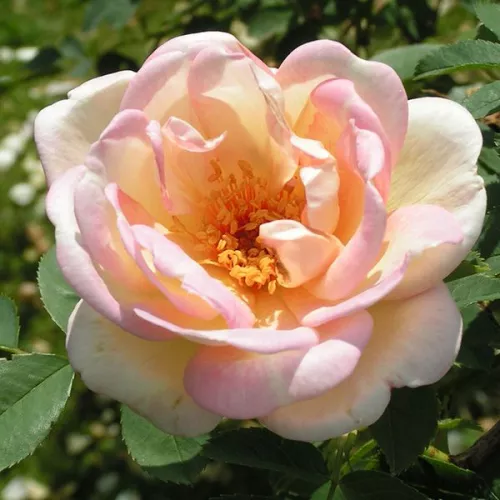
Colour data and phenology Flowers open pale creamy yellow with a buttery centre, then lighten to cream-white with a delicate pink edge; colour holds reasonably before fading to near white; bud and bloom changes add visual depth during the spring flush.
Fragrance and aroma Very strong, room-filling perfume with a classic rosy character; scent is most noticeable in still, mild weather and is a key ornamental feature, making it excellent near paths, terraces, doors and open windows.
Hip characteristics Rose hip production is limited; occasional small spherical green hips of 9–15 mm may appear but generally do not ripen, so hips are not a significant decorative or wildlife feature of this cultivar.
Resistance and winter hardiness Hardy to around −29 to −26 °C (RHS H7, USDA 5a), with good heat tolerance if drought stress is managed; shows moderate resistance to powdery mildew and black spot and good rust resistance under typical garden conditions.
Horticultural recommendations Suited to specimens, hedges, pergolas, walls and park-style plantings; prefers sun to light shade and reasonable drainage; allow space according to its mature height and width, pruning mainly to shape and renew older wood.

FRÜHLINGSDUFT offers towering spring bloom, powerful fragrance and long-lived structure on a dependable own-root shrub, making it a thoughtful choice for gardeners seeking lasting impact with measured effort.
Detailed product attributes

Product Identification Data

Product Name: FRÜHLINGSDUFT – cream-yellow wild rose - Kordes
Product Type: pharmaROSA® ORIGINAL - 2-litre own-root potted rose
Cultivar Authenticity: Verified:23.06.2025
Cultivar Quality Rating: premium silver
Item Number: [1132] 40-128 (14.02.2026) pharmarosa.co.uk

Name and Registration

Meaning of Cultivar Name: The term "Spring fragrance" refers to the scent of spring.
Cultivar Synonym: Spring Fragrance
Original Trade Name: Frühlingsduft
Current Trade Name: Frühlingsduft Botanical rose Kordes
Rose Group: Wild, Hybrid Spinosissima, Shrub
Commercial Type: wild rose
Commercial Group: Botanical rose
Exhibition Category: shrub rose
Collection: Botanical rose

Origin and Breeding

Initial Distributor: W. Kordes' Söhne (Germany)
Registration Year: unregistered variety
Breeder: Wilhelm J. H. Kordes II.
Breeding Company / Institution: W. Kordes’ Söhne
Breeding Year: Germany, 1949
Parentage: 'Joanna Hill' × Rosa pimpinellifolia L

Growth and Structural Characteristics

Height: 5.8-9ft (176-275 cm)
Spread: 4.2-6.6ft (128-200 cm)
Growth Habit: bushy, arching
Foliage: The variety's foliage is dense; the leaves have a matt surface and a mid-green shade.
Prickliness: densely thorned
Self-Cleaning Description: Some spent blooms fall off naturally and may sometimes require additional cleaning.
Self-Cleaning Intensity: Self-cleaning: moderate.

Flower Morphology

Petal Count: 26-39
Flower Fullness: double-flowered
Flower Shape: flat
Flower Size: L (2,75-3,95 in)
Inflorescence Type: cluster-flowered
Colour Code: ARS code: PB RHS code: 155D, 11C
Repeat Flowering: Non-remontant; blooms once.

Colour Data and Phenology

Colour: cream-yellow
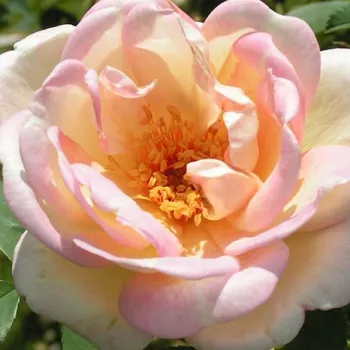
Flower Colour Description: Pale creamy-yellow base with a delicate pink hue and a buttery-yellow tone at the centre.
Closed Bud: Pale lemon-yellow with a slight pink flush on the outer petal edges.
Newly Opened Flower: The outer petals are cream-yellow to white, with a more vivid buttery yellow in the centre and a faint pink flush at the edges.
Full Bloom: The base colour is cream white with a pale pink edge, and the centre remains a light butter-yellow.
Before Fading: It fades almost to white, leaving a delicate pink tint at the petal edges.
Colour Fading Description: During opening it lightens markedly: the creamy-yellow tone fades to cream‑white, then almost white, with a delicate pink edge and a pale butter-yellow centre.

Fragrance and Aroma

Fragrance Strength: very strong, room-filling scented rose
Fragrance Character: classic, rosy character
Pollinator Attraction: Double (full) flowers moderately attract pollinators because the full flower form and reduced accessibility of the stamens limit their ability to reach nectar and pollen.
Pollinator-Friendly Rating: Double-flowered, therefore at most partially pollinator-friendly; its somewhat more open flower structure moderately attracts bees.

Hip Characteristics

Hip Shape: spherical
Hip Colour: green (usually does not ripen)
Hip Comment: Rose hip formation is not typical; occasionally a spherical green rose hip 9–15 mm in diameter may appear.

Resistance and Hardiness

Hardiness (°C): -29–-26 °C
Heat and Drought Tolerance Description: Tolerates heat well; in prolonged drought it requires supplementary watering.
Disease Resistance: moderate
  • powdery mildew – moderate
  • black spot – moderate
  • rust – resistant

Horticultural Recommendations

Recommended Planting Distance: for mass planting 140 cm, for hedging 130 cm, as a specimen 210 cm
Planting Density: square planting 0,5 plants/m², hexagonal arrangement 0,6 plants/m²
Partial Shade Tolerance: suitable for partial shade
Maintenance Requirement: Maintenance requirement medium; occasionally requires plant protection.
Primary Uses: specimen, park, pergola, wall-trained, hedge

Comments

Strengths: Breathable garden concept – Reduced chemical use
Companion Plants: Paeonia lactiflora - fragrant herbaceous peony
Alchemilla mollis - lady's mantle
Tanacetum parthenium - feverfew
Comment: -
FRÜHLINGSDUFT – cream-yellow wild rose - Kordes
Pale creamy-yellow base with a delicate pink hue and a buttery-yellow tone at the centre. - wild rose - very strong, room-filling scented rose - classic, rosy character
Online rose order - cream-yellow - wild rose - Frühlingsduft - (5.8-9ft (176-275 cm))
Inflorescence: cluster-flowered Height: 5.8-9ft (176-275 cm) Flower shape: flat Winter hardiness: 6b cream-yellow - W. Kordes' Söhne (Germany) wild rose - Flower size: XL (3,5 in -) Flower size: XL (3,5 in -) - Height: 5.8-9ft (176-275 cm) Height: 5.8-9ft (176-275 cm) - Flower fullness: double-flowered Frühlingsduft - Roses in the garden | pharmaROSA® Original - premium silver Wilhelm J. H. Kordes II.

We showcase the external appearance of the roses available for online purchase from our webshop.


Which product type is right for you?


Information

In what condition do we dispatch the rose from our online webshop?

Let us ask ourselves the question: What would I like to use the rose for?
Flower? – Location? – Screening? – Fragrance? – Height? – Breeder? – Rose hip?

Rose purchasing information
Methods of payment – Delivery charges – Delivery – Complaints handling

Care guide

Our product is a rose grown with pharmaROSA®’s unique cultivation technology!

2-litre, own-root, potted rose.
With a shoot system appropriate to the season.
With a root system that thoroughly permeates the growing medium.
Quality compliant with the requirements of the E.N.A. (European Nurserystock Association).
Supplied in unique packaging that prevents damage.
Can be planted during frost-free periods.
True-to-variety rose bush with a unique identifier.

The pharmaROSA® own-root potted rose is a well-rooted plant that supports reliable establishment when planted and cared for properly, so it can be planted whenever the soil is not frozen.


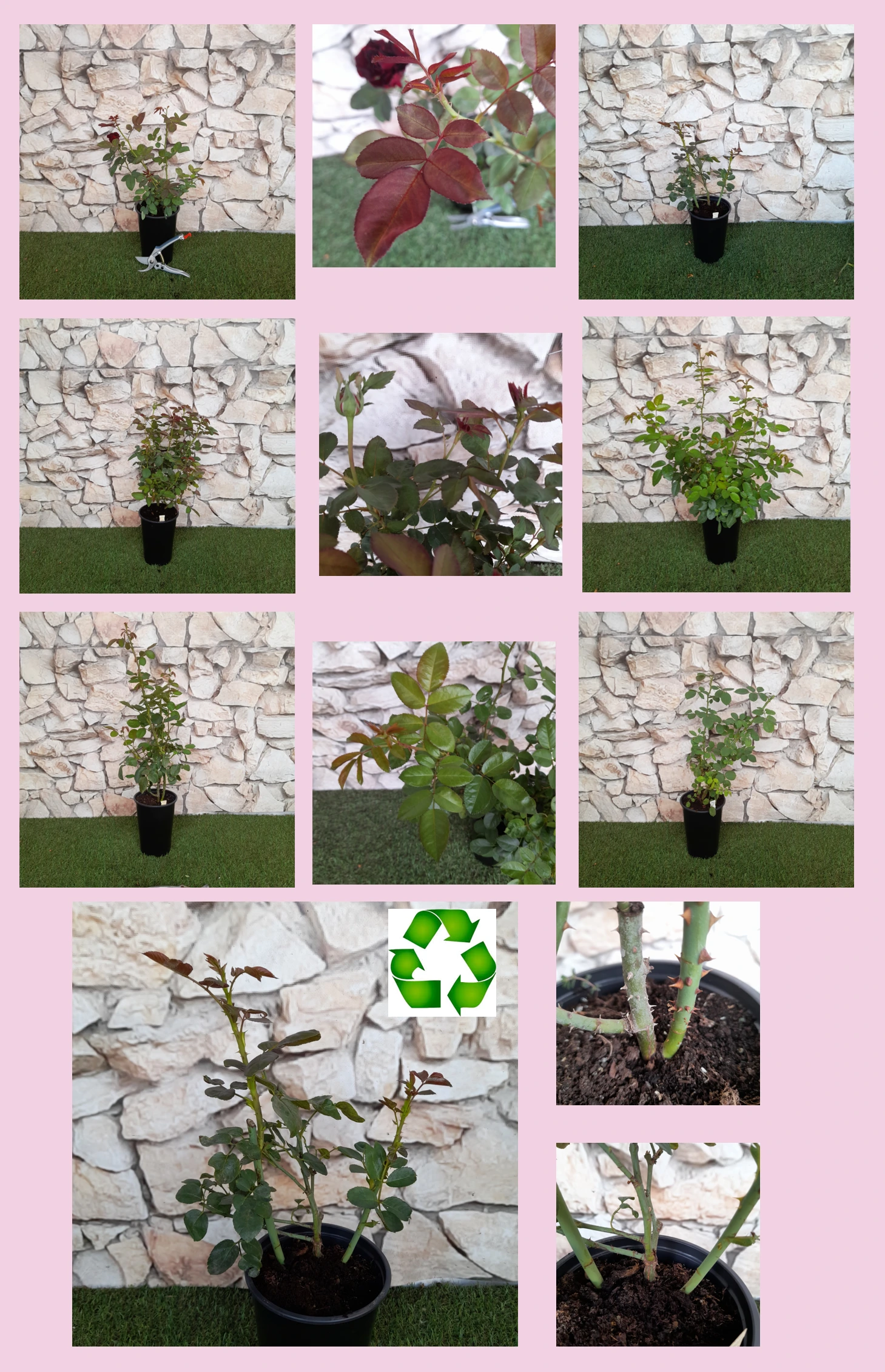
Crop overview: several varieties and growth stages in a short crop section.
Shoot system: intensive growth of fresh basal shoots on a young plant.

Root system: demonstration of a vigorous root system permeating the growing medium, by removing the pot.

Balance: mature plant with root system and shoots in harmony with each other.

Information about the videos
The video series is not a “seasonal showcase”; it illustrates the essence of pharmaROSA® own-root cultivation in a tangible way: how the plant is built up, what the root system is like and how the shoot system regenerates. The recordings were therefore made at different times and with plants at various stages of development, so mixed foliage levels and differing stages of growth may appear in the videos. They are not a ‘sample’ of the batch dispatched, but a visual explanation of how the technology works. The current condition of the rose available to order — typical for the given period and similar to what you can expect to receive in the parcel — is shown in the upper part of the product page.

pharmarosa.ptpharmarosa.hupharmarosa.dkdenisarose.frfrancescarose.itcharlotterose.bekimrose.nlpharmarosa.skpharmarosa.atpharmarosa.co.ukpharmarosa.czpharmarosa.depharmarosa.ropharmarosa.sipharmarosa.hrpharmarosa.grpharmarosa.iepharmarosa.espharmarosa.plpharmarosa.lupharmarosa.bgpharmarosa.ltpharmarosa.sepharmarosa.lvpharmarosa.eepharmarosa.fipharmarosa.ru

Product types

Pages for private customers
Garden roses for the family garden, with minimal care  → ORIGINAL®
Premium garden roses – instant impact, a truly showpiece garden  → EXTRA®
Pages for professionals and private customers
Roses for public spaces – large areas, sustainable maintenance  → NATURAL®
Roses for projects – hedge and row planting, fast implementation  → RAPID®
For professional partners only
Production – propagation material for garden roses, wholesale  → NEONATAL®

Company details

PharmaRosa Ltd.
Company registration number: 01-09-717479
VAT number: 13075314-2-43
Plant health registration no.: HU130721
Bank account (IBAN):
HU85117631891388688400000000
BIC (SWIFT): OTPVHUHB
Bank name: OTP Bank Nyrt.