Pure snow-white base colour with a delicate, warm creamy touch at the centre of the bloom. - hybrid tea rose - strongly scented, long-lasting rose - tea, classic tea-rose scent
– Pure snow-white blooms with creamy heart.
– Strong, long-lasting classic tea-rose fragrance.
– Upright, elegant habit ideal for cut flowers.
– Very double, ball-shaped flowers in good flushes.
– Excellent resistance to mildew, black spot, rust.
– Special feature: Opalescent petals age to powder-white, creating a soft, musical harmony in the border.
Personal taste – Harmony with the surroundings
pharmaROSA® ORIGINAL 2-litre own-root potted rose
18,70 £
Unfortunately, we are currently unable to ship to the United Kingdom; we only deliver to countries within the European Union. For more information, please contact us!
4.5(6943)
SHIRABE – white tea-hybrid rose – Kunieda
This elegant hybrid tea brings melody and harmony into small British gardens, combining snow-white, ball-shaped blooms with a refined, long-lasting tea fragrance that suits classic front-garden and cottage-style settings. Bred in Japan for reliable performance, it offers remontant flowering on an upright, moderately dense bush, giving a clean, vertical accent that sits neatly among perennials and low shrubs. Its very double flowers are ideal for cut use indoors, while in the border they keep their purity of colour as they mature from ivory-cream to opalescent powder white. Disease resistance is strong enough for typical UK conditions, even in more humid summers, and with sensible watering it copes well with breezier, exposed gardens where showers and wind are frequent. As an own-root plant it builds a stable framework over the years, rewarding patient gardeners as roots establish, shoots strengthen and full ornamental value unfolds by about the third season. Low routine care, dependable bloom and adaptable character make SHIRABE a reassuring choice when you want a rose that simply fits into family life.
Shirabe in freshly opened bloom, with ivory petals and a soft creamy centre.
Shirabe shows a very double, full white bloom with a well-filled centre.
Shirabe closed bud with pale creamy-white petal tips beneath greenish-white sepals.
Shirabe hybrid tea rose in full bloom
Usage options
Target area
Reasoning
Front garden focal point
The upright habit and neat, dark foliage create a clear vertical accent that stands out beside the front path or doorway without overwhelming a typical small plot. Its low general maintenance and good disease resistance suit busy householders who prefer straightforward care, perfect for the beginner.
Classic cottage-style border
Ball-shaped, creamy-white blooms echo traditional cottage planting and combine gracefully with soft perennials such as campanulas and feverfew, giving layers of texture rather than a flat hedge effect. The harmonious colour makes it easy to mix into evolving borders, ideal for the aesthete.
Small group planting (1–3 shrubs)
Planting two or three shrubs at the recommended spacing forms a balanced, repeat-flowering group that reads as one airy, rounded feature. Over time the own-root structure helps the stand stay coherent and recover well from pruning, appealing to the planner.
Cutting patch or cutting corner
The medium, very double flowers on strong stems are well suited to cutting, delivering long-lasting, scented blooms for the house without stripping the garden of colour. Regular picking encourages fresh buds, rewarding those who enjoy home-grown arrangements, suited to the stylist.
Mixed bed with perennials
SHIRABE’s moderate height and spread allow it to sit comfortably among echinacea, clustered bellflower and similar partners, adding structural depth without casting heavy shade. The pure white flowers act as a visual link between bolder colours, pleasing the designer.
Low-maintenance family border
Strong resistance to key rose diseases keeps foliage presentable in ordinary garden conditions, reducing the need for spraying or intensive monitoring. With routine watering in any prolonged dry spell, it settles into a simple annual cycle of pruning and feeding, ideal for the time-poor.
Feature in exposed or breezier spots
An upright, well-anchored bush form makes this cultivar a sensible choice for sites that feel the wind, for instance near drives or more open corners of the garden where showers and breezes are frequent. Robust stems support the blooms reliably, reassuring the pragmatist.
Large container on patio or terrace
In a generously sized pot of at least 40–50 litres, SHIRABE can be grown close to seating areas, letting you enjoy the strong tea-rose perfume at nose height. Consistent moisture and feeding keep it flowering well, making it rewarding for the patio-owner.
Styling ideas
Porch-Prelude – Plant a single SHIRABE by the front step with low lavender and thyme for scent at ankle and nose height – for those who like a refined yet welcoming entrance.
Cottage-Choir – Group SHIRABE with clustered bellflower and feverfew in a loose drift to echo traditional cottage borders – for gardeners who enjoy soft, romantic planting.
Moonlit-Border – Combine SHIRABE with silver foliage plants and pale pink perennials to create evening luminosity along a path – for evening garden users and after-work relaxers.
Cutting-Nook – Dedicate a sunny corner to two SHIRABE bushes with rows of coneflowers behind, supplying both structure and stems for vases – for home florists and bouquet lovers.
Patio-Gallery – Grow SHIRABE in a large container with neutral-toned pots around it so the white blooms become the calm focal point – for balcony and terrace owners seeking simplicity.
Technical cultivar profile
Parameter
Data
Name and registration
SHIRABE hybrid tea rose, Kunieda; current trade name used for this own-root garden form, belonging to the Hybrid Tea group and supplied as pharmaROSA ORIGINAL 2-litre container stock.
Origin and breeding
Bred by Kunieda Keiji of Rose Farm Keiji in Moriyama, Shiga Prefecture, Japan, from parent Misaki (2007), introduced in 2014 and selected for refined bloom form and reliable garden performance.
Growth and structural characteristics
Upright, moderately dense bush reaching about 95–125 cm in height with a 70–90 cm spread; dark green foliage, moderate prickliness and a form that lends itself to specimen use or small group planting.
Flower morphology
Medium-sized, very double, ball to pompon-shaped blooms with over 40 petals, mainly solitary on stems, remontant with a generous second flush that supports both garden display and cutting.
Colour data and phenology
Pure white base colour with a creamy ivory centre, ARS white, RHS NN155C outer and 158B inner; opens ivory, turns uniform white, then a soft powder-white before petals finally fade and drop.
Fragrance and aroma
Strong, classic tea-rose fragrance that lingers well on the bush and in the vase, giving a traditional scent profile prized for near-house planting and home-cut arrangements rather than for pollinator value.
Hip characteristics
Produces small, spherical orange-red hips around 8–12 mm across, usually sparsely due to the very double flowers which limit pollination, adding occasional late-season interest without heavy seeding.
Resistance and winter hardiness
Classed as resistant to powdery mildew, black spot and rust, with moderate heat and drought tolerance when watered in dry spells; hardy to approximately –21 to –18 °C (RHS H7, roughly USDA zone 6b).
Horticultural recommendations
Best in full sun; space at 55 cm for mass planting or about 90 cm as a specimen, using 3.3–3.8 plants/m² in beds, with routine pruning, feeding and watering in prolonged dry weather for best results.
SHIRABE offers refined white blooms, strong fragrance and good disease resistance on a long-lived own-root framework, a thoughtful choice if you prefer a quietly reliable, classically styled rose.
Detailed product attributes
Product Identification Data
Product Name:
SHIRABE – white tea-hybrid rose - Kunieda
Product Type:
pharmaROSA® ORIGINAL - 2-litre own-root potted rose
Flower Colour Description:
Pure snow-white base colour with a delicate, warm creamy touch at the centre of the bloom.
Closed Bud:
Beneath the greenish-white outer sepals, pale creamy-white petal tips are visible.
Newly Opened Flower:
Ivory petals, softly enriched with a buttery hue towards the centre.
Full Bloom:
Homogeneous white bloom with a slightly creamy inner tint that shimmers with a silky sheen in the light.
Before Fading:
The petals fade to an opalescent powder-white, the creamy tone almost vanishing.
Colour Fading Description:
During opening the ivory-cream tone gradually lightens; at full bloom it is uniformly white, and prior to fading it becomes an opalescent powder white, the creamy centre almost disappearing.
Pollinator Attraction:
Double (26–39 petals) flowers have limited attractiveness to pollinators because the double form reduces access to the stamens.
Pollinator-Friendly Rating:
Double, 26–39-petalled flowers partially cover the stamens, so pollinator-friendliness is limited; primarily an ornamental variety.
Our product is a rose grown with pharmaROSA®’s unique cultivation technology!
2-litre, own-root, potted rose.
With a shoot system appropriate to the season.
With a root system that thoroughly permeates the growing medium.
Quality compliant with the requirements of the E.N.A. (European Nurserystock Association).
Supplied in unique packaging that prevents damage.
Can be planted during frost-free periods.
True-to-variety rose bush with a unique identifier.
The pharmaROSA® own-root potted rose is a well-rooted plant that supports reliable establishment when planted and cared for properly, so it can be planted whenever the soil is not frozen.
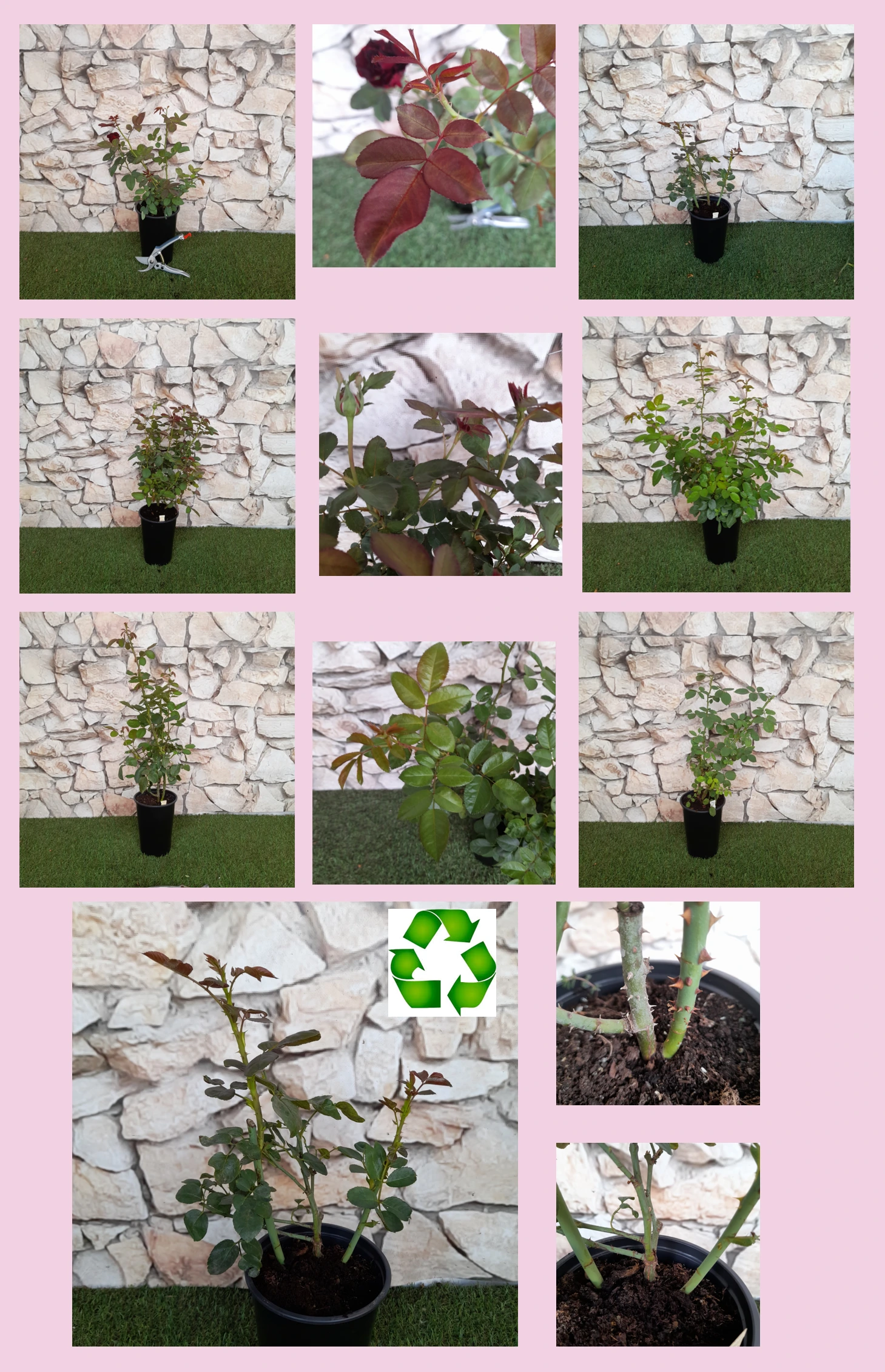
Crop overview: several varieties and growth stages in a short crop section.Shoot system: intensive growth of fresh basal shoots on a young plant.Root system: demonstration of a vigorous root system permeating the growing medium, by removing the pot.Balance: mature plant with root system and shoots in harmony with each other.
Information about the videos
The video series is not a “seasonal showcase”; it illustrates the essence of pharmaROSA® own-root cultivation in a tangible way: how the plant is built up, what the root system is like and how the shoot system regenerates. The recordings were therefore made at different times and with plants at various stages of development, so mixed foliage levels and differing stages of growth may appear in the videos. They are not a ‘sample’ of the batch dispatched, but a visual explanation of how the technology works. The current condition of the rose available to order — typical for the given period and similar to what you can expect to receive in the parcel — is shown in the upper part of the product page.
Pages for private customers Garden roses for the family garden, with minimal care → ORIGINAL® Premium garden roses – instant impact, a truly showpiece garden → EXTRA® Pages for professionals and private customers Roses for public spaces – large areas, sustainable maintenance → NATURAL® Roses for projects – hedge and row planting, fast implementation → RAPID® For professional partners only Production – propagation material for garden roses, wholesale → NEONATAL®
Company details
PharmaRosa Ltd. Company registration number: 01-09-717479 VAT number: 13075314-2-43 Plant health registration no.: HU130721 Bank account (IBAN): HU85117631891388688400000000 BIC (SWIFT): OTPVHUHB Bank name: OTP Bank Nyrt.