Unfortunately, we are currently unable to ship to the United Kingdom; we only deliver to countries within the European Union. For more information, please contact us!
5(8605)
FERDINAND PICHARD – pink historic perpetual hybrid rose - Tanne
Historic FERDINAND PICHARD brings classic garden character to small and medium family plots, with upright, bushy structure that settles well even in changeable, breezy, rain‑washed British gardens. Its creamy pink, crimson‑striped blooms appear repeatedly through summer, offering reliable flowering clusters for borders and cutting, while the strong, long‑lasting scent adds real fragrance around seating areas and paths. As an own‑root shrub it establishes steadily, forming a durable, regenerating bush that rewards simple care over many years, following a natural rhythm of root building in the first season, stronger shoot growth in the second, and full ornamental impact by about the third year.
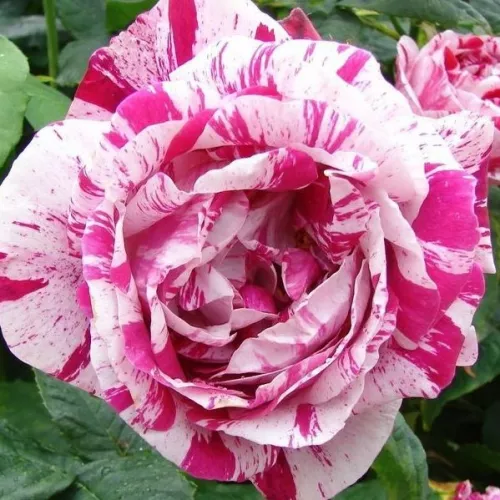
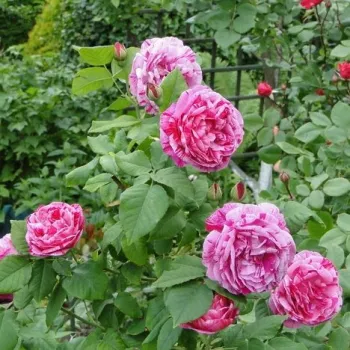
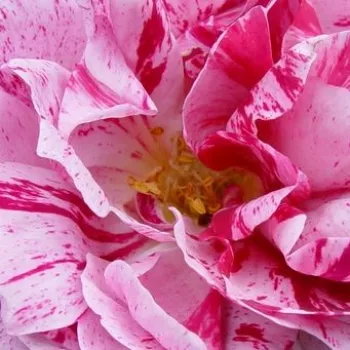
Full, cup-shaped blooms with 26–39 petals and a well-filled centre.
Cup-shaped, fully double blooms of Ferdinand Pichard.
Usage options
Target area
Reasoning
Front garden focal shrub
The upright, bushy habit and stripy, old‑rose flowers give instant period character near the front door, while own‑root growth builds a long‑lived, reliable presence with only moderate pruning and feeding needed for beginners.
Small cottage‑style mixed border
Remontant flowering with a plentiful second flush brings repeated colour through the season, blending well with perennials and cottage favourites so the border looks busy and full without complex succession planning for the busy.
Lightly shaded side garden
Suitable for partial shade, it will still flower and scent paths or side returns where sun is limited, allowing you to use awkward, between‑house spaces effectively without having to redesign the whole garden as an owner.
Traditional hedge or informal boundary
Planted at hedge spacing, the moderately thorny, upright framework gradually knits into a lightly screening, flowered line that anchors itself well even in exposed, wind‑ and rain‑prone spots for the practical gardener.
Cutting corner or rose bed
Large, full, scented blooms on substantial stems make excellent cut flowers, so a small group in a bed or dedicated cutting corner can supply vases indoors over many weeks for the scent‑loving household.
Feature planting in parks or larger lawns
The medium maintenance needs and robust shrub form suit park‑style planting or a single specimen in lawn, where dependable structure and colour are more important than high‑input show‑bench perfection for the relaxed planner.
Own‑root long‑term rose border
As an own‑root plant it builds its shape in situ, recovering well from harder pruning and adverse weather while remaining true to type, which supports stable, low‑fuss long‑term borders for the thoughtful collector.
Large container near seating
In a generously sized container of at least 40–50 litres with regular watering and feeding, its strong fragrance and striking colouring bring historic charm and scent close to terraces and benches for the patio‑focused gardener.
Styling ideas
Cottage‑doorway – Place as a single shrub by the front path, underplant with Erigeron karvinskianus for a soft, tumbling edge – ideal for lovers of romantic, picture‑postcard fronts.
Striped‑border – Repeat three plants along a mixed border, weaving in pink foxgloves and white campanulas to echo the stripes – for gardeners who enjoy gentle coordination without strict formality.
Heritage‑hedge – Create an informal boundary line, interspersed with lavender and catmint for colour contrast and understorey scent – suited to those wanting privacy with a traditional feel.
Scented‑seat – Plant in a large container beside a bench, combined with low Ajuga reptans in the pot’s shade – perfect for anyone who values evening fragrance in a compact space.
Cutting‑corner – Group three to five plants in a small bed, edged with Sedum acre to keep a neat outline while providing stems for the vase – for home florists who like easy, repeat cutting.
Technical cultivar profile
Parameter
Data
Name and registration
FERDINAND PICHARD – Hybrid Perpetual, historic perpetual hybrid rose, Historical rose group; current trade name: Ferdinand Pichard Heritage rose Tanne; unregistered variety with ARS exhibition name Ferdinand Pichard.
Origin and breeding
Bred by Rémi Tanne, France, circa 1921; parentage unknown; introduced by Eugène Turbat & Cie in 1921 as a Hybrid Perpetual with classic striped flowers and strong scent.
Awards and recognition
Royal Horticultural Society Award of Garden Merit (1993); Best Old Garden Rose, Rosexpo Montréal (1999); American Rose Society “Victorian Certificate” in 1998, 2000 and 2001.
Growth and structural characteristics
Upright, bushy shrub, about 120–180 cm high and 100–150 cm wide, with moderately dense, slightly glossy light to mid‑green foliage and moderate prickliness on shoots and main stems.
Flower morphology
Large, full, cup‑shaped blooms with 26–39 petals, typically borne singly; remontant, with a strong main flush and plentiful second flowering, but weak self‑cleaning so deadheading is recommended.
Colour data and phenology
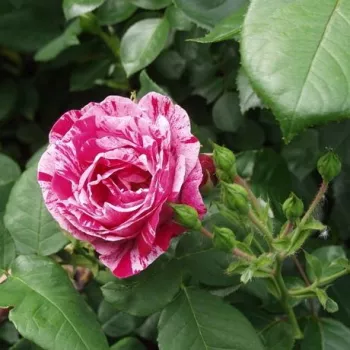
Pale pink base with vivid carmine‑red striping; colour may fade and striping blur in strong sun; buds deep pink with marbling, opening to creamy pink, then paler raspberry streaks as flowers age.
Fragrance and aroma
Strong, long‑lasting, classic rosy fragrance typical of heritage Hybrid Perpetuals; primarily ornamental, with double flowers limiting stamen access and offering only modest value for pollinating insects.
Hip characteristics
Occasional small ovoid hips, around 12–18 mm diameter, orange‑red when ripe; hips are not usually a prominent ornamental feature compared with the striking striped flowers.
Resistance and winter hardiness
Hardy to about −32 to −29 °C (RHS H7; USDA 4b; Swedish Zone 5); powdery mildew resistant, with moderate susceptibility to black spot and rust; benefits from regular watering in drought.
Horticultural recommendations
Best at 110–200 cm spacing, depending on hedge or specimen use; medium maintenance with occasional pest and disease control, regular deadheading, feeding, and mulching in typical UK gardens.
FERDINAND PICHARD offers repeat striped blooms, strong fragrance and a durable own‑root shrub for long‑term borders and containers, making it a thoughtful choice if you favour classic roses with manageable care.
Detailed product attributes
Product Identification Data
Product Name:
FERDINAND PICHARD – pink historic perpetual hybrid rose - Tanne
Product Type:
pharmaROSA® ORIGINAL - 2-litre own-root potted rose
Competition and Show Awards:
Royal Horticultural Society – Award of Garden Merit (1993); Best Old Garden Rose – Rosexpo Montréal (1999); American Rose Society – "Victorian Certificate" (1998, 2000, 2001)
Pollinator Attraction:
Double (26–39 petals) flowers have limited appeal to pollinators because the fully double form and reduced accessibility of the stamens restrict insects’ access to nectar and pollen.
Pollinator-Friendly Rating:
Double (26–39-petalled) flowers partially cover the stamens, so the variety is primarily ornamental and its pollinator-friendliness is limited.
Our product is a rose grown with pharmaROSA®’s unique cultivation technology!
2-litre, own-root, potted rose.
With a shoot system appropriate to the season.
With a root system that thoroughly permeates the growing medium.
Quality compliant with the requirements of the E.N.A. (European Nurserystock Association).
Supplied in unique packaging that prevents damage.
Can be planted during frost-free periods.
True-to-variety rose bush with a unique identifier.
The pharmaROSA® own-root potted rose is a well-rooted plant that supports reliable establishment when planted and cared for properly, so it can be planted whenever the soil is not frozen.
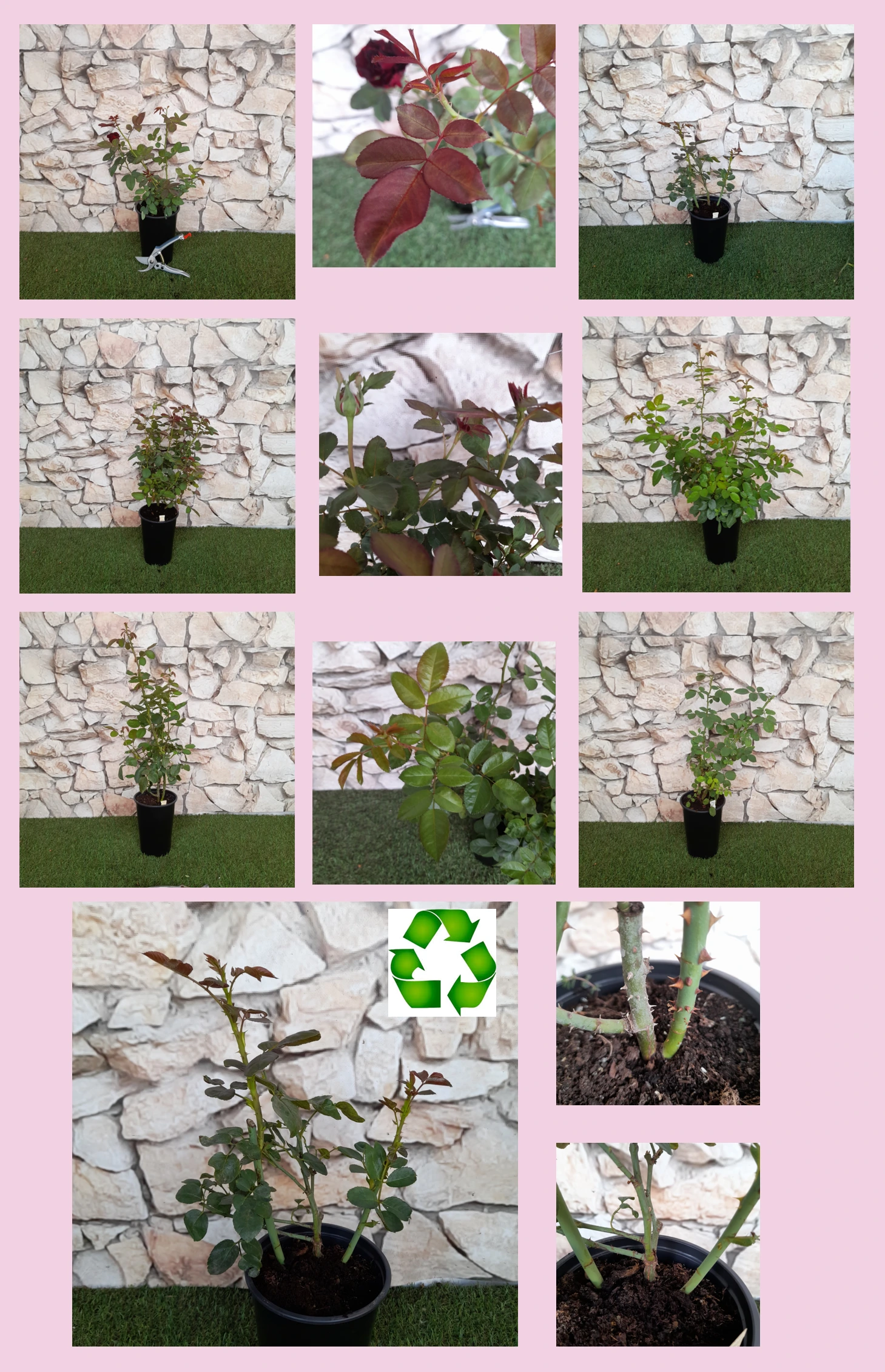
Crop overview: several varieties and growth stages in a short crop section.Shoot system: intensive growth of fresh basal shoots on a young plant.Root system: demonstration of a vigorous root system permeating the growing medium, by removing the pot.Balance: mature plant with root system and shoots in harmony with each other.
Information about the videos
The video series is not a “seasonal showcase”; it illustrates the essence of pharmaROSA® own-root cultivation in a tangible way: how the plant is built up, what the root system is like and how the shoot system regenerates. The recordings were therefore made at different times and with plants at various stages of development, so mixed foliage levels and differing stages of growth may appear in the videos. They are not a ‘sample’ of the batch dispatched, but a visual explanation of how the technology works. The current condition of the rose available to order — typical for the given period and similar to what you can expect to receive in the parcel — is shown in the upper part of the product page.
Pages for private customers Garden roses for the family garden, with minimal care → ORIGINAL® Premium garden roses – instant impact, a truly showpiece garden → EXTRA® Pages for professionals and private customers Roses for public spaces – large areas, sustainable maintenance → NATURAL® Roses for projects – hedge and row planting, fast implementation → RAPID® For professional partners only Production – propagation material for garden roses, wholesale → NEONATAL®
Company details
PharmaRosa Ltd. Company registration number: 01-09-717479 VAT number: 13075314-2-43 Plant health registration no.: HU130721 Bank account (IBAN): HU85117631891388688400000000 BIC (SWIFT): OTPVHUHB Bank name: OTP Bank Nyrt.