| Front garden focal point by the entrance or path |
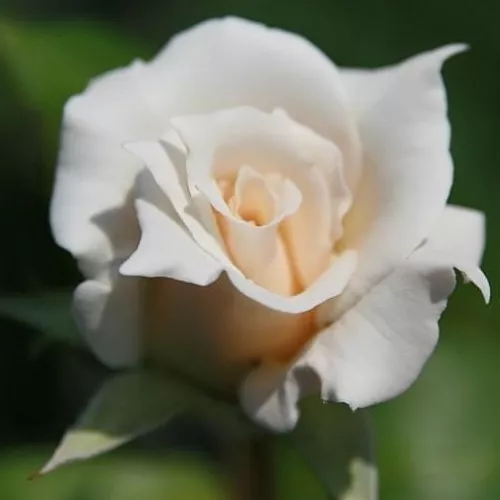
The tall, upright habit and extra-large, high‑centred white blooms create a formal, welcoming accent that reads clearly from the pavement. Strong disease resistance keeps leaves clean and attractive with minimal spraying, ideal when you prefer a smart approach path without ongoing fuss, particularly suitable for the busy-householder. |
| Small mixed border in a family back garden |
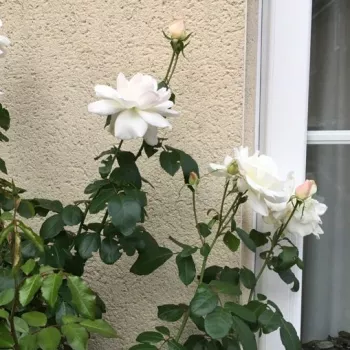
Its compact height around 80–100 cm lets it sit comfortably mid‑border without overshadowing perennials. Dense, matt light‑green foliage forms a stable backbone, and as an own‑root rose it builds a permanent, renewable framework that responds well to light annual pruning, reassuring for the long-term-planner. |
| Pairing on either side of a front door or gate |
Planting in symmetrical pairs highlights the refined, snow‑white flowers, which keep their colour well without browning. The upright structure and moderate spread make it easy to keep within a defined footprint, helping you maintain a tidy, proportioned entrance with only simple seasonal trimming, attractive for the style-conscious. |
| Low-maintenance rose bed with simple layout |
With recommended spacings of 50–60 cm, it forms a coherent, evenly spaced planting that reads as a classic rose bed without complicated design. Low maintenance requirements and reliable remontant flowering mean you can focus on basic tasks—watering, feeding, one main winter prune—rather than constant interventions, well suited to the time-poor. |
| Roses in heavy or clay-based garden soils |
The well‑rooted own‑root plant in a 2‑litre pot establishes steadily where drainage is improved with raised beds or soil conditioning, giving a firm anchor even in heavier ground. Once settled, the H7 hardiness and solid framework cope well with typical British winters, giving confidence to the cautious-beginner. |
| Cottage-style planting with airy grasses and perennials |
The pure white, slightly pearlescent blooms act as a visual pause among looser textures such as verbena or fine grasses, tying mixed cottage plantings together. Repeat flowering maintains this effect all summer, while the moderate fragrance adds gentle evening interest without overwhelming nearby plants, appealing to the cottage-gardener. |
| Larger containers on patios or paved front gardens |
In a generous container of at least 40–50 litres, this variety makes a neat, upright patio rose, provided regular watering and feeding are given. The well‑branched, own‑root structure fills the pot evenly, and clean foliage plus repeat blooms provide a long season of interest for spaces with little open soil, ideal for the urban-owner. |
| Simple rose hedge or short boundary line |
At 50 cm spacing it forms a low, elegant line of white blooms and light‑green foliage that reads as a soft boundary without feeling heavy. Consistent height and good disease resistance reduce the need for intricate pruning; a once‑yearly trim usually keeps it in shape and productive, convenient for the practical-gardener. |