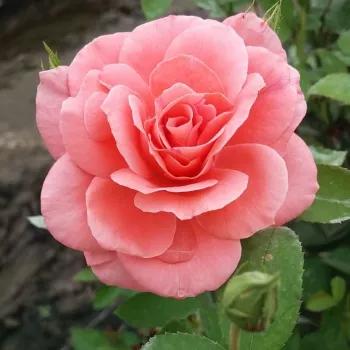
Warm-toned, uniform salmon-pink shade. - bedding floribunda rose - mild, delicately scented rose - soft, harmonious character
– Compact, upright habit for neat flower beds
– Abundant remontant clusters for long display
– Soft salmon‑pink blooms with gentle colour play
– Mild, harmonious fragrance for close planting
– Hardy to –21 °C, reliable in colder regions
– Special feature: Silver Medal winner at Kortrijk (Courtrai) 1982.
Built on experience – Gentle landscaping
pharmaROSA® ORIGINAL 2-litre own-root potted rose
18,20 £
Unfortunately, we are currently unable to ship to the United Kingdom; we only deliver to countries within the European Union. For more information, please contact us!
5(7052)
FAVORITE® – salmon-pink bedding floribunda rose – Lens
Salmon-pink blooms in soft, clustered waves make FAVORITE® a reliable front garden choice for those who want colour without demanding care, settling well even where soils need thoughtful drainage and structure. Its compact, upright habit and dense, mid-green foliage suit small beds and edging, giving a tidy, low hedge effect along paths and around the house. This floribunda’s remontant flowering delivers generous repeat flushes through the season, the pastel shades blending beautifully into classic cottage-style plantings. On its own roots it builds long-term stability and resilience in your border, and you can expect a gentle development arc as it focuses on roots in the first year, fuller shoots in the second, and complete ornamental impact from the third season.
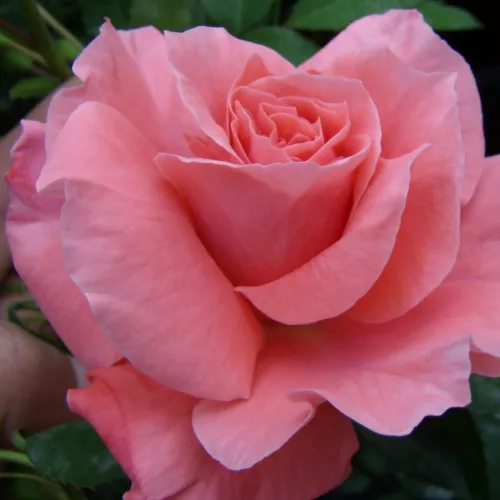
Favorite® showing the stamens in the open bloom
Freshly opened salmon-pink bloom of Favorite®.
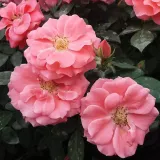
Favorite® shows cup-shaped, double blooms in clustered sprays.
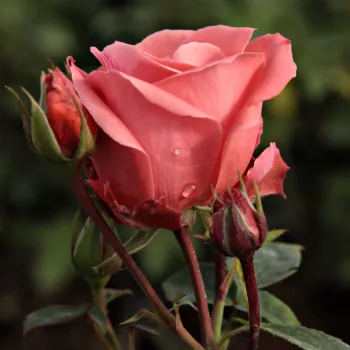
Favorite® shows its late-phase salmon-pink bloom, softening to a creamy pale tone.
Usage options
Target area
Reasoning
Front garden bed along a path
The compact, upright bushes form a neat, low line that marks paths and driveways without overwhelming small spaces. Clustered, medium-sized blooms give continuous interest through the season, ideal when you want reliable colour under easy-care conditions for the busy homeowner.
Ornamental border around the house
Dense foliage and moderate height help soften building edges while keeping window views clear. The own-root plants establish steadily and, with basic watering and feeding, build a long-lived, stable stand that copes well with typical British around-the-house conditions for the relaxed gardener.
Small mixed cottage-style planting
The warm salmon-pink clusters blend easily with perennials like cranesbills and bellflowers, giving a classic cottage feel in modest spaces. Repeat flowering means the rose weaves through changing perennials, providing structure and colour continuity valued by the style-conscious beginner.
Low flowering hedge or edging strip
At 40–60 cm tall with 25–30 cm spacing, plants join into a low, coherent line for edging lawns or driveways. Own-root growth allows the hedge to regenerate from the base over time, helping maintain a tidy outline with straightforward yearly pruning for the practical planner.
Small group planting in a focal bed
Groups of 3–5 bushes create a rounded, salmon-pink focal point that looks full without needing complex design work. Regular remontant flowering keeps the centre of the garden visually active, rewarding simple deadheading and feeding routines for the confident amateur.
Container on patio or terrace (large pot)
In a 40–50 litre container with good drainage, the compact habit is easy to manage and moves the cottage-garden look onto patios and balconies. Own-root structure copes well with periodic repotting, extending the productive life of the planting for the space-limited urbanite.
Family play-area border
Moderate height and a bushy, upright frame define play or seating areas without tall thorns at face level. The rose flowers generously with routine care, while own-root resilience helps it recover from the occasional knock or ball for the family-focused parent.
Small front garden with heavier soil
In raised beds or improved soil, the compact plants anchor well and give dependable colour even where clay needs attention to structure and moisture, echoing typical British conditions with careful drainage in mind for the time-pressed householder.
Styling ideas
Cottage-edge – Plant a short row along a path with cranesbills at their feet for a classic cottage boundary – ideal for lovers of traditional, romantic gardens.
Pastel-pocket – Group 3–5 plants in a small bed near the front door, underplanting with low, airy verbena for a soft, welcoming focal point – perfect for busy homeowners.
Patio-haven – Grow one plant in a 40–50 litre terracotta pot with trailing campanulas to bring rose-garden charm onto balconies or terraces – suited to urban gardeners.
Family-border – Use a loose line along a play-lawn edge, combining with low perennials to frame the space without tall barriers – good for young families.
Soft-screen – Create a salmon-pink, waist-high screen near seating areas by mixing this rose with mid-height perennials for gentle enclosure – attractive to relaxed entertainers.
Technical cultivar profile
Parameter
Data
Name and registration
Floribunda bedding rose; registered as LEN3 / LENperni, trade name Favorite® Bedding rose LEN3; LENperni, ARS exhibition name Favori, group: bed rose for garden and exhibition use.
Origin and breeding
Bred by Louis Lens, NV Louis Lens (Oudenburg, Belgium); unnamed seedling × unnamed seedling; introduced and registered in 1980 via Lens Roses as a compact floribunda.
Awards and recognition
Received a Silver Medal at the Kortrijk (Courtrai) International Rose Competition in 1982, reflecting its ornamental and garden performance under show trial conditions.
Growth and structural characteristics
Compact, upright bushes around 40–60 cm high and 35–50 cm wide, with dense, mid-green, slightly glossy foliage and moderate prickliness; suited to edging, beds and low hedging.
Flower morphology
Medium-sized, double, cup-shaped flowers with 26–39 petals, borne in clusters; remontant habit with a generous second flush provides sustained seasonal colour in beds and containers.
Colour data and phenology
Warm salmon-pink blooms, RHS 36C outer and 36D inner; buds open deep salmon, then fade to creamy, pastel tones with a brighter centre, giving soft, evolving colour through flowering.
Fragrance and aroma
Mild, delicately scented rose with a soft, harmonious fragrance character; stamens become visible when open, making flowers moderately attractive to pollinating insects in mixed plantings.
Hip characteristics
Occasional spherical hips, 6–10 mm in diameter, orange-red when mature; not produced heavily enough to be a primary feature, but of incidental seasonal and wildlife interest in some years.
Resistance and winter hardiness
Hardy to approximately −21 to −18 °C, RHS H7, USDA zone 6b, Swedish zone 3; moderate resistance to black spot, powdery mildew and rust, with routine protection useful in humid seasons.
Horticultural recommendations
Best in sunny positions with fertile, well-drained soil; medium maintenance with periodic plant protection; ideal for beds, edging, low hedges, containers and occasional cutting for the home.
FAVORITE® offers compact form, repeat salmon-pink flowering and enduring own-root resilience for small family gardens, making it a thoughtful choice when you want dependable colour with manageable care.
Detailed product attributes
Product Identification Data
Product Name:
FAVORITE® – salmon-pink bedding floribunda rose - Lens
Product Type:
pharmaROSA® ORIGINAL - 2-litre own-root potted rose
Closed Bud:
Vivid deep salmon-pink surface with a subtle play of light.
Newly Opened Flower:
Intensely salmon pink in the centre, gradually lightening towards the petal edges.
Full Bloom:
Pastel soft salmon pink, with a slightly brighter tone in the centre.
Before Fading:
Creamy, fading salmon pink with a subtle peach note.
Colour Fading Description:
During opening, the bright, deep salmon pink gradually lightens to a pastel, creamy pale salmon pink, with the centre remaining slightly more vivid.
Pollinator Attraction:
Flowers display their stamens when fully open; based on descriptions, and given the bloom form (single/semi‑double/double) and the accessibility of the stamens, they are moderately attractive to pollinators.
Pollinator-Friendly Rating:
The flowers expose the stamens when they open, so it is considered partially pollinator-friendly.
Our product is a rose grown with pharmaROSA®’s unique cultivation technology!
2-litre, own-root, potted rose.
With a shoot system appropriate to the season.
With a root system that thoroughly permeates the growing medium.
Quality compliant with the requirements of the E.N.A. (European Nurserystock Association).
Supplied in unique packaging that prevents damage.
Can be planted during frost-free periods.
True-to-variety rose bush with a unique identifier.
The pharmaROSA® own-root potted rose is a well-rooted plant that supports reliable establishment when planted and cared for properly, so it can be planted whenever the soil is not frozen.
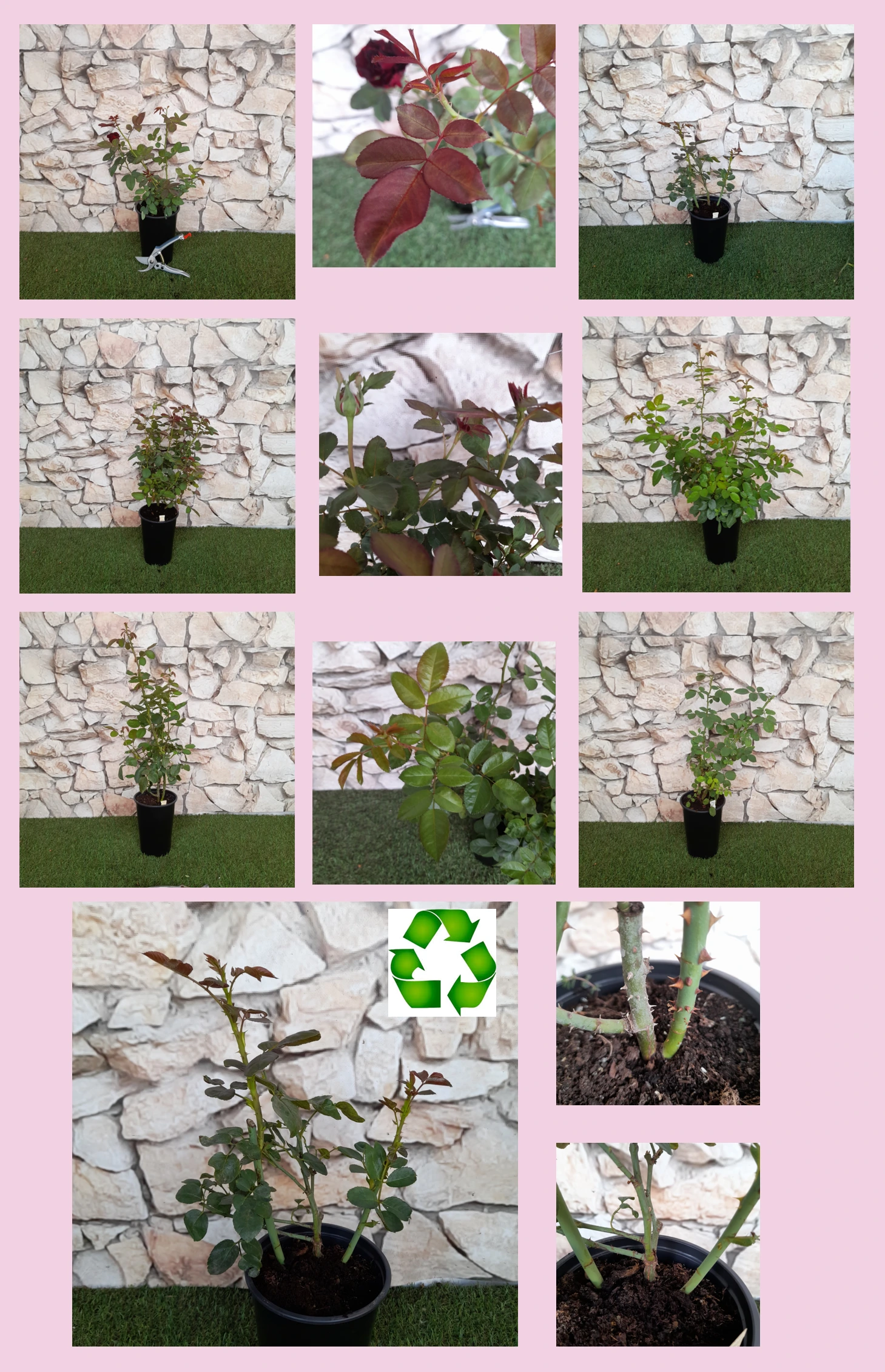
Crop overview: several varieties and growth stages in a short crop section.Shoot system: intensive growth of fresh basal shoots on a young plant.Root system: demonstration of a vigorous root system permeating the growing medium, by removing the pot.Balance: mature plant with root system and shoots in harmony with each other.
Information about the videos
The video series is not a “seasonal showcase”; it illustrates the essence of pharmaROSA® own-root cultivation in a tangible way: how the plant is built up, what the root system is like and how the shoot system regenerates. The recordings were therefore made at different times and with plants at various stages of development, so mixed foliage levels and differing stages of growth may appear in the videos. They are not a ‘sample’ of the batch dispatched, but a visual explanation of how the technology works. The current condition of the rose available to order — typical for the given period and similar to what you can expect to receive in the parcel — is shown in the upper part of the product page.
Pages for private customers Garden roses for the family garden, with minimal care → ORIGINAL® Premium garden roses – instant impact, a truly showpiece garden → EXTRA® Pages for professionals and private customers Roses for public spaces – large areas, sustainable maintenance → NATURAL® Roses for projects – hedge and row planting, fast implementation → RAPID® For professional partners only Production – propagation material for garden roses, wholesale → NEONATAL®
Company details
PharmaRosa Ltd. Company registration number: 01-09-717479 VAT number: 13075314-2-43 Plant health registration no.: HU130721 Bank account (IBAN): HU85117631891388688400000000 BIC (SWIFT): OTPVHUHB Bank name: OTP Bank Nyrt.