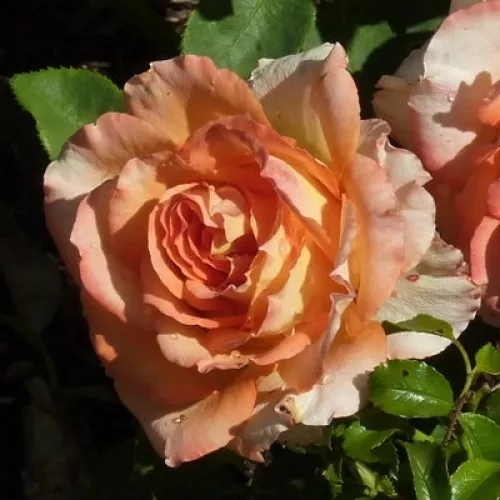
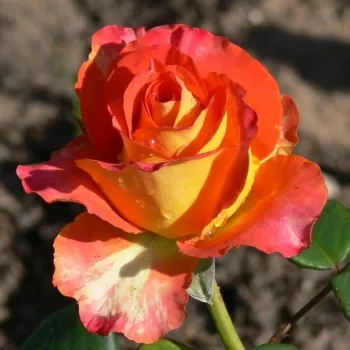
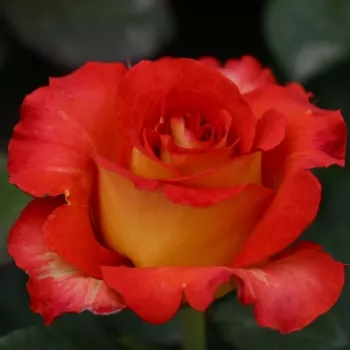
A warm golden-yellow base is enlivened by vivid orange and delicate red edges. - tea hybrid rose - very weak, barely perceptible scented rose - scent description not available
– Warm golden-orange blooms with red edges.
– Classic high-centred, elegant flower shape.
– Compact, bushy habit for beds and hedges.
– Medium disease resistance in garden use.
– Suitable for cutting, long-stemmed flowers.
– Special feature: Colour shifts from deep red bud to peach‑rose tones as flowers mature.
Thoughtful design – Soil-friendly approach
pharmaROSA® ORIGINAL 2-litre own-root potted rose
18,70 £
Unfortunately, we are currently unable to ship to the United Kingdom; we only deliver to countries within the European Union. For more information, please contact us!
4.5(6909)
Elisabeth von Thüringen – golden-orange hybrid tea rose
Bring classic hybrid tea elegance to a small family garden with Elisabeth von Thüringen, a compact, bushy rose whose golden‑orange blooms open from deep red buds into beautifully sculpted, high‑centred flowers. Its measured, upright habit stays naturally tidy, fitting neatly into front borders and around‑the‑house beds where you want colour without complicated layout decisions. Medium maintenance needs are easily handled with simple, seasonal care, while the own‑root form gives reassuring long‑term stability and makes recovery from pruning or weather stress more dependable. As roots build in year one, stems and structure fill out in year two and by year three you can expect full ornamental impact with reliable repeat flowering. Suitable for beds, low hedges or generous containers of at least 40–50 litres, it offers lasting value for busy gardeners, and copes well in typical British clay soils when you give it a spot with improved drainage against winter wet and waterlogging.
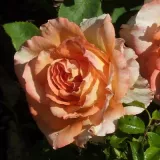
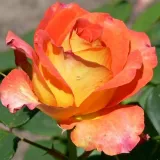
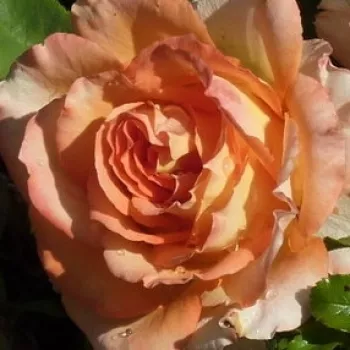
Colour states of Elisabeth von Thüringen shown side by side in different opening phases.
Elisabeth von Thüringen at full bloom, showing golden-orange flowers with a fine red edge.
Usage options
Target area
Reasoning
Front garden feature by the path
The neat, bushy habit and 50–75 cm height make this rose ideal for lining a front path or framing a doorway, giving formal hybrid tea flowers without overwhelming a modest space; it suits homeowners wanting clear structure with minimal fuss, especially beginners.
Small flower bed in a family garden
Its compact spread of 35–50 cm allows simple 3–5 plant groupings in small beds, creating a coherent block of colour that is easy to weed and maintain, appealing to those who like orderly, well‑defined planting areas, particularly busy-owners.
Cutting patch for home arrangements
The long‑stemmed, high‑centred blooms are classic cut‑rose type, so even a short row will supply elegant stems for vases through the season, ideal for gardeners who enjoy bringing their own flowers indoors, notably home-stylists.
Low hedge or boundary accent
Regular spacing at around 25 cm creates a low, continuous line of golden‑orange flowers that reads as a soft hedge; this is an effective way to edge driveways or separate garden areas for those favouring subtle, floral boundaries, especially planners.
Mixed cottage-style border
The warm golden‑orange and red‑edged petals blend beautifully with perennial blues and creams, fitting naturally into relaxed cottage mixes without visually dominating, which suits colour‑driven gardeners who want harmony rather than strict formality, particularly aesthetes.
Sunny patio container (40–50 litres minimum)
In a sizeable container the moderate root system is easy to manage, and watering and feeding are straightforward, so you gain showpiece blooms close to the house without redesigning borders, attractive for balcony and patio users, especially urbanites.
Roses for typical British clay soils
Own‑root establishment and a bushy, medium‑vigour habit help the plant adapt as soil structure improves over time, and in raised or well‑drained beds it copes reliably with wet winters, reassuring for gardeners on heavier ground, particularly clay-gardeners.
Long-term, low-complication planting
The own‑root form supports a long lifespan with predictable regrowth after pruning or winter, and once settled the remontant flowering pattern provides steady display with only moderate plant protection, appealing to those seeking dependable results, especially time-poor.
Styling ideas
Path-avenue – plant a staggered double row along a front path, underplant with low Euonymus fortunei ‘Minimus’ for evergreen edging – ideal for homeowners wanting a crisp, welcoming entrance.
Cottage-duo – combine with Verbena hastata ‘Blue Spires’ and soft grasses for an airy cottage border – suits gardeners who enjoy relaxed structure with rich colour contrasts.
Sunny-porch – grow one plant in a 50–60 litre terracotta pot by the front door, paired with trailing thyme – perfect for urban or suburban entrances needing smart, contained colour.
Cutting-row – arrange a short straight row at 45 cm spacing in a utility bed for reliable vase material – for those who like homegrown flowers without running a full cutting garden.
Gold-focus – centre a small circular bed on one rose, ringed by Coreopsis grandiflora and pale catmint – best for small gardens wanting a simple, high‑impact focal point.
Technical cultivar profile
Property
Data
Name and registration
Hybrid tea rose; registered as DICkarl, marketed as Elisabeth von Thüringen – golden‑orange hybrid tea rose – Dickson; verified cultivar authenticity for reliable, repeatable garden performance.
Origin and breeding
Bred by Colin Dickson in Germany, 2007; hybrid tea type with unknown parentage, selected for garden use and cutting; introduced later as a premium, own‑root plant for reliable establishment.
Growth and structural characteristics
Compact, bushy shrub 50–75 cm tall and 35–50 cm wide, moderately thorny, with moderately dense, glossy dark green foliage forming a tidy, upright outline suited to beds, borders and containers.
Flower morphology
Large, double, high‑centred blooms with 26–39 petals, solitary on stems in classic cut‑rose form; remontant with a generous second flush, giving extended seasonal display under standard garden care.
Colour data and phenology
Deep red buds open to golden‑orange with vivid orange and red edges; colours soften through peach‑rose tones as petals age, maintaining warm, luminous harmonies that read well at a distance.
Fragrance and aroma
Fragrance is very weak and often barely perceptible, so it is chosen primarily for its visual effect and flower form rather than scent; ideal where colour impact is more important than perfume.
Hip characteristics
Rose‑hip set is generally low because of double flowers; when present, small spherical orange‑red hips 10–14 mm across appear sporadically, adding a discreet autumn accent without heavy seeding.
Resistance and winter hardiness
Rated to approximately –21 to –18 °C (RHS H7, Swedish Zone 3, USDA 6b); medium resistance to black spot, powdery mildew and rust, benefitting from basic preventative care in damp, mild seasons.
Horticultural recommendations
Prefers a sunny position; medium maintenance with occasional plant protection. Plant 30–45 cm apart depending on use, in improved, well‑drained soil; suitable for beds, low hedges and cut‑flower rows.
Elisabeth von Thüringen offers compact hybrid tea elegance, rich golden-orange colour and dependable repeat flowering on a long-lived own-root plant, making it a sound choice if you want reliable structure and colour with moderate effort.
Detailed product attributes
Product Identification Data
Product Name:
ELISABETH VON THÜRINGEN – golden-orange hybrid tea rose - Dickson
Product Type:
pharmaROSA® ORIGINAL - 2-litre own-root potted rose
Flower Colour Description:
A warm golden-yellow base is enlivened by vivid orange and delicate red edges.
Closed Bud:
Deep red bud with a golden-orange hint at the tip.
Newly Opened Flower:
The red edging of the outer petals strongly contrasts with the inner golden‑orange petals.
Full Bloom:
When fully open a uniform golden-orange dominates, with a fine red tinge at the edges.
Before Fading:
The colour fades from peach to rose and the red edge becomes blurred.
Colour Fading Description:
At opening the deep‑red bud changes to golden‑orange, and when fully open golden‑orange predominates with a thin red edge; before the bloom fades it lightens to a peachy‑rose and the red edge becomes diffused.
Pollinator Attraction:
Its very double flower form and reduced accessibility of the stamens make it only weakly attractive to pollinators.
Pollinator-Friendly Rating:
Its double flowers mostly conceal the stamens, so it only attracts pollinators to a limited extent and is primarily an ornamental variety.
Hip Comment:
Rose-hip formation is expected to be limited due to the double flowers; occasionally spherical orange-red hips 10–14 mm in diameter are formed.
Our product is a rose grown with pharmaROSA®’s unique cultivation technology!
2-litre, own-root, potted rose.
With a shoot system appropriate to the season.
With a root system that thoroughly permeates the growing medium.
Quality compliant with the requirements of the E.N.A. (European Nurserystock Association).
Supplied in unique packaging that prevents damage.
Can be planted during frost-free periods.
True-to-variety rose bush with a unique identifier.
The pharmaROSA® own-root potted rose is a well-rooted plant that supports reliable establishment when planted and cared for properly, so it can be planted whenever the soil is not frozen.
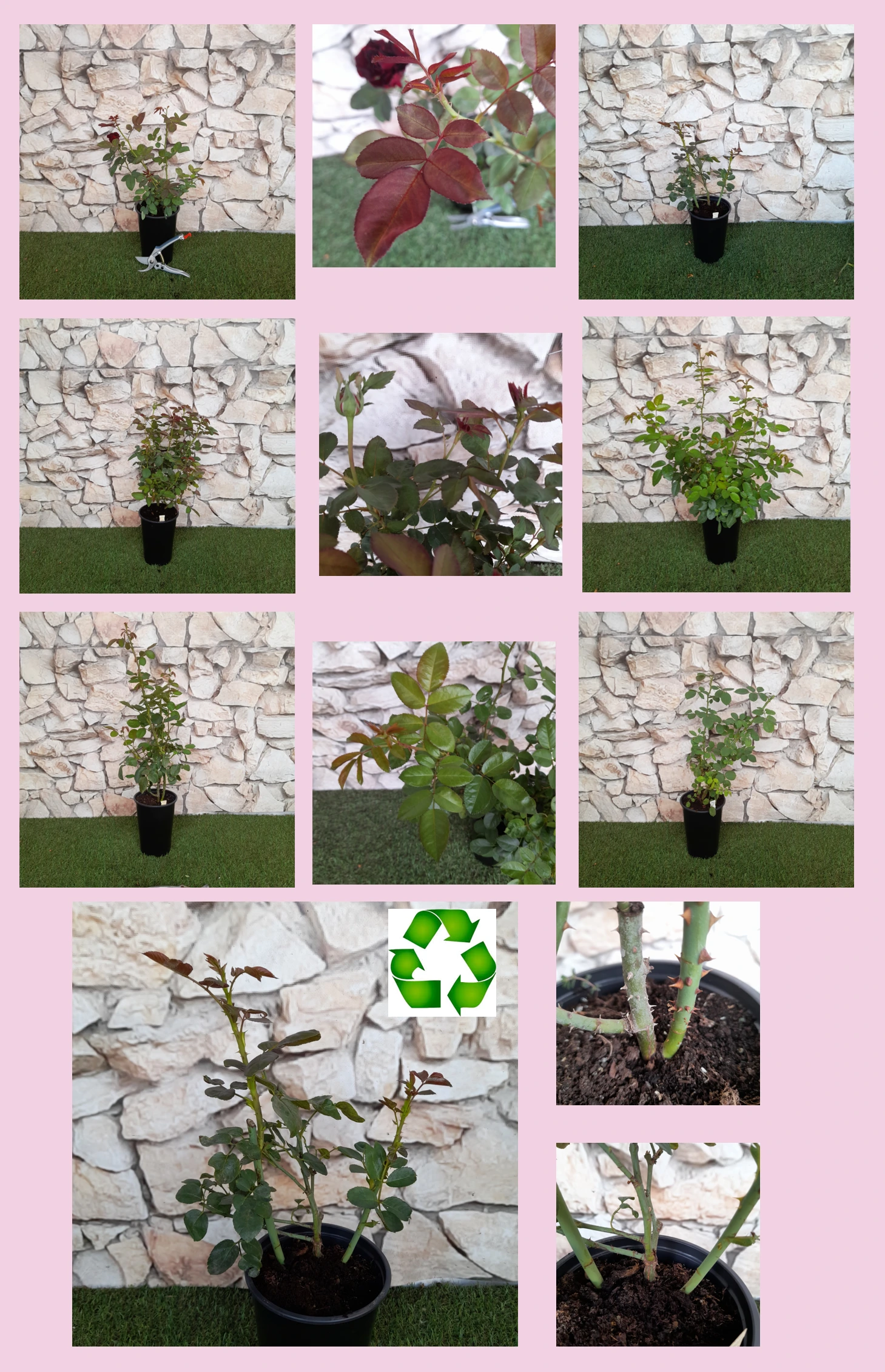
Crop overview: several varieties and growth stages in a short crop section.Shoot system: intensive growth of fresh basal shoots on a young plant.Root system: demonstration of a vigorous root system permeating the growing medium, by removing the pot.Balance: mature plant with root system and shoots in harmony with each other.
Information about the videos
The video series is not a “seasonal showcase”; it illustrates the essence of pharmaROSA® own-root cultivation in a tangible way: how the plant is built up, what the root system is like and how the shoot system regenerates. The recordings were therefore made at different times and with plants at various stages of development, so mixed foliage levels and differing stages of growth may appear in the videos. They are not a ‘sample’ of the batch dispatched, but a visual explanation of how the technology works. The current condition of the rose available to order — typical for the given period and similar to what you can expect to receive in the parcel — is shown in the upper part of the product page.
Pages for private customers Garden roses for the family garden, with minimal care → ORIGINAL® Premium garden roses – instant impact, a truly showpiece garden → EXTRA® Pages for professionals and private customers Roses for public spaces – large areas, sustainable maintenance → NATURAL® Roses for projects – hedge and row planting, fast implementation → RAPID® For professional partners only Production – propagation material for garden roses, wholesale → NEONATAL®
Company details
PharmaRosa Ltd. Company registration number: 01-09-717479 VAT number: 13075314-2-43 Plant health registration no.: HU130721 Bank account (IBAN): HU85117631891388688400000000 BIC (SWIFT): OTPVHUHB Bank name: OTP Bank Nyrt.