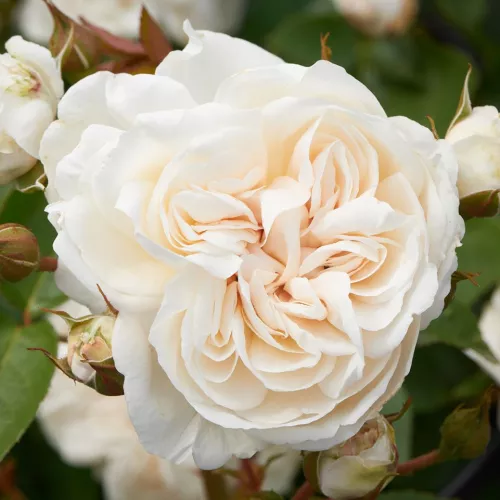
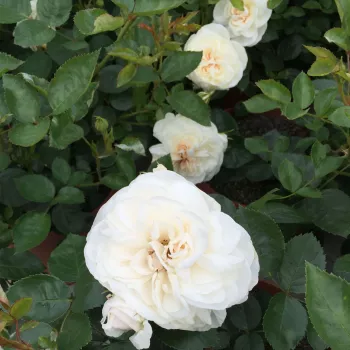
Pure snow-white petals. - climbing rose, rambler rose - medium-strength, noticeably fragrant rose - subtly sweet
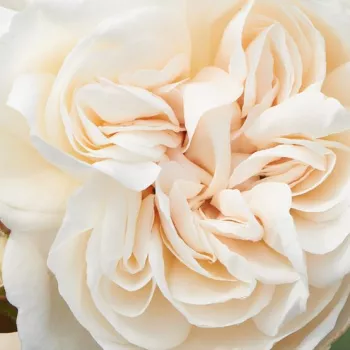
– Pure snow-white, very full cup-shaped blooms.
– Reliable remontant flowering, long decorative season.
– Compact, creeping climber for pergolas and trellises.
– Glossy, dense medium-green foliage backdrop.
– Hardy to -26 °C, suitable for colder regions.
– Special feature: Medium, subtly sweet fragrance ideal near seating areas.
Built on Experience – Nature-inspired Style
pharmaROSA® ORIGINAL 2-litre own-root potted rose
19,30 £
Unfortunately, we are currently unable to ship to the United Kingdom; we only deliver to countries within the European Union. For more information, please contact us!
3(4169)
Eisa ™ Courtyard® POUlcy037 – white climbing rose
This refined Courtyard® climber offers elegant snow‑white clusters that repeat reliably through the season, bringing a classic cottage‑garden feel to arches, trellises and façades. Its medium height and creeping habit make it surprisingly manageable for the typical family garden, ideal where you want vertical interest without overwhelming the space. Dense, glossy foliage provides a lasting green backdrop, while medium fragrance adds a gentle, romantic note around seating areas and front doors. As an own‑root plant, it settles in steadily and can regenerate well over time, supporting a genuinely durable feature that copes well with breezy, wetter spells in exposed or coastal‑influenced spots. In the first year it focuses on rooting, the second on building strong shoots, and by the third it displays its full ornamental potential with dependable flowering and a well‑anchored framework that suits straightforward, low‑fuss training and pruning for beginners.
Closed bud of EISA™, a white climbing rose.
Freshly opened white flowers of Eisa™ climbing rose.
Closed bud of the white climbing rose Eisa™ Courtyard®.
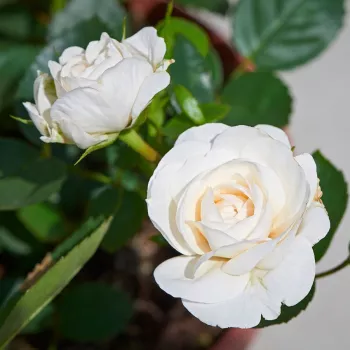
Eisa™ Courtyard® in several opening phases, from greenish-white bud to pure snow-white bloom.
Usage options
Target area
Reasoning
Front‑garden arch or porch trellis
Medium height and a creeping, trainable habit make this rose ideal for framing entrances without overshadowing windows. Its reliable repeat flowering ensures a welcoming display through summer for visitors and passers‑by who value easy charm for beginners.
Compact pergola or sitting‑area screen
Dense, glossy foliage and abundant, very full white blooms create a soft privacy screen around patios and family seating areas, giving structure without heavy pruning demands for those seeking relaxed outdoor rooms for busy homeowners.
Small cottage‑style mixed border backdrop
Trained on discreet supports at the back of a border, it offers a long‑lived vertical accent that partners well with perennials, gradually forming a stable framework that responds well to light annual shaping for style‑conscious small‑garden gardeners.
Climbing feature in large container (40–60 l)
In a substantial pot of at least 40–50 litres with a trellis or obelisk, this own‑root climber builds a balanced structure and can be repositioned on terraces, giving flexible design options for those with paved or rented spaces seeking portable impact for urbanites.
Part‑shaded side path or north‑east aspect
Tolerant of partial shade, it continues to flower where sun hours are limited, brightening side returns and less‑used corners with clear white clusters, suiting homes where aspect is constrained but a tidy, dependable climber is still desired by beginners.
Low, informal flowering hedge or boundary
At 100–200 cm high with a spreading habit, it can be trained along wires or a low fence to form a softly structured hedge, giving repeat flowers and screening while remaining practical to maintain for families wanting gentle separation without hard barriers for neighbours.
Wind‑brushed, rain‑exposed house wall
Well‑anchored own‑root growth and dense foliage help it cope with blustery, damp conditions, making it suitable for typical British weather on exposed aspects where a sturdy yet graceful white climber is preferred by resilient‑plant‑minded homeowners.
Cut‑flower and fragrance corner by the back door
Medium‑sized, very full blooms with a noticeable sweet fragrance lend themselves to small indoor arrangements, allowing regular cutting without spoiling the display, ideal for those who enjoy bringing a few home‑grown stems indoors for flower‑lovers.
Styling ideas
Porch‑frame elegance – Train Eisa Courtyard® up a simple wooden trellis either side of the front door, underplant with lavender and low box for a calm, welcoming cottage entry – for homeowners wanting classic kerb appeal.
White‑and‑green calm – Use this rose on a pergola with ferns, hostas and white foxgloves below to create a cool, restful palette that suits part‑shade – for those seeking a serene family seating area.
Courtyard container – Plant in a 50–60 litre pot with an obelisk, adding trailing ivy and violas at the base to soften the edges – for balcony and patio gardeners needing flexible vertical interest.
Romantic side path – Run discreet wires along a fence and weave stems through, edging the path with Campanula and Ajuga for a soft, lived‑in cottage feel – for beginners aiming for charm with little effort.
Simple white cutting corner – Grow against a sunny shed wall with Liriope and small ornamental grasses beneath, providing fragrant stems and year‑round structure – for busy gardeners who like occasional home‑grown bouquets.
Technical cultivar profile
Property
Data
Name and registration
Climbing Courtyard® rose marketed as Eisa ™ Courtyard® POUlcy037, classified as a large‑flowered climber / rambler; registered cultivar name POUlcy037, bred and introduced for ornamental garden use.
Origin and breeding
Bred by Mogens Nyegaard Olesen at Poulsen Roser A/S, Denmark, from unnamed seedling parents; breeding and registration completed in 2017, with introduction aimed at robust, decorative climbing garden roses.
Growth and structural characteristics
Creeping, trainable climbing habit reaching around 100–200 cm in height, with 80–140 cm spread; carries dense, glossy medium‑green foliage and moderate prickles, forming a compact yet effective vertical framework.
Flower morphology
Produces medium‑sized, cup‑shaped flowers in clusters, each very full with 40+ petals; remontant with abundant second flush, providing prolonged ornamental value on arches, trellises and other climbing supports.
Colour data and phenology
Buds emerge pale creamy white from olive‑green sepals, opening greenish‑white outside and bright white within; in full bloom flowers are pure snow‑white, fading only slightly translucent before petal drop with minimal colour change.
Fragrance and aroma
Displays a medium‑strength, noticeably sweet fragrance that remains gentle rather than overpowering; primarily ornamental due to very double flowers, with stamens mostly hidden and only limited pollinator access.
Hip characteristics
Rose hip formation is minimal; where produced, hips are very small at 0–5 mm diameter, so ornamental interest is focused mainly on foliage and repeat flowers rather than autumn fruit display.
Resistance and winter hardiness
Rated to approximately −26 to −23 °C (H7, USDA 5b; Swedish zone 4), showing solid winter hardiness; disease resistance is medium, with average tolerance to powdery mildew, black spot and rust under normal garden care.
Horticultural recommendations
Best on pergolas, trellises, containers and low hedging with 90–180 cm spacing; prefers regular watering in drought, responds to light pruning and training, and tolerates partial shade in typical family gardens.
Eisa ™ Courtyard® POUlcy037 offers manageable height, dense foliage, repeat white flowering and the regenerative stability of an own‑root climber; consider it where you want a long‑lived, graceful vertical accent with modest care.
Detailed product attributes
Product Identification Data
Product Name:
EISA ™ – white climbing rose - Olesen
Product Type:
pharmaROSA® ORIGINAL - 2-litre own-root potted rose
Closed Bud:
The bud emerges from olive‑green sepals, its tip pale creamy white.
Newly Opened Flower:
The outer petals are slightly greenish‑white, the inner petals bright white with a silky sheen.
Full Bloom:
The flower is uniformly snow-white, the petal edges curve softly with no variation in shade.
Before Fading:
The white petals become slightly translucent and fade without a creamy tint.
Colour Fading Description:
The flower's colour changes very little: the greenish‑white bud turns an even, pure white and only becomes slightly translucent just before the end of flowering.
Pollinator Attraction:
Because it has very double (fully double) flowers rather than simple or semi‑double forms, with the stamens largely inaccessible, it is only weakly attractive to pollinators.
Our product is a rose grown with pharmaROSA®’s unique cultivation technology!
2-litre, own-root, potted rose.
With a shoot system appropriate to the season.
With a root system that thoroughly permeates the growing medium.
Quality compliant with the requirements of the E.N.A. (European Nurserystock Association).
Supplied in unique packaging that prevents damage.
Can be planted during frost-free periods.
True-to-variety rose bush with a unique identifier.
The pharmaROSA® own-root potted rose is a well-rooted plant that supports reliable establishment when planted and cared for properly, so it can be planted whenever the soil is not frozen.
Crop overview: several varieties and growth stages in a short crop section.Shoot system: intensive growth of fresh basal shoots on a young plant.Root system: demonstration of a vigorous root system permeating the growing medium, by removing the pot.Balance: mature plant with root system and shoots in harmony with each other.
Information about the videos
The video series is not a “seasonal showcase”; it illustrates the essence of pharmaROSA® own-root cultivation in a tangible way: how the plant is built up, what the root system is like and how the shoot system regenerates. The recordings were therefore made at different times and with plants at various stages of development, so mixed foliage levels and differing stages of growth may appear in the videos. They are not a ‘sample’ of the batch dispatched, but a visual explanation of how the technology works. The current condition of the rose available to order — typical for the given period and similar to what you can expect to receive in the parcel — is shown in the upper part of the product page.
Pages for private customers Garden roses for the family garden, with minimal care → ORIGINAL® Premium garden roses – instant impact, a truly showpiece garden → EXTRA® Pages for professionals and private customers Roses for public spaces – large areas, sustainable maintenance → NATURAL® Roses for projects – hedge and row planting, fast implementation → RAPID® For professional partners only Production – propagation material for garden roses, wholesale → NEONATAL®
Company details
PharmaRosa Ltd. Company registration number: 01-09-717479 VAT number: 13075314-2-43 Plant health registration no.: HU130721 Bank account (IBAN): HU85117631891388688400000000 BIC (SWIFT): OTPVHUHB Bank name: OTP Bank Nyrt.