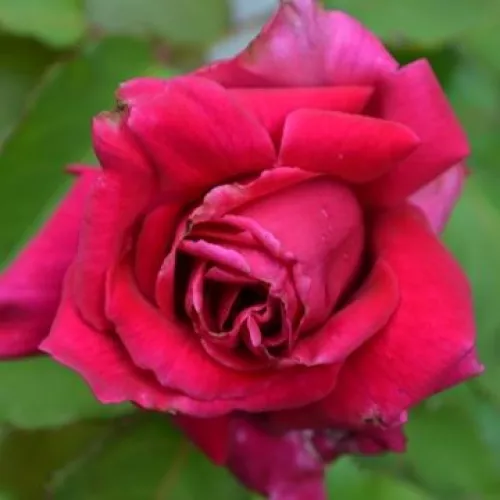
Deep, rich velvety red shade with a delicate purple undertone. - hybrid tea rose - strong, long-lasting scented rose - fruity sweet aroma
– Deep velvety red blooms with elegant form
– Strong, long‑lasting fruity sweet fragrance
– Upright, bushy habit for beds and hedges
– Reliable winter hardiness to RHS H7 rating
– Ideal for cutting, specimen and fragrance gardens
– Special feature: Celebratory rose honouring 170 years of Roseraie Ducher heritage.
Future-proof garden selection – Continuous garden development
pharmaROSA® ORIGINAL 2-litre own-root potted rose
19,30 £
Unfortunately, we are currently unable to ship to the United Kingdom; we only deliver to countries within the European Union. For more information, please contact us!
4.5(6879)
DUCHER 1845 – red hybrid tea rose – Ducher
Created in France to celebrate a historic rose garden, DUCHER 1845 combines classic hybrid tea elegance with reliable garden performance that suits today’s busy households. Large, high‑centred blooms unfold in a deep, velvety crimson colour with a subtle purple undertone, ideal if you want a traditional red rose that looks refined rather than brash. Each flower carries a fragrance of strong, fruity sweetness that holds well on the plant and in the vase, so you can enjoy it both outdoors and as a cut flower. The upright, bushy habit sits comfortably in small beds and front gardens, slotting into classic cottage-style borders without demanding complicated pruning. As an own‑root plant it offers reassuring longevity, rebuilding from its base if ever cut back hard and settling into a balanced shape over time. In a typical British family garden it copes well with cool, damp spells and blustery coastal weather when planted in well‑drained soil. Repeat flowering from early summer to autumn keeps the display going with only moderate maintenance, while sturdy stems are excellent for cutting and arranging indoors. With sensible watering and feeding, you will see strong root development in the first year, fuller top growth in the second, and by the third season DUCHER 1845 reaches its full ornamental impact as a dependable, easy‑to‑handle focal point in the garden.
Ducher 1845 in the late flowering stage, with muted cherry-red petals and paler edges.
Freshly opened flower of Ducher 1845 in intense scarlet red.
Ducher 1845 produces large, double red blooms.
Closed bud of Ducher 1845, showing a dark blackish-burgundy red shade.
Usage options
Target area
Reasoning
Front garden feature rose
The upright, bushy shrub shape and moderate height make this rose ideal for a smart yet welcoming front garden accent, giving structured form without overwhelming a small space; its reliable rebloom keeps entrances presentable for beginners.
Small mixed bed with perennials
Deep velvety red flowers with a subtle purple cast blend well with greys, whites and soft blues, pairing beautifully with plants such as thyme, dwarf wormwood and white verbena for an easy, classic cottage mix that flatters aesthetes.
Cut flower corner near the house
High‑centred, long‑stemmed blooms in an exhibition‑type form and rich red colouring are well suited to cutting, providing elegant, strongly scented stems close at hand for the house, rewarding those who enjoy arranging with homeowners.
Specimen shrub in a small lawn or gravel circle
Planted singly at the recommended wider spacing, the neat, erect shrub structure and dark glossy foliage give this rose enough presence to stand alone, creating a simple focal point that suits low‑maintenance gardeners.
Short hedge or row along a path
At closer spacing it forms an even, flower‑laden line, with moderate prickliness discouraging shortcutting while still being manageable to tend, ideal for edging paths or drives that need a tidy yet decorative boundary for families.
Part‑shade border beside buildings or fences
Its tolerance of partial shade lets you use it where sun is limited for part of the day, still giving good flowering as long as drainage is sound and air movement is reasonable, which benefits urban and courtyard owners.
Raised bed or improved heavy-clay border
Best performance comes with decent drainage, particularly on heavier British soils; in raised beds or well‑amended borders the own‑root plant establishes reliably and copes with cool, damp, occasionally windy conditions typical of many UK sites.
Large container on terrace or patio (40–50 litres+)
In a generous, well‑drained container the compact, upright habit and continuous flowering provide long‑season colour and scent near seating areas, while the own‑root growth and moderate care needs remain manageable for busy urban residents.
Styling ideas
Cottage – Combine with soft pinks, whites and lavender, plus thyme and dwarf wormwood, to create a relaxed cottage feel with rich red highlights – ideal for romantically inclined homeowners.
Formal – Plant in a symmetrical pair by the front door or along a path, underplanted with low box or thyme, for a restrained, structured entrance – suited to lovers of classic order.
Scented – Group three plants near a bench or terrace, with fragrant herbs and evening-scented perennials, to maximise the strong fruity perfume – perfect for evening garden users.
Contemporary – Set singly in a large charcoal or stone container with gravel mulch and minimal companions, letting the velvety red blooms provide a bold colour accent – attractive to modern, time-poor gardeners.
Family – Use as a focal point in a small lawn island or play-friendly border, mixing in easy perennials for a long-season, low-fuss display – great for busy family gardens.
Technical cultivar profile
Parameter
Data
Name and registration
Hybrid tea shrub rose marketed as DUCHER 1845 – red hybrid tea rose – Ducher; current trade name Ducher 1845 Hybrid tea rose Ducher; part of the Hybrid tea rose collection.
Origin and breeding
Bred by Fabien Ducher at Roseraie Ducher, Châteauneuf, Loire, France; introduced and registered in 2014, commemorating the 170th anniversary of the Ducher Rose Garden founded in 1845.
Growth and structural characteristics
Upright, bushy shrub reaching about 80–110 cm in height and 65–95 cm spread, with moderately dense, slightly glossy dark green foliage and moderate prickliness; forms a compact, tidy garden bush.
Flower morphology
Large, double, high‑centred hybrid tea flowers, typically solitary on stems; 26–39 petals with pointed buds, providing a classic cut‑rose form and good individual bloom impact in the garden or vase.
Colour data and phenology
Deep velvety red with a faint purple undertone; buds blackish burgundy, opening scarlet and deepening to rich crimson, then maturing to muted cherry red with paler edges; remontant with abundant repeat flowering.
Fragrance and aroma
Strong, long‑lasting fruity sweet fragrance typical of scented hybrid teas; blooms carry their scent well outdoors and when cut, making the variety suitable for fragrance-focused beds and cutting gardens.
Hip characteristics
Occasionally sets small, bright red spherical hips about 10–14 mm in diameter; hips are mainly ornamental and not produced in great abundance, adding discrete late-season interest when present.
Resistance and winter hardiness
Rated to around −21 to −18 °C (RHS H7, USDA 6b, Swedish Zone 3); resistant to powdery mildew and black spot with moderate rust susceptibility, generally showing average disease resistance under garden conditions.
Horticultural recommendations
Best in moderately fertile, well‑drained soil with regular feeding and watering; suitable for beds, specimen planting, hedging and cutting; plant 50–90 cm apart depending on use, allowing 3–3.8 plants per m² in massed schemes.
DUCHER 1845 offers rich velvety red blooms, strong fruity fragrance and reliable repeat flowering on a long-lived own-root shrub, making it a thoughtful choice for a enduring, characterful garden rose.
Detailed product attributes
Product Identification Data
Product Name:
DUCHER 1845 – red hybrid tea rose - Ducher
Product Type:
pharmaROSA® ORIGINAL - 2-litre own-root potted rose
Closed Bud:
Dark, blackish–burgundy red with a glossy claret sheen.
Newly Opened Flower:
Intense scarlet red, slightly darker at the centre, with a burgundy tinge on the outside.
Full Bloom:
Uniform deep velvety red, the inner petal surface a matt darker red.
Before Fading:
Muted cherry red, with a paler red tone at the petal edges.
Colour Fading Description:
At first opening the intense scarlet red deepens to a velvety crimson, then before the bloom fades it softens to a muted cherry red and the petal edges lighten.
Pollinator Attraction:
Double (26–39 petals) flowers have limited appeal to pollinators because the double flower form reduces stamen accessibility, which diminishes attraction.
Pollinator-Friendly Rating:
Double‑flowered form may restrict pollinator access; primarily an ornamental variety
Our product is a rose grown with pharmaROSA®’s unique cultivation technology!
2-litre, own-root, potted rose.
With a shoot system appropriate to the season.
With a root system that thoroughly permeates the growing medium.
Quality compliant with the requirements of the E.N.A. (European Nurserystock Association).
Supplied in unique packaging that prevents damage.
Can be planted during frost-free periods.
True-to-variety rose bush with a unique identifier.
The pharmaROSA® own-root potted rose is a well-rooted plant that supports reliable establishment when planted and cared for properly, so it can be planted whenever the soil is not frozen.
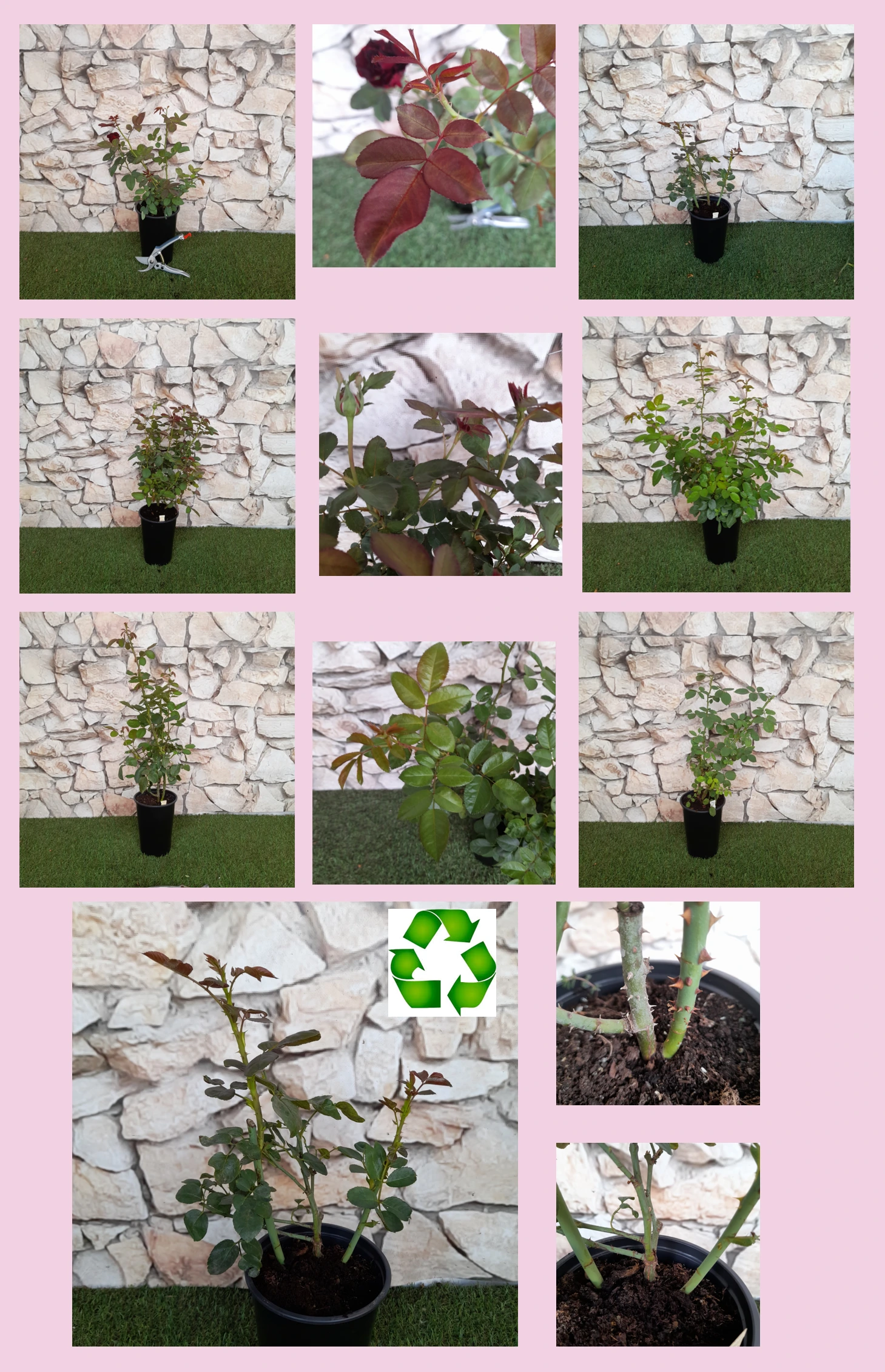
Crop overview: several varieties and growth stages in a short crop section.Shoot system: intensive growth of fresh basal shoots on a young plant.Root system: demonstration of a vigorous root system permeating the growing medium, by removing the pot.Balance: mature plant with root system and shoots in harmony with each other.
Information about the videos
The video series is not a “seasonal showcase”; it illustrates the essence of pharmaROSA® own-root cultivation in a tangible way: how the plant is built up, what the root system is like and how the shoot system regenerates. The recordings were therefore made at different times and with plants at various stages of development, so mixed foliage levels and differing stages of growth may appear in the videos. They are not a ‘sample’ of the batch dispatched, but a visual explanation of how the technology works. The current condition of the rose available to order — typical for the given period and similar to what you can expect to receive in the parcel — is shown in the upper part of the product page.
Pages for private customers Garden roses for the family garden, with minimal care → ORIGINAL® Premium garden roses – instant impact, a truly showpiece garden → EXTRA® Pages for professionals and private customers Roses for public spaces – large areas, sustainable maintenance → NATURAL® Roses for projects – hedge and row planting, fast implementation → RAPID® For professional partners only Production – propagation material for garden roses, wholesale → NEONATAL®
Company details
PharmaRosa Ltd. Company registration number: 01-09-717479 VAT number: 13075314-2-43 Plant health registration no.: HU130721 Bank account (IBAN): HU85117631891388688400000000 BIC (SWIFT): OTPVHUHB Bank name: OTP Bank Nyrt.