The outer face of the petals is a light flesh‑pink; the base and flower centre are a creamy‑white shade. - rambler, climbing rose - medium-strength, clearly noticeable-scented rose - delicate, muscat-like character
– Abundant once-a-year pastel pink display.
– Vigorous rambler for arches, pergolas, trees.
– Medium fragrance with delicate muscat notes.
– Excellent disease resistance, low maintenance.
– Orange hips for birds and winter interest.
– Special feature: Particularly attractive to bees and butterflies thanks to simple, open flowers with easy nectar access.
Grower care – Responsible plant selection
pharmaROSA® ORIGINAL 2-litre own-root potted rose
21,20 £
Unfortunately, we are currently unable to ship to the United Kingdom; we only deliver to countries within the European Union. For more information, please contact us!
4(6104)
KEW RAMBLER – pink climbing rambler rose
Cottage front gardens gain instant charm from KEW RAMBLER’s airy clusters of soft pink, single blooms and graceful rambling habit, ideal for arches, fences or tree training in family spaces. Its once-a-year summer display is generous, followed by small orange hips that feed birds and extend the season visually. With resistant foliage and low intervention needs, it suits busy gardeners and less formal schemes where reliable performance matters more than exhibition grooming. As an own-root plant it offers long-term stability, regenerating naturally from the base if stems are cut back or weather-damaged and forming a durable framework over time. Medium fragrance with a muscat-like note adds atmosphere along paths or seating areas, while the open flowers are highly pollinator-friendly, providing easy access for bees and butterflies. It copes well with British humidity and summer showers, needing only sensible watering in longer dry spells to manage moisture and keep growth balanced. Excellent coverage makes it useful for screening sheds or defining garden boundaries without complex training systems, and in its pharmaROSA® ORIGINAL 2-litre form it establishes as a half- to one-year-old, own-root plant that promises a reassuring development from young roots to maturing shoots and, by the third year, full ornamental value.
Kew Rambler: moderately thorny stems in close-up.
Usage options
Target area
Reasoning
Front-garden arch or pergola near the house
Ideal where you want a romantic arch or pergola clothed in soft pink, single flowers, combining good height with airy, not oppressive, coverage; its once-a-season mass flowering needs little more than annual tying-in and light shaping, so it suits beginners.
Screening an unattractive fence or boundary
The long, flexible shoots quickly cover 3–5 m of fencing, softening hard lines and providing privacy without heavy pruning regimes; own-root growth builds a durable, replaceable framework so gaps can be filled by new basal canes over time, reassuring for busy-owners.
Training into a small tree or large shrub
Lightly rambling stems can be threaded through the branches of an established tree, creating a summer “flowering tree” effect without needing separate support structures; minimal pruning and excellent disease resistance keep maintenance straightforward for hobby-gardeners.
Wildlife-friendly corner or informal hedge
Single, nectar-rich flowers followed by abundant orange hips provide both pollinator forage and winter food for birds, so a loose hedge or back-of-border line of plants supports garden biodiversity while remaining largely self-sufficient for nature-lovers.
Cottage-style mixed border backdrop
Placed at the rear of a mixed border, its grey-green foliage and pastel clusters form a soft vertical backdrop for perennials like lavender and catmint, with self-cleaning petals reducing deadheading, which particularly benefits style-conscious.
Coastal or wind-exposed family garden
Its resilient, well-anchoring root system and tough growth cope well with exposed sites where wind and rain are frequent, as long as soil drains reasonably; own-root plants settle steadily into local conditions, giving long-term reliability valued by coastal-owners.
Partially shaded side path or alleyway
Tolerant of partial shade, it flowers well on structures along side paths where sunshine is limited for part of the day; the medium, muscat-like scent is noticeable at nose level, enhancing everyday journeys for urban-gardeners.
Large container on terrace with vertical support
In a minimum 40–50 litre pot with a sturdy obelisk or frame, it offers height and seasonal drama without needing complex pruning; once established, own-root growth and good disease resistance keep care tasks simple for small-space.
Styling ideas
Romantic-archway – Train KEW RAMBLER over a metal or wooden arch, underplanting with lavender and catmint for a soft blue-pink palette and scented welcome – ideal for homeowners seeking a classic front-garden entrance.
Cottage-screen – Use along a wire or timber fence with oriental poppies and foxgloves in front, letting the airy canes blur boundaries – suited to those who like informal, flower-rich cottage borders.
Wildlife-haven – Combine with native shrubs and simple perennials to create a wildlife strip where bees, butterflies and birds find forage and hips – perfect for families keen to support garden biodiversity.
Tree-draped – Allow stems to weave through a small ornamental tree, creating a summer “veil” of pastel flowers above groundcover geraniums – appealing to gardeners wanting vertical interest without extra structures.
Court-yard-climber – Grow in a large 50 litre container with a tall obelisk, pairing with terracotta pots of herbs for a relaxed, Mediterranean feel – a good option for balcony and patio owners with limited borders.
Technical cultivar profile
Parameter
Data
Name and registration
KEW RAMBLER is a pink rambler / climbing rose sold as KEW RAMBLER – pink climbing rambler rose; a historic, unregistered variety grown for garden use and exhibitions.
Origin and breeding
Bred at the Royal Botanic Gardens, Kew from Rosa soulieana × ‘Hiawatha’, first introduced around 1913; a classic early 20th-century rambler valued for garden structures.
Growth and structural characteristics
Strong, rambling climber reaching 5–7.5 m high with a 3–5 m spread, moderately thorny, with grey‑green foliage; best on arches, fences, pergolas or trained into trees.
Flower morphology
Single, flat flowers with 5–12 petals, small (about 1–3 cm), carried in large, showy clusters; blooms once in early summer, then cleans itself as petals drop naturally.
Colour data and phenology
Pastel flesh‑pink buds and newly opened blooms fade to near white, often retaining a delicate pink rim; overall effect is soft pink to creamy‑white, especially in full sun.
Fragrance and aroma
Noticeable medium fragrance with a delicate, muscat‑like character; best appreciated near paths or seating where air movement carries the scent at flowering peak.
Hip characteristics
After flowering, it sets numerous small, spherical orange hips about 7–10 mm wide, extending interest into autumn and providing natural food sources for garden birds.
Resistance and winter hardiness
Robust garden rose rated RHS H7 and USDA zone 6a, tolerating approximately −23 to −21 °C; very good resistance to black spot, powdery mildew and rust in typical UK gardens.
Horticultural recommendations
Low‑maintenance rambler for pergolas, arches, fences or tree training; prefers well‑drained soil, regular watering in drought, and periodic tying‑in rather than heavy pruning.
KEW RAMBLER offers generous summer flower coverage, wildlife-friendly hips and reliable disease resistance on a long-lived, own-root framework, making it a thoughtful choice if you want a characterful yet undemanding climbing rose.
Detailed product attributes
Product Identification Data
Product Name:
KEW RAMBLER – pink climbing rambler rose
Product Type:
pharmaROSA® ORIGINAL - 2-litre own-root potted rose
Foliage:
The variety has moderately dense foliage. The surface character of the leaves cannot be classified unambiguously and their colour is a grey-green shade.
Our product is a rose grown with pharmaROSA®’s unique cultivation technology!
2-litre, own-root, potted rose.
With a shoot system appropriate to the season.
With a root system that thoroughly permeates the growing medium.
Quality compliant with the requirements of the E.N.A. (European Nurserystock Association).
Supplied in unique packaging that prevents damage.
Can be planted during frost-free periods.
True-to-variety rose bush with a unique identifier.
The pharmaROSA® own-root potted rose is a well-rooted plant that supports reliable establishment when planted and cared for properly, so it can be planted whenever the soil is not frozen.
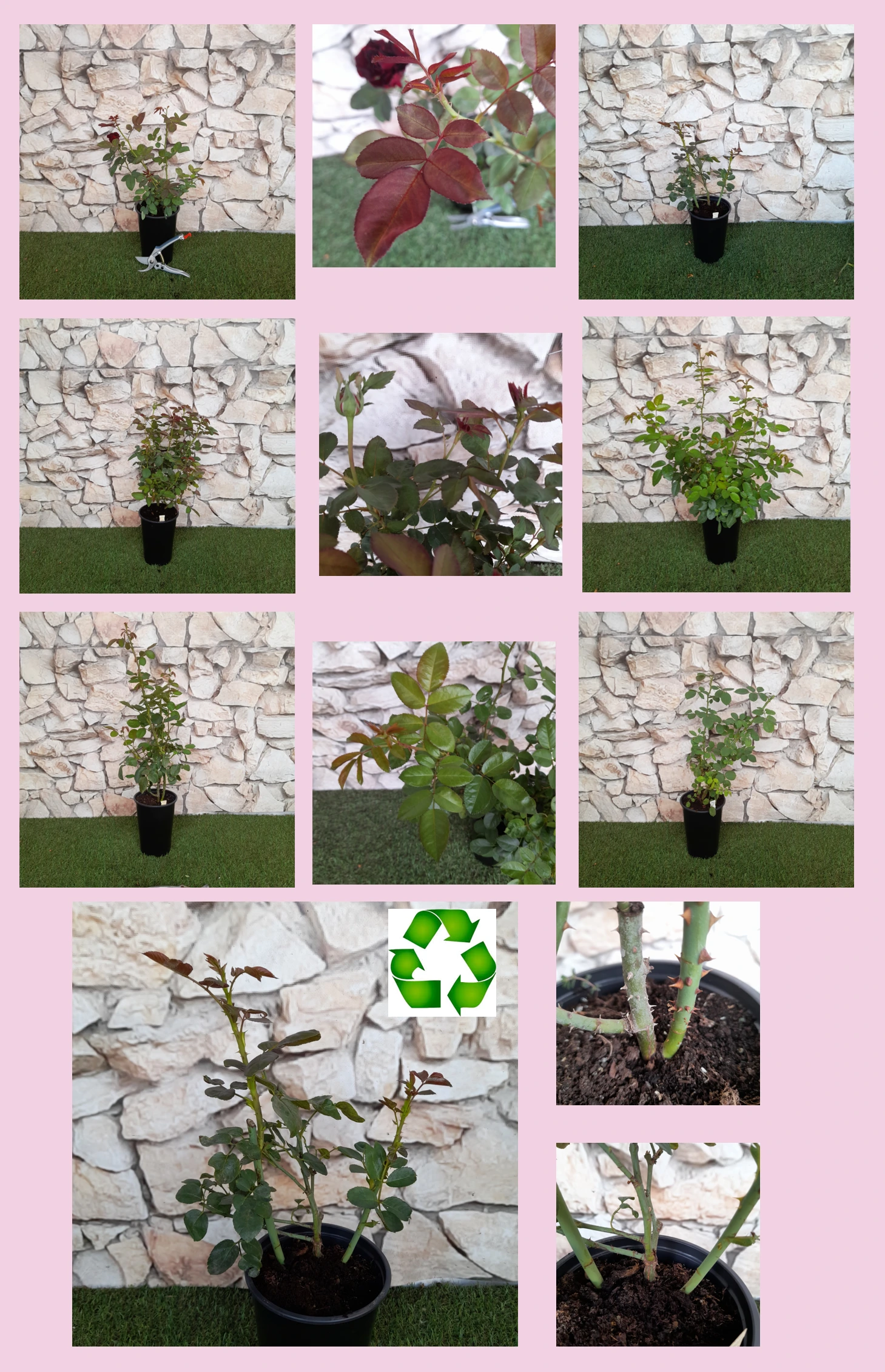
Crop overview: several varieties and growth stages in a short crop section.Shoot system: intensive growth of fresh basal shoots on a young plant.Root system: demonstration of a vigorous root system permeating the growing medium, by removing the pot.Balance: mature plant with root system and shoots in harmony with each other.
Information about the videos
The video series is not a “seasonal showcase”; it illustrates the essence of pharmaROSA® own-root cultivation in a tangible way: how the plant is built up, what the root system is like and how the shoot system regenerates. The recordings were therefore made at different times and with plants at various stages of development, so mixed foliage levels and differing stages of growth may appear in the videos. They are not a ‘sample’ of the batch dispatched, but a visual explanation of how the technology works. The current condition of the rose available to order — typical for the given period and similar to what you can expect to receive in the parcel — is shown in the upper part of the product page.
Pages for private customers Garden roses for the family garden, with minimal care → ORIGINAL® Premium garden roses – instant impact, a truly showpiece garden → EXTRA® Pages for professionals and private customers Roses for public spaces – large areas, sustainable maintenance → NATURAL® Roses for projects – hedge and row planting, fast implementation → RAPID® For professional partners only Production – propagation material for garden roses, wholesale → NEONATAL®
Company details
PharmaRosa Ltd. Company registration number: 01-09-717479 VAT number: 13075314-2-43 Plant health registration no.: HU130721 Bank account (IBAN): HU85117631891388688400000000 BIC (SWIFT): OTPVHUHB Bank name: OTP Bank Nyrt.