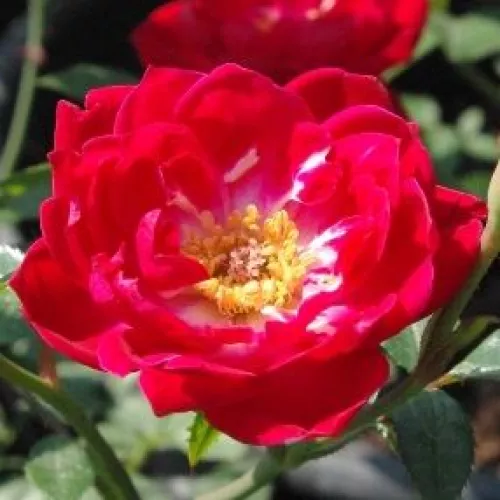
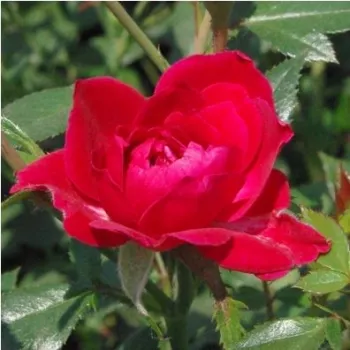
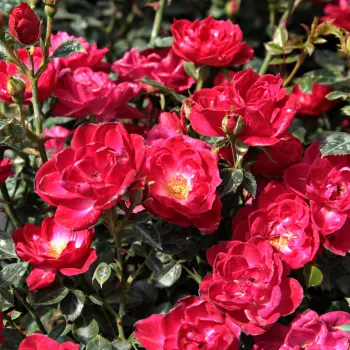
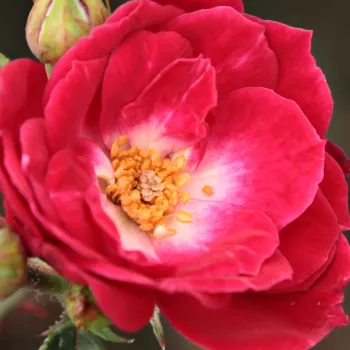
Medium red, rich and uniform shade. - bedding polyantha rose - very weak, barely noticeable scented rose - classic, rose-scented character
– Compact, low bedding rose for neat borders
– Rich clusters of small red cup-shaped blooms
– Glossy dark green foliage for a tidy effect
– Reliable remontant flowering through the season
– Good winter hardiness down to around –20 °C
– Special feature: Evenly fading ruby-red blooms give lasting colour interest.
Future-proof garden concept – Neat composition
pharmaROSA® ORIGINAL 2-litre own-root potted rose
17,60 £
Unfortunately, we are currently unable to ship to the United Kingdom; we only deliver to countries within the European Union. For more information, please contact us!
3.5(5712)
Dopey – red bedding polyantha rose – de Ruiter
Compact and perfectly sized for borders, Dopey forms a low, tidy mound of glossy foliage and small, cup-shaped ruby-red blooms in generous clusters, creating a continuous carpet of colour from early summer into autumn. Its remontant habit means a reliable second flush without demanding complex pruning, ideal when you want simple, repeat performance in a busy family garden. As an own-root rose it settles in steadily, building a strong framework for long-term display while suiting typical British conditions, even where drainage needs a little attention on heavier soils. In the first year it concentrates on roots, the second on top growth, and by the third you enjoy its full ornamental value. Suitable for small groups at the front of a bed or near paths, its modest height, habit and medium maintenance needs make it easy to integrate with classic cottage companions. In larger containers of at least 40–50 litres it offers reliable colour on patios and in front gardens, supporting informal, people-friendly spaces where children and adults can enjoy a neat, low-maintenance rose at close quarters.
Dopey shows several opening phases in one clip, from deep ruby red buds to mid-red blooms.
Usage options
Target area
Reasoning
Front garden bed along a path
The compact, low habit keeps paths clear while the dense, dark green foliage and small red clusters provide a neat, repeated accent beside everyday routes to the door. Suits those wanting easy structure and colour in a small front space for the busy homeowner.
Mixed cottage-style border
Its steady repeat flowering and even colour fade blend well with classic perennials, adding reliable red highlights among looser shapes without overpowering taller plants behind. Ideal in the mid-to-front section of informal plantings for the cottage-gardener.
Small group planting (1–5 plants)
Planted in threes or fives at the recommended spacing, Dopey creates a unified, low bedding feature with good ground coverage, limiting visible bare soil and helping the bed look finished quickly. A sound choice for those preferring simple layouts for the beginner.
Low flowering hedge or edging strip
Regularly spaced plants at the hedge distance form a tidy, low edging line, guiding the eye and gently dividing garden areas without blocking views, with seasonal hips adding extra interest. Suitable for framing lawns or narrow borders for the design-conscious.
Containers and large patio pots
In 40–50 litre or larger containers with good drainage, its modest height, compact root system and remontant flowering provide a practical, portable colour feature for patios, balconies or doorstep areas, especially where permanent beds are limited for the urban-gardener.
Partially shaded positions
Tolerating partial shade, it performs reliably where full sun is limited, such as east- or west-facing aspects, still producing clusters of medium red blooms on glossy foliage, useful near walls or taller shrubs that cast shade for the shade-challenged.
Exposed or wind-affected family gardens
The low, compact framework anchors well and is less prone to wind damage than taller roses, making it suitable for more open, breezy plots and typical suburban sites where shelter is modest and drainage on heavier soils may need consideration for the coastal-owner.
Low-input, long-term planting schemes
As an own-root rose it develops a durable, bushy structure that can be refreshed by harder pruning if needed, maintaining ornamental value over many years with only moderate care and occasional health checks, supporting a stable, easy garden plan for the time-poor.
Styling ideas
Classic edging – Line a path or drive with evenly spaced Dopey plants for a low, red border backed by clipped box or yew – for householders wanting a simple, traditional front approach.
Cottage ribbon – Thread short runs of Dopey through a border with Campanula glomerata and Lychnis viscaria 'Alba' to create relaxed red-and-white ribbons – for lovers of informal cottage charm.
Patio focus – Plant three Dopey in a 50 litre terracotta pot with Verbena hastata ‘Pink Spires’ rising through for height and movement – for terrace gardeners wanting structure with minimal effort.
Family-friendly corner – Use a small group in a corner bed near seating, combining with low grasses and seasonal bulbs to give long interest at child’s-eye level – for families seeking neat colour without thorny thickets.
Neighbourly frontage – Combine Dopey with pale-flowered perennials in a narrow front strip to offer a well-kept, welcoming look to the street – for neighbours keen to keep kerb appeal high but maintenance modest.
Technical cultivar profile
Parameter
Data
Name and registration
Polyantha bedding rose, registered cultivar name Dopey, commercial name Dopey – red bedding polyantha rose – de Ruiter; ARS approved exhibition name Dopey; unregistered as a formal registration entry.
Origin and breeding
Bred by Gerrit de Ruiter (De Ruiter Innovations B.V., Netherlands) from ‘Robin Hood’ × unknown seedling; introduced in 1954 through Willicher Baumschulen and C. Gregory & Son Ltd. into continental and British markets.
Growth and structural characteristics
Compact, low-growing bush 30–45 cm high and 30–50 cm wide, with dense, glossy dark green foliage and light prickliness; forms a rounded, bedding-type shrub suited to close spacing in beds, borders and containers.
Flower morphology
Semi-double, small cup-shaped blooms (approximately 0.5–1.5 in) in generous clusters, with 13–25 petals; remontant with a reliable second flush, giving extended seasonal display from early summer into early autumn.
Colour data and phenology
Medium, rich red colour (ARS MR; RHS 46B–46A); buds ruby to burgundy, opening vivid scarlet red, then clear mid-red before fading evenly to raspberry red, maintaining a harmonious overall effect on the plant.
Fragrance and aroma
Fragrance very weak, with a light classic rose character only faintly perceptible at close range; chosen primarily for floral effect and bedding use rather than for strong scent, suiting visual-focused planting schemes.
Hip characteristics
Develops small, spherical red hips, around 5–8 mm diameter, produced in moderate numbers after flowering; provide modest late-season interest and an additional textural element once main bloom display has passed.
Resistance and winter hardiness
Hardy to approximately –21 to –18 °C (RHS H7; Swedish zone 3; USDA 6b); moderate resistance to black spot, powdery mildew and rust; copes with summer heat if watered, but does not tolerate prolonged drought stress.
Horticultural recommendations
Best in beds, borders, containers and park plantings at 25–45 cm spacing; partial shade tolerant; medium maintenance with occasional pest and disease checks; use well-drained soil, especially on heavier clays or wetter plots.
Dopey offers compact, repeat red flowering, suitability for containers and small beds, and the dependable longevity of an own-root plant, making it a sound, unhurried choice for family gardens and cottage-style frontages.
Detailed product attributes
Product Identification Data
Product Name:
DOPEY – red bedding polyantha rose - de Ruiter
Product Type:
pharmaROSA® ORIGINAL - 2-litre own-root potted rose
Closed Bud:
Dark ruby red on the outside, deep burgundy on the inside.
Newly Opened Flower:
The outer surfaces are vivid scarlet red, with a slightly darker tone on the inner petals.
Full Bloom:
The surface is a clear mid-red and slightly glossy.
Before Fading:
Fades to raspberry red with a uniform loss of colour.
Colour Fading Description:
As the bloom opens it fades from a deep ruby red to a clear mid‑red, then to a raspberry red before the flower fades, with an even colour fade.
Pollinator Attraction:
Semi-double (13–25 petals) flowers moderately attract pollinators; the semi-double bloom form and limited accessibility of the stamens reduce their attractiveness.
Our product is a rose grown with pharmaROSA®’s unique cultivation technology!
2-litre, own-root, potted rose.
With a shoot system appropriate to the season.
With a root system that thoroughly permeates the growing medium.
Quality compliant with the requirements of the E.N.A. (European Nurserystock Association).
Supplied in unique packaging that prevents damage.
Can be planted during frost-free periods.
True-to-variety rose bush with a unique identifier.
The pharmaROSA® own-root potted rose is a well-rooted plant that supports reliable establishment when planted and cared for properly, so it can be planted whenever the soil is not frozen.
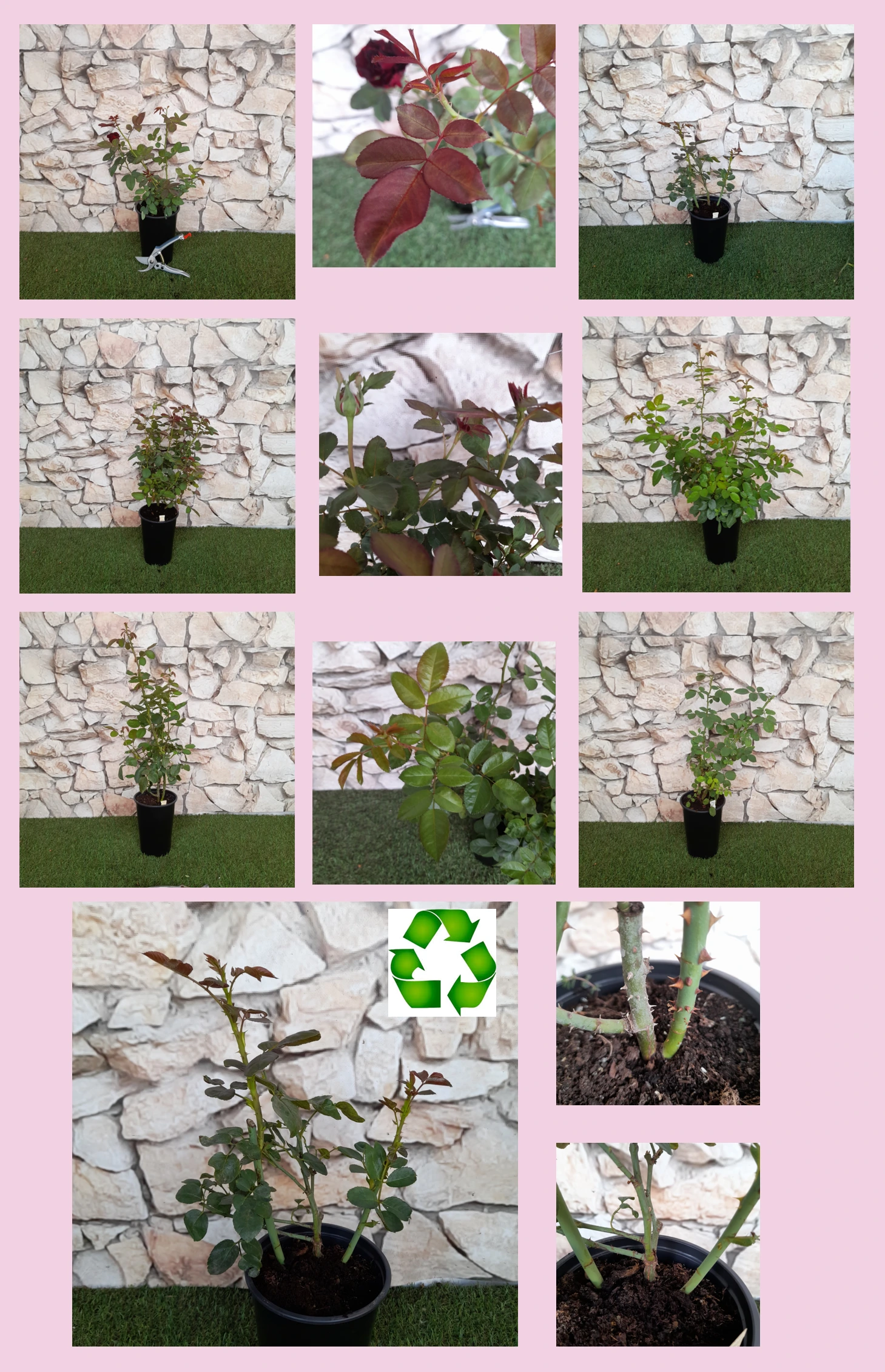
Crop overview: several varieties and growth stages in a short crop section.Shoot system: intensive growth of fresh basal shoots on a young plant.Root system: demonstration of a vigorous root system permeating the growing medium, by removing the pot.Balance: mature plant with root system and shoots in harmony with each other.
Information about the videos
The video series is not a “seasonal showcase”; it illustrates the essence of pharmaROSA® own-root cultivation in a tangible way: how the plant is built up, what the root system is like and how the shoot system regenerates. The recordings were therefore made at different times and with plants at various stages of development, so mixed foliage levels and differing stages of growth may appear in the videos. They are not a ‘sample’ of the batch dispatched, but a visual explanation of how the technology works. The current condition of the rose available to order — typical for the given period and similar to what you can expect to receive in the parcel — is shown in the upper part of the product page.
Pages for private customers Garden roses for the family garden, with minimal care → ORIGINAL® Premium garden roses – instant impact, a truly showpiece garden → EXTRA® Pages for professionals and private customers Roses for public spaces – large areas, sustainable maintenance → NATURAL® Roses for projects – hedge and row planting, fast implementation → RAPID® For professional partners only Production – propagation material for garden roses, wholesale → NEONATAL®
Company details
PharmaRosa Ltd. Company registration number: 01-09-717479 VAT number: 13075314-2-43 Plant health registration no.: HU130721 Bank account (IBAN): HU85117631891388688400000000 BIC (SWIFT): OTPVHUHB Bank name: OTP Bank Nyrt.