Bright, saturated orange-red base colour with a subtle reddish tint. - landscape shrub rose - very weak, barely noticeable scented rose - scent description not available
– Bright orange-red blooms with coral-pink fading.
– Compact, bushy habit for tidy bedding displays.
– Good disease resistance for easier care.
– Heat and moderate drought tolerant once established.
– Produces attractive bright red hips in autumn.
– Special feature: Awarded high-scoring distinction at The Hague (2024).
Carefully curated range – Natural growth habit
pharmaROSA® ORIGINAL 2-litre own-root potted rose
18,70 £
Unfortunately, we are currently unable to ship to the United Kingdom; we only deliver to countries within the European Union. For more information, please contact us!
4.5(6929)
DISCUS AMORINA – orange-red landscape shrub rose – De Ruiter
Effortless and compact, DISCUS AMORINA has a naturally bushy habit that slips easily into front gardens and mixed cottage borders, creating low, tidy structure without complicated pruning. Clusters of small, single blooms in a vivid orange-red open repeatedly through the season, changing gently from bright tones to soft coral-pink as they age, so your beds always look lively rather than static. Its good disease resistance, urban tolerance and capacity to cope with warm, drying weather make it reassuring for exposed and town gardens where summers increasingly bring spells of heat and moderate drought. As an own-root plant it develops a balanced framework that recovers well after winter or any accidental damage, settling in gradually over three seasons – first strengthening roots, then building shoots, before reaching full ornamental value by year three – and its moderate crop of bright red hips extends the season into autumn. Reliable, low-input performance and stress-hardy character give you colour and structure without demanding expertise.
Discus Amorina showing its uniform orange-red full bloom.
Discus Amorina in close-up, showing its very light fragrance.
Usage options
Target area
Reasoning
Front garden edging strip
This compact shrub holds at 40–60 cm, making it ideal for a neat, low edging along drives, pavements or front paths. Its bushy habit fills gaps quickly without overwhelming small spaces, and the bright orange-red clusters give clear structure from the street. Minimal pruning is needed beyond a light annual tidy, so the line stays smart with little time investment – a reassuring option for the busy homeowner.
Small bed or island border focus
In a modest front or side bed, a group of three to five plants creates a dense, rounded feature that flowers in flushes from early summer onwards. The repeating single blooms and shifting colour tones keep a small area visually active without needing replanting each year, and the rose’s own-root vigour supports a long-lived display that settles deeper into the soil with time – appealing to the long-term planner.
Mixed cottage-style planting
The simple, single flowers and airy clusters pair well with perennials such as dwarf asters, sage or Japanese anemones, echoing traditional cottage borders while staying easy to manage. Dense, glossy foliage gives a solid green backdrop, so companion plants show clearly against it, and the rose’s natural shape avoids the need for clipping or training – ideal for the style-conscious beginner.
Low-maintenance family border
With good resistance to common rose diseases and low pruning and feeding demands, this variety suits family gardens where time is limited. Once established, it tolerates heat and moderate drought well, so brief dry spells or family holidays are less of a worry, provided basic watering is in place; the stable, compact form helps keep borders orderly for the time-pressed family.
Urban and roadside planting
Its proven tolerance of heat, general stress and moderate air pollution makes it a sound choice for front gardens on busy streets or near parking bays. The bushy, medium-height structure offers a soft visual buffer without creating a solid screen, and clusters of bright blooms read well from a distance, even against hard surfaces – a practical option for the urban gardener.
Low informal hedge or boundary line
Planted at closer spacing, this landscape shrub forms a low, gently interlocking row, useful for subtly marking paths, drive edges or play areas. The rose’s resilient own-root base helps it recover from the odd knock or accidental pruning, and the mix of flowers and hips offers seasonal interest without demanding strict shaping – suiting the family-focused planner.
Pollinator-friendly mixed bed
The single, open blooms present accessible stamens, helping to attract visiting insects compared with more heavily petalled varieties. Used among herbaceous perennials and herbs, this adds a light pollinator contribution without changing the overall design. The plant’s reliable repeat flowering keeps nectar available over a longer season – quietly supporting the wildlife-aware owner.
Small garden or patio in large containers
In a 40–50 litre or larger container with good drainage, this compact, bushy shrub provides long-season colour for paved front gardens or patios where soil may be poor or space limited, while avoiding overgrowth. The rose’s resilience and modest water demands, once established, support easier care in such spots, even during warm, drying weather – giving confidence to the container gardener.
Styling ideas
Cottage-ribbon – Run a loose line of DISCUS AMORINA along a front path and weave between clumps of soft perennials to echo classic cottage borders – ideal for romantic front-garden enthusiasts.
Urban-focus – Place three shrubs together in a small, square bed by the drive for a compact orange-red focal point that stands up to traffic and paving – suited to city and suburban homeowners.
Perennial-weave – Combine with dwarf asters, sage and low ornamental grasses so the rose’s glossy foliage anchors a longer-flowering tapestry – attractive for detail-loving gardeners.
Family-frame – Use as a low frame around a lawn or play space, giving gentle boundaries and season-long colour without thorny thickets or complex clipping – reassuring for young-family gardens.
Container-duo – Plant a matching pair in large tubs flanking a front door, adding bright, repeat-flowering structure that stays compact and formal enough for entrances – appealing to design-conscious residents.
Technical cultivar profile
Property
Data
Name and registration
DISCUS AMORINA – orange-red landscape shrub rose from De Ruiter; modern shrub / bedding rose used as a low landscape shrub, supplied as an own-root pharmaROSA ORIGINAL 2-litre plant.
Origin and breeding
Bred by De Ruiter Innovations BV in the Netherlands, breeding year 2019; parentage not disclosed. Introduced through De Ruiter Innovations B.V.; selected for landscape and bedding use.
Growth and structural characteristics
Compact bushy shrub reaching about 40–60 cm in height and spread, with dense, mid-green glossy foliage and moderate prickling; naturally rounded habit suits low beds, edging and small garden settings.
Flower morphology
Small, single, flat flowers (about 0.5–1.5 inches) carried in clusters, with around 5–12 petals. Remontant, with a notably abundant second flush, giving repeated decorative colour through the season.
Colour data and phenology
Bright orange-red base colour (RHS 33B outer, 42A inner) that shifts gradually through vivid orange-red to softer coral pink as blooms age, maintaining lively tonal variation from bud to decline.
Fragrance and aroma
Fragrance very weak and barely noticeable, making it best chosen for visual effect, structure and resilience rather than scent-led plantings or areas where strong perfume is a key design requirement.
Hip characteristics
Produces moderate quantities of small, spherical hips about 6–10 mm across, bright red in colour, extending ornamental value into autumn and providing light wildlife interest without heavy seeding.
Resistance and winter hardiness
Rated H7, hardy to around –26 to –23 °C (USDA 5b; Swedish zone 4). Good general disease resistance with notable powdery mildew resistance and good black spot and rust tolerance in garden conditions.
Horticultural recommendations
Best at 30–55 cm spacing depending on use; low maintenance with minimal pruning and feeding needs. Performs well in beds, borders, hedging and larger containers where soil is reasonably well prepared.
DISCUS AMORINA offers compact, bushy structure, repeat orange-red flowering and resilient, own-root longevity for family and front gardens; consider it if you prefer dependable colour with modest upkeep.
Detailed product attributes
Product Identification Data
Product Name:
DISCUS AMORINA – orange-red landscape shrub rose - De Ruiter
Product Type:
pharmaROSA® ORIGINAL - 2-litre own-root potted rose
Closed Bud:
Deep orange-red, with a silky glossy surface.
Newly Opened Flower:
Bright orange‑red with a slightly lighter tone at the petal edges.
Full Bloom:
Uniformly orange-red with a slightly darker shade in the centre.
Before Fading:
Fading to coral pink, with soft pastel tones.
Colour Fading Description:
During opening it changes from deep orange-red to vivid orange-red, retains this shade until full bloom, then fades to coral pink before the bloom declines.
Pollinator Attraction:
Its single blooms may attract pollinators, since the simple (single) flower form with exposed stamens is more attractive than semi‑double or double forms where the stamens are less accessible.
Our product is a rose grown with pharmaROSA®’s unique cultivation technology!
2-litre, own-root, potted rose.
With a shoot system appropriate to the season.
With a root system that thoroughly permeates the growing medium.
Quality compliant with the requirements of the E.N.A. (European Nurserystock Association).
Supplied in unique packaging that prevents damage.
Can be planted during frost-free periods.
True-to-variety rose bush with a unique identifier.
The pharmaROSA® own-root potted rose is a well-rooted plant that supports reliable establishment when planted and cared for properly, so it can be planted whenever the soil is not frozen.
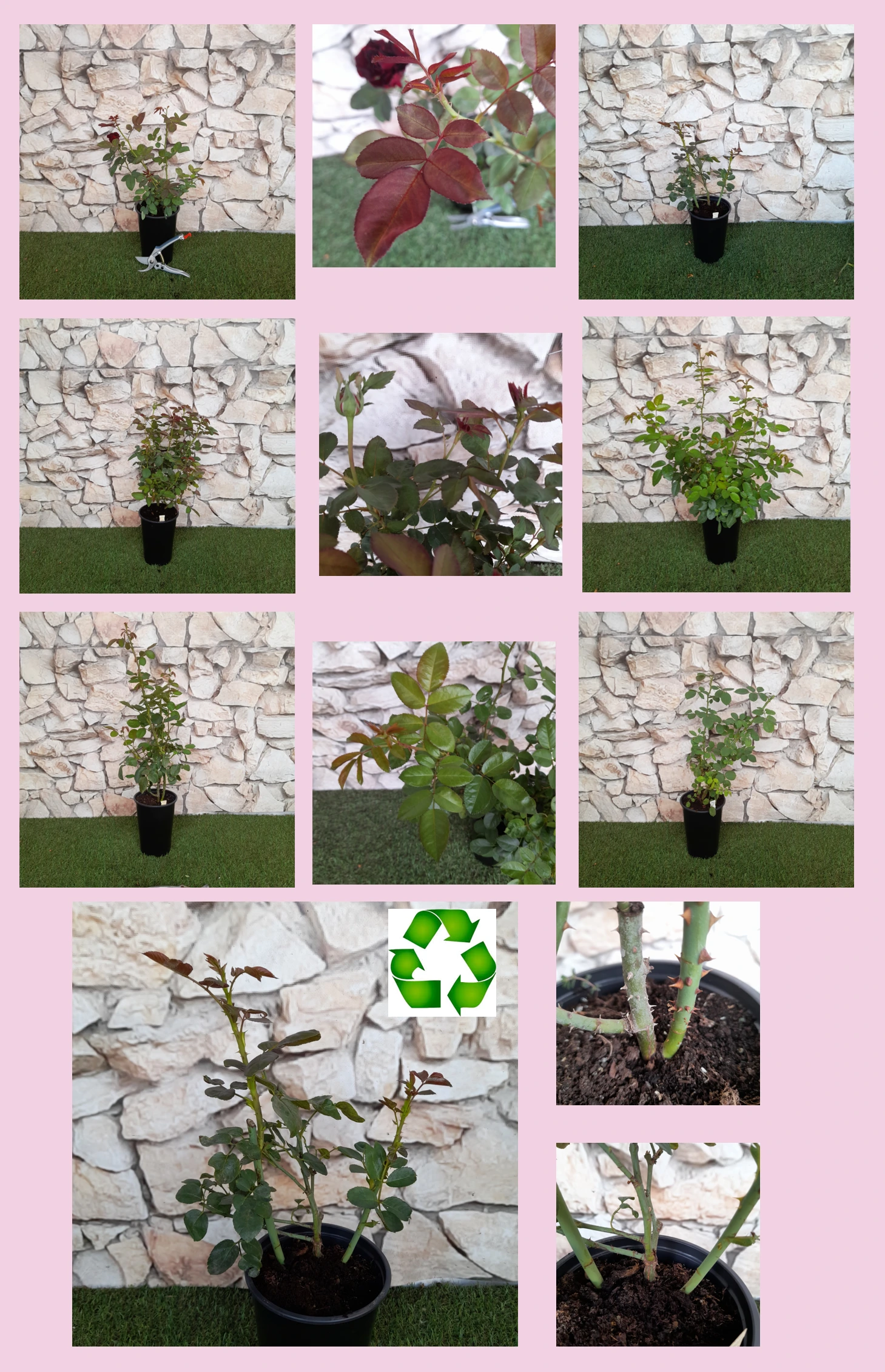
Crop overview: several varieties and growth stages in a short crop section.Shoot system: intensive growth of fresh basal shoots on a young plant.Root system: demonstration of a vigorous root system permeating the growing medium, by removing the pot.Balance: mature plant with root system and shoots in harmony with each other.
Information about the videos
The video series is not a “seasonal showcase”; it illustrates the essence of pharmaROSA® own-root cultivation in a tangible way: how the plant is built up, what the root system is like and how the shoot system regenerates. The recordings were therefore made at different times and with plants at various stages of development, so mixed foliage levels and differing stages of growth may appear in the videos. They are not a ‘sample’ of the batch dispatched, but a visual explanation of how the technology works. The current condition of the rose available to order — typical for the given period and similar to what you can expect to receive in the parcel — is shown in the upper part of the product page.
Pages for private customers Garden roses for the family garden, with minimal care → ORIGINAL® Premium garden roses – instant impact, a truly showpiece garden → EXTRA® Pages for professionals and private customers Roses for public spaces – large areas, sustainable maintenance → NATURAL® Roses for projects – hedge and row planting, fast implementation → RAPID® For professional partners only Production – propagation material for garden roses, wholesale → NEONATAL®
Company details
PharmaRosa Ltd. Company registration number: 01-09-717479 VAT number: 13075314-2-43 Plant health registration no.: HU130721 Bank account (IBAN): HU85117631891388688400000000 BIC (SWIFT): OTPVHUHB Bank name: OTP Bank Nyrt.