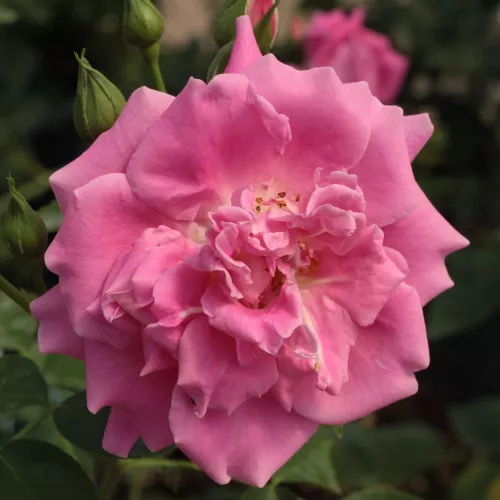
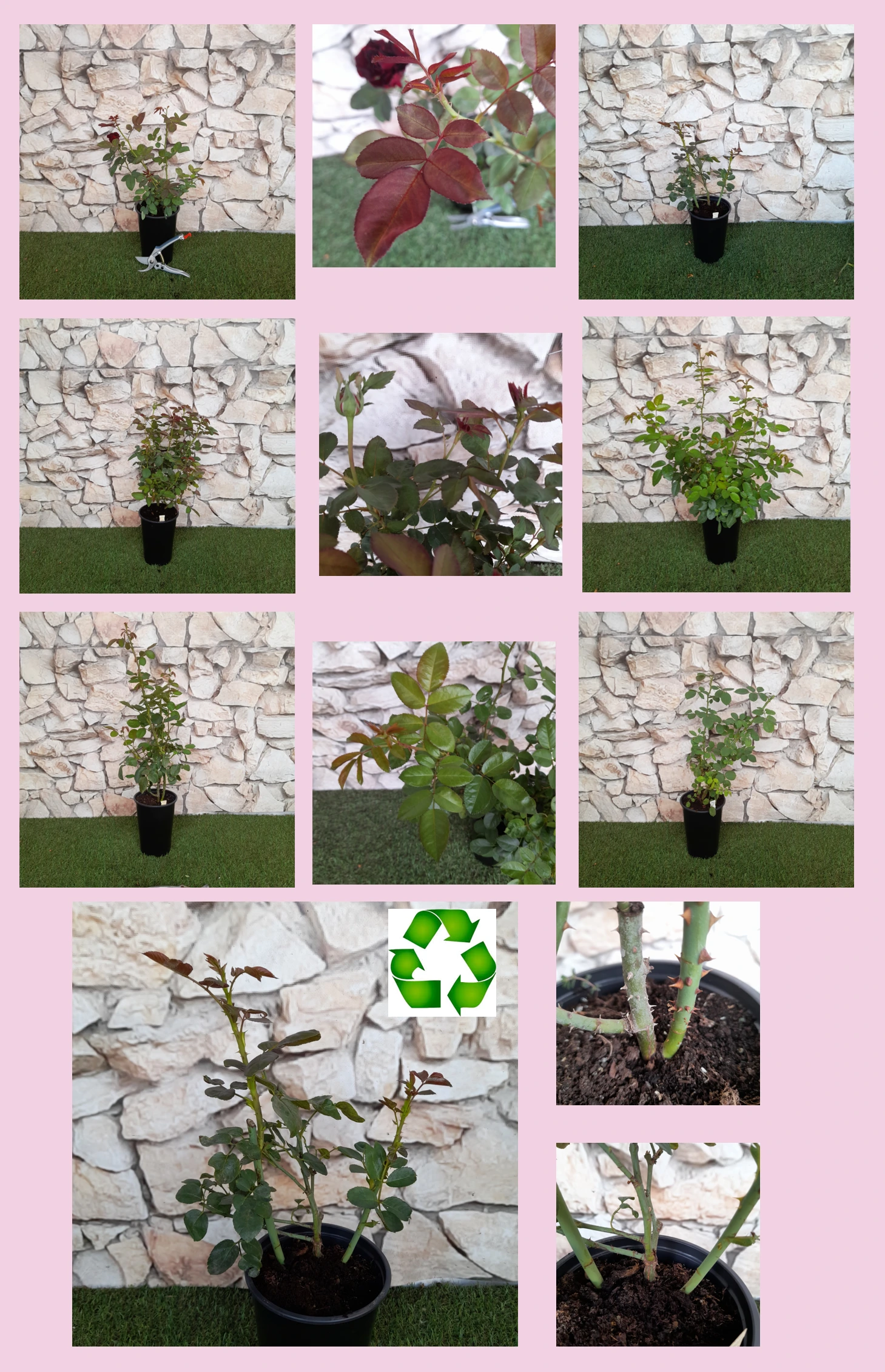
ROUNDELAY – dark‑red bedding grandiflora rose – Swim
Roundelay is a classic dark red grandiflora for beds and borders, combining easy-going planting with upright, bushy structure and impressively durable blooms. Medium-sized, high-centred flowers appear in clusters, giving generous repeat flowering right through summer, while the velvety, colourfast petals hold their deep crimson shade with very little fading. On its own roots it develops a balanced, long-lived shrub that matures steadily in a natural arc of root-building, shoot growth and then full display over three seasons. Its medium care needs suit ordinary family gardens, provided you give it a sunny spot with reasonably free-draining soil that copes well with local rain and wind exposure in British plots. Strong, lasting fragrance and glossy dark foliage add depth to cottage-style schemes, while its neat clusters are ideal for cutting into vases at home.
Usage options
| Target area |
Reasoning |
| Front garden focal clump |
Use 3–5 plants in a sunny front bed to create a compact, upright bush that flowers repeatedly, giving a dependable focal point by the path or gate without advanced pruning skills – ideal for the aesthetic-focused beginner. |
| Small family border with classic reds |
Its steady, bushy structure and limited final spread make it easy to weave into a mixed border, providing rich dark red accents that stay tidy among perennials and small shrubs – ideal for the busy garden owner. |
| Cutting corner near the house |
The high-centred, clustered blooms are sized and shaped for cutting, and repeat well, so a few bushes close to the back door will keep you in fragrant, dark red stems for the house – ideal for the home flower enthusiast. |
| Long-term rose feature bed |
As an own-root plant it builds a stable framework that can regenerate from the base, supporting many years of ornamental value in a dedicated rose bed with only moderate seasonal care – ideal for the long-horizon garden planner. |
| Traditional cottage-style mix with perennials |
Its strong colour and classic form partner well with soft-textured perennials, while the manageable height keeps the planting balanced rather than dominant in informal cottage schemes – ideal for the relaxed border designer. |
| Smaller beds on exposed plots |
The medium-height, upright habit anchors well in the soil so it stands up reliably in open, breezy gardens where ornamental structure still matters despite regular coastal winds – ideal for the weather-aware plot holder. |
| Large patio container (40–50 litres+) |
In a generous pot with good drainage and feeding, it forms a neat, flowering bush that brings colour and scent close to seating areas, without needing elaborate training or shaping – ideal for the time-pressed patio gardener. |
| Simple, repeat-flowering family rose area |
Planted at the recommended spacing, it grows into a coherent, easy-to-read rose patch that flowers in waves, needing only basic deadheading and routine health checks – ideal for the low-maintenance garden seeker. |
Styling ideas
- Cottage Contrast – Pair Roundelay with airy Crocosmia and lavender cotton to offset its velvety crimson clusters and glossy foliage – for lovers of relaxed, traditional cottage borders.
- Front-Door Welcome – Plant three bushes by the path with low evergreen edging to give a structured, scented greeting that looks good from the pavement – for homeowners focused on kerb appeal.
- Red-and-Green Classic – Combine with a backdrop of cherry laurel to highlight the deep red blooms against dark green leaves in a simple, formal bed – for fans of timeless, uncluttered schemes.
- Patio Feature – Grow a single plant in a 50–60 litre container with soft underplanting of hardy herbs to enjoy repeat flowers and scent near seating – for balcony and terrace users.
- Cutting Strip – Line a sunny border edge with a short run of Roundelay for easy access to straight, well-formed stems for the vase – for home florists who like to pick regularly.
Technical cultivar profile
| Parameter |
Data |
| Name and registration |
Grandiflora bed rose marketed as Roundelay – dark-red bedding grandiflora rose – Swim; exhibition grandiflora and cut-flower type; ARS approved exhibition name Roundelay; unregistered cultivar. |
| Origin and breeding |
Bred by Herbert C. Swim at Armstrong Nurseries, California, United States, from ‘Charlotte Armstrong’ × ‘Floradora’; introduced by Armstrong Nurseries in 1953 for garden and exhibition use. |
| Awards and recognition |
Widely recognised mid-century grandiflora, awarded Gold Medal and City of Geneva Prize in 1954 trials, plus RNRS Trial Ground Certificate in 1958 for garden and ornamental performance. |
| Growth and structural characteristics |
Upright, bushy habit reaching about 85–115 cm high and 75–105 cm wide, with moderately dense, glossy dark green foliage and moderate prickliness; forms a balanced shrub in beds and borders. |
| Flower morphology |
Medium-sized, double, high-centred blooms with 26–39 petals, produced mostly in clusters; pointed, cut-rose style buds; remontant with an especially abundant second flush in suitable conditions. |
| Colour data and phenology |
Deep, velvety dark red with subtle burgundy tones; buds deep burgundy, newly opened flowers crimson, remaining colourfast with only slight paling in strong sun and deepening in cooler weather. |
| Fragrance and aroma |
Strong, long-lasting scent typical of classic dark red garden roses; fragrance persists well on the bush and in cut stems, enhancing its value for near-house planting and indoor arrangements. |
| Hip characteristics |
Hip set is generally modest due to the double bloom form; when present, hips are ellipsoid, about 12–18 mm across, with a clear red shade corresponding roughly to RHS 44A in colour. |
| Resistance and winter hardiness |
Hardy to around −21 to −18 °C (RHS H7, USDA 6b, Swedish zone 3); overall disease resistance medium, with high black spot susceptibility, so occasional protective treatments and hygiene are advisable. |
| Horticultural recommendations |
Best in full sun with regular moisture and feeding; suitable for beds, small parks, cutting and specimen use; allow 55–100 cm spacing depending on layout and plan basic plant protection in damp seasons. |
ROUNDELAY – dark‑red bedding grandiflora rose – Swim offers reliable repeat flowering, strong fragrance and a long-lived own-root shrub form that rewards patient gardeners seeking a classic red rose to enjoy for many seasons.