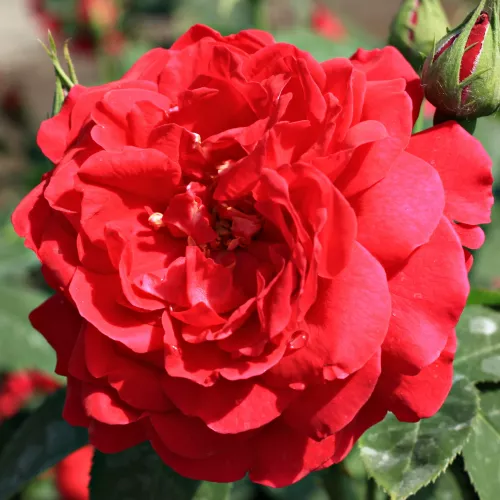
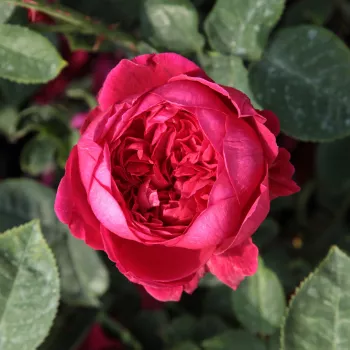
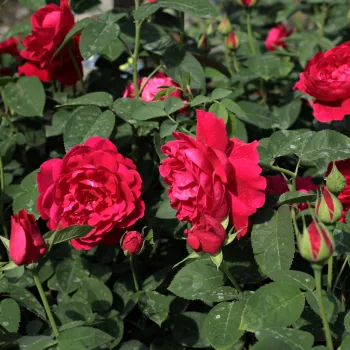
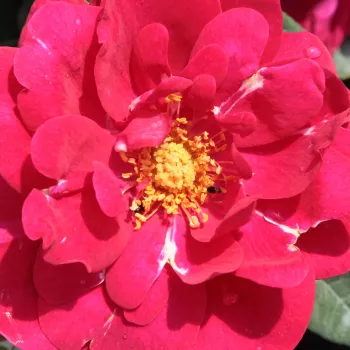
The petals are uniformly a fiery red shade. Fading or colour change is barely noticeable. - floribunda bedding rose - unscented rose - no noticeable scent
– Bushy, compact habit for neat bedding displays
– Vivid fiery red blooms with excellent colour retention
– Reliable repeat flowering with abundant second flush
– Resistant to powdery mildew, black spot and rust
– Low maintenance, suitable for urban plantings
– Special feature: Early 1960s classic, multi-award-winning floribunda from Roseraies Georges Delbard.
Water-wise – Well-arranged composition
pharmaROSA® ORIGINAL 2-litre own-root potted rose
18,20 £
Unfortunately, we are currently unable to ship to the United Kingdom; we only deliver to countries within the European Union. For more information, please contact us!
3.5(5930)
DIABLOTIN – red bedding floribunda rose – Delbard & Chabert
compact floribunda shrubs of Diablotin bring disciplined, vivid red colour to small British gardens, staying reliably tidy in front beds, low hedges and along paths. The flowers appear in generous clusters and repeat steadily from early summer, so a modest group of plants quickly gives the effect of a carefully planned display with minimal deadheading. On its own roots the plant matures gradually, building a long-lived framework that can regenerate from the base and hold its shape for years. In ordinary garden soil it is reassuringly resilient against common fungal problems, coping well even in more humid, disease-prone seasons. This makes it particularly easy-care for time-pressed gardeners who want bedding roses that simply get on with the job. The bushy, low, edging habit also suits containers and raised beds where improved drainage helps it handle heavier clay and persistent wet weather. Over the first seasons you see roots establishing, then stronger shoots, and by the third year a settled plant at full ornamental value.
Diablotin rose in full bloom, showing vivid red, double flowers.
Closed bud of Diablotin, a red bedding floribunda rose.
Usage options
Target area
Reasoning
Front garden bedding strip along the drive or pavement
Low, bushy plants form a compact, continuous band of fiery red, giving a smart, intentional look without overpowering the space. The clear shape is easy to read from the street and needs only light trimming, suiting busy homeowners.
Low informal hedge to define paths or lawn edges
Regular spacing creates a neat, waist-high line that softens hard edges while still feeling ordered. The dense foliage screens the bare ground, and simple annual pruning keeps the hedge in check, ideal for tidy-minded beginners.
Small mixed cottage-style bed by the house
The compact habit leaves room for perennials while its repeat clusters of red provide a constant anchor colour. Because it stays relatively low, it will not swamp neighbouring plants, making layout easier for style-focused novices.
Urban front garden with limited time for upkeep
Strong disease resistance and modest size mean few interventions: basic watering, an annual feed and an occasional tidy are generally enough, even in damp, fungus-prone seasons, reassuring for time-pressed city gardeners.
Small groups in raised beds or heavy-clay borders
Planting 3–5 together gives a cohesive block of colour that copes better with variable drainage than fussier varieties, especially where raised beds help manage persistent wet and wind in exposed plots, handy for practical homeowners.
Feature plant in a large patio container (40–50 litres)
The bushy, compact structure suits big pots where its repeat flowering keeps the terrace bright. In a generous container, watering and feeding are straightforward and growth is easy to manage, appealing to balcony and patio gardeners.
Long-season colour focus in small beds
Remontant flowering with a strong second flush ensures colour beyond the first summer peak. Once established, the own-root plant maintains its framework and can regenerate from the base after hard pruning, rewarding long-term planners.
Simple, low-maintenance family garden border
Reliable flowering, medium self-cleaning and low maintenance needs mean you can keep borders looking purposeful with a few light sessions each season rather than weekly attention, ideal for casual family gardeners.
Styling ideas
Cottage-Ribbon – run a single or double row along a path, weaving between clumps of hardy geraniums and low grasses for a relaxed, old-fashioned border – suits romantic cottage-garden enthusiasts
Crimson-Carpet – mass-plant in a shallow arc at the front of a bed to create a bold red “carpet” against taller pastel perennials – ideal for colour-driven beginners
Patio-Focus – place one shrub in a 40–50 litre terracotta pot, underplant with trailing thyme or euonymus for year-round structure – perfect for small-patio and balcony owners
Orderly-Edge – clip a lightly formal low hedge to frame a lawn or play area, pairing with neat box or euonymus shapes behind – appealing to fans of structured, low-effort gardens
Town-Garden – combine Diablotin with airy companions like hare’s-ear bupleurum and hemp-agrimony for a soft, upright texture mix – designed for style-conscious urban gardeners
Technical cultivar profile
Parameter
Data
Name and registration
Floribunda bed rose, registered as DELpo, traded as Diablotin bedding rose DELpo; shrub rose type for bedding, edging and low hedging in family gardens.
Origin and breeding
Bred in France by Georges Delbard and André Chabert from ‘Orléans Rose’ × ‘Fashion’; introduced and registered in 1961 by Roseraies Georges Delbard.
Awards and recognition
Trial Ground Certificate, National Rose Society UK (1961); certificates at Madrid and Bagatelle rose trials (1961); silver medal from Société Nationale d’Horticulture.
Growth and structural characteristics
Compact, bushy shrub 60–90 cm high, 50–70 cm wide, with dense mid-green, matt foliage and moderate prickliness; forms a well-filled, tidy low bush suitable for bedding and borders.
Flower morphology
Medium, 1.5–2.75 inch, double, cup-shaped blooms carried in clusters; 26–39 petals give a full effect, and the cultivar remontantly repeats with an abundant second flush in season.
Colour data and phenology
Uniform fiery red petals, ARS red; RHS 46A outer and 46B inner; colour holds very well, fading only slightly to a more matt red as blooms mature, remaining bright even when fully open.
Fragrance and aroma
No noticeable scent; bred primarily for colour effect and bedding performance rather than perfume, making it best used where visual impact is the main requirement.
Hip characteristics
Occasional small, spherical orange-red hips 6–9 mm across may form late in the season, but are usually unobtrusive and do not significantly affect the plant’s decorative value.
Resistance and winter hardiness
Rated resistant to powdery mildew, black spot and rust; hardy to approximately –21 to –18 °C (RHS H7, Swedish Zon 3, USDA 6b), with moderate heat and drought tolerance in UK gardens.
Horticultural recommendations
Best at 35–40 cm spacing in beds or hedges, 65 cm as a specimen; low maintenance with occasional deadheading; suitable for partial shade, containers and urban plantings with regular watering.
DIABLOTIN bedding rose DELpo offers compact, vivid red bedding colour, dependable repeat flowering and durable, own-root growth for long-term structure, making it a thoughtful choice for straightforward, attractive family gardens.
Detailed product attributes
Product Identification Data
Product Name:
DIABLOTIN – red bedding floribunda rose - Delbard & Chabert
Product Type:
pharmaROSA® ORIGINAL - 2-litre own-root potted rose
Competition and Show Awards:
Trial Ground Certificate – National Rose Society, United Kingdom (1961); Certificate – Concours International de Madrid (1961); Certificate – Concours International des Roses Nouvelles de Bagatelle, Paris (1961); Silver medal – Société Nationale d’Horticu
Flower Colour Description:
The petals are uniformly a fiery red shade. Fading or colour change is barely noticeable.
Closed Bud:
Velvety, deep red surface with a slightly darker tone at the apex.
Newly Opened Flower:
On opening, the outer petals are bright red and the inner petals a slightly darker red.
Full Bloom:
It remains bright red even when fully open, and the ring of inner petals is a slightly deeper shade.
Before Fading:
The red hue gently fades, taking on a matt tone.
Colour Fading Description:
As the bloom opens, the red hue only slightly fades; by the end it becomes a little more matte, but overall remains vivid red.
Pollinator Attraction:
Double (26–39 petals) flowers have limited attraction for pollinators, since the double form and reduced accessibility of the stamens restrict foraging.
Pollinator-Friendly Rating:
Double (26–39 petalled) flowers mean its pollinator-friendliness is limited.
Heat and Drought Tolerance Description:
Blooms continuously in hot conditions, tolerates moderate drought; requires watering during prolonged dry periods.
Our product is a rose grown with pharmaROSA®’s unique cultivation technology!
2-litre, own-root, potted rose.
With a shoot system appropriate to the season.
With a root system that thoroughly permeates the growing medium.
Quality compliant with the requirements of the E.N.A. (European Nurserystock Association).
Supplied in unique packaging that prevents damage.
Can be planted during frost-free periods.
True-to-variety rose bush with a unique identifier.
The pharmaROSA® own-root potted rose is a well-rooted plant that supports reliable establishment when planted and cared for properly, so it can be planted whenever the soil is not frozen.
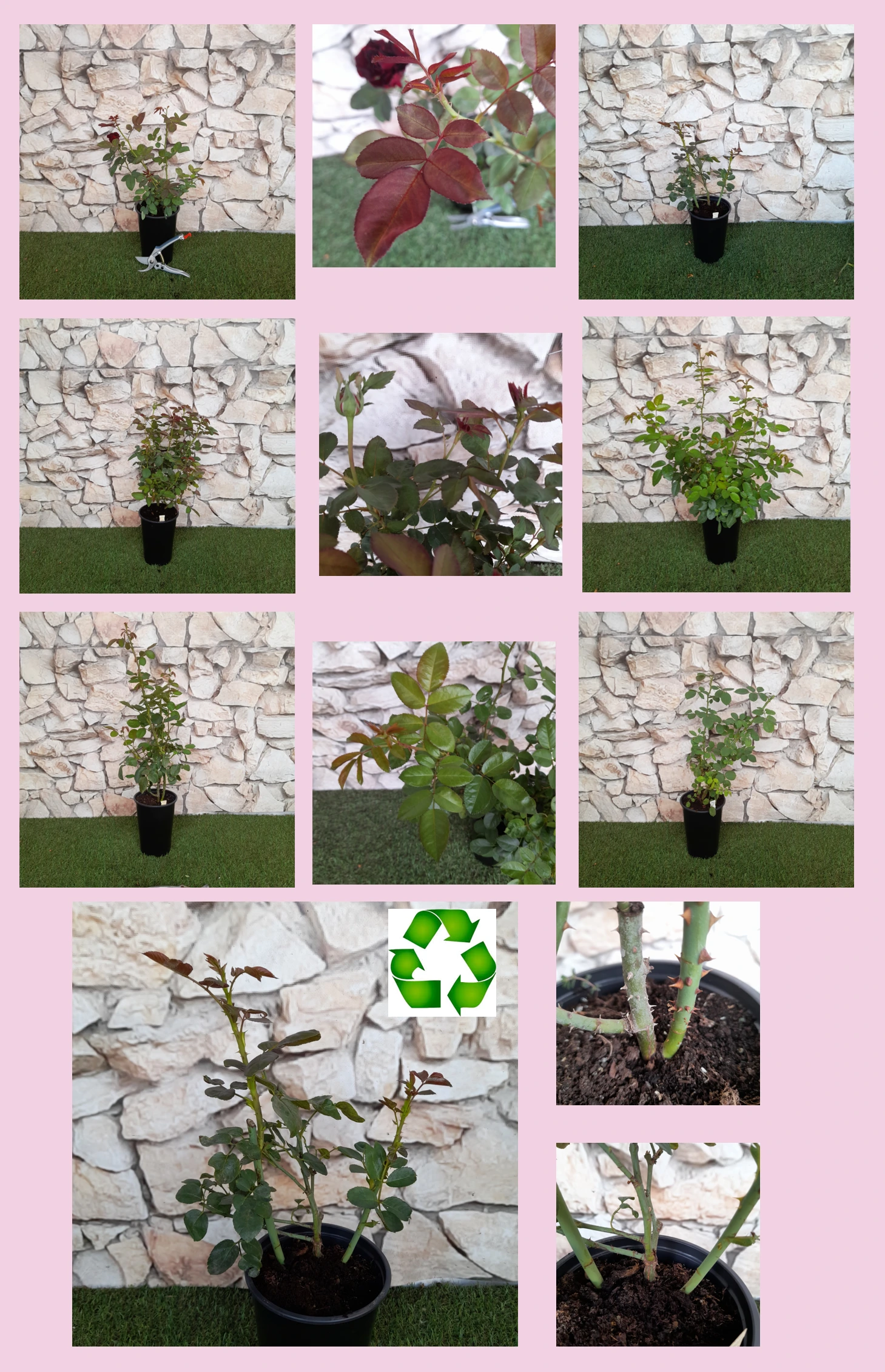
Crop overview: several varieties and growth stages in a short crop section.Shoot system: intensive growth of fresh basal shoots on a young plant.Root system: demonstration of a vigorous root system permeating the growing medium, by removing the pot.Balance: mature plant with root system and shoots in harmony with each other.
Information about the videos
The video series is not a “seasonal showcase”; it illustrates the essence of pharmaROSA® own-root cultivation in a tangible way: how the plant is built up, what the root system is like and how the shoot system regenerates. The recordings were therefore made at different times and with plants at various stages of development, so mixed foliage levels and differing stages of growth may appear in the videos. They are not a ‘sample’ of the batch dispatched, but a visual explanation of how the technology works. The current condition of the rose available to order — typical for the given period and similar to what you can expect to receive in the parcel — is shown in the upper part of the product page.
Pages for private customers Garden roses for the family garden, with minimal care → ORIGINAL® Premium garden roses – instant impact, a truly showpiece garden → EXTRA® Pages for professionals and private customers Roses for public spaces – large areas, sustainable maintenance → NATURAL® Roses for projects – hedge and row planting, fast implementation → RAPID® For professional partners only Production – propagation material for garden roses, wholesale → NEONATAL®
Company details
PharmaRosa Ltd. Company registration number: 01-09-717479 VAT number: 13075314-2-43 Plant health registration no.: HU130721 Bank account (IBAN): HU85117631891388688400000000 BIC (SWIFT): OTPVHUHB Bank name: OTP Bank Nyrt.