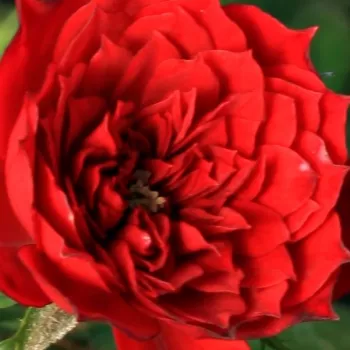
DETROIT™ – red dwarf-mini rose
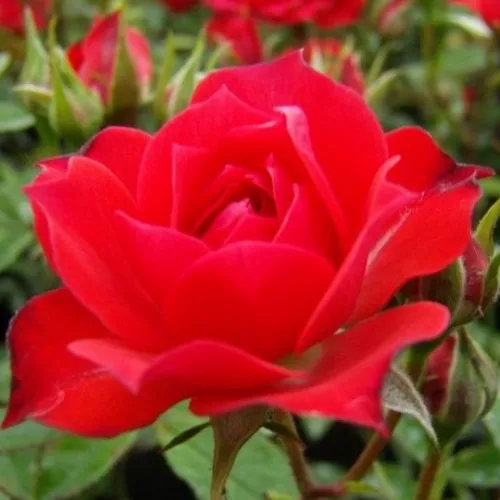
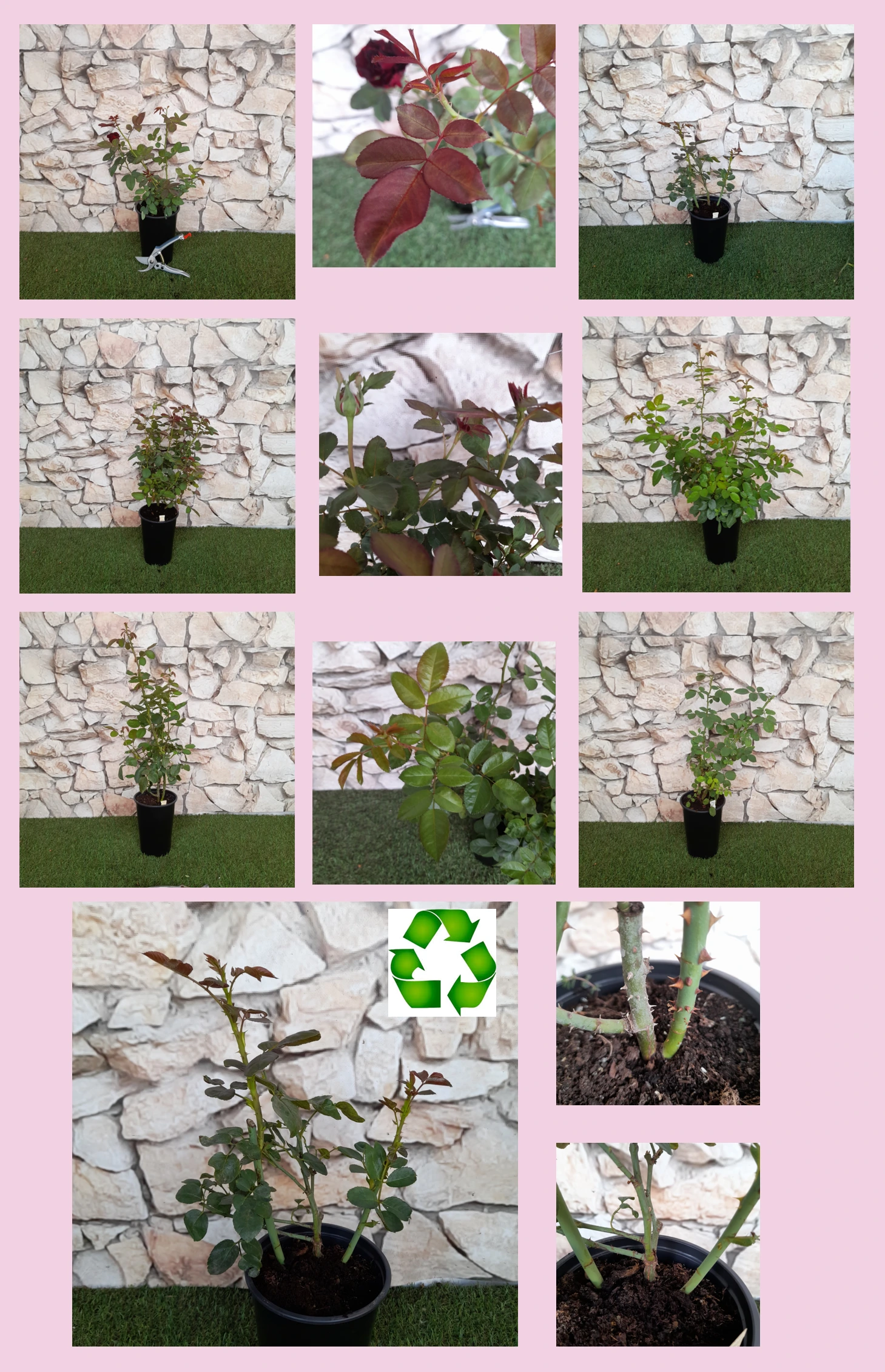
Compact and upright, DETROIT™ builds a neat, bushy presence in small gardens, rewarding you with vivid scarlet-red, double pompon blooms that keep returning in strong flushes across the season. Its medium care needs are straightforward: reasonable feeding, watering and a light annual prune are enough for healthy, balanced growth, even where you must manage wetter spells and improve soil to cope with persistent rainfall and cool winds. The plant’s own-root longevity supports a naturally stable shape over time, while its versatile size suits front gardens, low hedging and containers of at least 40–50 litres. Moderately dense, dark green foliage provides an elegant backdrop to the flowers, and the rose’s resilient winter hardiness helps it settle as a long-term feature in typical British family plots. Over the seasons, roots establish, then shoots build structure, and by the third year the full ornamental effect of this tidy, repeat-flowering miniature rose really comes into its own.
Usage options
| Target area |
Reasoning |
| Front garden focal point |
The compact, upright habit gives a clearly defined shape that anchors small front gardens without overwhelming the space. Vivid red blooms add instant kerb appeal and remain in scale with paths, low walls and driveways, suiting appearance-conscious homeowners. |
| Small mixed border or cottage-style bed |
Its repeat-flowering clusters of scarlet-red pompon blooms weave easily into classic cottage plantings, adding colour between perennials and annuals. The medium maintenance level fits busy lives while still offering a traditional garden feel for enthusiastic beginners. |
| Low informal hedge or edging row |
Planted at recommended distances, the moderately dense foliage and upright growth line paths or lawn edges with a low, flowered barrier. Own-root plants knit into a lasting strip of colour and structure, ideal for long-term planners. |
| Feature plant in a large container (40–50 L+) |
DETROIT™ adapts well to generous pots, where its tidy height and spread stay manageable on patios and by front doors. Regular watering and feeding are simple to organise in containers, even for time-pressed city-dwellers. |
| Small-group planting for colour impact |
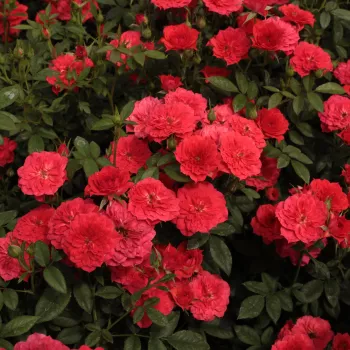
Groups of three to five plants create a strong block of red, with clustered blooms giving the impression of a much larger rose area. The compact stature leaves room for companions, making balanced schemes easier for design-conscious gardeners. |
| Long-season flowering accent near seating areas |
Strong repeat-flowering keeps colour returning through the season, so one or two plants near a bench or terrace stay interesting over many months. Limited fragrance is offset by continuous visual appeal for relaxation-focused families. |
| Weather-conscious coastal or exposed gardens |
Its sturdy, upright build and moderate foliage density avoid becoming top-heavy, helping the plant stand up in breezier spots where improving drainage and air flow matters in frequently wet, wind-affected sites for practical-minded owners. |
| Environmentally aware ornamental schemes |
Medium disease resistance, with noted robustness against powdery mildew and black spot, supports more sustainable care with fewer treatments when basic hygiene and monitoring are in place, appealing to eco-responsible gardeners. |
Styling ideas
- COTTAGE RIBBON – Line a narrow bed with DETROIT™ and interplant soft pink campanulas and white daisies for a classic cottage-edge look – ideal for lovers of romantic front gardens.
- SCARLET ACCENT – Place one rose in a large terracotta pot with trailing white lobelia to highlight the vivid red flowers by the front door – suited to urban homeowners wanting quick kerb appeal.
- LOW HEDGE – Use a row along a path with alternating clumps of lavender for scent and texture contrast, keeping the overall hedge below knee height – perfect for families needing clear garden structure.
- POCKET BORDER – In a small border, group three plants in a loose triangle and underplant with silver-leaved groundcovers to emphasise form and colour – good for design-conscious beginners.
- GRASSLAND MIX – Combine DETROIT™ with airy switchgrass and warm-toned blanketflower to create a contemporary, low, prairie-style strip – appealing to eco-minded gardeners seeking movement and colour.
Technical cultivar profile
| Parameter |
Data |
| Name and registration |
DETROIT™ – red dwarf-mini rose from the Mini – dwarf rose collection; miniature Hybrid Setigera type with no separate registered name recorded for exhibition or registration databases. |
| Origin and breeding |
Parentage and breeder data are not documented; likely bred around 2000, with exact introduction and registration years unknown, distributed as a compact ornamental for garden use. |
| Growth and structural characteristics |
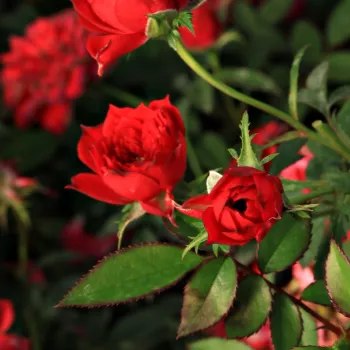
Forms an upright, compact bush about 100–120 cm tall and 70–90 cm wide, with moderately dense, slightly glossy dark green foliage and a moderately thorny framework suitable for edging or small beds. |
| Flower morphology |
Double, 26–39-petalled pompon flowers carried in clusters; small blooms of 0.5–1.5 inches across, produced repeatedly with a notably strong second flush following the main early-summer flowering. |
| Colour data and phenology |
Flowers open bright scarlet red with a warm orange glow at the base, then soften to brick–mahogany with pinkish-brown edges, giving an evolving red display of medium colour retention through the bloom cycle. |
| Fragrance and aroma |
No noticeable fragrance; flowers are primarily visual. The fully double blooms limit access to stamens, so pollinator value is modest, with the cultivar chosen mainly for its colour and form. |
| Hip characteristics |
Occasionally forms small, spherical rose hips about 11–13 mm in diameter, bright red in colour, adding a discreet decorative note in late season when present on the shrub. |
| Resistance and winter hardiness |
Medium overall disease resistance; shows resistance to powdery mildew and black spot, with rust at medium levels. Hardy to around –21 to –18 °C (RHS H7), suiting most temperate UK gardens. |
| Horticultural recommendations |
Medium maintenance: occasional plant protection and routine feeding recommended. Suggested spacing 55 cm for mass planting, 50 cm for hedging, 90 cm as a solitary, giving about 3.2–3.7 plants per m². |
DETROIT™ – red dwarf-mini rose offers compact structure, repeat scarlet flowering and reliable hardiness on a durable own-root base, making it a thoughtful choice if you want lasting colour with manageable care.