DENTELLE DE BRUXELLES – carmine-red rambler climbing rose - Lens
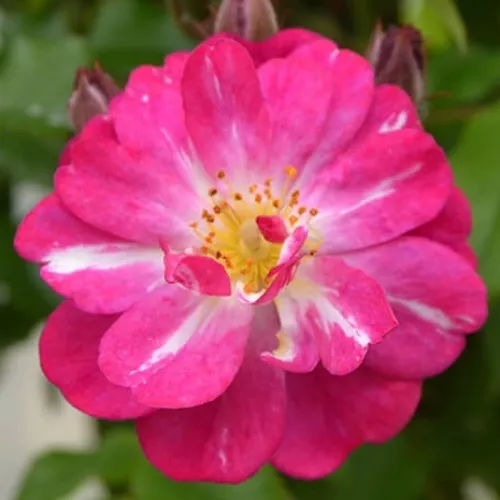
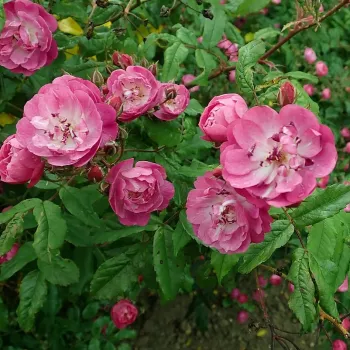
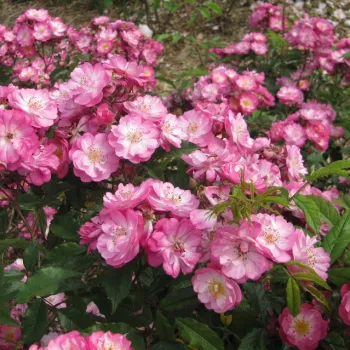
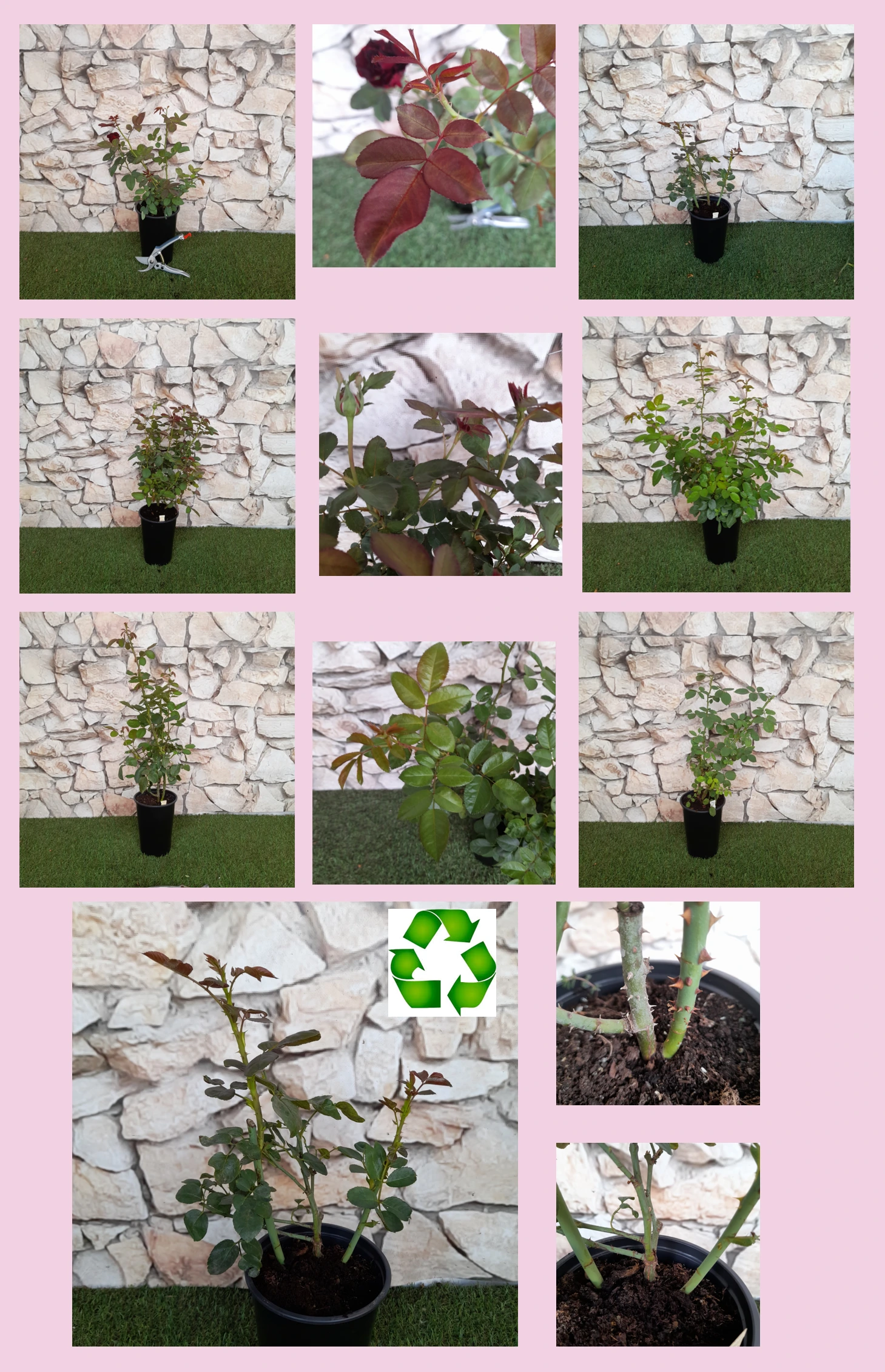
With its intricate carmine-red blooms, DENTELLE DE BRUXELLES creates a romantic, lace-like curtain of colour that suits classic British front gardens and relaxed cottage schemes. This climber is easy to integrate into existing planting, rewarding even modest care with reliable flowering and steadily increasing coverage year after year. Own-root plants settle securely, building a deep, resilient root system that supports long-term longevity and natural regeneration after pruning or winter weather. Its remontant flowering habit delivers a generous early summer display followed by a second abundant flush, so a single plant can dress a wall, arch or pergola for months. The semi-double, bee-visited clusters add wildlife interest, while naturally self-shedding blooms help retain a tidy look without constant deadheading. Dense, mid-green foliage clothes the whole framework, providing cover and privacy even between flowering peaks. This variety copes well in typical UK conditions, managing breezy, damp spells and heavier soils when given sensible drainage and support around the house in coastal gardens. Over time, the climber will form a stable, bushy structure, giving you a classic, low-fuss vertical feature that matures gracefully and becomes part of the fabric of your garden. As roots strengthen in the first year and top growth builds in the second, by the third season you can expect its full ornamental impact to transform your chosen spot.
Usage options
| Target area |
Reasoning |
| Front-garden house wall or garage facade |
Trained on trellis or wires, this climber steadily clothes a facade with dense mid-green foliage and waves of carmine-red flowers, giving structure and colour while needing only light seasonal pruning – ideal for a time-pressed beginner. |
| Archway or pergola in a family garden |
Its bushy, vigorous habit and remontant flowering make it well suited to covering an arch or pergola, providing repeating colour, dappled shade and a romantic walkway effect with minimal ongoing intervention – perfect for a style-conscious homeowner. |
| Mixed cottage-style border backdrop |
Used at the back of a border with perennials in front, the reliable repeat flowering adds vertical interest and colour continuity, while own-root robustness supports long-term performance without complicated rose management – reassuring for a busy gardener. |
| Screening between properties or around seating areas |
Planted along a boundary and lightly guided on posts and wires, the dense foliage offers natural cover and soft screening, with light, subtle scent and colourful clusters that enhance privacy without demanding formal hedging skills – suitable for a privacy-seeking family. |
| Small group along a fence or railings |
A row of 2–3 plants can create a continuous flowering line along fencing, with self-cleaning blooms helping keep the scene neat and reducing deadheading, so you gain a refined look with relatively little hands-on care – helpful for a practical owner. |
| Partially shaded side path or north-east aspect |
This rose tolerates partial shade, so it can brighten less-sunny spots with clusters of colour, where many other climbers struggle, forming a stable framework as it adapts to local soil and care – encouraging for a tentative novice. |
| Large container on a patio or roof terrace |
In a 40–50 litre container with support, it becomes a vertical accent that flowers repeatedly, and as an own-root plant it re-establishes well after occasional repotting or pruning, supporting a long-lived feature for compact spaces – ideal for an urban gardener. |
| Exposed, breezy corner near the coast |
Once anchored to a sturdy support, its consistent growth and medium disease resistance cope with typical British wind and humidity, provided the soil drains reasonably well in wetter spells, so it suits moderately challenging plots for a coastal-front householder. |
Styling ideas
- COTTAGE ARCH – Train over a timber arch with foxgloves, Monarda and digitalis at the base for a romantic entrance – ideal for lovers of classic cottage gardens.
- FRONT-FENCE VEIL – Let it drape along low front-garden railings with neat edging perennials for a tidy yet soft street-facing display – suitable for image-conscious homeowners.
- PATIO COLUMN – Grow in a 40–50 litre pot around an obelisk, underplant with lavender and low grasses for vertical interest on terraces – good for space-limited city gardeners.
- WILDLIFE RIBBON – Combine along a boundary with Liatris and bee-friendly perennials to create a nectar-rich strip that also screens gently – appealing to wildlife-focused families.
- SHADED-CORNER LIFT – Use in a lightly shaded side bed with ferns and hostas, where its carmine-red clusters add height and colour without demanding full sun – helpful for inexperienced shade gardeners.
Technical cultivar profile
| Parameter |
Data |
| Name and registration |
Dentelle de Bruxelles, registered as LENkivi, rambler-type climbing rose in the Climbing rose collection; American Rose Society exhibition name Dentelle de Bruxelles. |
| Origin and breeding |
Bred by Louis Lens, Belgium, from ‘Kiftsgate’ × ‘Violet Hood’; bred 1986, registered 1986, introduced 1988 by Lens Roses and Pépinières Louis Lens SA. |
| Growth and structural characteristics |
Vigorous, bushy climber reaching about 180–280 cm high and 120–200 cm spread, with dense, slightly glossy mid-green foliage and moderate prickliness on the canes. |
| Flower morphology |
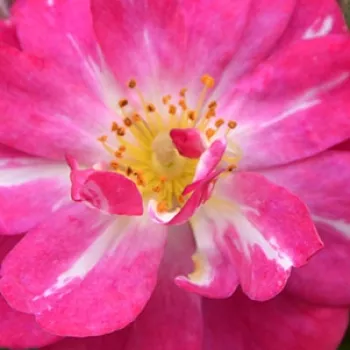
Semi-double, small cup-shaped flowers, approximately 0.5–1.5 inches, carried in clusters; around 13–25 petals per bloom, with abundant repeat flowering in a remontant habit. |
| Colour data and phenology |
Deep carmine-red with subtle violet tinge; buds dark carmine-red, fading through pale pink to whitish-lilac towards the centre, with very good colour retention through the flowering period. |
| Fragrance and aroma |
Mild, subtle fragrance; not overpowering but present around clusters, contributing a gentle rose scent while keeping the plant suitable for paths, entrances and compact seating areas. |
| Hip characteristics |
Produces numerous small, spherical hips, around 6–10 mm in diameter, carmine-red, adding autumn and early winter ornamental interest and extending the seasonal value of the plant. |
| Resistance and winter hardiness |
Medium resistance to powdery mildew, black spot and rust; hardy to approximately −32 to −29 °C (RHS H7, Swedish zone 5, USDA zone 4b) under normal garden conditions. |
| Horticultural recommendations |
Suitable for beds, parks, specimen use and urban spaces; medium maintenance, appreciates protection in high disease pressure areas; tolerates partial shade and benefits from regular watering in drought. |
DENTELLE DE BRUXELLES offers reliable repeat flowering, neat self-cleaning clusters and long-lived own-root strength, making it a thoughtful choice for those planning a lasting, low-fuss climbing feature.