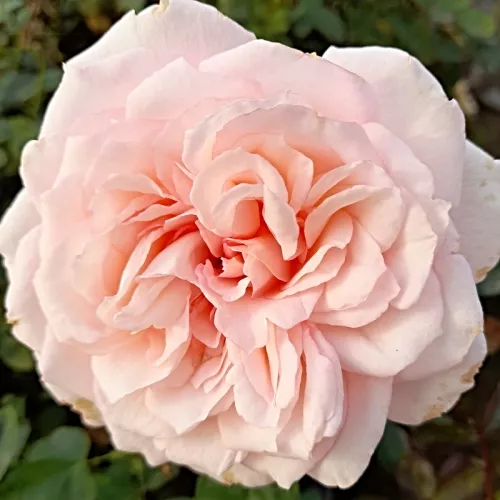
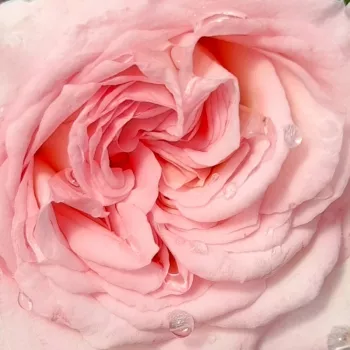
The flower is characterised by a delicate silvery‑pink tone. - nostalgia rose - strong, richly scented rose - sweet, rich character
– Romantic pale-pink rosette blooms in clusters
– Very full flowers with strong, rich fragrance
– Upright, bushy shrub for beds or containers
– Dark, glossy foliage gives elegant contrast
– Winter-hardy to RHS H7, moderate disease resistance
– Special feature: Blooms fade from silvery pink to creamy tones, creating a nostalgic, changing display.
Harmonious environment – Minimal maintenance
pharmaROSA® ORIGINAL 2-litre own-root potted rose
18,70 £
Unfortunately, we are currently unable to ship to the United Kingdom; we only deliver to countries within the European Union. For more information, please contact us!
3(3757)
Daisy's Delight – pale pink nostalgic rose – Scarman
Nostalgic rosettes of pale silvery pink, a romantic focal point in small beds and front gardens, combine with upright bushy growth and dense dark foliage for an easy, traditional cottage feel; own-root plants establish securely, forming a long-lived structure that copes well even where soil stays heavy after rain and needs careful drainage management. Strong, sweet fragrance and generous remontant flowering give reliable display from summer onwards, while the plant steadily develops – first putting energy into roots, then into sturdy shoots, and by the third year reaching its full ornamental impact with minimal intervention beyond basic feeding and watering.
Freshly opened flower of Daisy's Delight, showing silvery-tinged pale pink petals.
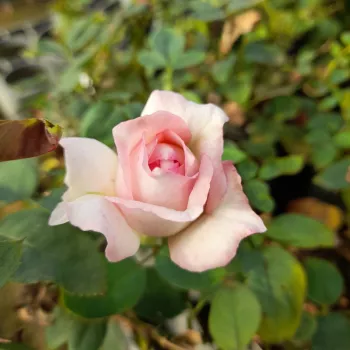
Closed bud of Daisy's Delight, showing its uniform silvery powdery pink tone.
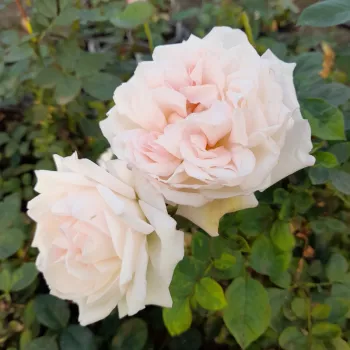
Daisy's Delight in full bloom, showing a very full rosette flower form.
Usage options
Target area
Reasoning
Front garden feature rose
Daisy's Delight forms an upright, well-shaped shrub around 110–160 cm, ideal as a welcoming feature by a gate, path or front door. Its dense, glossy dark foliage looks tidy even between flushes, supporting the medium maintenance requirement. Perfect for the style-conscious homeowner
Romantic cottage-style bed
The very full, rosette-shaped blooms and pale silvery-pink colour suit traditional cottage mixes with perennials and grasses, echoing classic British front gardens without demanding expert care or complex pruning. A good choice for the cottage-garden beginner
Small group planting (1–3 shrubs)
Planting two or three shrubs at 110–120 cm spacing creates a soft, billowing line or loose hedge, giving more impact than a single plant while remaining easy to look after in a family garden. Well suited to the time-poor gardener
Feature in mixed border
The remontant flowering habit provides a generous second flush, weaving repeat colour through a mixed border. Dark, glossy foliage sets off lighter companion plants and maintains structure once the main summer display has passed. Ideal for the long-season planner
Container on patio or terrace
Its upright habit and strong fragrance work well in a large container, where flowers can be enjoyed up close from seating areas; choose a substantial 40–50 litre pot to support long-term root development and reduce watering frequency. Best for the compact-garden owner
Low-maintenance family garden rose
Moderate disease resistance and a medium maintenance requirement mean routine checks and occasional treatments are usually sufficient, without the need for specialised rose care, while own-root growth helps the shrub recover well from any setbacks. Suits the busy family
Structural rose for long-term planting
On its own roots the plant gradually forms a balanced, stable shrub that rebuilds well after pruning and can remain in place for many years, giving enduring romantic character without frequent replacement or replanting. Ideal for the long-view gardener
Bed with difficult, heavier soil
Once established in well-prepared ground, the robust shrub form anchors reliably even where heavier soils hold moisture; raised beds or improved drainage help it settle and then perform steadily, limiting worry over wet spells in typical British weather. Reassuring for the cautious beginner
Styling ideas
Cottage-border trio – Plant three shrubs in a gentle curve with Stipa tenuissima and soft blue Aster novi-belgii for a romantic, billowing border – for lovers of relaxed cottage style
Front-door welcome – Use a single shrub flanking a path with low lavender or nepeta edging to frame the entrance in scented pale pink – for homeowners enhancing kerb appeal
Patio perfume pot – Grow one plant in a 40–50 litre clay container with trailing thyme at the base to enjoy fragrance near seating – for balcony and terrace gardeners
Roses-and-mock-orange – Combine with Philadelphus coronarius behind the rose for layered white and pink blossom and summer scent – for enthusiasts of classic romantic pairings
Soft screening row – Space shrubs at about 110 cm to form a loose, flowering boundary that feels airy yet private – for families wanting gentle garden structure
Technical cultivar profile
Parameter
Data
Name and registration
Shrub rose, nostalgia type; trade name Daisy's Delight Romantic rose Scarman, ARS exhibition name Daisy's Delight; part of the Romantic rose collection.
Origin and breeding
Bred by John Scarman in Germany around 2009, introduced circa 2015 via Scarman Roses and Landhaus Ettenbühl; exact registration year and parentage are not recorded.
Growth and structural characteristics
Medium to tall upright shrub, around 110–160 cm high and 100–150 cm wide; moderately thorny with dense, dark green, glossy foliage providing a full, structured appearance.
Flower morphology
Large, very full, rosette-shaped clustered flowers with over 40 petals; remontant habit provides initial bloom followed by a generous second flush in suitable conditions.
Colour data and phenology
Silvery pale pink flowers, ARS lp, RHS 36D outer, 158C inner; buds open pink, then lighten to creamy, buttery tones, with colour fading a little faster in strong sun.
Fragrance and aroma
Richly scented rose with a strong, sweet, classic fragrance; heavily double blooms mainly serve ornamental use rather than pollinator support due to enclosed stamens.
Hip characteristics
Forms small, spherical red hips occasionally, around 8–12 mm diameter; hips add a modest decorative touch in late season when present, but are not a main feature.
Resistance and winter hardiness
Hardy to approximately −21 to −18 °C, RHS H7, Swedish zone 3, USDA 6b; moderate resistance to black spot, powdery mildew and rust, requiring periodic monitoring.
Horticultural recommendations
Best in sunny sites with well-drained soil; medium maintenance with occasional pest and disease control; suitable as specimen, in flower beds, or larger containers from 40 litres.
Daisy's Delight offers rich fragrance, repeat flowering and a stable, long-lived own-root shrub for easy front-garden charm; an excellent option to consider when planning a romantic yet manageable border.
Detailed product attributes
Product Identification Data
Product Name:
DAISY'S DELIGHT – pale pink nostalgic rose - Scarman
Product Type:
pharmaROSA® ORIGINAL - 2-litre own-root potted rose
Meaning of Cultivar Name:
The term "Daisy's Delight" refers to the beauty evoked by the daisy flower, that is the common daisy, or by a woman named Daisy.
Pollinator Attraction:
According to the descriptions, its double, marbled flowers are not very attractive to pollinators, as the double flower form and reduced accessibility of the stamens limit pollinator access to nectar and pollen.
Pollinator-Friendly Rating:
Its very double flowers enclose the stamens, making it primarily an ornamental cultivar.
Our product is a rose grown with pharmaROSA®’s unique cultivation technology!
2-litre, own-root, potted rose.
With a shoot system appropriate to the season.
With a root system that thoroughly permeates the growing medium.
Quality compliant with the requirements of the E.N.A. (European Nurserystock Association).
Supplied in unique packaging that prevents damage.
Can be planted during frost-free periods.
True-to-variety rose bush with a unique identifier.
The pharmaROSA® own-root potted rose is a well-rooted plant that supports reliable establishment when planted and cared for properly, so it can be planted whenever the soil is not frozen.
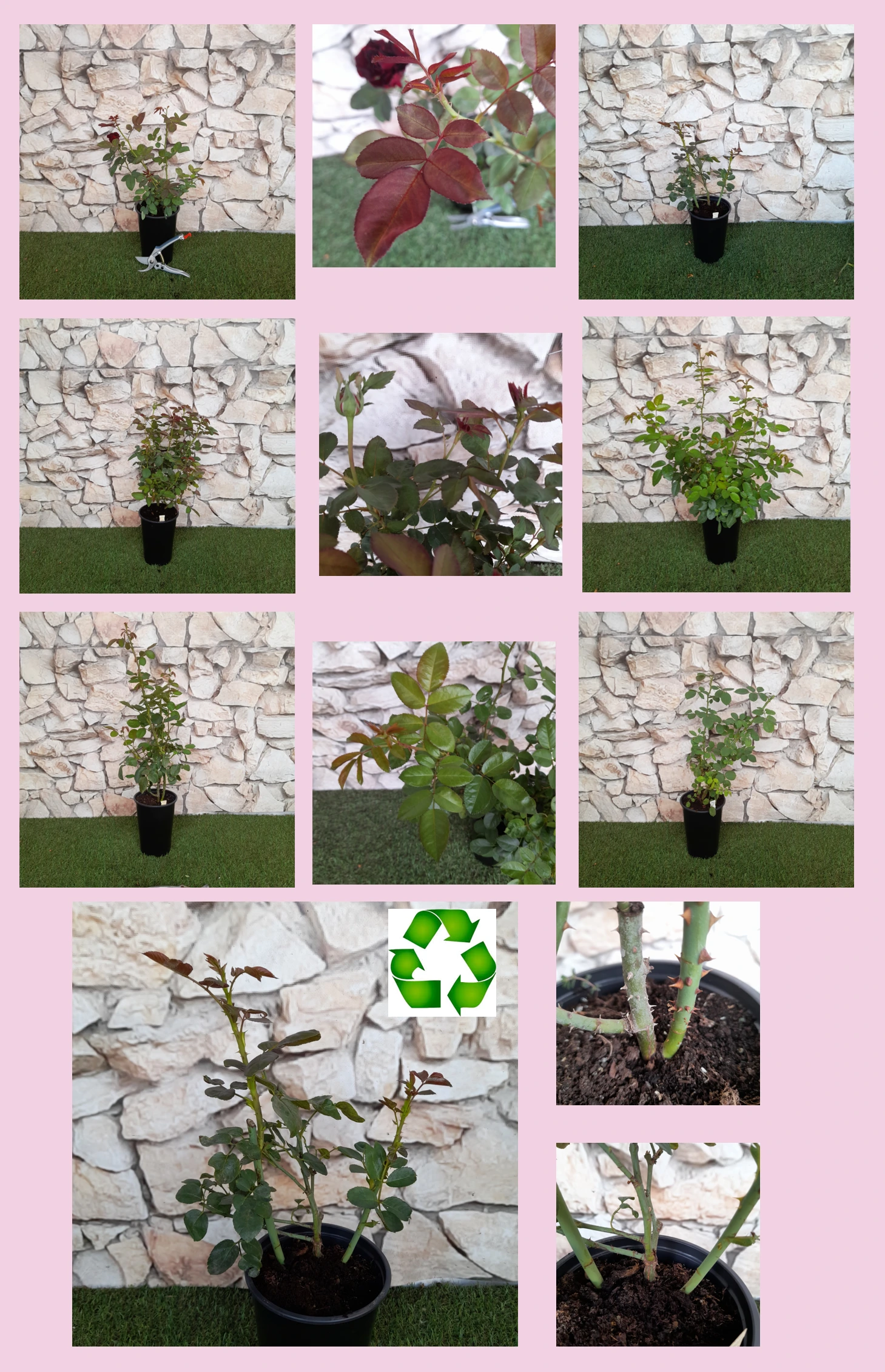
Crop overview: several varieties and growth stages in a short crop section.Shoot system: intensive growth of fresh basal shoots on a young plant.Root system: demonstration of a vigorous root system permeating the growing medium, by removing the pot.Balance: mature plant with root system and shoots in harmony with each other.
Information about the videos
The video series is not a “seasonal showcase”; it illustrates the essence of pharmaROSA® own-root cultivation in a tangible way: how the plant is built up, what the root system is like and how the shoot system regenerates. The recordings were therefore made at different times and with plants at various stages of development, so mixed foliage levels and differing stages of growth may appear in the videos. They are not a ‘sample’ of the batch dispatched, but a visual explanation of how the technology works. The current condition of the rose available to order — typical for the given period and similar to what you can expect to receive in the parcel — is shown in the upper part of the product page.
Pages for private customers Garden roses for the family garden, with minimal care → ORIGINAL® Premium garden roses – instant impact, a truly showpiece garden → EXTRA® Pages for professionals and private customers Roses for public spaces – large areas, sustainable maintenance → NATURAL® Roses for projects – hedge and row planting, fast implementation → RAPID® For professional partners only Production – propagation material for garden roses, wholesale → NEONATAL®
Company details
PharmaRosa Ltd. Company registration number: 01-09-717479 VAT number: 13075314-2-43 Plant health registration no.: HU130721 Bank account (IBAN): HU85117631891388688400000000 BIC (SWIFT): OTPVHUHB Bank name: OTP Bank Nyrt.