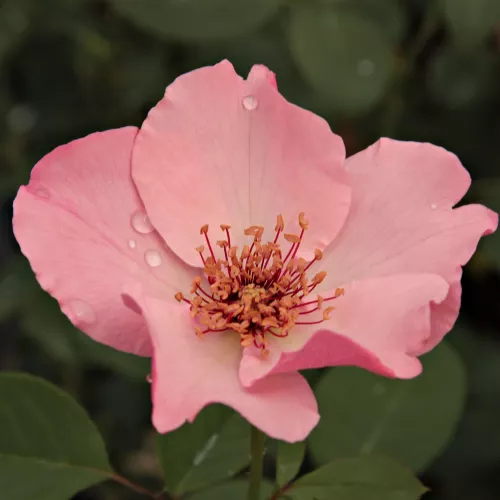
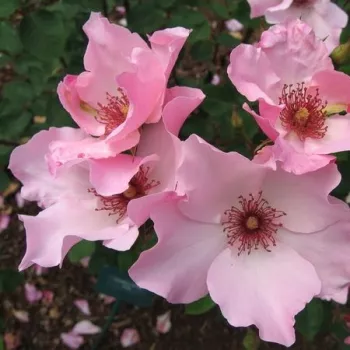
Soft, silky light-pink shade with a delicate silvery tone. - historic, tea rose - medium-strength, clearly scented rose - tea-scented, spicy
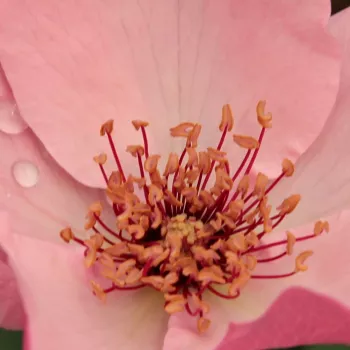
– Silky soft pink blooms with burgundy stamens
– Medium, clearly tea‑spicy fragrance
– Reliable repeat flowering through the season
– Good disease resistance, winter hardy to H7
– Elegant, upright habit for borders and cutting
– Special feature: Historic 1927 Hybrid Tea with ornamental orange‑red hips.
Responsible gardening – Consistent quality
pharmaROSA® ORIGINAL 2-litre own-root potted rose
18,70 £
Unfortunately, we are currently unable to ship to the United Kingdom; we only deliver to countries within the European Union. For more information, please contact us!
5(7792)
Dainty Bess – pink historic tea rose – Archer
Delicate yet reliable, Dainty Bess brings romantic single blooms to classic British front gardens, its upright structure ideal for borders and specimen planting in modest family plots. The silky, light-pink flowers frame bold burgundy stamens, giving a distinctive character that also draws bees and other pollinators to their open centres. Medium, clearly tea‑spiced fragrance adds quiet charm, while moderate disease resistance helps the plant cope steadily even in damp, fungus‑prone seasons and breezy, weather‑exposed situations near the house. As an own‑root plant it settles in for the long term, forming a stable bush that responds well to simple pruning and develops naturally from roots in the first year, to strong shoots in the second, and full ornamental value by the third, giving lasting confidence to the time‑pressed home gardener.
Dainty Bess: egyszerű, lapos virágforma jól látható profilból.
Freshly opened pale silvery-pink bloom of Dainty Bess.
Usage options
Target area
Reasoning
Front garden focal point
The upright, medium‑sized habit makes Dainty Bess perfect as a focal plant beside a path or doorway, where its pale pink, single blooms and burgundy stamens can be appreciated at eye level without overwhelming a smaller space, suiting the needs of the style-conscious home gardener.
Classic cottage-style border
Planted in small groups at the recommended spacing, it mixes easily with perennials such as campanulas or airy verbena, its historical character and repeat flowering lending a traditional cottage feel without complicated maintenance for lovers of relaxed, romantic gardens.
Mixed rose and perennial bed
The dark green foliage and soft flower colour act as a gentle link between bolder roses and herbaceous plants; moderate disease resistance and own‑root resilience help maintain a tidy look over years for gardeners wanting reliable structure in a mixed planting.
Specimen in lawn or gravel
Used alone at the wider solitary spacing, Dainty Bess forms a clear, upright bush that shows off its elegant, single flowers from all sides, requiring only occasional pruning and basic spraying to remain attractive, ideal for homeowners wanting a simple yet distinctive specimen.
Cutting and vase use
Originally selected as an exhibition hybrid tea and cut flower, its long, straight stems and refined single blooms add an airy, vintage note to indoor arrangements, rewarding even modest garden care with regular stems to cut for those who enjoy bringing roses indoors.
Pollinator-friendly family garden
The open flower form with exposed stamens invites bees and other beneficial insects, combining ornamental value with wildlife support, which is especially welcome in family gardens where a visually appealing yet nature-friendly planting is appreciated by environmentally aware gardeners.
Weather-exposed front or corner bed
The medium height and upright framework stand up well in ordinary garden winds, while its disease profile supports steady performance through humid, fungus-prone British summers even in more open, breezy positions, reassuring those whose plots are not naturally sheltered.
Large container near seating
Grown in a generous 40–50 litre pot, this own‑root rose builds a durable framework with fragrant blooms positioned close to eye and nose level, giving several months of interest on patios or by benches with straightforward seasonal care for balcony and terrace gardeners.
Styling ideas
Gateway welcome – Plant one Dainty Bess each side of a front gate, underplanted with low lavender, to create a soft, scented entrance – ideal for homeowners wanting a gentle historic accent without complex design.
Cottage trio – Group three plants in a loose triangle with clustered bellflower and pink verbena for a light, romantic border – suited to cottage-garden enthusiasts seeking easy, long-season colour.
Vintage vase bed – Arrange a short row along a path at cutting distance, combining with whites and silvers for timeless bouquets – for those who like to pick their own nostalgic indoor flowers.
Calm corner – Position a single specimen near a bench with soft grasses and artemisia to highlight its simple blooms and fragrance – perfect for gardeners creating a quiet reading or coffee spot.
Patio statement – Grow Dainty Bess in a large terracotta container, framed by low herbs, to bring classic rose charm to paved spaces – ideal for busy urban gardeners with limited beds.
Technical cultivar profile
Parameter
Data
Name and registration
Dainty Bess is a historic hybrid tea from the Heritage rose collection, registered and traded under the same name for exhibition, garden and cut-flower use.
Origin and breeding
Bred by William Edward Basil Archer in the United Kingdom from ‘Ophelia’ × ‘Kitchener of Khartoum’, introduced in 1927 and now valued as a reliable historic garden rose.
Awards and recognition
Recognised by the Royal National Rose Society with multiple Show and Trials certificates from 1930 to 1953, confirming long-term exhibition and garden merit.
Growth and structural characteristics
Forms an upright bush about 100–140 cm high and 80–110 cm wide, with medium-density dark green foliage and moderate prickles, suitable for borders, specimens and informal hedging.
Flower morphology
Bears large, flat, single to semi-single blooms with 5–12 petals on mainly solitary stems, flowering remontantly with a generous second flush in favourable conditions.
Colour data and phenology
Soft light pink with a silvery tone (RHS 65C–65D), deepening slightly in the centre; petals gradually fade to a translucent very pale pink with a subtle silvery edge before dropping.
Fragrance and aroma
Noted for a clear, medium-strength tea fragrance with a gentle spicy note, well perceived near paths, seating areas or when used as a cut flower indoors.
Hip characteristics
Produces moderate numbers of small, ellipsoid orange-red hips around 10–14 mm, which may add late-season ornamental interest if flowers are not deadheaded.
Resistance and winter hardiness
Shows good hardiness down to about −26 to −23 °C (RHS H7), with resistance to powdery mildew and black spot and moderate susceptibility to rust in humid seasons.
Horticultural recommendations
Best in a sunny position with well-drained soil, spaced 80–150 cm depending on use; maintenance is moderate, mainly pruning and occasional plant protection where disease pressure is high.
Dainty Bess offers elegant historic single blooms, reliable repeat flowering and pollinator appeal on a durable own-root framework, making it a thoughtful choice for gardeners seeking long-lived, gently distinctive roses.
Foliage:
The cultivar's foliage is of medium density; the leaf surface texture is not clearly classifiable, and the colour is a dark green shade (RHS 137A).
Closed Bud:
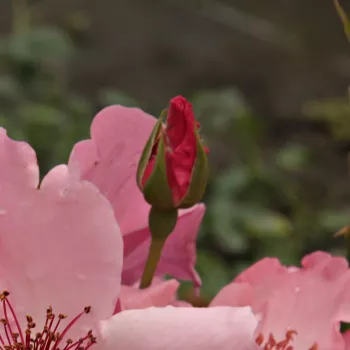
Light pink with a faint silvery veil on the outer side.
Newly Opened Flower:
Pale silvery‑pink petals with a slightly deeper pink tone at the centre.
Full Bloom:
Uniform, soft light pink, accentuated by the vivid contrast of deep burgundy stamens.
Before Fading:
The petals fade to a translucent, pale pink, with a silvery shimmer along their edges.
Colour Fading Description:
During opening the soft light pink gradually fades; before the bloom fades it becomes translucent, very pale pink with a silvery edge.
Pollinator Attraction:
Its open flowers, bearing 5–12 petals, and their accessible stamens attract pollinators, as simple or semi‑double forms with exposed stamens are more attractive than fully double blooms with concealed stamens.
Our product is a rose grown with pharmaROSA®’s unique cultivation technology!
2-litre, own-root, potted rose.
With a shoot system appropriate to the season.
With a root system that thoroughly permeates the growing medium.
Quality compliant with the requirements of the E.N.A. (European Nurserystock Association).
Supplied in unique packaging that prevents damage.
Can be planted during frost-free periods.
True-to-variety rose bush with a unique identifier.
The pharmaROSA® own-root potted rose is a well-rooted plant that supports reliable establishment when planted and cared for properly, so it can be planted whenever the soil is not frozen.
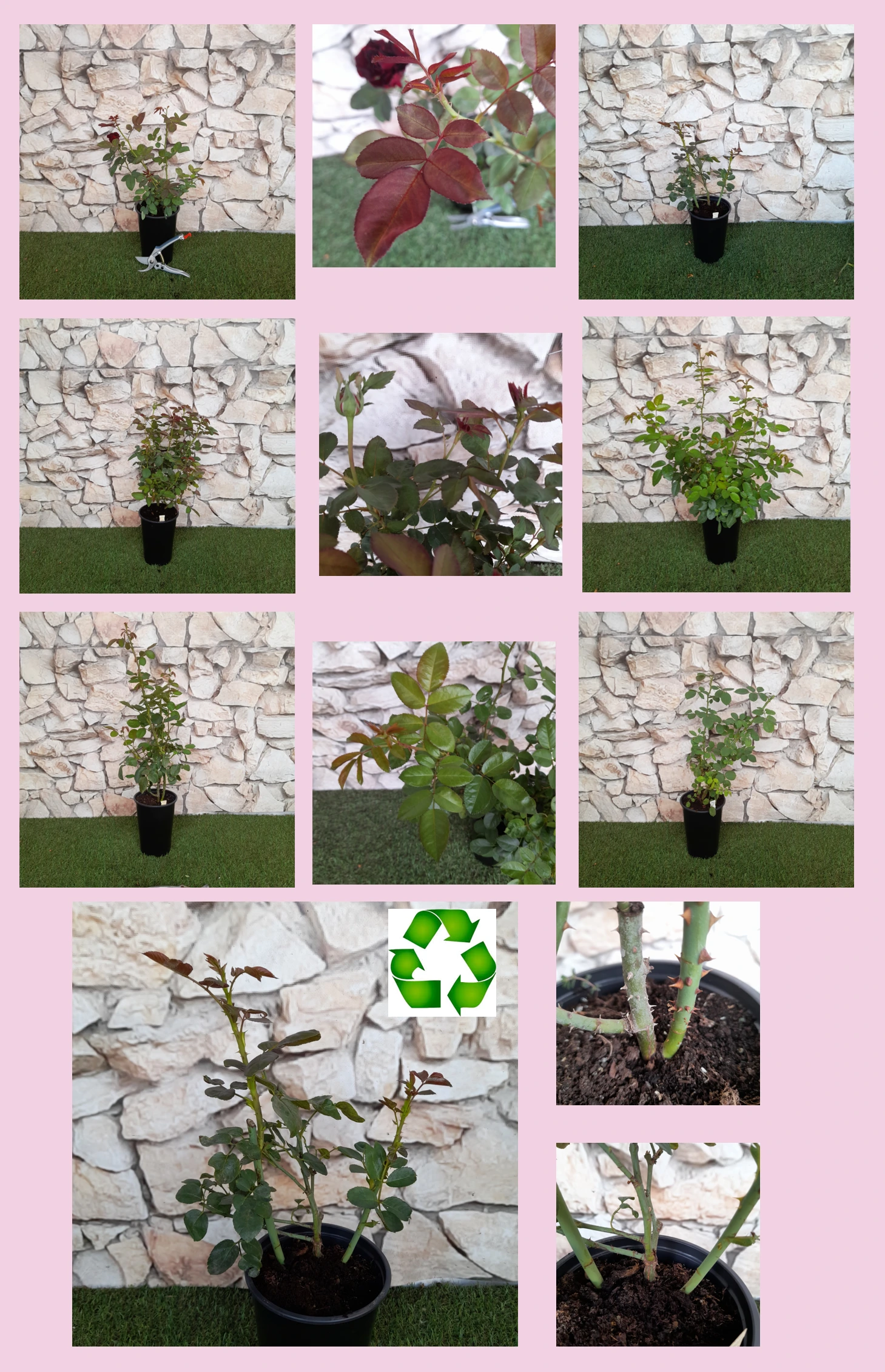
Crop overview: several varieties and growth stages in a short crop section.Shoot system: intensive growth of fresh basal shoots on a young plant.Root system: demonstration of a vigorous root system permeating the growing medium, by removing the pot.Balance: mature plant with root system and shoots in harmony with each other.
Information about the videos
The video series is not a “seasonal showcase”; it illustrates the essence of pharmaROSA® own-root cultivation in a tangible way: how the plant is built up, what the root system is like and how the shoot system regenerates. The recordings were therefore made at different times and with plants at various stages of development, so mixed foliage levels and differing stages of growth may appear in the videos. They are not a ‘sample’ of the batch dispatched, but a visual explanation of how the technology works. The current condition of the rose available to order — typical for the given period and similar to what you can expect to receive in the parcel — is shown in the upper part of the product page.
Pages for private customers Garden roses for the family garden, with minimal care → ORIGINAL® Premium garden roses – instant impact, a truly showpiece garden → EXTRA® Pages for professionals and private customers Roses for public spaces – large areas, sustainable maintenance → NATURAL® Roses for projects – hedge and row planting, fast implementation → RAPID® For professional partners only Production – propagation material for garden roses, wholesale → NEONATAL®
Company details
PharmaRosa Ltd. Company registration number: 01-09-717479 VAT number: 13075314-2-43 Plant health registration no.: HU130721 Bank account (IBAN): HU85117631891388688400000000 BIC (SWIFT): OTPVHUHB Bank name: OTP Bank Nyrt.