Crocus Rose – cream-coloured English shrub rose (AUSquest)
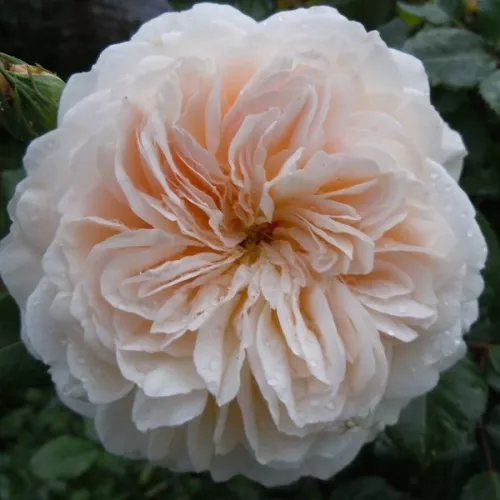
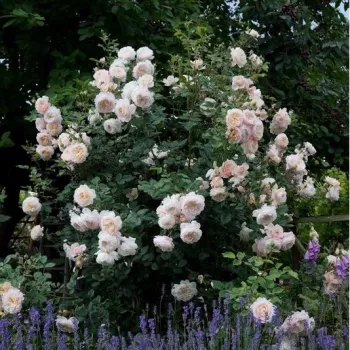
Romantic English charm meets modern reliability in Crocus Rose, a bushy David Austin shrub that settles easily into typical British front gardens and cottage-style borders. Its soft cream-yellow, rosette blooms with a peachy centre repeat generously through the season, providing relaxed, continuous colour without demanding complicated pruning or specialist care. Medium fragrance adds a fresh, clean note around paths and seating areas, while balanced growth makes it equally suitable as a specimen or in small groups. As a hardy H7 shrub it copes well with British winters and helps anchor borders even in gardens where heavy soil needs thoughtful drainage and raised beds to avoid waterlogging. Supplied as a well-rooted, own-root plant in a 2-litre pot, it is ready to establish steadily in its final position, with roots strengthening in year one, shoots and structure filling out in year two, and full ornamental presence by year three, supporting long-term garden confidence for busy beginners and relaxed homeowners who want dependable flowering with medium, manageable care.
Usage options
| Target area | Reasoning |
|---|
| Front garden feature shrub |
The bushy, 100–150 cm habit forms a tidy, rounded presence that suits small front gardens, giving structure without overpowering the space. The soft cream and peach tones read clearly from the pavement while remaining understated enough for typical British streetscapes, a reassuring choice for the cautious beginner |
| Classic cottage-mix border |
Dense, mid-green, glossy foliage and repeat-flowering rosette blooms weave naturally into cottage-style mixes with perennials such as garden pinks, dwarf heucheras and medicinal sage. The moderate self-cleaning means just occasional deadheading to keep borders neat, appealing to visually focused yet time-poor homeowners |
| Low-maintenance small rose group (1–3 plants) |
Planted with 100 cm spacing, a small group creates a generous, romantic mass of cream flowers that repeats well after the first flush. As an own-root shrub it develops a stable, long-lived stand with good regeneration, so the display improves year on year for relaxed, low-effort gardeners |
| Specimen near seating or windows |
The medium, fresh fragrance and medium-sized, very double blooms are best appreciated close up, making this rose ideal beside a bench, terrace or under a window. Height and spread balance well at eye level, offering impact without blocking light, a pleasing solution for comfort-seeking urbanites |
| Mixed shrub planting for structure |
With its 100–150 cm height, bushy framework and dense foliage, Crocus Rose slots easily into mixed shrub compositions, providing both flowering interest and leafy volume. Good winter hardiness down to approximately -23 °C supports long-term structural planting for forward-planning owners |
| Partial-shade borders along paths or walls |
Suitability for partial shade allows you to use this rose where sun is filtered by buildings or neighbouring plants, typical in narrow side gardens and between houses. Flowers still colour and scent well, offering a refined solution for awkward spaces in compact plots valued by space-conscious householders |
| Cut flowers from the family garden |
The large, very double, rosette blooms and medium fragrance make attractive, romantic-cut stems for informal vases. Regular cutting encourages further flowering, integrating garden enjoyment indoors without specialist skills, a gentle introduction to home flower arranging for creative beginners |
| Large containers on patios (40–60 litres) |
In a substantial 40–60 litre container with good drainage, Crocus Rose performs well on patios or small terraces, keeping its bushy shape and repeat bloom. Thoughtful watering supports its moderate drought tolerance, a practical way to enjoy an English shrub rose where borders are limited for balcony-focused residents |
Styling ideas
- Cottage Trio – Combine Crocus Rose with garden pinks and dwarf heucheras for a soft, layered cottage border; ideal for lovers of traditional, romantic front gardens.
- Cream Accent – Use a single shrub as a focal point in a small lawn bed, underplanting with low silver foliage plants; suited to homeowners seeking calm, elegant structure.
- Patio Statement – Plant in a 50–60 litre terracotta pot with trailing thyme around the base; perfect for balcony and terrace gardeners wanting impact without complex care.
- Soft Hedge – Create a loose, flowering hedge at 90 cm spacing along a path, mixing in lavender for scent contrast; appealing to families who like gentle separation without hard fencing.
- Shade Edge – Place Crocus Rose on the brighter side of a part-shaded border with tall perennials behind; useful for urban plots where walls and fences limit direct sun.
Technical cultivar profile
| Property | Data |
|---|
| Name and registration |
English shrub rose from the David Austin English Rose Collection; registered as AUSquest, marketed as Crocus Rose – a romantic, cream-coloured English rose with premium bronze quality rating. |
| Origin and breeding |
Bred in the United Kingdom by David Charles Henshaw Austin; parentage ‘Golden Celebration’ × unknown; introduced and registered in 2000 by David Austin Roses Ltd. |
| Awards and recognition |
Holds the Royal Horticultural Society Award of Garden Merit, indicating dependable garden performance and ornamental value under typical UK conditions and standard care levels. |
| Growth and structural characteristics |
Bushy shrub reaching 100–150 cm in height and spread, with dense, mid-green, glossy foliage and moderate prickliness, forming a rounded, substantial presence in beds, borders or large containers. |
| Flower morphology |
Large, very double rosette blooms with 40+ petals, typically carried in clusters; good repeat flowering with an abundant second flush, supported by moderate self-cleaning of spent blooms. |
| Colour data and phenology |
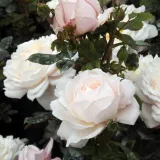
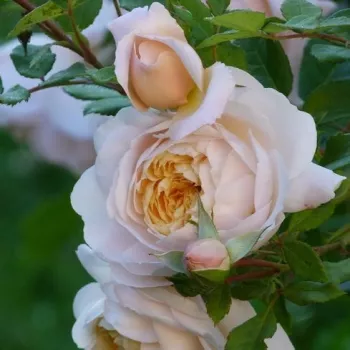
Soft cream-yellow base with gentle peach tones inside; buds butter-yellow with peach-pink tips, fading in strong sun to pale cream while the inner rosette remains delicately tinted. |
| Fragrance and aroma |
Medium-strength, fresh, clean fragrance typical of many English shrub roses; noticeable around seating areas and paths without becoming overpowering in smaller, enclosed gardens. |
| Hip characteristics |
Hip set is usually limited due to fully double flowers, but small spherical orange-red hips of about 9–15 mm may occasionally form, adding a discreet seasonal accent in late season. |
| Resistance and winter hardiness |
Hardy to approximately -23 to -26 °C (RHS H7, USDA 5b); disease resistance is medium to powdery mildew, black spot and rust, benefiting from standard UK rose care and monitoring. |
| Horticultural recommendations |
Best at 100 cm spacing in beds, 90 cm for hedging or 180 cm as a specimen; suits borders, shrub groups, parks and cutting, with medium maintenance and occasional plant protection. |
Crocus Rose (AUSquest) offers repeat flowering, a bushy, compact habit and reliable hardiness, while its own-root form supports long-lived, regenerating shrubs; a thoughtful choice if you value lasting, easy-going beauty in your garden.