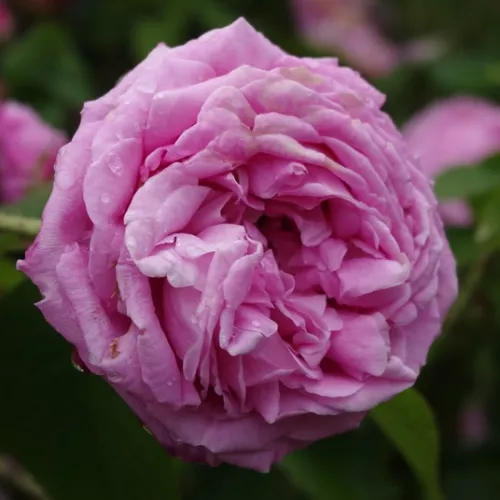
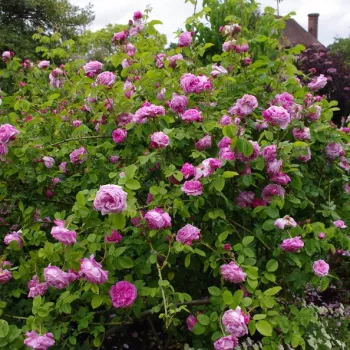
Uniform, medium-saturated warm pink with a delicate cherry hue. - historical, bourbon rose - very strong, detectable from a distance scented rose - classic, rose-scented
– Tall, vigorous climbing habit for structures
– Abundant historic Bourbon charm in bloom
– Very strong, classic rose fragrance
– Good winter hardiness for colder gardens
– Moderate disease resistance, less spraying needed
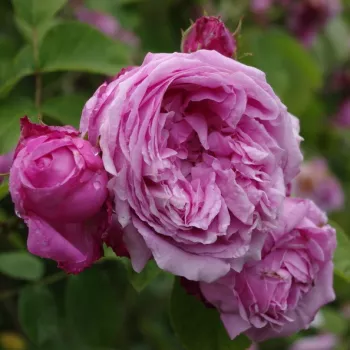
– Special feature: Colour shifts from rich mid‑pink to soft shell‑pink with mauve tones as blooms mature.
Harmonious setting – Low maintenance
pharmaROSA® ORIGINAL 2-litre own-root potted rose
18,70 £
Unfortunately, we are currently unable to ship to the United Kingdom; we only deliver to countries within the European Union. For more information, please contact us!
3.5(5854)
COUPE D’HÉBÉ – pink historic Bourbon rose - Laffay
This romantic Bourbon climber brings heritage elegance and rich fragrance to traditional British front gardens, blending gracefully into cottage-style borders and around-the-house plantings. Its remontant flowering provides colour across the season, with mid-pink, cupped blooms that fade charmingly to soft shell-pink. Well-rooted in the pharmaROSA® ORIGINAL 2‑litre pot, it offers a reassuringly simple start even where soils are heavy and need thoughtful drainage in wetter spells and humidity. Over time its dense foliage and arching, climbing habit create a vertical screen or focal column on walls, trellises, and obelisks, while own-root vigour supports a long-lived, regenerating structure that matures steadily into a stable, enduring garden feature.
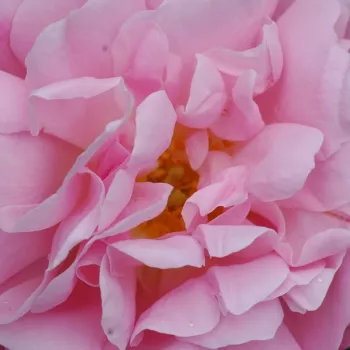
Freshly opened bloom of Coupe d’Hébé in bright mid-pink.
Coupe d’Hébé showing a double, cupped bloom with a softly opening centre.
Usage options
Target area
Reasoning
Front-garden focal climber by the entrance
Trained up a pillar or porch post, Coupe d’Hébé forms an elegant, tall climber with strongly scented blooms that welcome visitors at the front door; its historical charm suits period properties and cottage façades for the style-conscious beginner.
Screening along fences or between neighbours
The dense foliage and climbing habit lend themselves to creating a living screen along garden boundaries or between seating areas, softening hard lines while maintaining privacy for those wanting a calm, refined family.
Classic cottage-style mixed border
Placed towards the back of a mixed border, it provides vertical interest and repeat mid-pink flowering that partners beautifully with perennials, ideal for loosely planned, romantic schemes that still stay manageable for the typical home gardener.
Perfumed seating area or evening terrace
The very strong, classic rose fragrance carries on still evenings, so planting near a bench or terrace lets you enjoy its scent without intensive care routines, making it rewarding for time-poor urban owners.
Specimen rose on an obelisk in a small bed
Grown on an obelisk, a single plant can dominate a modest bed, giving height and character without complex design, while its own-root growth gradually fills out the support for a long-term, low-fuss display.
Historic or period-style garden feature
With origins in the mid‑19th century and classic Bourbon character, this rose looks “at home” in heritage-inspired schemes, suiting those who value authenticity and gentle, traditional colour harmonies for a cultured garden enthusiast.
Part-shade side garden or north–east aspect
Coupe d’Hébé tolerates partial shade, so it can brighten side passages or less-sunny house walls; with sensible watering during dry spells it establishes reliably even where light and moisture vary for the practical home planner.
Large container rose for patios and courtyards
In a 40–50 litre container with good drainage, this own-root climber offers vertical colour on patios or small courtyards, making the most of limited footprints while allowing easy placement adjustments for the flexible small-space gardener.
Styling ideas
Cottage-porch – Train Coupe d’Hébé up a wooden porch post with underplanting of Aubrieta and dwarf asters for a soft, tumbling welcome – ideal for lovers of traditional, flower-filled entrances.
Elegant-screen – Use a series of trellises with this rose spaced along a boundary, interplanted with white Liatris for vertical texture – suited to families wanting privacy with a classic look.
Heritage-border – Place it at the back of a mixed border with pastel perennials and ornamental grasses to celebrate its 19th-century origin – perfect for those recreating a period-style garden.
Scented-nook – Grow it around a bench or small arbour so the strong fragrance gathers in a sheltered corner – a good choice for busy people who mainly enjoy their garden in the evenings.
Container-column – Plant in a 50‑litre pot with an obelisk and trailing rock cress at the base for a compact yet vertical feature – great for balcony and courtyard gardeners needing mobile structure.
Technical cultivar profile
Property
Data
Name and registration
Coupe d’Hébé is a historic Bourbon shrub/climbing rose marketed as a heritage rose, unregistered but traded under this traditional name and confirmed for cultivar authenticity.
Origin and breeding
Bred by Jean Laffay in France around 1840 as a Bourbon × Rosa chinensis hybrid; distributed from Camden Park, Australia, in 1850 and now valued as a classic historical garden rose.
Growth and structural characteristics
Strong, tall climber reaching about 200–300 cm high and 120–200 cm wide, with dense, light green, slightly glossy foliage and many prickles, suitable for walls, trellises and freestanding supports.
Flower morphology
Medium-sized, cupped, double flowers with 26–39 petals, borne mainly solitary; remontant with a lighter second flush and weak self-cleaning, so deadheading improves continuity and appearance.
Colour data and phenology
Opens rich mid-pink (RHS 68C/68D) with a cherry hue, then softens to shell-pink and gentle mauve-rose tones; colour retention is modest but fading is graceful and suits romantic planting schemes.
Fragrance and aroma
Very strong, classic rose fragrance readily noticeable from a distance, contributing significantly to sensory impact around entrances, terraces and seating areas when flowering peaks.
Hip characteristics
Produces occasional spherical orange hips, about 15–22 mm, adding a discreet late-season accent if spent blooms are not removed after flowering.
Resistance and winter hardiness
Hardy to approximately −26 to −23 °C (RHS H7, USDA 5b), with good resistance to powdery mildew and black spot, medium rust sensitivity, and moderate tolerance of heat and drought.
Horticultural recommendations
Best used as a climber or tall shrub in beds, parks, scented gardens or for cutting; plant 90–165 cm apart depending on use, in well-drained soil with regular watering during extended dry periods.
Coupe d’Hébé offers strongly scented historic blooms, reliable climbing structure and long-term own-root resilience, making it a thoughtful choice for those planning a lasting, characterful garden feature.
Detailed product attributes
Product Identification Data
Product Name:
COUPE D’HÉBÉ – pink historic Bourbon rose - Laffay
Product Type:
pharmaROSA® ORIGINAL - 2-litre own-root potted rose
Colour Fading Description:
The fresh mid-pink fades to a pastel shell-pink by full opening; the inner petals lighten while the outer petals become a soft mauve-rose.
Pollinator Attraction:
Its very double flower form and reduced accessibility of the stamens make it unattractive to pollinators.
Pollinator-Friendly Rating:
Because its flowers are double it attracts pollinators poorly; its pollinator-friendliness is limited and it is primarily an ornamental variety.
Our product is a rose grown with pharmaROSA®’s unique cultivation technology!
2-litre, own-root, potted rose.
With a shoot system appropriate to the season.
With a root system that thoroughly permeates the growing medium.
Quality compliant with the requirements of the E.N.A. (European Nurserystock Association).
Supplied in unique packaging that prevents damage.
Can be planted during frost-free periods.
True-to-variety rose bush with a unique identifier.
The pharmaROSA® own-root potted rose is a well-rooted plant that supports reliable establishment when planted and cared for properly, so it can be planted whenever the soil is not frozen.
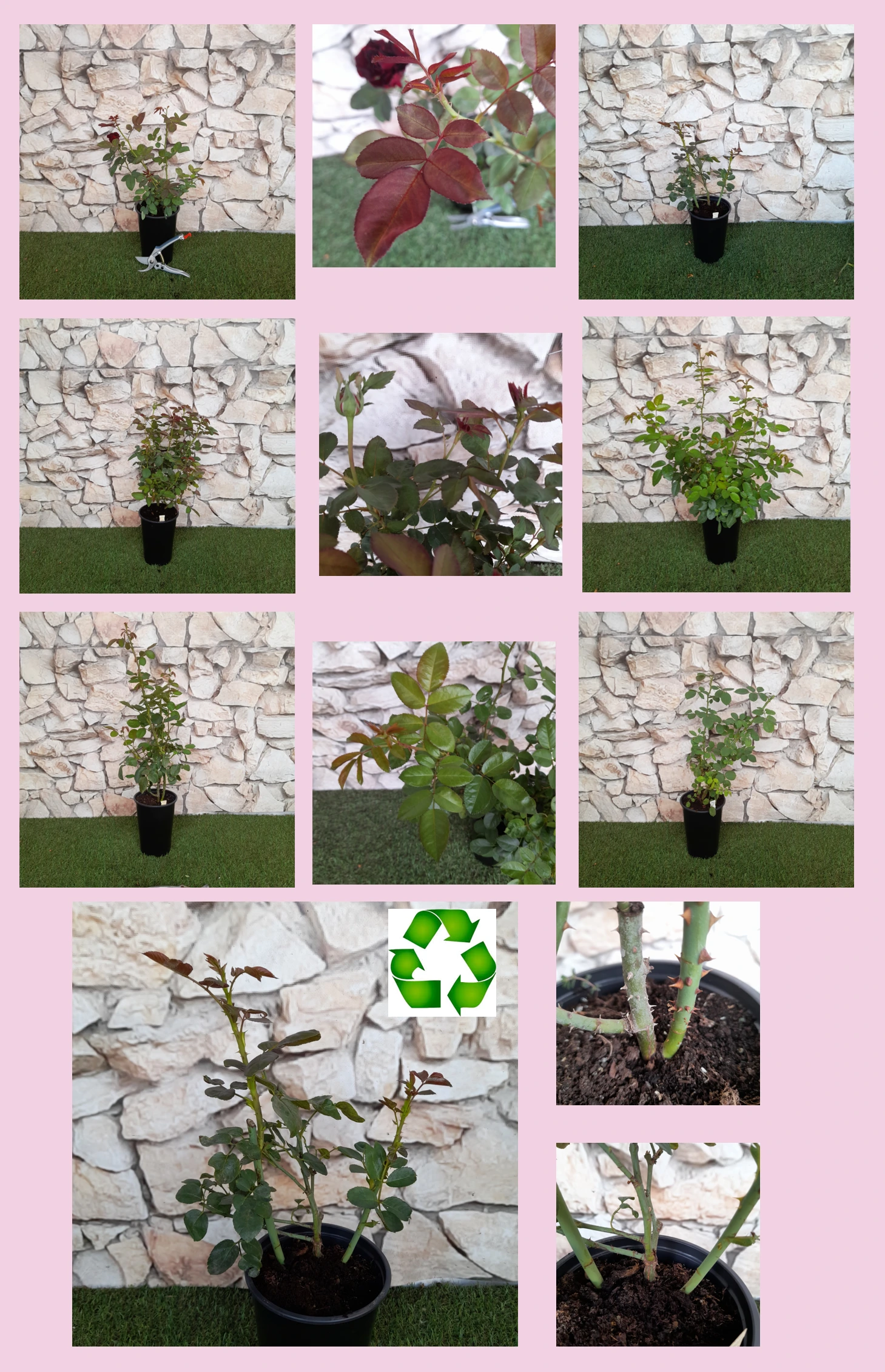
Crop overview: several varieties and growth stages in a short crop section.Shoot system: intensive growth of fresh basal shoots on a young plant.Root system: demonstration of a vigorous root system permeating the growing medium, by removing the pot.Balance: mature plant with root system and shoots in harmony with each other.
Information about the videos
The video series is not a “seasonal showcase”; it illustrates the essence of pharmaROSA® own-root cultivation in a tangible way: how the plant is built up, what the root system is like and how the shoot system regenerates. The recordings were therefore made at different times and with plants at various stages of development, so mixed foliage levels and differing stages of growth may appear in the videos. They are not a ‘sample’ of the batch dispatched, but a visual explanation of how the technology works. The current condition of the rose available to order — typical for the given period and similar to what you can expect to receive in the parcel — is shown in the upper part of the product page.
Pages for private customers Garden roses for the family garden, with minimal care → ORIGINAL® Premium garden roses – instant impact, a truly showpiece garden → EXTRA® Pages for professionals and private customers Roses for public spaces – large areas, sustainable maintenance → NATURAL® Roses for projects – hedge and row planting, fast implementation → RAPID® For professional partners only Production – propagation material for garden roses, wholesale → NEONATAL®
Company details
PharmaRosa Ltd. Company registration number: 01-09-717479 VAT number: 13075314-2-43 Plant health registration no.: HU130721 Bank account (IBAN): HU85117631891388688400000000 BIC (SWIFT): OTPVHUHB Bank name: OTP Bank Nyrt.