Coral™ Pixie® groundcover rose – BOZcorapix
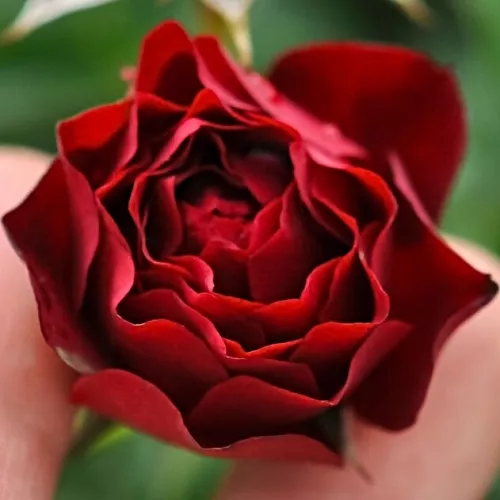
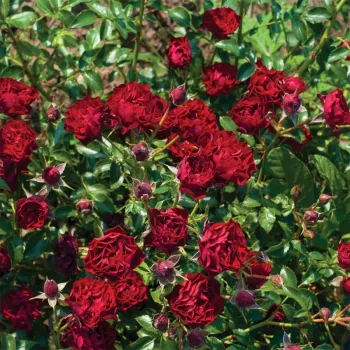
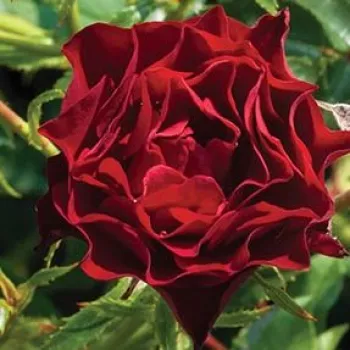
Coral blooms ripple across this low, spreading shrub, creating a richly coloured carpet of dark red with a soft coral sheen that suits classic British front gardens as well as relaxed cottage borders. Its dense, dark green foliage forms a tidy structure, helping to suppress weeds and cover bare soil with minimal effort. Strongly remontant flowering ensures repeated displays from early summer onwards, rewarding you with clusters of small, semi-double cups that refresh the planting week after week. Bred for modern gardens, it offers convincing disease resilience, so there is less need for spraying even in damp, fungus-prone seasons. As an own-root rose, it settles steadily and can be expected to give a long-lived presence in family gardens, coping well with typical British conditions where improved drainage is helpful on heavier clay soils. Its compact habit makes it easy to position along paths, in low borders or as edging around more upright perennials. In a large pot from about 40–50 litres, it forms a neat, flowering accent for patios and entrances. With light, fruity-scented flowers and a reliable growth rhythm, it suits gardeners who value straightforward care and visual impact over many seasons.
Usage options
| Target area | Reasoning |
|---|
| Front garden edging along paths or driveways |
The naturally spreading, low growth habit forms a clean, defined line that softens paving without blocking access or views. Dense foliage and small, semi-double flowers create a smart but welcoming edge that keeps its shape with minimal pruning, helping busy householders maintain a neat approach. Ideal for beginners |
| Low-maintenance ground cover in problem spots |
This variety forms a compact, weed-suppressing mat that helps cover bare soil and visually anchors mixed plantings. Its good disease resistance and winter hardiness reduce the need for treatments or replacements over time, providing a stable, long-lived planting where you want reliable cover rather than constant attention. Designed for easy-care |
| Small mixed cottage-style borders |
The dark coral-red colouring lends depth and contrast among pastel perennials and traditional cottage plants. Repeated clusters of flowers thread through the season, linking early and late interest so borders never feel empty. The modest height fits naturally in front-of-border positions without complicated staking or shaping. Perfect for aesthetes |
| Compact rose beds in family gardens |
Planted in small groups at the recommended spacing, plants knit together into a coherent low shrub layer that is easy to look after. Year by year the own-root plants thicken and mature, rewarding simple seasonal pruning with consistent flowering and structure rather than demanding specialist care. Reassuring for homeowners |
| Containers and large patio pots (40–50 litres or more) |
In a generously sized container, the spreading habit fills the surface, giving a carpet of colour without crowding the space. Regular watering and feeding are straightforward tasks, and the compact framework is simple to tidy in late winter, making it a practical choice for entrances, terraces and balconies. Suitable for urbanites |
| Low informal hedging and boundary definition |
At around 35–60 cm high, plants can be used in a loose line to mark garden boundaries, separate seating areas or edge lawns. Repeated flowering provides a softer alternative to clipped evergreen hedges, while the hardy root system and moderate prickliness offer some deterrent without being overly aggressive. Useful for families |
| Roses for wetter, fungus-prone UK regions |
With resistance to powdery mildew, black spot and rust, this rose stays presentable where humidity and summer showers can quickly mark less robust varieties. Once established with decent drainage on heavier soils, it provides colour and cover even in challenging seasons, supporting gardens where reliable performance matters. Helpful for busy-gardeners |
| Long-term planting plans and new-build gardens |
As an own-root shrub, it develops a stable framework and can regenerate from the base if cut back hard, supporting a long planting life. Expect roots to settle in the first year, top growth to build in the second, and full ornamental effect by about the third, suiting gardeners planning for the future. Ideal for planners |
Styling ideas
- Cottage-border ribbon – weave Coral™ Pixie® in front of soft blues and mauves such as Salvia nemorosa, creating a low, repeating line of dark coral-red that ties the planting together – for lovers of relaxed cottage style
- Entrance containers – plant one or three in a 40–50 litre pot beside the front door, underplant with trailing thyme or lobelia for softness and enjoy a compact, colourful welcome – for time-pressed homeowners
- Groundcover tapestry – combine it in a sunny bed with low grasses and silver foliage plants to form a weed-suppressing carpet that stays attractive with little trimming – for low-maintenance seekers
- Family-friendly edging – line a path or play-lawn edge with evenly spaced plants to create a soft, colourful boundary that remains low enough for supervision and easy mowing – for young families
- Structured colour block – use a small grid of closely spaced plants in a rectangular bed to form a modern, colour-dense panel that reads clearly from the street – for design-conscious front-garden owners
Technical cultivar profile
| Characteristic | Data |
|---|
| Name and registration |
Groundcover shrub rose from the Pixie® collection; registered as BOZcorapix, marketed as Coral™ Pixie® BOZcorapix, with dark coral-red flowers referencing its name and exhibition category. |
| Origin and breeding |
Bred by Biljana Božanić Tanjga for Pheno Geno Roses, introduced after 2018 via Pheno Geno Roses B.V. in the Netherlands; parentage not disclosed, selected for compact, spreading habit and strong repeat flowering. |
| Growth and structural characteristics |
Low, spreading groundcover shrub typically 35–60 cm tall and 40–75 cm wide, with dense, slightly glossy dark green foliage and moderate prickles, forming a compact, weed-suppressing framework over time. |
| Flower morphology |
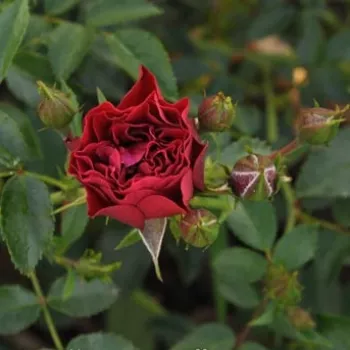
Small, semi-double flowers (13–25 petals) in clustered inflorescences, cup-shaped with slightly ruffled edges; strongly remontant, giving abundant second and subsequent flushes through the main season. |
| Colour data and phenology |
Deep, velvety dark red with coral shimmer; buds dark burgundy (RHS 60A/60B), opening to dark coral red with pale pink edging as they fade, retaining colour reasonably well before moderate lightening late on. |
| Fragrance and aroma |
Very light, barely noticeable scent with a gentle fruity character; fragrance is not the main feature, allowing focus on colour effect, compact habit and reliable season-long flowering performance. |
| Hip characteristics |
Produces moderately abundant, small spherical hips, about 5–8 mm across, in orange-red tones; hips add discreet autumn interest without dominating the overall appearance of the plant. |
| Resistance and winter hardiness |
Rated resistant to powdery mildew, black spot and rust; hardy to approximately −26 to −23 °C (RHS H7, Swedish Zone 4, USDA 5b), suitable for most UK regions with ordinary winter conditions. |
| Horticultural recommendations |
Best in sunny sites with reasonable drainage; plant 35–60 cm apart depending on use, at 6.3–7.2 plants/m² for massing. Ideal for borders, beds, containers and ground cover with low maintenance expectations. |
Coral™ Pixie® offers compact, spreading groundcover, season-long dark coral-red colour and strong disease resistance in a durable own-root form, making it a thoughtful choice for long-lived, low-effort planting schemes.