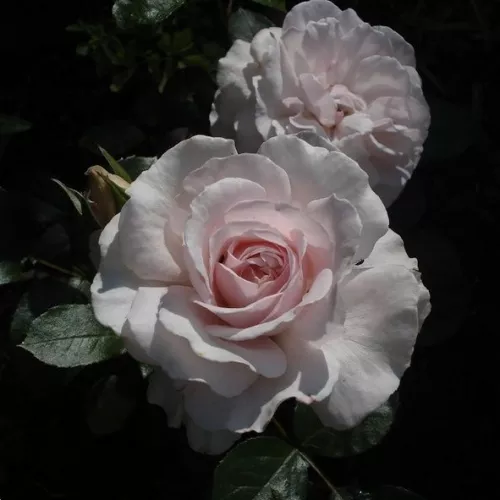
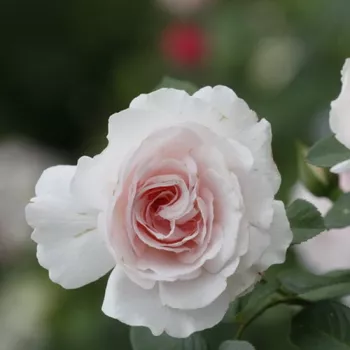
Delicate, shell-pink shade in a uniformly soft pastel tone. - floribunda bedding rose - strong, distinctive-scented rose - rich, old-rose character
– Rich, old-rose fragrance, strongly scented.
– Very double, cup-shaped blooms in light pink.
– Reliable reblooming with abundant second flush.
– Dark glossy foliage on upright, dense plants.
– Good winter hardiness to RHS H7 rating.
– Special feature: Awarded the R. J. Frizzell Award – Most Fragrant Rose for its exceptional scent.
Unfortunately, we are currently unable to ship to the United Kingdom; we only deliver to countries within the European Union. For more information, please contact us!
4.5(6967)
CONSTANCE FINN – light pink bedding floribunda rose – Harkness
Fragrant and generously flowering, ‘Constance Finn’ is a classic Harkness floribunda that gives you softly cupped, shell‑pink blooms in repeat flushes from early summer well into autumn. Its upright, well-branched habit and dense, dark green foliage create a tidy, medium-height bush that sits perfectly in small beds, front gardens and cottage-style borders, even where damp, breezy weather can encourage fungal problems. Bred for hardiness to typical British winters, it copes reliably with cold snaps while its moderate black-spot resistance supports easy-care routines with only occasional treatments. The strong, old-rose perfume and large, very double flowers add a refined, traditional feel close to paths and seating, while its own-root longevity lets the shrub mature steadily, regenerating from the base for a long garden life. Over time you will see Year 1 building roots, Year 2 filling out the framework, and by Year 3 the full ornamental effect in bloom. Suitable for beds, low hedging or a statement in a large container, it offers dependable impact without demanding expert-level care.
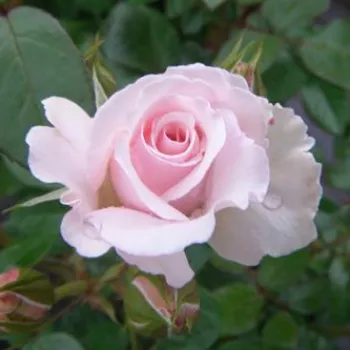
Freshly opened Constance Finn bloom in delicate pastel pink.
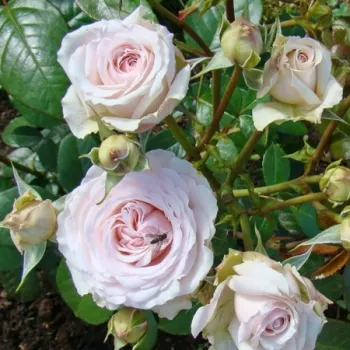
Constance Finn in closed bud, showing a pale powder-pink tone with a silvery edge.
Constance Finn rose foliage in a dense dark green shade.
Close-up of the moderately thorny stems of Constance Finn.
Usage options
Target area
Reasoning
Front garden focal bush beside the path
The strong, old-rose fragrance and large, very double blooms are best appreciated close to where people pass, making the front path an ideal setting. Regular repeat flowering through the season means there is usually something to enjoy on everyday comings and goings, even if you have limited time for garden work. Perfect for busy beginners
Small rose bed in a family garden
Its compact, upright habit and recommended spacings make it easy to design a simple rectangular or square bed that looks orderly without complex planning. Reliable reblooming helps keep the bed colourful from mid-season onwards, with only light pruning and deadheading needed each year to maintain shape. Ideal for low-maintenance households
Cottage-style mixed border with perennials
The pastel shell-pink flowers combine beautifully with traditional companions such as feverfew, aubrieta or crocosmia, giving a soft cottage look. The medium height lets it sit mid-border, where its repeated waves of bloom weave through perennials and disguise bare stems, so the border remains attractive between flushes. Suited to style-conscious gardeners
Low flowering hedge along a drive or boundary
Planted at hedge spacing, the upright growth and dense foliage knit into a continuous, rose-filled line that softens hard edges and fences. Its reblooming habit means the hedge does more than just mark a boundary; it delivers colour and scent for months, with straightforward winter pruning to keep the line tidy over many years. Best for practical homeowners
Large patio container or courtyard feature
In a pot of at least 40–50 litres, the plant’s moderate size is easy to manage, while repeat-flowering and strong scent give long seasonal interest on terraces and small paved spaces. Own-root growth helps it recover if containers dry briefly or stems are pruned harder, supporting long-term use in a fixed decorative pot. Ideal for urban balcony-owners
Weather-exposed or coastal-style planting
The sturdy flowering stems and well-furnished framework stand up better to wind and rain than many taller, lankier roses, helping the display remain neat after bad weather. Its moderate black-spot resistance is useful where damp, breezy conditions can otherwise quickly spoil foliage in typical British summers. Helpful for coastal gardeners
Long-term structural rose in a family border
As an own-root shrub, it gradually builds a balanced framework and can regenerate from the base, helping the plant recover from occasional damage and extend its lifespan. This makes it a dependable “anchor” rose that will hold its place in a mixed border as other, shorter-lived plants are refreshed around it over time. Reassuring for long-term planners
Classic, scented corner near a seating area
The combination of strong perfume, soft light-pink colour and continuous flowering makes it an excellent choice beside a bench or patio table. You can enjoy the scent and close-up detail of the blooms from spring onwards, with only occasional feeding and seasonal pruning needed to keep the plant performing year after year. Appealing to cottage-garden lovers
Styling ideas
Cottage Harmony – Group 3–5 plants with feverfew and aubrieta for a loose, pastel cottage bed that flowers for months – for lovers of informal, romantic gardens
Perfumed Welcome – Place two shrubs symmetrically at a gate or path entrance to greet visitors with scent and soft pink colour – for homeowners who value a graceful first impression
Soft Hedge – Plant a low line at 40 cm spacing along a drive, underplanted with low grasses, for a gentle, flowering boundary – for families wanting structure without harsh fencing
Patio Accent – Grow a single plant in a 50-litre terracotta pot with trailing thyme around the base to enjoy fragrance on the terrace – for small-space and courtyard gardeners
Romantic Corner – Combine with pale lavender and white perennials in a sheltered corner to create a scented evening retreat – for those seeking a quiet, relaxing seating area
Technical cultivar profile
Feature
Data
Name and registration
Floribunda bedding rose, registered as HAReden, marketed as Constance Finn; exhibition floribunda type used both in gardens and for show displays.
Origin and breeding
Bred by Robert Harkness, R. Harkness & Co. Ltd., United Kingdom, introduced and registered in 1997; commercial distribution initially handled by Harkness Roses.
Awards and recognition
R. J. Frizzell Award for Most Fragrant Rose, Belfast 1999, and DGAA Homelife Centenary Rose award highlight its notable fragrance and ornamental reliability.
Growth and structural characteristics
Upright, bushy shrub to about 95–130 cm high and 55–85 cm wide, with dense, glossy dark green foliage and moderate prickliness, forming a tidy, medium-sized garden rose.
Flower morphology
Large, cupped flowers (about 2.75–3.95 inches) with very double, 40+ petal blooms, mostly borne singly on stems, repeating strongly with abundant first and second flushes.
Colour data and phenology
Soft shell-pink pastel, ARS code lp, RHS 65C/65D; buds open porcelain-like, then fade to very pale pink with almost white outer petals and a subtle whitish-lilac, pearly veil.
Fragrance and aroma
Strong, distinctive old-rose type perfume, noted for richness and persistence; highly double blooms offer limited pollen, though butterflies may occasionally visit according to reports.
Hip characteristics
Hip set usually low due to very double flowers, but small spherical orange-red hips 8–12 mm in diameter may form sporadically late in the season, adding discreet autumn interest.
Resistance and winter hardiness
Hardy to about –21 to –18 °C (RHS H7, USDA 6b, Swedish zone 3); moderate disease resistance overall, with good black-spot resistance and average tolerance to mildew and rust.
Horticultural recommendations
Best at 40–75 cm spacing depending on use, giving 4.0–4.6 plants/m² in beds; medium maintenance, with routine feeding, seasonal pruning and occasional disease control recommended.
Constance Finn offers richly fragrant, repeat-flowering pastel blooms on a hardy, long-lived own-root shrub that settles into family gardens with reassuring ease; a thoughtful choice if you prefer roses that quietly earn their place.
Detailed product attributes
Product Identification Data
Product Name:
CONSTANCE FINN – light pink bedding floribunda rose - Harkness
Product Type:
pharmaROSA® ORIGINAL - 2-litre own-root potted rose
Closed Bud:
Pale powder pink, slightly deeper towards the centre, with a whitish-silvery edge.
Newly Opened Flower:
Delicate pastel pink, richer in the centre, fading porcelain‑like towards the edges.
Full Bloom:
Uniform very pale pink, with the outer petal zone almost white and a cool undertone.
Before Fading:
The pink further fades and takes on a whitish-lilac veil with a pearly effect.
Colour Fading Description:
During opening the delicate shell‑pink pastel gradually fades to a uniform, very pale pink; the outer petal whorl becomes almost white and, before the flower fades, acquires a whitish–lilac veil.
Pollinator Attraction:
According to the descriptions, it may also attract butterflies; single, semi-double or fully double flower forms and the accessibility of the stamens strongly influence pollinator attraction, with single and semi-double blooms with exposed stamens being e
Pollinator-Friendly Rating:
Highly double (very double)-flowered variety, therefore it attracts pollinators only to a limited extent, although descriptions say it may also attract butterflies.
Our product is a rose grown with pharmaROSA®’s unique cultivation technology!
2-litre, own-root, potted rose.
With a shoot system appropriate to the season.
With a root system that thoroughly permeates the growing medium.
Quality compliant with the requirements of the E.N.A. (European Nurserystock Association).
Supplied in unique packaging that prevents damage.
Can be planted during frost-free periods.
True-to-variety rose bush with a unique identifier.
The pharmaROSA® own-root potted rose is a well-rooted plant that supports reliable establishment when planted and cared for properly, so it can be planted whenever the soil is not frozen.
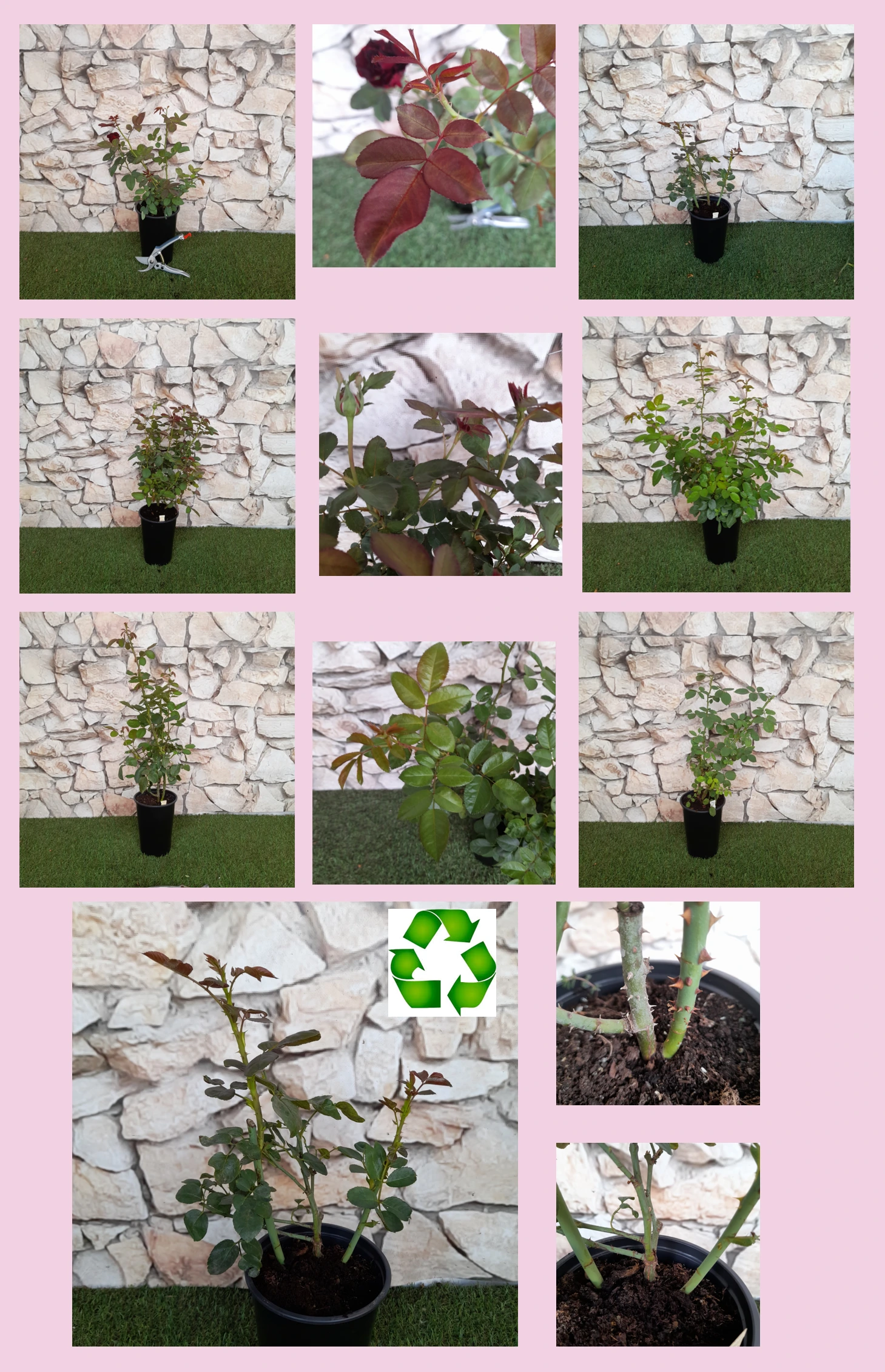
Crop overview: several varieties and growth stages in a short crop section.Shoot system: intensive growth of fresh basal shoots on a young plant.Root system: demonstration of a vigorous root system permeating the growing medium, by removing the pot.Balance: mature plant with root system and shoots in harmony with each other.
Information about the videos
The video series is not a “seasonal showcase”; it illustrates the essence of pharmaROSA® own-root cultivation in a tangible way: how the plant is built up, what the root system is like and how the shoot system regenerates. The recordings were therefore made at different times and with plants at various stages of development, so mixed foliage levels and differing stages of growth may appear in the videos. They are not a ‘sample’ of the batch dispatched, but a visual explanation of how the technology works. The current condition of the rose available to order — typical for the given period and similar to what you can expect to receive in the parcel — is shown in the upper part of the product page.
Pages for private customers Garden roses for the family garden, with minimal care → ORIGINAL® Premium garden roses – instant impact, a truly showpiece garden → EXTRA® Pages for professionals and private customers Roses for public spaces – large areas, sustainable maintenance → NATURAL® Roses for projects – hedge and row planting, fast implementation → RAPID® For professional partners only Production – propagation material for garden roses, wholesale → NEONATAL®
Company details
PharmaRosa Ltd. Company registration number: 01-09-717479 VAT number: 13075314-2-43 Plant health registration no.: HU130721 Bank account (IBAN): HU85117631891388688400000000 BIC (SWIFT): OTPVHUHB Bank name: OTP Bank Nyrt.