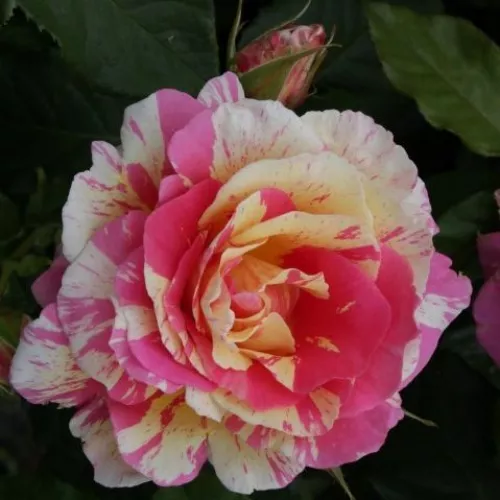
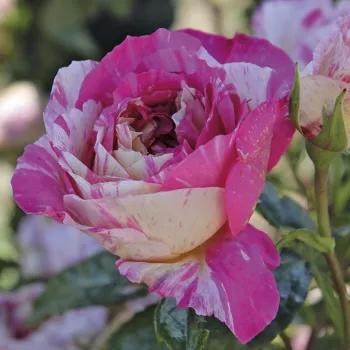
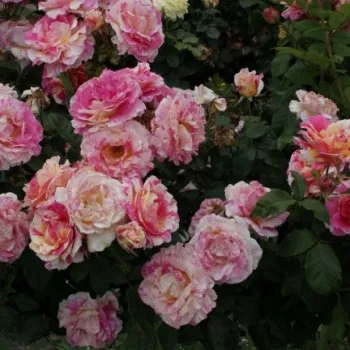
A lemon-yellow base is variegated with streaks and spots ranging from carmine to raspberry. - hybrid tea rose - mild, restrained-scented rose - slightly sweet, fruity aroma
– Striking lemon-yellow and raspberry-red blooms
– Reliable remontant flowering with rich second flush
– Upright hybrid tea form for borders and cutting
– Glossy dark green foliage, elegant appearance
– Strong resistance to mildew, black spot and rust
– Special feature: Forms decorative spherical red hips after flowering.
Variety guarantee – Continuous availability
pharmaROSA® ORIGINAL 2-litre own-root potted rose
19,30 £
Unfortunately, we are currently unable to ship to the United Kingdom; we only deliver to countries within the European Union. For more information, please contact us!
3(5088)
CLAUDE MONET™ – yellow-red tea hybrid rose – Christensen
This painterly hybrid tea brings colour and shifting light effects to the garden, with lemon-yellow blooms streaked in carmine and raspberry that gently fade through cream and blush tones. Its upright, compact habit fits neatly into front gardens and small borders, giving you exhibition-style flowers on a bush sized for everyday spaces. Bred with modern disease resistance, it offers reassuringly low-maintenance care for busy gardeners who still want a refined look. Semi-double, cup-shaped flowers open repeatedly through the season, offering moderate appeal to visiting pollinators while also serving beautifully as cut stems indoors. As an own-root plant it settles in securely and ages with grace, developing a stable framework that copes well with typical British weather and occasional strong winds near exposed or coastal sites. Over the first year it focuses on roots, the second on new shoots, and by the third year it reveals its full ornamental character in your garden.
Frissen nyílt, sárga-pirosan csíkozott virág a Claude Monet™ rózsán.
Claude Monet™ rose in full bloom, showing cream-yellow petals with pink to raspberry-red variegation.
Usage options
Target area
Reasoning
Front garden focal bush
The upright, compact habit and clearly shaped blooms create a tidy, eye-catching presence by a path or doorway without overwhelming a small frontage. Repeating flushes of painterly flowers keep kerb appeal high with limited pruning or specialist work, ideal if you want impact but have little time for detailed upkeep, particularly for the busy beginner.
Small mixed border in a family garden
Its moderate height and narrow spread allow it to slot comfortably among perennials and low shrubs, adding vertical accents of striped colour without shading out neighbours. The semi-double flowers bring texture among cottage favourites while the mild fragrance avoids overpowering seating areas, making it well suited to relaxed, informal beds beside terraces for the cottage-lover.
Feature rose in large containers (40–50 litres+)
Planted in a generous 40–50 litre container, this rose keeps a controlled, upright shape that is easy to manage on patios, balconies, or small paved gardens. The repeat flowering and clean foliage provide a long season of interest with simple feeding and watering, giving structure and colour where border space is tight for the urban gardener.
Low-maintenance rose and shrub composition
Its good disease resistance and reliable repeat flowering make it an excellent choice in easy-care groupings with other robust roses and compact shrubs. Once settled, seasonal pruning and occasional deadheading are usually sufficient, so you can maintain a coherent, elegant rose area without constant spraying or complex regimes, ideal for the time-poor homeowner.
Long-term, own-root rose planting for lasting structure
Being grown on its own roots, this cultivar gradually builds a stable framework that recovers well from harsher winters or accidental damage, without the worry of rootstock suckers. Over the years it maintains its characteristic colouring and form, supporting a long-lived planting that can anchor a border through many seasons for the future-planner.
Cutting patch and exhibition-style blooms
The large, cup-shaped flowers with a defined centre and striking striping are well suited to cutting, giving you painterly stems for vases and informal arrangements. Regular picking encourages further blooms, and the neat bush habit keeps the cutting area orderly and accessible, particularly attractive for the home florist.
Pollinator-friendly ornamental corner
Semi-double flowers with 13–25 petals and a lightly open form offer moderate access to nectar and pollen, contributing to a more wildlife-aware garden while still looking refined. Combined with clematis or airy perennials, it provides both colour and gentle ecological value without compromising ease of care, well matched to the wildlife-conscious.
Weather-resilient planting in exposed gardens
The reasonably sturdy, upright framework and modern breeding help it hold its blooms and foliage respectably even where wind can sweep across the plot, supporting season-long display in typical British conditions with minimal intervention. This reassures those whose plots face occasional strong winds near more open or coastal positions, especially the practical gardener.
Styling ideas
Cottage border vignette – Pair with soft pink geraniums and airy nepeta to echo its cream and raspberry tones in a loose, romantic front garden scene – ideal for homeowners who favour classic cottage charm.
Artist’s patio pot – Grow in a 50-litre terracotta container with silver-leaved herbs to frame the streaked flowers like living brushstrokes – perfect for balcony and patio gardeners wanting a single, showpiece rose.
Striped rose trio – Plant three in a gentle arc underplanted with low lavender for a neat yet expressive focal group – suited to those seeking tidy structure with a painterly twist.
Vertical gallery – Combine with a dark purple clematis such as ‘Jackmanii’ on a discreet obelisk behind, letting the clematis weave through the rose for layered colour – appealing to design-conscious gardeners.
Family-front welcome – Flank the front path with alternating CLAUDE MONET™ bushes and small box or ilex domes for year-round form and summer colour – good for busy families wanting smart, low-effort frontage.
Technical cultivar profile
Parameter
Data
Name and registration
Hybrid tea rose, registered as JACdesa, marketed as CLAUDE MONET™ Les Roses de peintres®. Exhibition name CLAUDE MONET, bred for both garden and cut-flower use.
Origin and breeding
Bred by Jack E. Christensen at Armstrong Nurseries, USA. Introduced by Jackson & Perkins and Delbard in 1992, from an unknown parentage selected for colour and garden performance.
Growth and structural characteristics
Upright bush reaching 80–110 cm in height and 45–65 cm spread, with moderately dense, glossy dark green foliage. Moderately thorny stems form a compact, balanced framework over time.
Flower morphology
Semi-double, cup-shaped blooms with a defined medium-high centre, typically 13–25 petals. Large-flowered hybrid tea type carried mainly singly, with remontant flowering and a plentiful second flush.
Colour data and phenology
Lemon-yellow base heavily streaked and spotted carmine to raspberry-red, ARS code RB. RHS: 14B outer, 53A inner. Colours soften from vivid yellow and red to cream and pastel pink as blooms age.
Fragrance and aroma
Mildly fragrant hybrid tea with a restrained, slightly sweet, fruity aroma. Scent is noticeable at close range without dominating nearby seating areas, complementing its decorative variegated flowers.
Hip characteristics
Produces moderate quantities of small, spherical red hips, approximately 10–14 mm across. These appear after flowering if spent blooms are left, adding a discreet seasonal accent into autumn.
Resistance and winter hardiness
Rated resistant to powdery mildew, black spot, and rust. Hardy to around −21 to −18 °C (USDA 6b, RHS H7, Swedish zone 3), suitable for most UK climates with standard winter protection.
Horticultural recommendations
Prefers sunny positions with well-drained soil. Recommended spacing 55 cm for masses, 45 cm for hedging, 85 cm as specimens, giving 3.3–3.8 plants/m². Low maintenance with routine pruning and feeding.
CLAUDE MONET™ offers painterly repeat-flowering blooms, compact upright growth and good disease resistance on a durable own-root plant; a thoughtful choice if you would like dependable colour with modest effort.
Detailed product attributes
Product Identification Data
Product Name:
CLAUDE MONET™ – yellow-red tea hybrid rose - Christensen
Product Type:
pharmaROSA® ORIGINAL - 2-litre own-root potted rose
Flower Colour Description:
A lemon-yellow base is variegated with streaks and spots ranging from carmine to raspberry.
Closed Bud:
Dark carmine red with fine lemon-yellow streaking in places.
Newly Opened Flower:
Vivid lemon-yellow ground with deep carmine-red irregular striping.
Full Bloom:
Cream-yellow base with pink to raspberry-red variegation.
Before Fading:
Pale cream-pink, the red stripes mellow to a pastel pink.
Colour Fading Description:
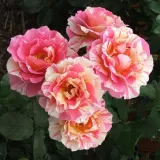
During opening the bright lemon-yellow base colour fades to creamy yellow, then to a pale creamy pink, and the carmine-red striping softens to a pastel pink.
Pollinator Attraction:
Semi-double flowers with 13–25 petals moderately attract pollinators, as the semi-double form partially obscures the stamens and reduces their accessibility.
Pollinator-Friendly Rating:
Semi-double, its flowers have 13–25 petals and moderately attract pollinators, therefore partially pollinator-friendly
Our product is a rose grown with pharmaROSA®’s unique cultivation technology!
2-litre, own-root, potted rose.
With a shoot system appropriate to the season.
With a root system that thoroughly permeates the growing medium.
Quality compliant with the requirements of the E.N.A. (European Nurserystock Association).
Supplied in unique packaging that prevents damage.
Can be planted during frost-free periods.
True-to-variety rose bush with a unique identifier.
The pharmaROSA® own-root potted rose is a well-rooted plant that supports reliable establishment when planted and cared for properly, so it can be planted whenever the soil is not frozen.
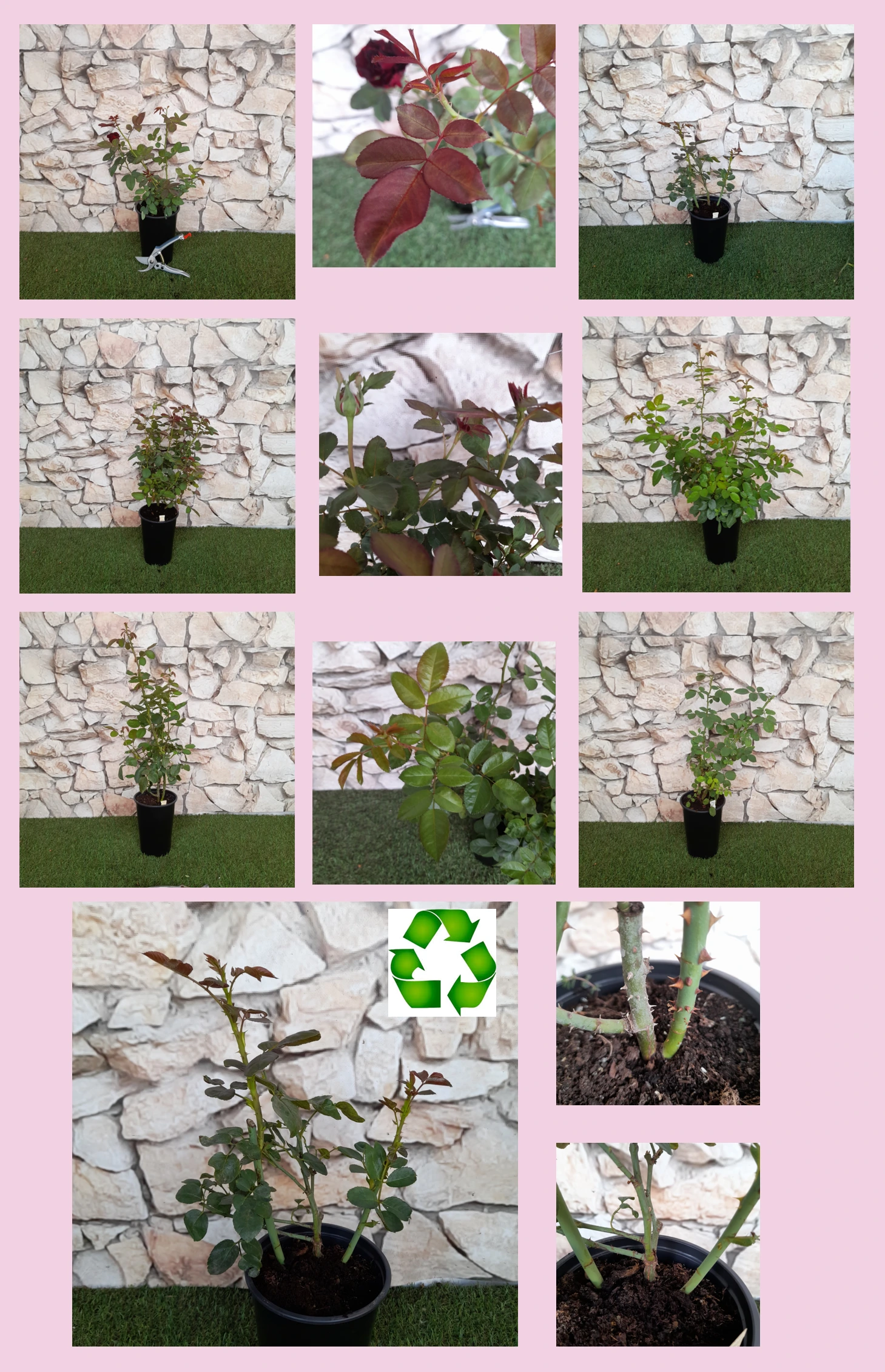
Crop overview: several varieties and growth stages in a short crop section.Shoot system: intensive growth of fresh basal shoots on a young plant.Root system: demonstration of a vigorous root system permeating the growing medium, by removing the pot.Balance: mature plant with root system and shoots in harmony with each other.
Information about the videos
The video series is not a “seasonal showcase”; it illustrates the essence of pharmaROSA® own-root cultivation in a tangible way: how the plant is built up, what the root system is like and how the shoot system regenerates. The recordings were therefore made at different times and with plants at various stages of development, so mixed foliage levels and differing stages of growth may appear in the videos. They are not a ‘sample’ of the batch dispatched, but a visual explanation of how the technology works. The current condition of the rose available to order — typical for the given period and similar to what you can expect to receive in the parcel — is shown in the upper part of the product page.
Pages for private customers Garden roses for the family garden, with minimal care → ORIGINAL® Premium garden roses – instant impact, a truly showpiece garden → EXTRA® Pages for professionals and private customers Roses for public spaces – large areas, sustainable maintenance → NATURAL® Roses for projects – hedge and row planting, fast implementation → RAPID® For professional partners only Production – propagation material for garden roses, wholesale → NEONATAL®
Company details
PharmaRosa Ltd. Company registration number: 01-09-717479 VAT number: 13075314-2-43 Plant health registration no.: HU130721 Bank account (IBAN): HU85117631891388688400000000 BIC (SWIFT): OTPVHUHB Bank name: OTP Bank Nyrt.