CHOCOLATE RIPPLES – red climbing rose - Simpson
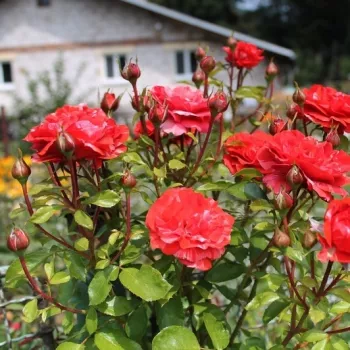
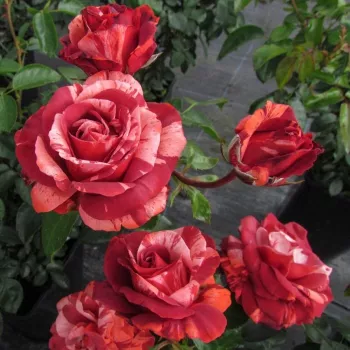
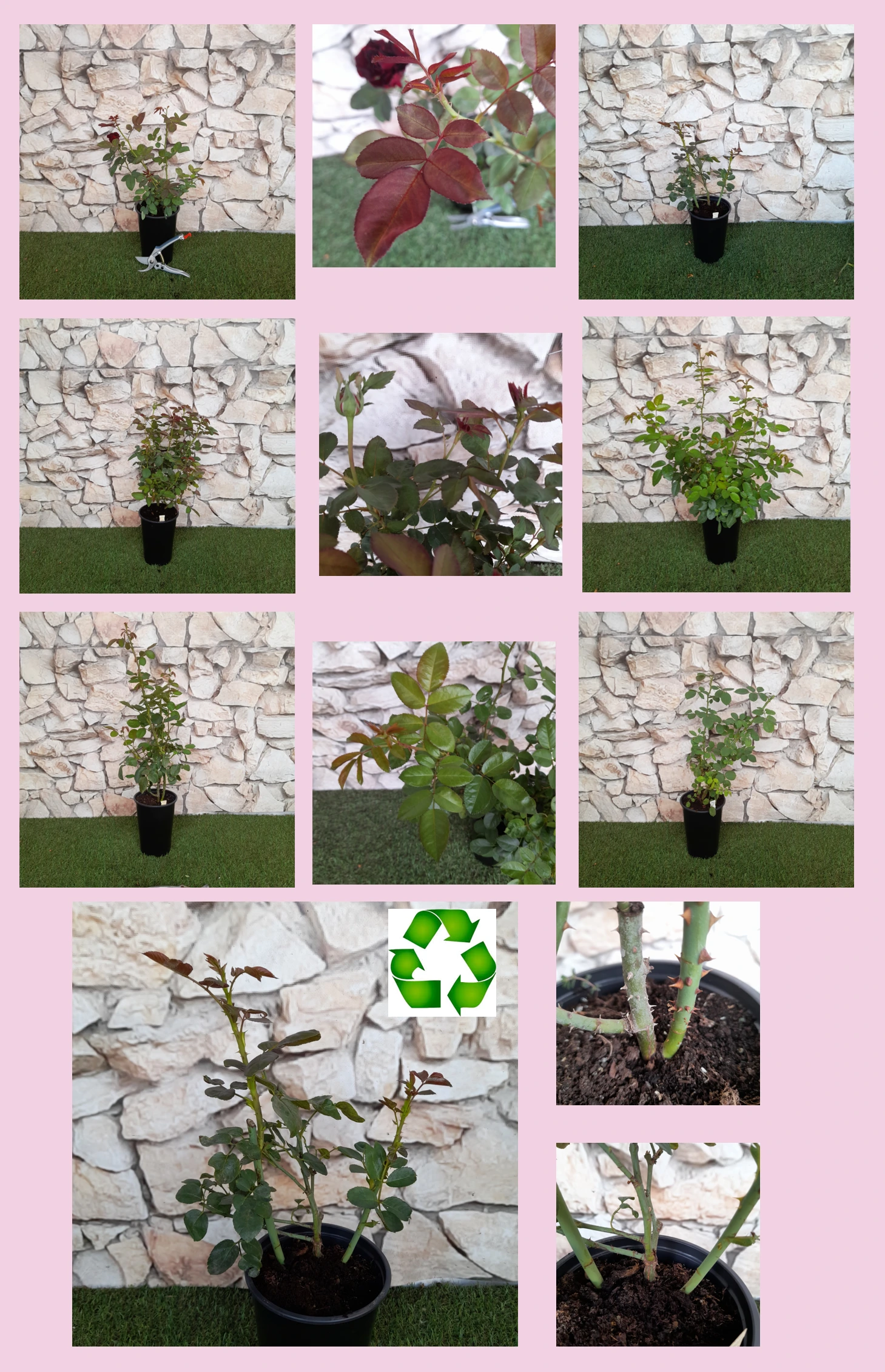
This distinctive climbing rose combines colour drama with dependable flowering, producing clusters of double, cup-shaped blooms that repeat generously through the season. Their brick-red, burgundy and cream stripes mellow into a soft coffee tone, giving your walls, arches and fences an evolving display that remains attractive even as blooms age. A clearly noticeable chocolate-sweet fragrance adds sensory richness without overwhelming small gardens, while its dense, glossy foliage offers reliable coverage on trellis or pergola. On its own roots it establishes steadily, then builds structure and flower power year by year for a long-lived garden presence. Over three seasons you will first see strong rooting, then confident shoots, and by the third year a full ornamental impact, even in breezier gardens where good anchoring and managed drainage help it settle in for the long term.
Usage options
| Target area |
Reasoning |
| House wall or sunny fence |
Ideal where you want a dependable repeat-flowering climber to soften brick, render or fencing, as it carries successive waves of medium-sized blooms from early summer onwards with only basic seasonal care – reassuring for the beginner. |
| Feature arch or pergola |
Works beautifully over an arch or pergola, its dark, glossy foliage and moderate height providing a manageable curtain of blooms that will thicken gradually on its own roots into a long-lived structure – appealing for the homeowner. |
| Front-garden focal point |
The unusual striped, chocolate-toned flowers create an instant talking point by a front gate or path, giving cottage-style character without needing complicated pruning plans – attractive to the style-conscious. |
| Small terrace or patio in a large container |
Can be grown in a robust 40–50 litre container with a trellis, where its repeat flowering and compact climbing habit offer vertical interest in tight spaces that are easy to water and tend – convenient for the urban-gardener. |
| Mixed cottage border with light support |
Suited to informal cottage plantings with a simple obelisk or tripod, where its patterned flowers partner naturally with perennials and its own-root growth gradually forms a balanced, resilient framework – rewarding for the hobby-gardener. |
| Sheltered coastal or windy suburban garden |
Helpful where steady anchoring and sensible drainage matter, as its climbing habit can be trained securely to supports and its dense foliage knits in over time, reducing gaps and movement – reassuring for the family-gardener. |
| Long-term rose feature bed |
A sound choice when you want a climber that will settle and perform over many years, with own-root growth allowing good recovery from pruning adjustments and weather setbacks – suitable for the planner. |
| Low-maintenance rose and shrub scheme |
Fits into simple planting plans needing moderate rather than intensive care; average disease resistance and repeat flowering mean occasional checks and timely feeding are generally sufficient – practical for the busy-owner. |
Styling ideas
- Cottage-arch – Train Chocolate Ripples over a simple wooden arch with Campanula persicifolia at the base for soft blue spires beneath striped blooms – for lovers of traditional cottage entrances.
- Brick-softening – Use it on a warm house wall with Alchemilla mollis to blur the base, letting the coffee-toned flowers ease hard lines – for homeowners wanting gentler façades.
- Evening-nook – Grow in a 50-litre container by a seating area so the chocolate fragrance and changing flower tones can be enjoyed up close – for those who unwind outdoors after work.
- Naturalistic-fence – Combine with Lunaria annua and other self-seeding favourites along a boundary, allowing its stripes to punctuate a relaxed, slightly wild scheme – for fans of informal, low-fuss gardens.
- Vertical-feature – Place a metal obelisk in a small border and spiral the climber up, underplanting with airy perennials to create height without taking much ground – for small-garden owners seeking drama.
Technical cultivar profile
| Characteristic |
Data |
| Name and registration |
Large-flowered climber, registered as SIMstripe, marketed as Chocolate Ripples climbing rose SIMstripe; exhibition climbing rose in the climbing rose commercial group. |
| Origin and breeding |
Bred by Nola M. Simpson from ‘Dark Moments’ × ‘Oranges ’n’ Lemons’; introduced and first distributed in the United Kingdom by Style Roses in 2009. |
| Growth and structural characteristics |
Climbing habit reaching around 150–230 cm high, spreading 90–160 cm, with dense, glossy dark green foliage and a moderately thorny framework suited to training on supports. |
| Flower morphology |
Clusters of medium-sized, double, cup-shaped blooms with approximately 26–39 petals; flowers produced in repeating flushes, with a notably abundant second flowering period. |
| Colour data and phenology |
Brick-red to burgundy base with cream and dusty pink stripes; buds dark reddish-brown, flowers ageing towards coffee-brown tones with beige striping; generally good colour retention in garden conditions. |
| Fragrance and aroma |
Moderate, clearly noticeable scent combining chocolate and sweet notes; primarily ornamental, with double flowers limiting pollinator access and reducing its value as a nectar source. |
| Hip characteristics |
Rose hip set is usually sparse due to its double blooms; when present, bears small spherical red hips about 8–13 mm in diameter, adding occasional late-season interest. |
| Resistance and winter hardiness |
Hardy to approximately –21 to –18 °C (RHS H7, Swedish Zone 3, USDA 6b); overall moderate disease resistance, notably good against black spot, with some susceptibility to mildew and rust. |
| Horticultural recommendations |
Best in full sun on a supportive structure such as wall, fence, arch or pergola; allow space of 140–220 cm, maintain moderate feeding and occasional plant protection as required. |
Chocolate Ripples Climbing rose SIMstripe offers striking striped colour, reliable repeat flowering and a long-lived own-root framework that settles into walls and arches with reassuring ease, making it a thoughtful choice for enduring garden structure.