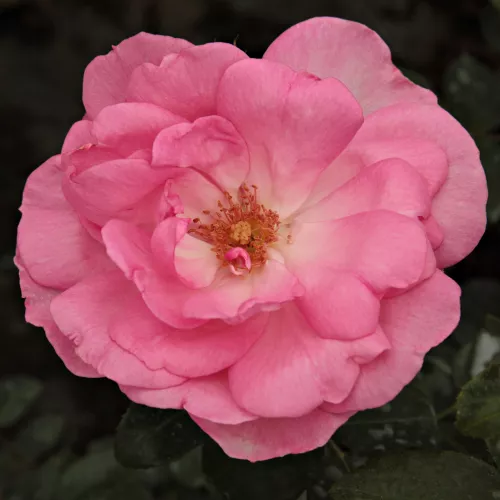
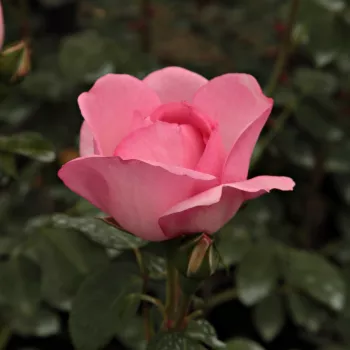
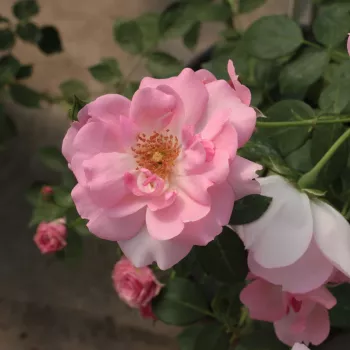
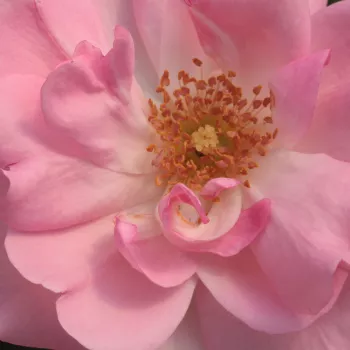
Centenaire de Lourdes™ – pink floribunda bedding rose
Effortless planting meets reliable flowering in this classic floribunda, giving you a cottage-style look with minimal fuss and a bushy, balanced habit that sits neatly in family-sized borders. Its semi-double, mid-pink blooms open wide for pollinators, then soften to pastel shades that blend beautifully with traditional front-garden mixes, while its own-root form quietly builds strength and longevity year after year. Over time the shrub anchors itself well in breezier, wetter UK spots with thoughtful drainage, rewarding patient gardeners as roots establish, shoots extend, and the plant reaches its full ornamental value by the third season.
Usage options
| Target area | Reasoning |
|---|
| Front garden feature by the entrance |
Ideal where you want to plant once and have dependable colour: the bushy, upright habit stays tidy around 1–1.4 m, giving a welcoming mid-height accent without dominating the space. Semi-double clusters add movement and a soft, classic look suited to house-front beds for beginners. |
| Small bedding groups in family gardens |
Planted in groups of 3–5 at the recommended spacing, the floribunda clusters create a full, even block of pink from early summer onwards. Own-root plants knit together gradually, forming a stable, cohesive bed that is easy to maintain for busy-owners. |
| Cottage-style mixed border |
The shifting pink tones, from vivid buds to pale, almost creamy centres, blend naturally with perennials and shrubs for a relaxed cottage feel. The medium height and dense foliage give structure without needing intricate pruning plans for style-seekers. |
| Low, informal hedge or boundary line |
At about 100–140 cm, plants aligned at hedge spacing form a soft, flowering boundary that screens gently without feeling heavy. Own-root longevity allows the hedge to mature steadily, offering a long-term framework for homeowners. |
| Roses for pollinator-friendly gardens |
Semi-double, cup-shaped flowers open wide to expose stamens, making nectar and pollen easily accessible. Repeated clusters through the season give regular foraging opportunities, supporting bees and other beneficial insects for wildlife-lovers. |
| Containers and large tubs on patios |
Suited to a minimum 40–50 litre container, where its bushy habit and remontant flowering give reliable colour on terraces or small urban plots. With regular watering and feeding, it offers a substantial rose presence without complex care for city-gardeners. |
| Family gardens in wetter, breezier regions |
A good choice for average UK conditions where wind and rain can flatten floppier plants; its bushy framework and moderate disease resistance hold garden shape, while thoughtfully improved soil helps it cope with heavier, wetter ground for coastal-owners. |
| Long-term rose borders and collections |
As an own-root rose, it builds strength steadily: roots establish first, then top growth, maturing into a long-lived shrub that takes seasonal pruning well. This makes it a dependable backbone variety for evolving rose borders for enthusiasts. |
Styling ideas
- COTTAGE RIBBON – Run a loose line of Centenaire de Lourdes down a narrow front border, threading between lavender and hardy geraniums for a soft, village-garden feel – ideal for style-conscious homeowners.
- POLLINATOR DRIFT – Plant a small drift of 3 shrubs with Allium and Russian sage so bees move between the airy perennials and accessible rose blooms – perfect for wildlife-friendly family plots.
- ENTRANCE PAIR – Flank a path or gate with two large containers of this rose, underplanting with low catmint to frame a welcoming entrance – suited to compact urban gardens.
- PASTEL BED – Combine groups of this pink floribunda with white perennials and silvery foliage for a calm, easy-care scheme that still looks refined – good for low-maintenance front gardens.
- SOFT HEDGE – Use a row along a drive or boundary, interplanted with dogwoods for winter stems, to give year-round interest from flowers, foliage and hips – attractive for long-term planners.
Technical cultivar profile
| Property | Data |
|---|
| Name and registration |
Centenaire de Lourdes™ (DELge), floribunda bedding rose from the Les Centenaires de Lourdes® collection; ARS exhibition name Centenaire de Lourdes; bush rose, exhibition floribunda category. |
| Origin and breeding |
Bred by André Delbard-Chabert, Delbard (France), introduced 1958; parentage ‘Frau Karl Druschki’ × unknown seedling; unregistered cultivar used widely as a reliable garden and exhibition floribunda. |
| Awards and recognition |
Selected among the World’s Ten Best Roses at the World Rose Congress in 1994, highlighting its sustained garden performance and international appreciation by experienced rose growers. |
| Growth and structural characteristics |
Bushy shrub reaching about 100–140 cm in height with a 75–105 cm spread; moderately thorny stems and dense, slightly glossy green foliage (RHS 137A) provide a full, balanced garden presence. |
| Flower morphology |
Semi-double, cup-shaped flowers with around 13–25 petals; large clusters on floribunda-style trusses; large blooms (approx. 2.75–3.95 in) repeat freely with an abundant second flush in season. |
| Colour data and phenology |
Muted mid-pink with a slight salmon undertone; buds deep mid-pink (RHS 65C/65B), opening to uniform soft mid-pink, then lightening to pastel and pale tones with age, giving layered colour effects. |
| Fragrance and aroma |
Mild, discreet fragrance with a soft rose character; not overpowering near seating areas, but noticeable at close range when blooms are freshly opened on warm, still days in summer. |
| Hip characteristics |
Forms moderate numbers of spherical red hips, around 8–12 mm in diameter; hips add a subtle decorative effect in late season if spent flowers are not removed for continued flowering. |
| Resistance and winter hardiness |
Hardy to approximately −26 to −23 °C (RHS H7, USDA 5b, Swedish zone 4); black spot resistant with moderate susceptibility to powdery mildew and rust, usually manageable with basic care. |
| Horticultural recommendations |
Best in full sun with reasonably drained soil; space 55–100 cm depending on use; medium maintenance, occasional plant protection; suited to beds, park plantings, hedges, cutting and large containers. |
Centenaire de Lourdes™ offers dependable flowering, a bushy, balanced habit and partial pollinator appeal, while its own-root form promises long-term garden value; a thoughtful choice if you want a classic rose that quietly endures.