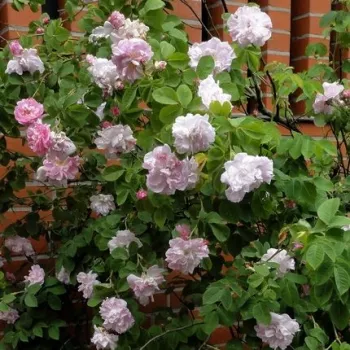
Uniform, rich mid-pink shade with a slightly warm tone. - historical, damask rose - very strong, noticeable from afar scented rose - sweet-spicy, damask-scented
– Very strong, sweet-spicy damask fragrance.
– Romantic, cupped mid-pink historic blooms.
– Tall, upright shrub for hedges or specimens.
– Hardy to about −30 °C, suited to cold gardens.
– Attractive bright red hips for autumn interest.
– Special feature: Awarded ARS Dowager Queen nine times for historic garden excellence.
Natural renewal – Secure ordering
pharmaROSA® ORIGINAL 2-litre own-root potted rose
21,20 £
Unfortunately, we are currently unable to ship to the United Kingdom; we only deliver to countries within the European Union. For more information, please contact us!
4(6419)
Celsiana – historic pink Damask rose in 2‑litre own‑root container
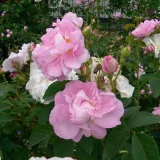
historic charm meets easy‑going character in ‘Celsiana’, a venerable Damask shrub that slips naturally into classic British front gardens. Its once‑a‑year flush of early summer blossoms produces softly cupped, mid‑pink clusters that fade to near white in strong sun, creating a relaxed, cottage‑style look without complicated maintenance. The very strong, sweet‑spicy damask fragrance is noticeable from a distance, while the semi‑double flowers remain open enough to tempt bees and other pollinators into family gardens. On its own roots this shrub develops steadily into a long‑lived, upright bush, forming deep, resilient roots in Year 1, generous shoots in Year 2 and full ornamental value by Year 3. Well suited to mixed borders and looser hedges, it tolerates typical UK conditions, including wetter, windier spells near the coast where reliable anchoring and drainage really matter, and its moderate disease tolerance keeps ongoing care simple for busy gardeners who still value traditional character.
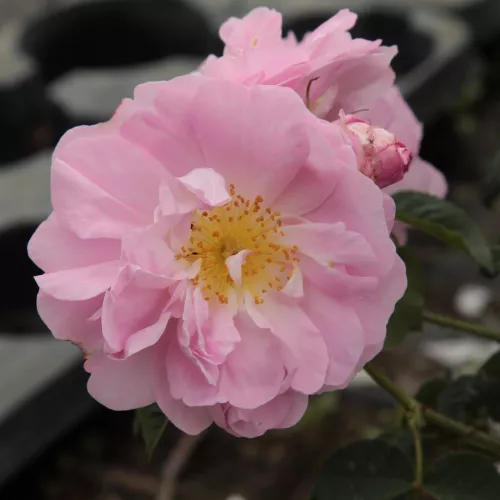
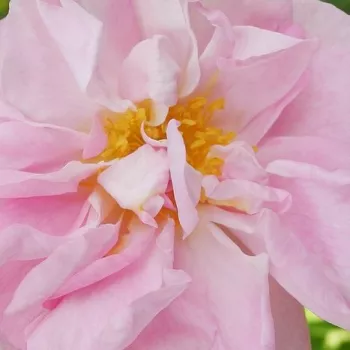
Celsiana shows its semi-double, warm mid-pink flowers in full bloom.
Usage options
Target area
Reasoning
Feature shrub in a classic front garden
Planted as a single specimen, ‘Celsiana’ develops into a tall, upright shrub that gives a strong focal point beside a path, bay window or front gate. Its once‑a‑year flush of clustered, cupped pink flowers creates a traditional June display with minimal intervention – ideal for a tidy but relaxed frontage for the beginner.
Light, informal flowering hedge
At 135–225 cm high and up to 175 cm wide, this Damask rose is well suited to loosely clipped, flowering hedges. Spaced at about 130 cm, it forms a gently billowing line of summer colour, with grey‑green foliage and bright red hips adding structure later in the year, suiting those who want screening without fussy topiary for the homeowner.
Mixed cottage border with perennials
‘Celsiana’ combines beautifully with traditional border plants such as Mexican daisy, evergreen candytuft and compact sages, its mid‑pink, semi‑double clusters weaving into a soft cottage tapestry. The own‑root habit lets it settle and knit gradually into mixed plantings over several seasons, appealing to gardeners building a long‑term border picture for the enthusiast.
Pollinator‑friendly family garden corner
The semi‑double, open flowers offer accessible stamens, encouraging bees and other pollinating insects into small gardens. A concentrated blooming period provides a rich nectar source just when many family gardens are most used, allowing a wildlife‑friendly feel without complex planting plans for the eco‑conscious.
Strongly scented seating or patio area
With a very strong, sweet‑spicy Damask scent that carries on still evenings, ‘Celsiana’ is perfect near a bench, back‑door terrace or path where you regularly pass. A single shrub in a raised bed or large container by a seating area gives classic rose perfume with only occasional pruning and deadheading for the scent‑lover.
Large container or courtyard planter
In a well‑drained container of at least 40–50 litres, this upright shrub can bring historic character to paved courtyards or urban gardens where border space is limited. Own‑root growth ensures it can be rejuvenated with harder pruning if needed, while regular watering in hot spells keeps its moderate drought tolerance comfortable for the city‑gardener.
Low‑input, long‑term planting scheme
Once established, this own‑root Damask rose offers a long lifespan and the capacity to regenerate from the base after harder pruning or weather damage, supporting stable ornamental value over many years. Its moderate disease resistance and simple structure suit gardeners who prefer straightforward annual tasks over constant attention for the busy.
Exposed or open‑site planting
The upright, well‑anchored shrub form and robust root system cope well with typical British weather, including breezier, wetter periods where good soil preparation and drainage support reliable establishment, even in more open aspects, giving confidence in challenging spots for the coastal.
Styling ideas
Cottage‑border anchor – Use ‘Celsiana’ mid‑border with foxgloves, hardy geraniums and Mexican daisy to create a soft, June‑centred display – ideal for lovers of relaxed cottage style.
Romantic hedge – Plant a loose line along a boundary at 130 cm spacing, underplanting with lavender or low sage for a fragrant, textural hedge – suited to front‑garden traditionalists.
Courtyard statement – Grow one plant in a 50‑litre terracotta pot with trailing evergreen candytuft at the rim for year‑round structure and a summer scent focus – perfect for paved town gardens.
Scented seating nook – Position near a bench with pale perennials and grasses so the strong damask fragrance and soft pinks frame an evening sitting area – appealing to those who unwind outdoors after work.
Heritage showpiece – Combine with other historic roses in a dedicated bed, using its tall, upright habit as a backdrop to lower varieties – for gardeners who enjoy classic collections and period character.
Technical cultivar profile
Parameter
Data
Name and registration
Celsiana – historic Damask rose; current trade name CELSIANA – pink historic Damask rose; American Rose Society exhibition name: Celsiana; historic shrub, Dowager Queen category.
Origin and breeding
Damask rose (Rosa × damascena) of uncertain breeding origin; introduced around 1732 in the Netherlands, associated with French nurseryman Jacques‑Martin Cels as an early distributor.
Awards and recognition
Recognised in American Rose Society shows as a Dowager Queen winner on multiple occasions between 2000 and 2001, highlighting its enduring exhibition value among historic shrub roses.
Growth and structural characteristics
Upright shrub 135–225 cm tall and 105–175 cm wide, with moderately dense, grey‑green matt foliage and moderate prickliness; forms a bushy framework suitable for hedging or specimen planting.
Flower morphology
Semi‑double, cupped blooms with 13–25 petals, borne in clusters of medium‑sized flowers (approximately 4–7 cm), self‑cleaning to a moderate degree and flowering once in early summer.
Colour data and phenology
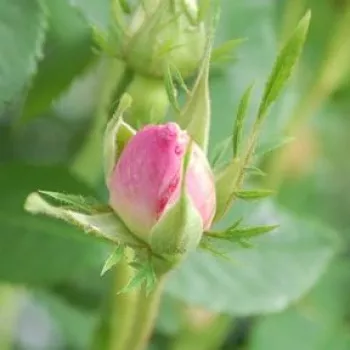
Rich mid‑pink flowers (RHS 65C outer, 65B inner) that open from mauve‑pink buds, then fade through pastel pink to pale or almost white in strong sun, giving a softly changing colour effect over the bloom period.
Fragrance and aroma
Very strong, sweet‑spicy Damask scent, often noticeable at several metres; classic old‑rose perfume suitable for fragrance‑focused gardens and near seating areas where air movement carries the aroma.
Hip characteristics
Forms bright red, spherical hips 11–19 mm in diameter by autumn if spent flowers are not removed; hips add seasonal interest and can complement wildlife‑friendly or informal planting schemes.
Resistance and winter hardiness
Hardy to approximately −32 to −29 °C (RHS H7, USDA 4b, Swedish zone 5); moderate resistance to black spot, powdery mildew and rust; tolerates heat but benefits from regular watering in prolonged drought.
Horticultural recommendations
Best in full sun with well‑drained soil; medium maintenance with occasional plant protection; spacing 130–220 cm depending on hedge or specimen use; suitable for parks, hedges, specimens and cut flowers.
Celsiana offers a richly fragrant, pollinator‑friendly historic display as a long‑lived shrub, and as an own‑root rose it settles securely for years of relaxed enjoyment – a thoughtful choice if you value classic character without demanding care.
Detailed product attributes
Product Identification Data
Product Name:
CELSIANA – pink historic Damask rose
Product Type:
pharmaROSA® ORIGINAL - 2-litre own-root potted rose
Meaning of Cultivar Name:
The name was given after Jacques‑Martin Cels, a French gardener and nursery owner.
Cultivar Synonym:
Abondante; Belle Couronnée; Bifera Coronata; Cels; Cels à fleurs pleines; De Cels; Grande Couronnée; Incarnata Maxima; La Coquette; Rosa damascena ‘Mutabilis’; Rosier de Cels; Van Huysum
Our product is a rose grown with pharmaROSA®’s unique cultivation technology!
2-litre, own-root, potted rose.
With a shoot system appropriate to the season.
With a root system that thoroughly permeates the growing medium.
Quality compliant with the requirements of the E.N.A. (European Nurserystock Association).
Supplied in unique packaging that prevents damage.
Can be planted during frost-free periods.
True-to-variety rose bush with a unique identifier.
The pharmaROSA® own-root potted rose is a well-rooted plant that supports reliable establishment when planted and cared for properly, so it can be planted whenever the soil is not frozen.
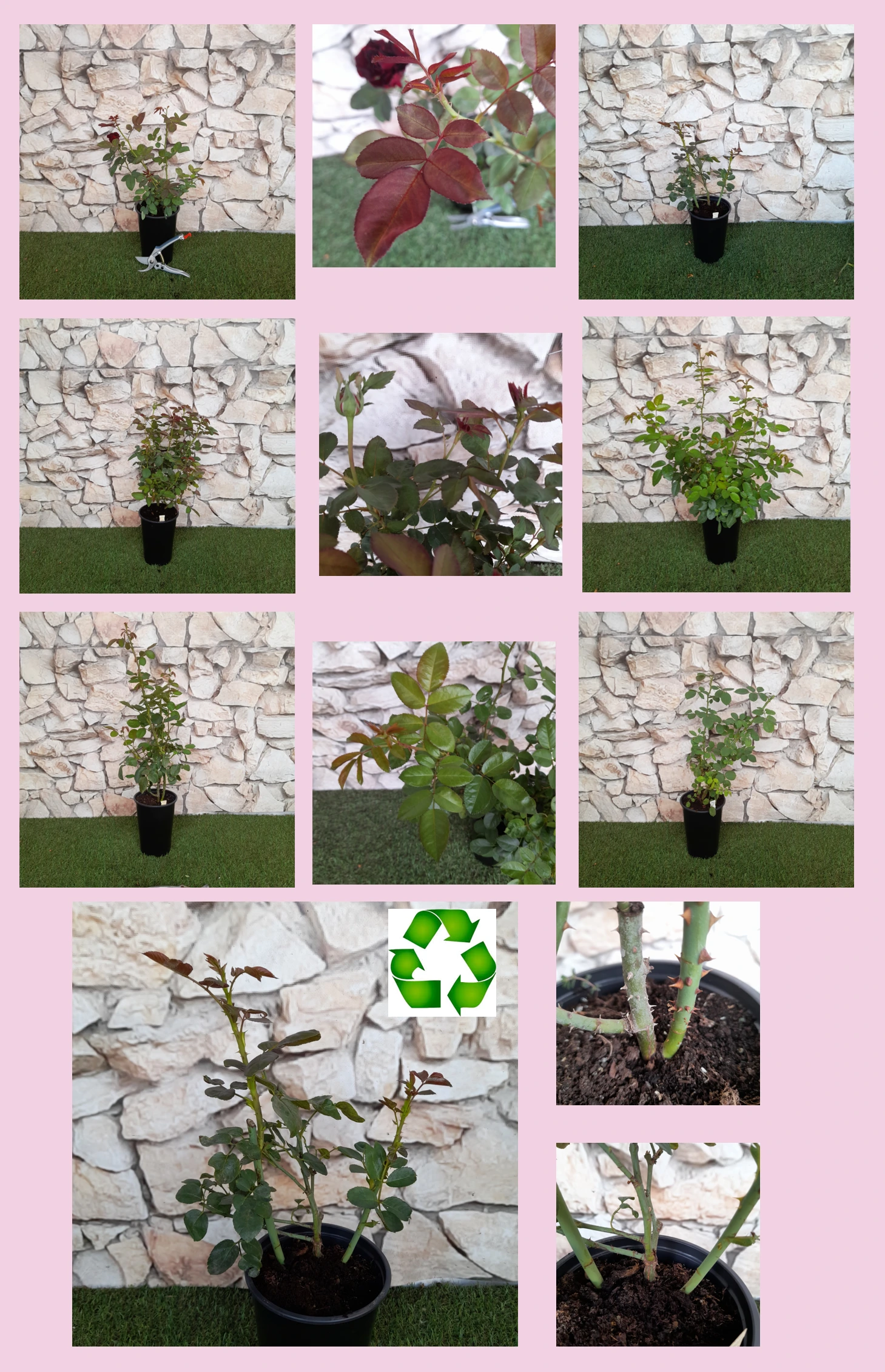
Crop overview: several varieties and growth stages in a short crop section.Shoot system: intensive growth of fresh basal shoots on a young plant.Root system: demonstration of a vigorous root system permeating the growing medium, by removing the pot.Balance: mature plant with root system and shoots in harmony with each other.
Information about the videos
The video series is not a “seasonal showcase”; it illustrates the essence of pharmaROSA® own-root cultivation in a tangible way: how the plant is built up, what the root system is like and how the shoot system regenerates. The recordings were therefore made at different times and with plants at various stages of development, so mixed foliage levels and differing stages of growth may appear in the videos. They are not a ‘sample’ of the batch dispatched, but a visual explanation of how the technology works. The current condition of the rose available to order — typical for the given period and similar to what you can expect to receive in the parcel — is shown in the upper part of the product page.
Pages for private customers Garden roses for the family garden, with minimal care → ORIGINAL® Premium garden roses – instant impact, a truly showpiece garden → EXTRA® Pages for professionals and private customers Roses for public spaces – large areas, sustainable maintenance → NATURAL® Roses for projects – hedge and row planting, fast implementation → RAPID® For professional partners only Production – propagation material for garden roses, wholesale → NEONATAL®
Company details
PharmaRosa Ltd. Company registration number: 01-09-717479 VAT number: 13075314-2-43 Plant health registration no.: HU130721 Bank account (IBAN): HU85117631891388688400000000 BIC (SWIFT): OTPVHUHB Bank name: OTP Bank Nyrt.