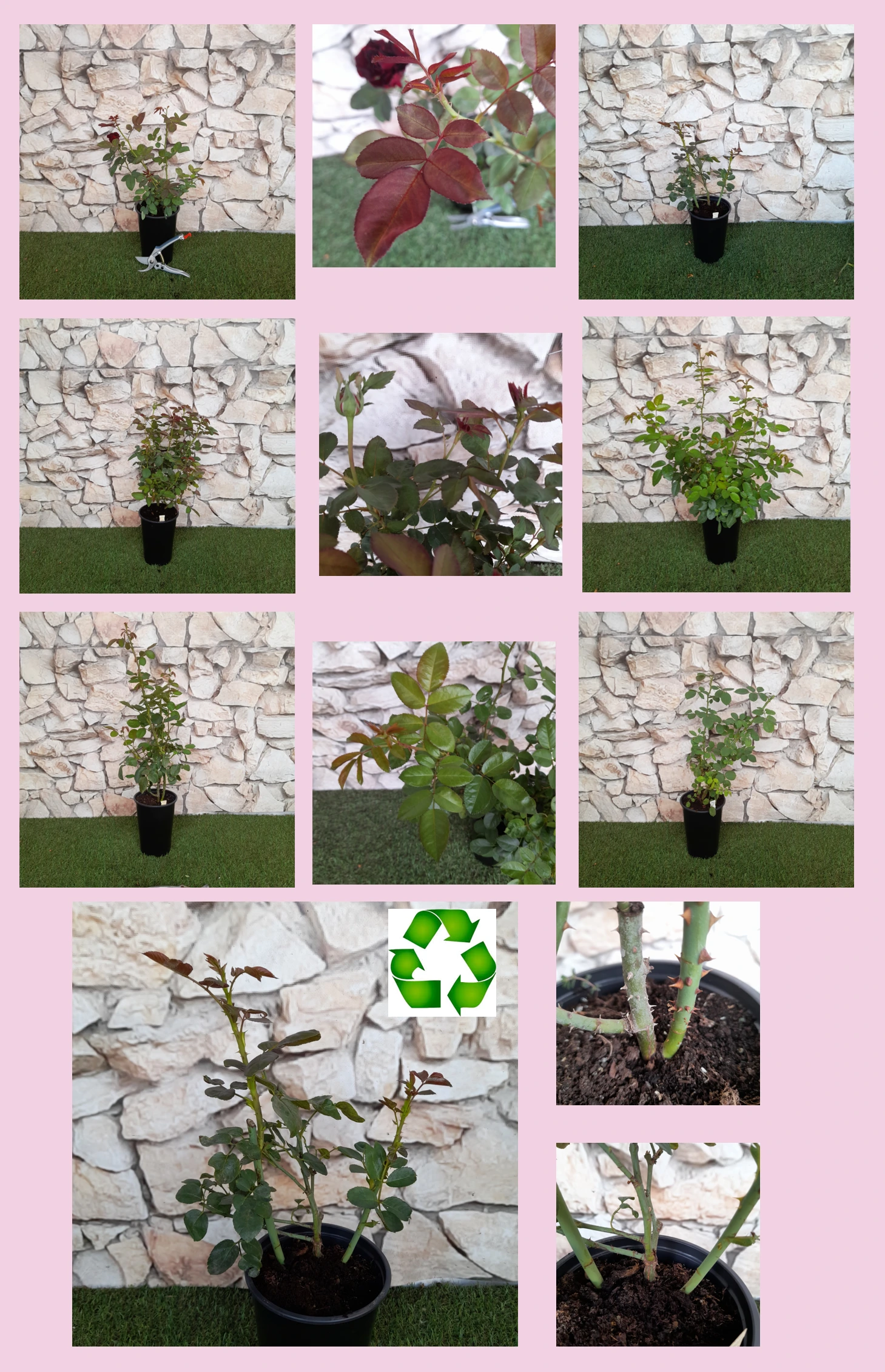
Carminia – purple-pink bedding floribunda rose
Colour and fragrance combine beautifully in Carminia, a compact floribunda that slips effortlessly into small British gardens, even where windy, rain‑washed front borders call for reliable anchoring and sturdy growth. Its bushy habit and medium height make it ideal for neat beds or edging, while remontant flowering keeps the clusters of lilac-pink blooms returning from summer into autumn. As an own-root plant, Carminia develops a balanced, long-lived shrub that can regenerate if cut back hard and needs only straightforward seasonal care. In borders or large containers, it offers fragrance and soft texture without complicated pruning, rewarding regular watering and feeding with generous clusters of fully double flowers. Over time its structure and roots mature steadily – Year‑1 anchoring, Year‑2 bush-building, and by Year‑3 a full ornamental presence that settles convincingly into cottage-style and contemporary plantings alike.
Usage options
| Target area |
Reasoning |
| Front garden bedding strip |
Carminia’s compact, bushy habit and moderate height create a tidy, low hedge-like line that frames paths and drives without overwhelming smaller plots. Regular clusters of lilac-pink flowers keep the frontage looking cared for with minimal effort – perfect for the busy homeowner. |
| Mixed cottage border |
The changing lilac-pink tones blend well with perennials and traditional cottage favourites, while repeat flowering ensures colour between main perennial flushes. Own-root growth settles into the soil and climate, giving a stable, long-lived shrub that fits naturally into evolving borders – reassuring for the style-conscious beginner. |
| Small group planting (3–5 plants) |
Planted in a loose triangle or drift, Carminia forms an even, rounded mass of bloom and foliage that looks designed without complex layout. Remontant flowering and medium care needs keep the group attractive over the season with only simple deadheading and feeding – ideal for the low-maintenance gardener. |
| Feature rose in a large container |
Carminia adapts well to life in a substantial pot of at least 40–50 litres, where its bushy, upright habit and strong scent provide a focal point near a door, terrace or seating area. Good heat tolerance helps in sunnier, paved spots when watering is kept consistent – well suited to the urban balcony-owner. |
| Edging along paths or patios |
The moderate spread and dense foliage make a well-defined edge that softens hard surfaces without encroaching too far, and the strong citrus-floral fragrance is noticeable as you pass. Repeated flowering in clustered heads provides a long season of interest – attractive for the family garden user. |
| Partially shaded side garden |
Carminia tolerates partial shade, so it performs reliably on side returns or spots with only a few hours of sun, maintaining acceptable flowering and form. Own-root resilience supports recovery if growth becomes uneven and needs corrective pruning – a comfort for the cautious newcomer. |
| Exposed or wind-prone beds |
The compact, well-branched shrub keeps its shape and anchors well once established, helping it cope with blustery, rain-exposed positions where taller roses may rock or snap, offering dependable structure even where strong weather and wet conditions demand solid root-holding – particularly valuable to the coastal gardener. |
| Small cutting corner in a family garden |
Medium-sized, fully double, strongly scented blooms on clustered stems lend themselves to short-stem cutting for the house without stripping the plant bare. Repeat flowering means more buds follow each light harvest, so the bush remains decorative outdoors – enjoyable for the home bouquet-maker. |
Styling ideas
- Cottage Drift – Plant 3–5 Carminia in a loose sweep, weaving between hardy geraniums and daylilies for a relaxed front-garden feel with repeat colour – for lovers of informal cottage style.
- Doorway Welcome – Grow Carminia in a 40–50 litre container by the front step so its strong citrus-floral scent greets you daily – for homeowners who value fragrance in small spaces.
- Neat Border Edge – Line a path with evenly spaced plants at 30–40 cm, underplanting with low evergreen groundcovers to keep structure year-round – for those seeking tidy, easy-care definition.
- Pastel Harmony – Combine Carminia with pale salvias, soft pink campanulas and silvery foliage plants to echo its lilac-pink colour shifts – for gardeners curating a gentle, romantic palette.
- Family Playframe – Use Carminia in a bed near seating or play areas, where its compact, moderately thorny form and repeat blooms give interest without excessive height – for families who want beauty with practicality.
Technical cultivar profile
| Parameter |
Data |
| Name and registration |
Floribunda bedding rose registered as Carminia, marketed as Carminia – purple-pink bedding floribunda rose. Belongs to the bedding rose collection and shrub rose exhibition category. |
| Origin and breeding |
Bred by Martin Vissers in Belgium (2008) from Sweet Blondie × Outta The Blue, introduced in 2020 through Viva International with initial distribution by Jan Spek Rozen BV. |
| Growth and structural characteristics |
Compact, bushy shrub typically 80–105 cm high and 30–50 cm wide, with dense, slightly glossy medium-green foliage and moderate prickliness, suitable for beds, edging and containers. |
| Flower morphology |
Fully double, cup-shaped florets with 26–39 petals, borne in clusters on floribunda-style trusses. Medium bloom size around 4–7 cm, repeating freely with a strong second flush in season. |
| Colour data and phenology |
Closed buds deep lavender, opening lilac-pink with silvery edges; flowers fade to pale silvery lilac. Colour codes around RHS 75C outer and 75B inner petals, with medium overall colour retention. |
| Fragrance and aroma |
Noticeably strong, far-scented fragrance with a fresh citrus-floral character. Full, double blooms limit stamen access, so ornamental value outweighs pollinator attraction in typical garden use. |
| Hip characteristics |
Hips form only occasionally; small spherical fruits about 5–8 mm across, orange-red (RHS 40A), so autumn hip display is limited and does not dominate the plant’s appearance. |
| Resistance and winter hardiness |
Hardy to approximately −21 to −18 °C (RHS H6, USDA 6b, Swedish zone 3). Shows moderate resistance to black spot, mildew and rust, with good heat and moderate drought tolerance once established. |
| Horticultural recommendations |
Best at 25–45 cm spacing depending on effect, giving 12.8–14.7 plants/m² in mass plantings. Suits beds, edging, containers and park plantings; needs routine feeding and occasional plant protection. |
Carminia brings compact structure, repeat lilac-pink flowering and strong fragrance on a resilient own-root shrub that matures into a dependable long-term feature; a considered choice if you want colour with uncomplicated care.