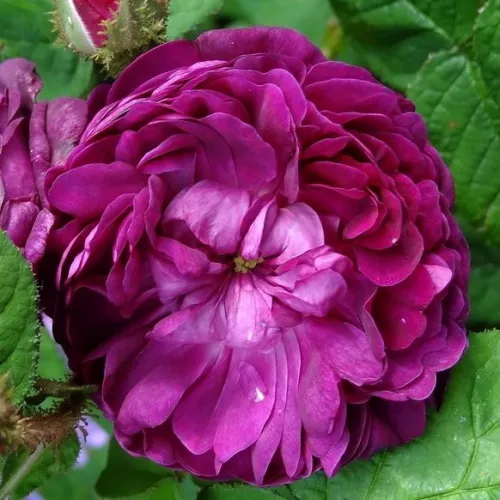
CAPITAINE JOHN INGRAM – crimson-purple historic moss rose – Laffay
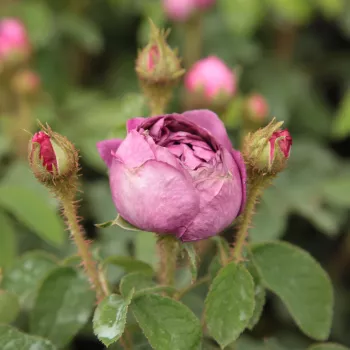
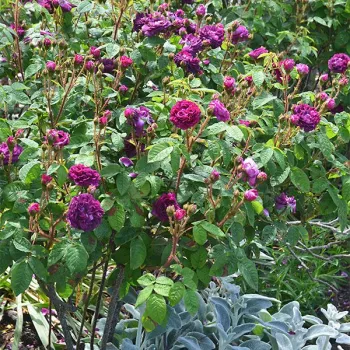
This distinguished moss rose brings a touch of heritage romance to smaller British gardens, offering richly mossed buds and intensely perfumed, once-a-year spectacle when it is in bloom. Its deep, crimson-purple rosettes create classic impact in a front border, with each flower carrying an intoxicating spicy fragrance that can fill a sheltered corner near a path or doorway. As an own-root plant it develops reliable structure and long-term longevity, regenerating from its base and settling especially well in well-prepared beds with good drainage where heavier soils would otherwise hold winter wet and compromise roots. Over time the bush forms a slightly spreading, medium-tall presence that works beautifully as a cottage-style specimen or in a small group of three, building from root establishment in year one to fuller top growth in year two and then a mature display of historic character by year three. With thoughtful siting, you can enjoy its period charm and scented abundance without complex design work.
Usage options
| Target area |
Reasoning |
| Feature shrub in a classic front garden |
Used as a single feature plant near the entrance, this variety’s medium-tall, bushy frame and once-a-season mass of crimson-purple blooms create a focal point with real period charm, ideal where you want impact from one well-placed shrub – for lovers of classic entrances |
| Small group in a cottage-style border |
Planted in a loose triangle of three at about 1.2–1.5 m spacing, the slightly spreading habit knits together into a rounded mass, giving a generous wave of colour and scent that suits informal cottage mixes without demanding elaborate design – for relaxed cottage gardeners |
| Historically themed rose bed |
In a dedicated historic-rose bed this cultivar offers authentic Victorian character, with its mossed buds and rosette flowers pairing well with other heritage shrubs, providing a strong sense of time and place for enthusiasts of older garden styles – for heritage rose collectors |
| Specimen for fragrance-focused corners |
With an extremely strong, garden-filling perfume, it is a natural choice beside seating areas or paths where you pass in June, giving a concentrated season of scent that rewards a sunny, sheltered position and attentive seasonal care – for fragrance-first gardeners |
| Traditional mixed shrub border |
Among shrubs such as lilac and dogwood, its 120–190 cm height and mid-green foliage weave into the structure of a mixed border, adding a deep, velvety colour accent that repeats the border’s tones without overpowering other plants – for structure-focused planners |
| Flower bed with summer highlights |
In a sunny flower bed this non-remontant rose delivers one concentrated flush, making it ideal as a seasonal highlight surrounded by perennials that carry the display later, so the bed remains attractive once the main show is over – for thoughtful bed designers |
| Cut-flower use for special arrangements |
The medium-sized, double, rosette blooms and rich, spicy scent lend themselves to short-stemmed, intimate arrangements, giving a luxurious, old-world character in vases during its flowering period, best cut just as buds begin to open – for home floral stylists |
| Own-root planting for long-term structure |
As an own-root shrub it builds its framework steadily, adapting to your soil and responding well to renewal pruning if ever damaged, giving confidence that the plant can recover and remain part of the garden’s long-term backbone – for long-view garden planners |
Styling ideas
- Cottage focus – Combine with foxgloves, hardy geraniums and catmint for a soft, layered June display that plays up its historic charm – ideal for homeowners creating a storybook front garden.
- Scented corner – Place near a bench with lavender and dianthus to extend the fragrance palette through the season – suitable for those who unwind outdoors after work.
- Heritage frame – Underplant with low box or evergreen dwarf hedging to frame its once-a-year show and keep the bed tidy in winter – good for neat, design-conscious gardeners.
- Moody tones – Pair its deep burgundy blooms with purple salvias, dark heucheras and white campanulas for a dramatic yet balanced border – for style-led urban gardeners.
- Romantic specimen – Use as a single shrub backed by lilac or dogwood, with pale roses or perennials in front to set off the rich flower colour – appealing to those seeking a focal point with character.
Technical cultivar profile
| Parameter |
Data |
| Name and registration |
Capitaine John Ingram is a historic moss rose traded as a heritage shrub; it is an unregistered variety with the exhibition name Capitaine John Ingram and verified cultivar authenticity. |
| Origin and breeding |
Bred by Jean Laffay in France and introduced in 1854, this moss rose has unknown parentage, reflecting mid-19th-century breeding traditions and carrying the character of classic French heritage roses. |
| Growth and structural characteristics |
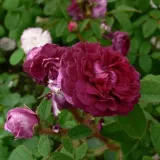
Forms a bushy, slightly spreading shrub 120–190 cm tall and 80–120 cm wide, with moderately dense, mid-green, matt foliage and dense prickling, suited to specimen use or inclusion in traditional shrub borders. |
| Flower morphology |
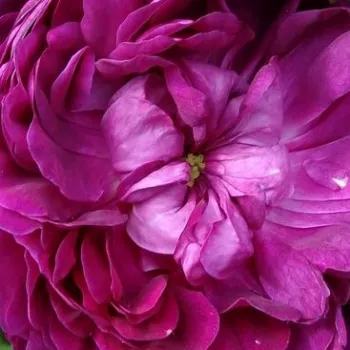
Bears medium-sized, double, rosette-shaped blooms with approximately 26–39 petals, produced singly in a once-a-year flush, giving a traditional, non-remontant display typical of many historic moss roses. |
| Colour data and phenology |
Flowers open deep crimson-red with a purplish hue, developing velvety burgundy tones and a smoky edge; colour lightens slightly in strong sun, giving moderate retention and subtle variations with changing light. |
| Fragrance and aroma |
Exhibits an extremely strong, garden-filling perfume with a deeply spicy character, providing intense seasonal fragrance around paths, seating or entrances when used thoughtfully in warm, sheltered positions. |
| Hip characteristics |
Fruit set is generally poor due to the double bloom form, but the plant may occasionally produce small, spherical orange-red hips 10–15 mm across, adding modest late-season interest when present. |
| Resistance and winter hardiness |
Very susceptible to major fungal diseases and best grown with regular protection; fully hardy to approximately −26 to −23 °C, corresponding to RHS H7 and USDA zone 5b, with Swedish hardiness around zone 4. |
| Horticultural recommendations |
Prefers a sunny position and good air circulation, with 80–150 cm plant spacing; requires consistent preventive care, particularly against mildew, black spot and rust, for reliable ornamental performance in the garden. |
CAPITAINE JOHN INGRAM offers historic character, powerful fragrance and strong visual impact as a long-lived own-root shrub, making it a thoughtful choice if you wish to add period charm to your garden.