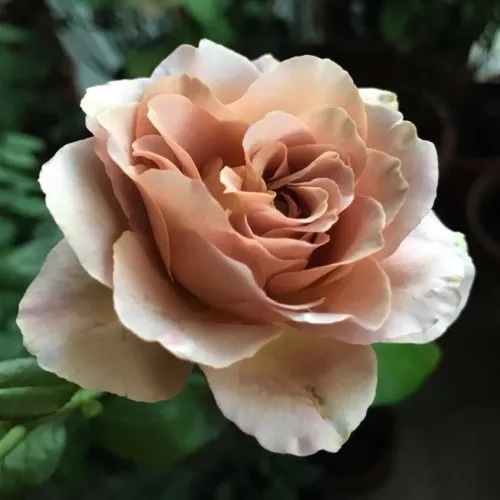
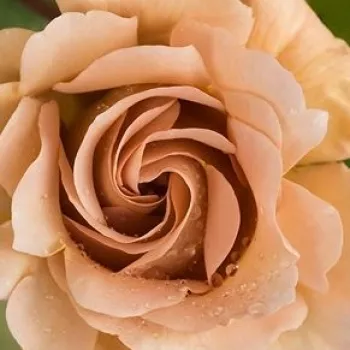
Warm caramel petals shading from brown through mauve to beige with a silky sheen. - hybrid tea rose - strong, long-lasting scented rose - vanilla scented
– Large, fully double, high‑centred blooms.
– Unique light brown, caramel to beige tones.
– Strong, long‑lasting vanilla fragrance.
– Good heat and drought tolerance.
– Upright, elegant habit with glossy foliage.
– Special feature: Premium gold rated cut rose with distinctive mocha colouring.
Conscious planning – Soil-friendly approach
pharmaROSA® ORIGINAL 2-litre own-root potted rose
21,20 £
Unfortunately, we are currently unable to ship to the United Kingdom; we only deliver to countries within the European Union. For more information, please contact us!
5(11359)
CAFFE LATTE™ – light brown hybrid tea rose – De Ruiter
This distinctive hybrid tea brings a mocha twist to classic garden roses, with blooms that swirl from soft brown through mauve to beige, set off by glossy, dark green foliage. Its upright habit makes it ideal as a focal point in smaller British front gardens or as a vertical accent in cottage-style borders, while the long, straight stems are excellent for cutting and bringing indoors. Strong, lingering fragrance with a vanilla note makes every flush feel luxurious, and regular repeat flowering keeps the display going from early summer into autumn. On its own roots it settles in well, forming a stable, long-lived shrub that responds reliably once established, coping well even where strong winds and rain can challenge less robust roses in exposed plots. With good basic care you see roots in year one, stronger shoots in year two and full ornamental impact by year three, all from an easy-to-handle 2-litre plant that suits time-pressed owners.
Caffe Latte™ hybrid tea rose in full bloom.
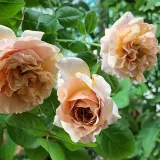
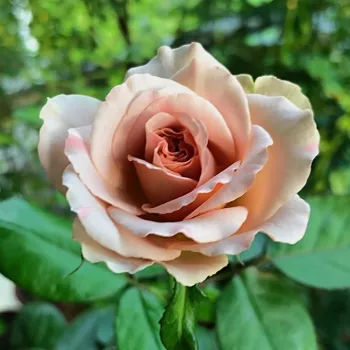
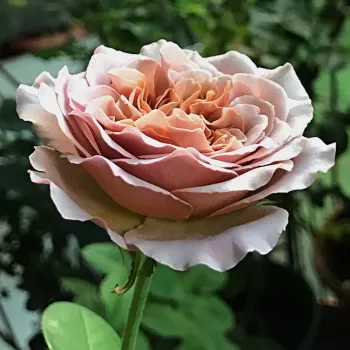
Caffe Latte™ in different opening stages, showing its changing light-brown tones.
Usage options
Target area
Reasoning
Feature rose in a small front garden bed
The upright structure and moderate spread make this variety excellent where space is limited but you want a strong vertical accent by the front path or bay window. The unusual caramel and mocha tints read beautifully against brick or painted render, giving a tailored, designer feel without complex planting schemes for style-conscious beginners.
Cutting patch for home-arranged bouquets
Long, straight stems and classic, high-centred hybrid tea blooms lend themselves perfectly to cutting, while the strong vanilla perfume carries well indoors. Regular deadheading encourages fresh stems for vases through the season, letting you harvest flowers without diminishing garden impact, ideal for home florists and creative decorators.
Repeat-flowering focal point in a mixed border
This rose offers dependable repeat flowering with an especially generous second flush, so a single plant can hold the eye between perennials and low shrubs. By deadheading spent blooms, you maintain a steady sequence of caramel-toned flowers into autumn, supporting gardeners who want long-lasting interest from a compact planting.
Warm-toned cottage-style combinations
The coffee-and-caramel palette partners beautifully with soft purples and dusky pinks, echoing classic cottage charm in a modern way. Grouping with perennials such as Echinacea, calamint or phlox builds an informal, romantic look while this rose’s distinctive colouring prevents the border from feeling predictable, suiting design-led cottage-garden enthusiasts.
Sunny, heat-exposed beds near house walls
Good heat tolerance allows this rose to perform well against south- or west-facing walls, where reflected warmth can stress more delicate cultivars. With regular watering through prolonged dry spells it continues to flower and hold its structure, making it a sound choice for low-maintenance front gardens beside driveways and paved areas.
Wind-exposed suburban or coastal plots
The sturdy, upright growth and well-anchored own-root system help this variety cope better where wind can rock taller roses, and its resilience means flowers still present well after summer showers in breezy districts. Over time it forms a settled, balanced shrub, useful for householders in more exposed British gardens and coastal locations.
Containers and large terrace planters
Planted singly in a generous pot of at least 40–50 litres, this rose becomes a portable focal point for patios or entrances. The upright, not sprawling, habit keeps the outline tidy in containers, while the scented blooms are enjoyed at close quarters, making it suitable for balcony and terrace gardeners with limited ground space.
Long-term structural rose in a family garden
As an own-root plant, this cultivar gradually develops into a robust, well-shaped shrub that responds well to either light annual tidying or more traditional pruning. Medium disease resistance with good black spot tolerance supports a reliable framework over many seasons, appealing to busy householders seeking durable structure rather than short-term bedding effects.
Styling ideas
CARAMEL BORDER – Combine with warm apricot and soft cream perennials for a tonal, coffee-and-cream ribbon along a path – ideal for front-garden owners wanting understated sophistication.
MOCHA COTTAGE – Weave through loose drifts of purple coneflower and phlox for a relaxed, cottage feel that still looks deliberate – suited to romantic, colour-conscious gardeners.
URBAN FOCAL – Use a single plant in a tall, simple container by the front door to showcase its unusual blooms and scent – perfect for busy city dwellers with limited soil.
CUTTING CORNER – Plant a small group of three in a sunny corner for a private cutting patch that keeps the rest of the garden undisturbed – great for home florists and craft lovers.
TWILIGHT TERRACE – Set in a large pot with soft grasses and pale lavender nearby so the scented flowers can be enjoyed on summer evenings – aimed at those who relax outdoors after work.
Technical cultivar profile
Property
Data
Name and registration
Caffe Latte™ hybrid tea rose from the Hybrid Tea group, marketed as CAFFE LATTE™ – light brown hybrid tea rose – De Ruiter; American Rose Society exhibition name Caffe Latte.
Origin and breeding
Bred by De Ruiter Innovations B.V. in the Netherlands and introduced in 2005; parentage is not recorded, but the selection was developed primarily for cut-flower quality.
Growth and structural characteristics
Upright bush, 120–160 cm high with 55–85 cm spread; moderately dense, glossy dark green foliage and moderate thorns; weak self-cleaning, so spent blooms usually need manual removal.
Flower morphology
Fully double, high-centred hybrid tea blooms with 26–39 petals, often in small clusters; large flower size and pointed buds echo commercial cut-rose forms for strong garden presence.
Colour data and phenology
Flowers shift from mocha-brown and mauve tones to caramel and pastel beige-brown; colour lightens in strong sun, yet retains a distinctive coffee hue with a soft silky sheen.
Fragrance and aroma
Strong, long-lasting vanilla-scented fragrance, most noticeable near full bloom and in warm, still weather, adding a sensual, perfumed element both outdoors and in cut arrangements.
Hip characteristics
Occasional small, spherical hips, 10–14 mm in diameter, developing orange-red tones later in the season; generally incidental to its main use as a flowering and cutting rose.
Resistance and winter hardiness
Hardy to around –21 to –18 °C (RHS H7, USDA 6b); good heat tolerance with watering; medium disease resistance, with good resistance to black spot and rust but watch for mildew.
Horticultural recommendations
Best in full sun with well-drained soil; suitable for borders, specimen planting and cutting. Space 55–100 cm depending on use; moderate care including watering, feeding and deadheading.
CAFFE LATTE™ rewards you with uniquely toned, strongly scented blooms on a long-lived, own-root shrub that settles in reliably, so it is well worth considering if you want a distinctive yet manageable garden rose.
Detailed product attributes
Product Identification Data
Product Name:
CAFFE LATTE™ – light brown hybrid tea rose - De Ruiter
Product Type:
pharmaROSA® ORIGINAL - 2-litre own-root potted rose
Pollinator Attraction:
The flowers are double (26–39 petals); this flower form obscures and restricts access to the stamens, making the variety of low attractiveness to pollinators.
Pollinator-Friendly Rating:
Its double flowers make it unattractive to pollinators, so its pollinator-friendliness is limited; it is primarily ornamental.
Our product is a rose grown with pharmaROSA®’s unique cultivation technology!
2-litre, own-root, potted rose.
With a shoot system appropriate to the season.
With a root system that thoroughly permeates the growing medium.
Quality compliant with the requirements of the E.N.A. (European Nurserystock Association).
Supplied in unique packaging that prevents damage.
Can be planted during frost-free periods.
True-to-variety rose bush with a unique identifier.
The pharmaROSA® own-root potted rose is a well-rooted plant that supports reliable establishment when planted and cared for properly, so it can be planted whenever the soil is not frozen.
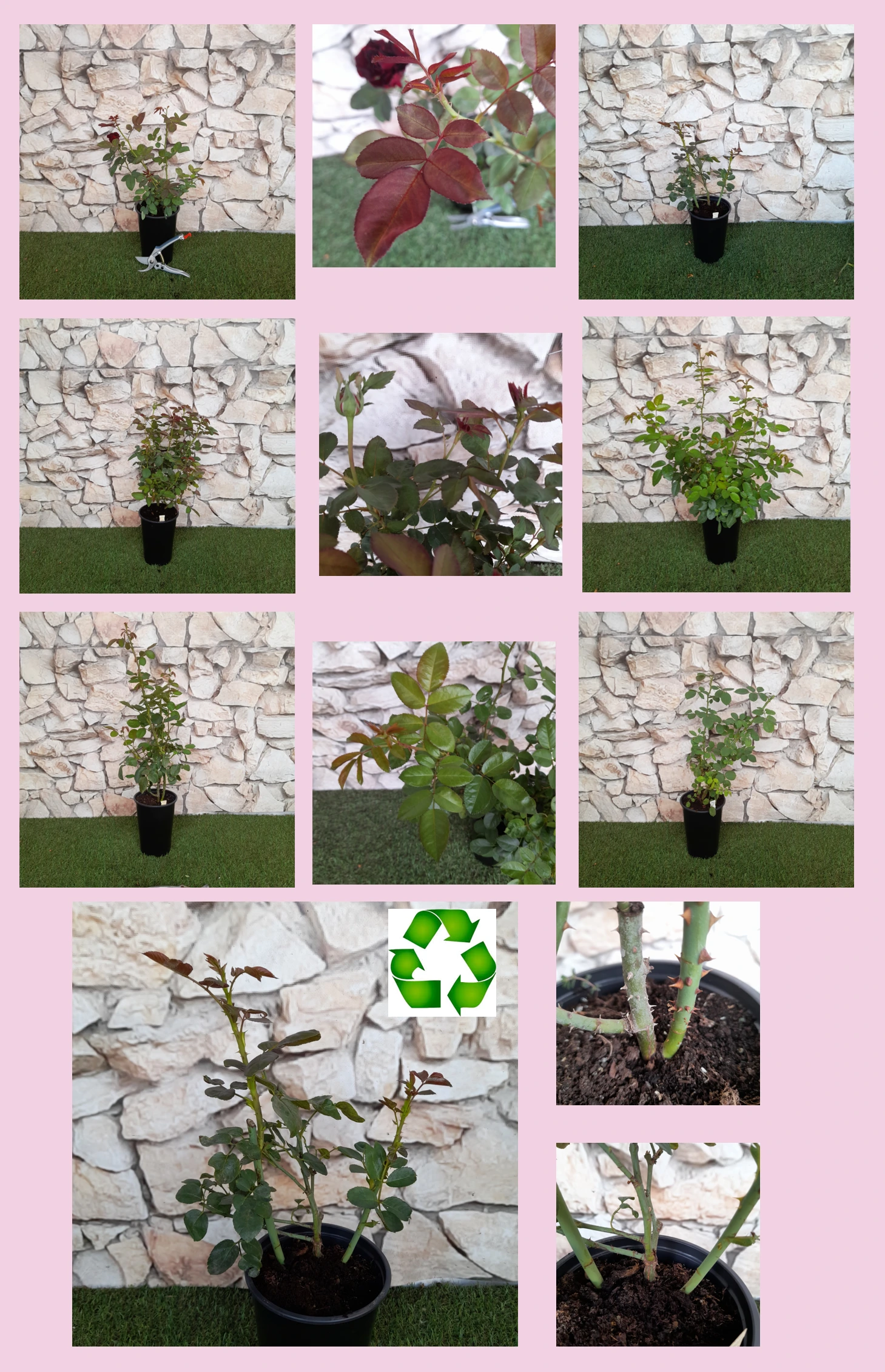
Crop overview: several varieties and growth stages in a short crop section.Shoot system: intensive growth of fresh basal shoots on a young plant.Root system: demonstration of a vigorous root system permeating the growing medium, by removing the pot.Balance: mature plant with root system and shoots in harmony with each other.
Information about the videos
The video series is not a “seasonal showcase”; it illustrates the essence of pharmaROSA® own-root cultivation in a tangible way: how the plant is built up, what the root system is like and how the shoot system regenerates. The recordings were therefore made at different times and with plants at various stages of development, so mixed foliage levels and differing stages of growth may appear in the videos. They are not a ‘sample’ of the batch dispatched, but a visual explanation of how the technology works. The current condition of the rose available to order — typical for the given period and similar to what you can expect to receive in the parcel — is shown in the upper part of the product page.
Pages for private customers Garden roses for the family garden, with minimal care → ORIGINAL® Premium garden roses – instant impact, a truly showpiece garden → EXTRA® Pages for professionals and private customers Roses for public spaces – large areas, sustainable maintenance → NATURAL® Roses for projects – hedge and row planting, fast implementation → RAPID® For professional partners only Production – propagation material for garden roses, wholesale → NEONATAL®
Company details
PharmaRosa Ltd. Company registration number: 01-09-717479 VAT number: 13075314-2-43 Plant health registration no.: HU130721 Bank account (IBAN): HU85117631891388688400000000 BIC (SWIFT): OTPVHUHB Bank name: OTP Bank Nyrt.