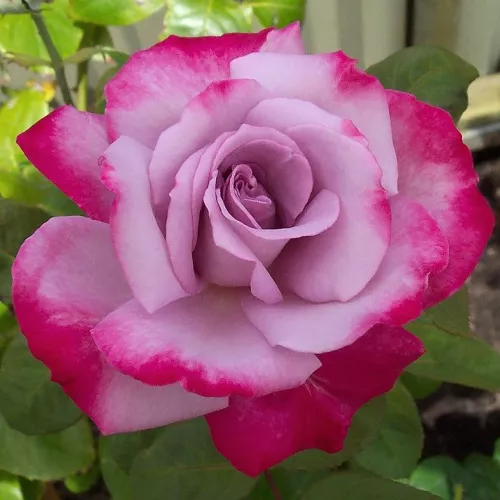
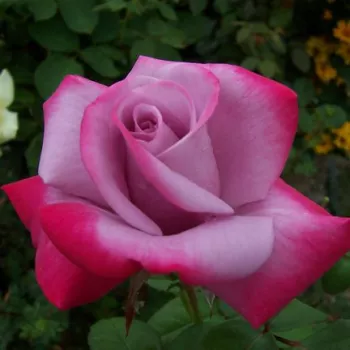
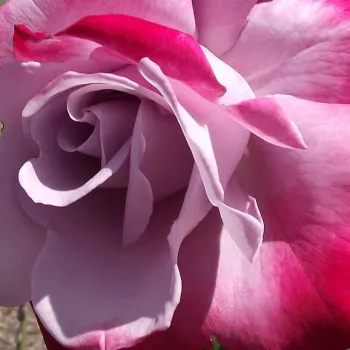
Pale lavender-lilac base colour with a bright crimson-pink rim on the petal edges. - hybrid tea rose - medium strength, noticeably fragrant rose - scent description not available
– Striking lavender blooms with crimson-pink rims
– Reliable repeat flowering through the season
– Dense, glossy dark green foliage backdrop
– Very good resistance to major rose diseases
– Suitable for borders, specimens and cutting
– Special feature: Colour shifts beautifully with light and weather, creating a “burning sky” effect.
Refined garden style – Long-term safety
pharmaROSA® ORIGINAL 2-litre own-root potted rose
21,20 £
Unfortunately, we are currently unable to ship to the United Kingdom; we only deliver to countries within the European Union. For more information, please contact us!
5(7091)
Burning Sky™ hybrid tea rose WEZeip
The BurningSky hybrid tea is an easy-going choice if you would like a refined, exhibition-style rose without demanding care. Its upright habit and dense, glossy foliage create a naturally tidy structure in smaller UK front gardens, while its pale lavender-lilac blooms edged in bright crimson-pink give a distinctive colour accent that works beautifully with classic cottage borders. Bred for good disease resistance, it copes reliably in humid summers where fungal problems are common, needing only basic pruning and deadheading to look its best. As an own-root plant it develops into a stable, long-lived bush that regenerates well after winter and settles securely in breezier sites with reliable anchoring in exposed, coastal-type conditions. With regular watering in dry spells it flowers repeatedly through the season, providing generous, fragrant blooms for cutting. In its pharmaROSA® ORIGINAL 2-litre form it is straightforward to plant, then steadily builds from root growth in the first year to stronger shoots in the second and full garden impact by the third.
Freshly opened flower of Burning Sky™ hybrid tea rose, with a lavender-purple centre and carmine-edged petals.
Burning Sky™ in closed bud, showing deep magenta-pink tones.
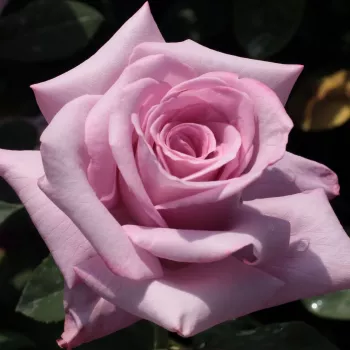
Burning Sky™ in its late bloom stage, with softened lilac-pink tones and a pronounced crimson edge.
Usage options
Target area
Reasoning
Front garden focal point
Ideal as a single specimen in a small front garden where you want tidy structure without intricate care: its upright habit and dense, glossy foliage naturally form a smart, vertical accent beside paths or entrances – for busy homeowners
Classic rose-and-perennial border
Repeat-flowering, medium-sized blooms in lavender-lilac with crimson-pink edges provide a strong colour note that blends well with purples, whites and soft greys in mixed cottage borders, keeping interest from early summer to autumn – for cottage-style enthusiasts
Cutting garden row
Long, straight stems with high-centred, double flowers make it well suited to cutting; the medium fragrance and reliable rebloom mean you can take regular stems for the house without stripping the garden display – for home florists
Low-maintenance family border
Good resistance to black spot, powdery mildew and rust keeps foliage healthy with minimal spraying, so the plant stays attractive in ordinary family gardens where time and expertise are limited – for relaxed, low-input gardeners
Long-term feature shrub
Own-root growth ensures the bush forms on its own wood, giving stable shape, steady regeneration after pruning and a long garden life without worries about weak graft unions or suckers – for planners of lasting plantings
Small group planting (3–5 plants)
Planting a compact group at recommended spacing creates a coherent bank of upright stems and dense foliage that reads as a single, structured feature, ideal where you want order without formal hedging – for design-conscious beginners
Partially shaded side garden
Performs reliably in sites with a few hours of sun and light afternoon shade, maintaining flower production and foliage quality, which suits narrow side gardens and between-house passages – for owners of shaded plots
Sheltered large containers
Can be grown in a sturdy 40–50 litre pot on patios or near doors, provided drainage is good and watering is regular during dry spells, giving a vertical accent even where borders are limited – particularly helpful where breezy, coastal-like winds need steadier anchoring – for balcony and patio gardeners
Styling ideas
Cottage Duo – Combine with low-growing Nepeta x faassenii for a lavender and lilac border that flowers for months with little intervention – ideal for time-poor cottage-garden lovers
Front-Door Accent – Plant a single bush by the path with evergreen edging for a neat, architectural entrance that stays attractive between flushes – suited to small front gardens needing simple structure
Romantic Trio – Group three plants in a triangle with Gypsophila repens ‘Knuddel’ to soften the base, giving a cloud-like, romantic effect – appealing to home florists who cut for vases
Structured Mix – Use as vertical punctuation in a mixed border with ornamental grasses and pale perennials, relying on its disease resistance for a clean backdrop – good for design-aware beginners
Patio Feature – Grow in a 50 litre container, underplant with trailing thyme or low euphorbia for an ordered, fragrant patio display – perfect for busy urban gardeners with limited beds
Technical cultivar profile
Property
Data
Name and registration
Hybrid tea rose, registered as WEZeip, marketed as Burning Sky™ hybrid tea rose WEZeip, also known in exhibition circles as Paradise™; belongs to the hybrid tea commercial and exhibition group.
Origin and breeding
Bred in the United States by Oliver L. Weeks for Weeks Roses from ‘Swarthmore’ × unknown; introduced and registered in 1978 by Weeks Roses (USA) for garden and cutting use.
Growth and structural characteristics
Upright hybrid tea reaching about 85–115 cm in height and 65–90 cm spread, with dense, dark green, glossy foliage and strong prickliness; spent blooms usually need deadheading for best appearance.
Flower morphology
Large, double, high-centred goblet to chalice blooms with 26–39 petals, usually borne singly on stems; remontant habit with an abundant second flush, good for cutting and display in garden settings.
Colour data and phenology
Pale lavender-lilac base with bright crimson-pink petal rims; colour and edge intensity vary with light and heat, lightening towards mauve at full bloom and fading in strong sun while retaining ornamental interest.
Fragrance and aroma
Medium-strength fragrance, clearly noticeable at close range around seating or path edges; primarily grown for visual impact but offers an additional scented layer in mixed ornamental plantings and cut arrangements.
Hip characteristics
Rose hip formation is generally limited due to the very double flowers; when present, hips are small, globular, orange-red and about 10–15 mm in diameter, adding modest late-season interest.
Resistance and winter hardiness
Rated resistant to black spot, powdery mildew and rust; hardy to approximately −21 to −18 °C (RHS H7, USDA 6b, Swedish zone 3), with moderate tolerance of summer heat if watering is regular.
Horticultural recommendations
Best as border, cut-flower or specimen plant at 50–100 cm spacing; prefers well-drained soil, regular moisture and sun or light partial shade; pruning is flexible and routine care needs are comparatively low.
Burning Sky™ hybrid tea rose WEZeip offers reliable repeat flowering, strong disease resistance and a long-lived own-root shrub form, making it a reassuring choice for an elegant yet undemanding garden rose.
Pollinator Attraction:
The strongly double, high-centred blooms have inaccessible stamens, which reduces their attractiveness to pollinators.
Pollinator-Friendly Rating:
Double, high-centred blooms are poorly accessible to pollinators, so its pollinator-friendliness is limited; it is primarily an ornamental variety.
Our product is a rose grown with pharmaROSA®’s unique cultivation technology!
2-litre, own-root, potted rose.
With a shoot system appropriate to the season.
With a root system that thoroughly permeates the growing medium.
Quality compliant with the requirements of the E.N.A. (European Nurserystock Association).
Supplied in unique packaging that prevents damage.
Can be planted during frost-free periods.
True-to-variety rose bush with a unique identifier.
The pharmaROSA® own-root potted rose is a well-rooted plant that supports reliable establishment when planted and cared for properly, so it can be planted whenever the soil is not frozen.
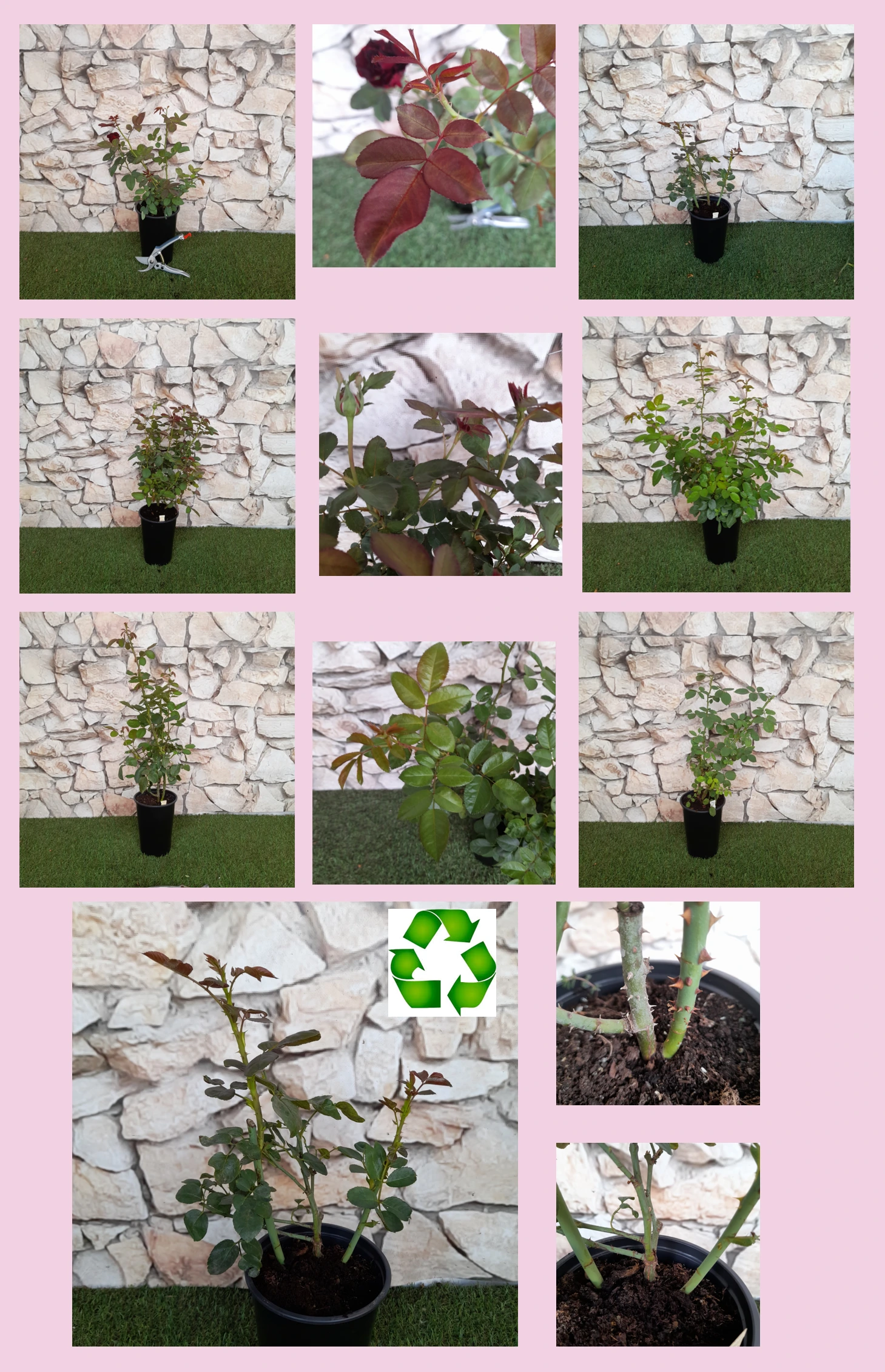
Crop overview: several varieties and growth stages in a short crop section.Shoot system: intensive growth of fresh basal shoots on a young plant.Root system: demonstration of a vigorous root system permeating the growing medium, by removing the pot.Balance: mature plant with root system and shoots in harmony with each other.
Information about the videos
The video series is not a “seasonal showcase”; it illustrates the essence of pharmaROSA® own-root cultivation in a tangible way: how the plant is built up, what the root system is like and how the shoot system regenerates. The recordings were therefore made at different times and with plants at various stages of development, so mixed foliage levels and differing stages of growth may appear in the videos. They are not a ‘sample’ of the batch dispatched, but a visual explanation of how the technology works. The current condition of the rose available to order — typical for the given period and similar to what you can expect to receive in the parcel — is shown in the upper part of the product page.
Pages for private customers Garden roses for the family garden, with minimal care → ORIGINAL® Premium garden roses – instant impact, a truly showpiece garden → EXTRA® Pages for professionals and private customers Roses for public spaces – large areas, sustainable maintenance → NATURAL® Roses for projects – hedge and row planting, fast implementation → RAPID® For professional partners only Production – propagation material for garden roses, wholesale → NEONATAL®
Company details
PharmaRosa Ltd. Company registration number: 01-09-717479 VAT number: 13075314-2-43 Plant health registration no.: HU130721 Bank account (IBAN): HU85117631891388688400000000 BIC (SWIFT): OTPVHUHB Bank name: OTP Bank Nyrt.