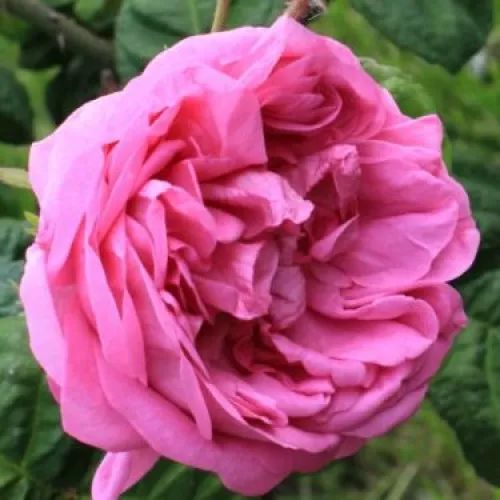
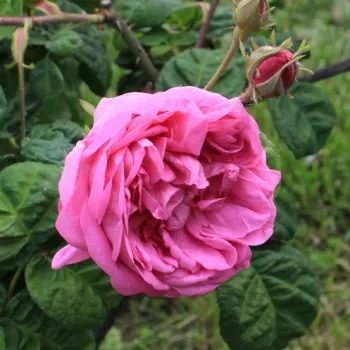
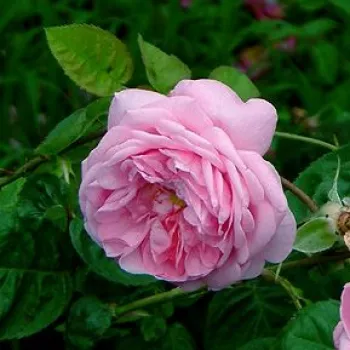
Uniform, rich mid-pink shade with a slightly darker tone at the base of the petals. - historical, centifolia rose - very strong fragrance, noticeable from a distance rose - classic, rose-like character
– Abundant, classic mid‑pink Centifolia blooms
– Very strong, traditional rose fragrance
– Vigorous, bushy shrub for beds and parks
– Historic variety introduced in France, 1801
– Hardy to around –30 °C for cold climates
– Special feature: Distinctive crinkled “lettuce‑leaf” foliage gives unique texture.
Nature-inspired style – A garden-honouring choice
pharmaROSA® ORIGINAL 2-litre own-root potted rose
21,20 £
Unfortunately, we are currently unable to ship to the United Kingdom; we only deliver to countries within the European Union. For more information, please contact us!
3.5(5126)
Bullata – pink historic centifolia rose – Duhamel
This historic centifolia shrub rose brings a uniquely crinkled character to the family garden, with textured, lettuce-like foliage that looks at home in classic British cottage-style borders. Its once-a-season flush of richly fragrant, very double, ball-shaped blooms creates a memorable summer highlight, while the bushy habit and dense leaves give a naturally full look even between flowering periods. Well suited to average UK conditions, it performs reliably when given sensible soil preparation and care, even where you need better footing against coastal wind and rain in more open plots. Own-root growth helps it form a stable shrub that matures steadily over time, offering a quietly enduring presence in the garden. The medium maintenance need focuses mainly on a simple annual prune and some deadheading of spent blooms, keeping the plant attractively tidy without specialist knowledge. In partial shade it still flowers well, supporting flexible placement around the house or in front gardens. Planted as an own-root, half- to one-year-old shrub in a 2‑litre container, it is ready to settle in and, with steady moisture and feeding, move from rooting in the first year to building framework shoots in the second and showing its full ornamental impact from the third season onward.
Bullata shows a dense, matt green foliage mass.
Usage options
Target area
Reasoning
Front garden feature shrub
Use as a single, eye-catching shrub near the front door or along a path where its distinctive crinkled foliage and mid-pink, very double blooms can be appreciated up close. The bushy habit provides a naturally full presence between flowering, giving structure without complex clipping for the style-conscious beginner.
Cottage-style mixed border
Combine with perennials and ornamental grasses for a romantic, cottage look: its once-a-season, strongly scented flower display reads as a classic summer moment in mixed planting. Dense foliage gives a green backdrop for earlier and later companions, with only light pruning needed each winter for those who prefer low-fuss charm.
Specimen rose in lawn or gravel
Planted as a solitary specimen with a clear space around it, this shrub shows off its rounded outline and textural leaves, ideal where you want one characterful rose rather than a complex rose bed. Simple yearly shaping and some deadheading after flowering are enough to preserve its form, suiting homeowners seeking impact from a single plant.
Small informal hedge or screen
In a loose row at 105 cm spacing, its bushy, medium-tall growth offers a soft screen along boundaries or driveways without the severity of clipped hedging. Moderate maintenance needs mean just occasional thinning and tidying, giving a traditional, slightly wild look that still remains manageable for time-pressed gardeners.
Part-shade side garden or courtyard
Suited to positions with a few hours of sun and light afternoon shade, this variety keeps good foliage quality and offers reliable flowering without demanding the absolute sunniest part of the plot. This flexibility helps you make use of narrow side gardens or enclosed courtyards, especially where beginners want attractive planting near paths.
Rose bed focal point in historic schemes
Within a dedicated rose bed, this historic centifolia creates a focal clump that complements older buildings or period-inspired designs. Its own-root form supports a long-lived planting that can regenerate from the base if cut back hard, making it a sound choice for those building a lasting, characterful rose area for the long term.
Larger containers on terrace or patio
Grown in a substantial container of at least 40–50 litres with good drainage, this bushy shrub can bring heritage charm and scent to terraces, patios, or paved front gardens. Regular watering and seasonal feeding are the main tasks, avoiding complex rose care while still delivering a traditional look for urban gardeners with limited soil.
Exposed but well-prepared garden beds
In open beds where wind and weather can be challenging, its robust shrub framework and H7 hardiness allow it to settle securely if the soil is improved and drainage ensured, helping it cope with frequent rain and stronger breezes typical of many British plots where householders want tough, good-looking planting near the house.
Styling ideas
Cottage-focus trio – Plant three shrubs in a loose triangle with low perennials such as geraniums and lady’s mantle to soften the base, creating a classic cottage cluster – ideal for period-style front gardens.
Historic-partner mix – Combine Bullata with other historic roses and soft grasses to echo traditional walled gardens, letting its crinkled foliage provide texture – for enthusiasts of heritage planting.
Pastel-terrace pot – In a large 50-litre container, underplant with trailing lobelia and soft pink diascia to mirror the rose tones – perfect for small terraces or paved, low-maintenance spaces.
Airy-screen border – Use a row of shrubs interwoven with light, scrambling clematis to form an informal flowering screen – suited to homeowners wanting gentle separation without solid fencing.
Fragrance-corner – Position near a seating area with scented companions such as lavender and thyme to create a richly perfumed corner – ideal for those who value evening scent more than all-season bloom.
Technical cultivar profile
Property
Data
Name and registration
Bullata is a historic centifolia shrub rose, commercially known as a historical rose; unregistered variety, marketed under the trade name Bullata – pink historic centifolia rose – Duhamel.
Origin and breeding
Originating in France around 1801, bred by Duhamel as a spontaneous sport of ‘Gros Pompon’ (centifolia), reflecting the early nineteenth-century development of garden centifolias.
Growth and structural characteristics
Bushy shrub 120–180 cm high and 90–150 cm wide with dense, matt, medium-green foliage and moderate prickliness; forms a rounded, structurally stable framework over the years.
Flower morphology
Medium-sized, very double, ball to pompon-shaped blooms with more than 40 petals; solitary on the stems, flowering once in the season rather than repeating later flushes.
Colour data and phenology
Uniform, rich mid-pink flowers (RHS 57B–57C) with slightly darker petal bases; colour lightens moderately in strong sun, staying deeper and more saturated in cooler conditions.
Fragrance and aroma
Very strong, classic rose fragrance, noticeable from a distance in still air; grown primarily as an ornamental rather than for pollinators due to the tightly packed double petals.
Hip characteristics
Hip set is generally low because of the very double blooms; when present, hips are small, spherical, red (RHS 46A), about 12–18 mm in diameter, adding a discreet autumn accent.
Resistance and winter hardiness
Hardy to approximately –32 to –29 °C (RHS H7, USDA 4b, Swedish Zon 5); disease resistance is moderate, with possible powdery mildew, black spot, and rust in humid, high-pressure seasons.
Horticultural recommendations
Best in well-drained soil with regular watering in prolonged drought; medium maintenance with annual pruning and deadheading; spacing 105–180 cm depending on use and desired density.
Bullata offers a richly fragrant summer display, a full, bushy historic presence and reliable cold hardiness, while its own-root form supports long-term regeneration and ease of care, making it a thoughtful choice for a lasting family garden rose.
Detailed product attributes
Product Identification Data
Product Name:
BULLATA – pink historic centifolia rose - Duhamel
Product Type:
pharmaROSA® ORIGINAL - 2-litre own-root potted rose
Meaning of Cultivar Name:
The name is of Latin origin; bullatus means "blistered, puckered", referring to the crinkled, lettuce-leaf-like foliage.
Cultivar Synonym:
Lettuce-leaved Rose; A Feuilles de Laitue; ‘Bullate Cabbage Rose; Cent-feuilles à Feuilles de Laitue; Rosa lactuca; R. centifolia bullata; Rosa × centifolia ‘Bullata'
Pollinator Attraction:
Its very double, tightly closed blooms are poor at attracting bees and butterflies, as the double flower form and reduced accessibility of the stamens limit pollinator access.
Pollinator-Friendly Rating:
Its very double flowers conceal the stamens; primarily an ornamental variety.
Hip Comment:
Hip formation is expected to be scarce due to the double flowers; it occasionally produces spherical red (RHS 46A) hips 12–18 mm in diameter.
Our product is a rose grown with pharmaROSA®’s unique cultivation technology!
2-litre, own-root, potted rose.
With a shoot system appropriate to the season.
With a root system that thoroughly permeates the growing medium.
Quality compliant with the requirements of the E.N.A. (European Nurserystock Association).
Supplied in unique packaging that prevents damage.
Can be planted during frost-free periods.
True-to-variety rose bush with a unique identifier.
The pharmaROSA® own-root potted rose is a well-rooted plant that supports reliable establishment when planted and cared for properly, so it can be planted whenever the soil is not frozen.
Crop overview: several varieties and growth stages in a short crop section.Shoot system: intensive growth of fresh basal shoots on a young plant.Root system: demonstration of a vigorous root system permeating the growing medium, by removing the pot.Balance: mature plant with root system and shoots in harmony with each other.
Information about the videos
The video series is not a “seasonal showcase”; it illustrates the essence of pharmaROSA® own-root cultivation in a tangible way: how the plant is built up, what the root system is like and how the shoot system regenerates. The recordings were therefore made at different times and with plants at various stages of development, so mixed foliage levels and differing stages of growth may appear in the videos. They are not a ‘sample’ of the batch dispatched, but a visual explanation of how the technology works. The current condition of the rose available to order — typical for the given period and similar to what you can expect to receive in the parcel — is shown in the upper part of the product page.
Pages for private customers Garden roses for the family garden, with minimal care → ORIGINAL® Premium garden roses – instant impact, a truly showpiece garden → EXTRA® Pages for professionals and private customers Roses for public spaces – large areas, sustainable maintenance → NATURAL® Roses for projects – hedge and row planting, fast implementation → RAPID® For professional partners only Production – propagation material for garden roses, wholesale → NEONATAL®
Company details
PharmaRosa Ltd. Company registration number: 01-09-717479 VAT number: 13075314-2-43 Plant health registration no.: HU130721 Bank account (IBAN): HU85117631891388688400000000 BIC (SWIFT): OTPVHUHB Bank name: OTP Bank Nyrt.