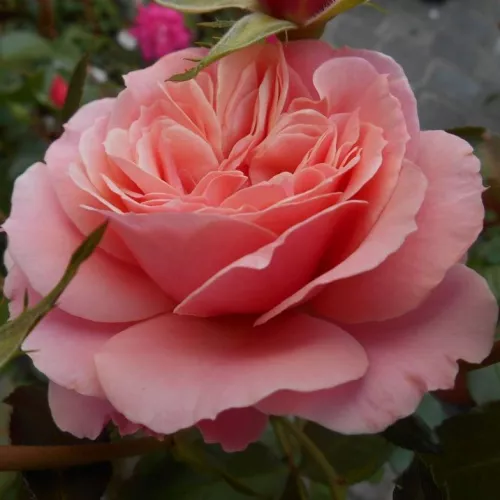
Uniform porcelain pink with a slightly more pastel shade inside. - bedding floribunda rose - very weak, barely perceptible scented rose - subtle, delicate character
– Abundant, XL, very double porcelain pink blooms
– Compact, bushy habit ideal for beds and borders
– Reliable repeat flowering with rich second flush
– Good heat tolerance, suited to warmer sites
– Award-winning floribunda with multiple gold medals
– Special feature: Colour holds beautifully, fading to elegant powder-pink with an inner glow.
Personal taste – Variety guarantee
pharmaROSA® ORIGINAL 2-litre own-root potted rose
19,30 £
Unfortunately, we are currently unable to ship to the United Kingdom; we only deliver to countries within the European Union. For more information, please contact us!
3(4682)
Botticelli ® bedding rose MEIsylpho
Porcelain blooms in a soft, even pink make Botticelli an elegant choice for neat, smaller gardens where you want reliable colour without complicated work, even in areas with humid summers and occasional wind. This compact, bushy floribunda forms a low, rounded shrub that fits beautifully into front beds, edging and cottage-style planting, producing generous clusters of very double flowers from early summer with a strong second flush. Its own-root form develops steadily into a long-lived, balanced plant that copes well with heat when watered sensibly, bringing dependable structure and repeat flowering across seasons. Place it in sun or light partial shade, give basic deadheading and feeding, and enjoy how it settles in over time, moving from root-building to fuller top growth and then to a mature, richly flowering garden feature by the third year with minimal effort from the gardener. Ideal for modestly sized borders, containers from 40–50 litres, or low hedging where tidy appearance and long-term reliability matter.
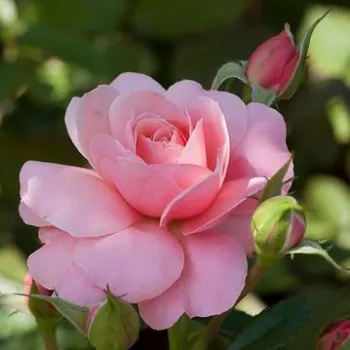
Botticelli ® in freshly opened bloom, showing its soft pink tones.
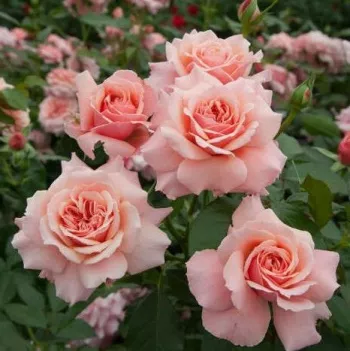
Botticelli ® in full bloom, showing its very double pink flowers.
Closed bud of Botticelli® in silky pink with a deeper-toned edge.
Dark green, slightly glossy foliage of Botticelli®.
Usage options
Target area
Reasoning
Front garden bedding strip
The compact, bushy habit and 60–80 cm height create a tidy, low flowering line that frames paths and driveways without overwhelming a small plot. Regular clusters of porcelain-pink blooms keep the frontage looking curated with only light deadheading and simple annual pruning, making it easy to integrate into classic British front gardens for the beginner.
Cottage-style mixed border
Repeated flushes of clustered, pastel flowers thread gentle colour through perennials such as foxgloves or airy grasses, echoing traditional cottage schemes. Medium disease resistance, especially good powdery mildew tolerance, supports reliable performance where space is shared with other plants, and the balanced shape slots neatly between herbaceous drifts for the homeowner.
Low rose hedge along paths or lawns
Planting at 35 cm intervals creates a low, continuous flowering ribbon that visually separates lawn and borders. The dense foliage and moderate prickliness offer gentle definition without being too aggressive, while self-cleaning tendencies mean fewer spent blooms to pick up on busy days, suiting the family.
Small group planting in feature beds
Groups of three to five plants at 40–65 cm spacing quickly read as a single, rounded mass of pink, useful for anchoring small beds or corners. The strong second flush keeps the group cohesive through summer, and own-root growth gradually knits them into a long-lived focal block, helpful for the time-poor.
Patio or balcony in large containers
In a 40–50 litre container, the modest height and rounded habit fit comfortably near seating without dominating the space. Good heat tolerance supports summer performance on sheltered patios as long as watering is regular, and the neat foliage backdrop sets off the porcelain-pink clusters attractively for the urban.
Family garden play-area edge
The relatively low stature, rounded outline and medium thorniness allow careful use near play spaces, giving a soft visual boundary with manageable risk. Medium self-cleaning reduces dropped petals on paving, and the subtle scent avoids overpowering small gardens, making life simpler for the parents.
Partially shaded side garden
Suitability for partial shade means Botticelli can brighten side paths or north–east facing beds that receive only part-day sun, still producing regular clusters of pastel blooms. This flexibility helps make the most of limited light in urban plots and conversions, particularly reassuring for the novice.
Coastal or wind-exposed beds with good drainage
The dense, dark green foliage and bushy structure provide a compact framework that withstands typical British breezes when planted in well-drained soil, an advantage in more exposed sites where taller roses may rock or break, offering practical reliability for the coastal.
Styling ideas
Pastel-Edged Path – Line a narrow front path with Botticelli and low lavender or Nepeta to create a soft pink-and-lilac edging that stays low and tidy – ideal for homeowners wanting classic charm without complex care.
Renaissance-Patio Pot – Plant a single Botticelli in a 50-litre terracotta pot, underplant with white alyssum, and place near seating for compact, elegant colour – suited to balcony and patio gardeners with limited space.
Cottage-Drift Border – Weave groups of three roses between foxgloves, hardy geraniums and ornamental grasses for a relaxed, painterly cottage mix – perfect for lovers of informal, romantic planting.
Low-Rose Hedge – Use a repeated line of Botticelli to edge a front lawn, backed by taller perennials or clipped shrubs, for a restrained yet welcoming boundary – good for families seeking structure and flowers together.
Soft-Screen Corner – Cluster five plants in a corner bed near a seating area to form a rounded, flowering screen, using pale clematis on a backdrop trellis – useful for busy urban gardeners wanting impact with simple upkeep.
Technical cultivar profile
Parameter
Data
Name and registration
Floribunda bedding rose, registered as MEIsylpho, marketed as Botticelli ® bedding rose MEIsylpho; ARS exhibition name Botticelli, in the bed rose commercial group.
Origin and breeding
Bred by Michèle Meilland Richardier, Meilland International, France; breeding and registration 2003, introduced 2005, from unknown parentage selected for refined pink bedding display.
Awards and recognition
Highly decorated bedding rose with multiple 2003–2004 awards, including Gold Medals at The Hague and Bagatelle, Golden Rose of Geneva, plus top prizes in Monza and Rome.
Growth and structural characteristics
Compact, bushy shrub 60–80 cm high and 50–70 cm wide, moderately thorny, with dense, dark green, slightly glossy foliage forming a rounded, well-filled bedding plant.
Flower morphology
Very double, cupped blooms with over 40 petals, borne in clusters on floribunda-type trusses; extra-large flowers around 3.5 inches, remontant with an especially abundant second flush.
Colour data and phenology
Uniform porcelain pink with slightly paler inner tones; buds silky pink, opening to soft pink, then fading to powder-pink with a whitish inner glow, showing very good colour retention in sun.
Fragrance and aroma
Fragrance is very weak and barely perceptible, with a subtle, delicate character; selected primarily for ornamental bedding impact rather than perfume or pollinator attraction.
Hip characteristics
Low fruit set due to very double flowers; where produced, hips are 6–10 mm, spherical and orange-red, offering occasional discreet autumn interest without prolific seeding.
Resistance and winter hardiness
Rated H7 and hardy to approximately –21 to –18 °C (USDA 6b, Sweden Zone 3); good heat tolerance, resistant to powdery mildew, with medium resistance to black spot and rust.
Horticultural recommendations
Suited to beds, edging, low hedges and large containers; prefers sun to partial shade, regular watering in drought, and plant protection in extremely humid conditions to limit disease.
Botticelli ® bedding rose MEIsylpho offers compact, bushy growth, repeat porcelain-pink flowering and reliable performance from a long-lived own-root plant, making it a thoughtful choice if you want enduring structure and colour with modest upkeep.
Competition and Show Awards:
The Hague (Netherlands) – Gold Medal (2003); Rome (Italy) – Silver Medal (2003); Monza (Italy) – 1st Prize (Bedding rose) and 1st Prize (Landscape architecture) (2003); Bagatelle, Paris (France) – Gold Medal (2004); Geneva (Switzerland) – Golden Rose (200
Self-Cleaning Description:
Some of the spent blooms fall off naturally; for a neater appearance it is advisable to remove (deadhead) the remaining spent flowers.
Closed Bud:
Silky pink with a delicately deeper-toned edge.
Newly Opened Flower:
Soft, pure pink, with a slightly more intense rose shade appearing on the outer petals.
Full Bloom:
Even light pink, becoming paler towards the petal edges.
Before Fading:
Fades to a powder-pink tone, with an almost whitish glow at the centre.
Colour Fading Description:
As the bloom opens, the soft pink gradually lightens, and before fading it pales to a powder-pink with an almost whitish inner glow.
Pollinator Attraction:
Its very double (telt) flower form makes it less attractive to pollinators, as the densely packed petals limit access to the stamens and nectar.
Pollinator-Friendly Rating:
Its very double flowers conceal the stamens; primarily an ornamental cultivar
Our product is a rose grown with pharmaROSA®’s unique cultivation technology!
2-litre, own-root, potted rose.
With a shoot system appropriate to the season.
With a root system that thoroughly permeates the growing medium.
Quality compliant with the requirements of the E.N.A. (European Nurserystock Association).
Supplied in unique packaging that prevents damage.
Can be planted during frost-free periods.
True-to-variety rose bush with a unique identifier.
The pharmaROSA® own-root potted rose is a well-rooted plant that supports reliable establishment when planted and cared for properly, so it can be planted whenever the soil is not frozen.
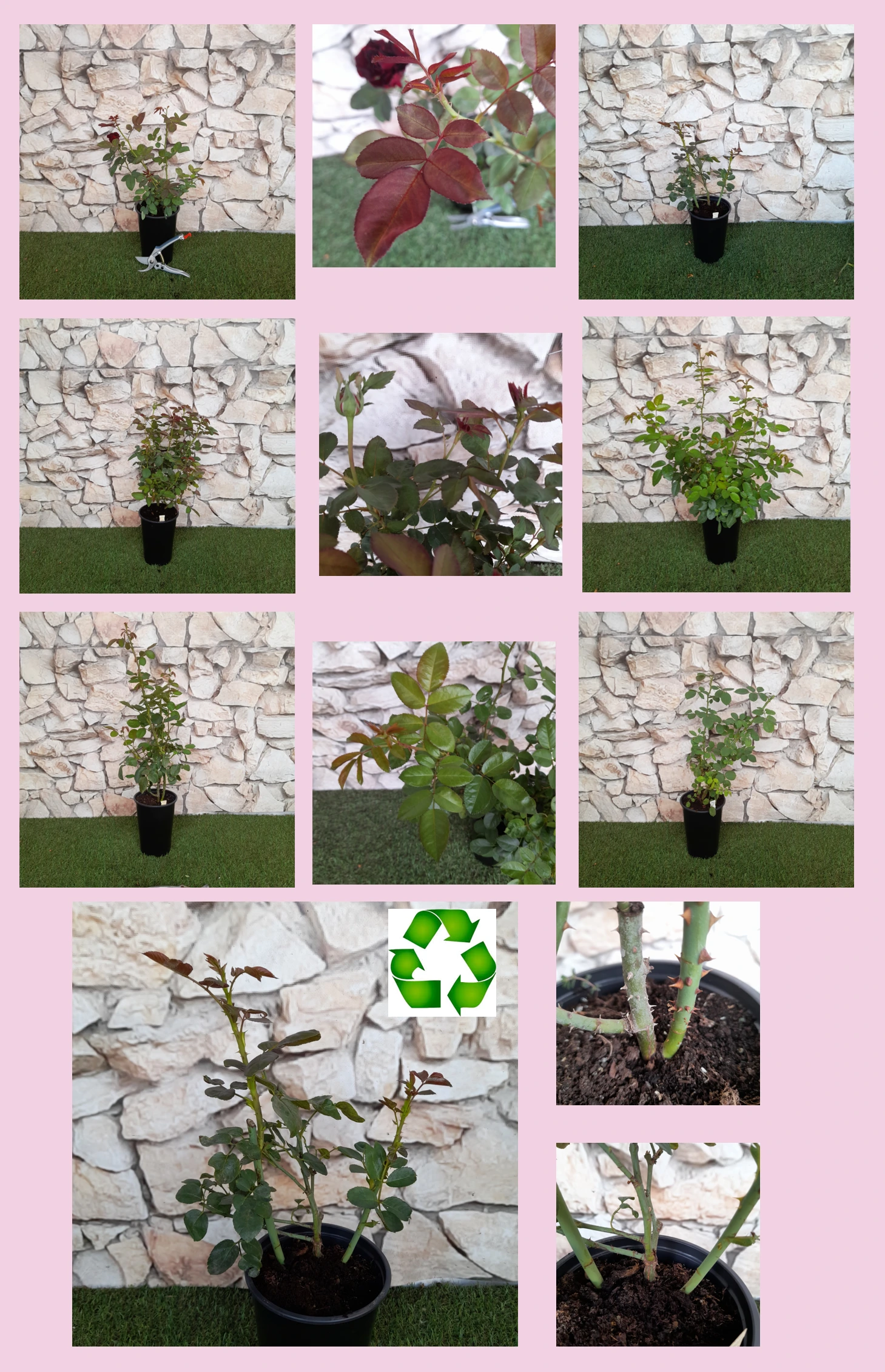
Crop overview: several varieties and growth stages in a short crop section.Shoot system: intensive growth of fresh basal shoots on a young plant.Root system: demonstration of a vigorous root system permeating the growing medium, by removing the pot.Balance: mature plant with root system and shoots in harmony with each other.
Information about the videos
The video series is not a “seasonal showcase”; it illustrates the essence of pharmaROSA® own-root cultivation in a tangible way: how the plant is built up, what the root system is like and how the shoot system regenerates. The recordings were therefore made at different times and with plants at various stages of development, so mixed foliage levels and differing stages of growth may appear in the videos. They are not a ‘sample’ of the batch dispatched, but a visual explanation of how the technology works. The current condition of the rose available to order — typical for the given period and similar to what you can expect to receive in the parcel — is shown in the upper part of the product page.
Pages for private customers Garden roses for the family garden, with minimal care → ORIGINAL® Premium garden roses – instant impact, a truly showpiece garden → EXTRA® Pages for professionals and private customers Roses for public spaces – large areas, sustainable maintenance → NATURAL® Roses for projects – hedge and row planting, fast implementation → RAPID® For professional partners only Production – propagation material for garden roses, wholesale → NEONATAL®
Company details
PharmaRosa Ltd. Company registration number: 01-09-717479 VAT number: 13075314-2-43 Plant health registration no.: HU130721 Bank account (IBAN): HU85117631891388688400000000 BIC (SWIFT): OTPVHUHB Bank name: OTP Bank Nyrt.