Blush Noisette – pink historic noisette rose – Noisette
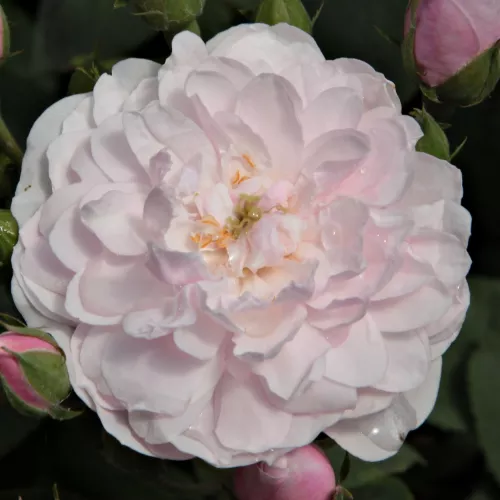
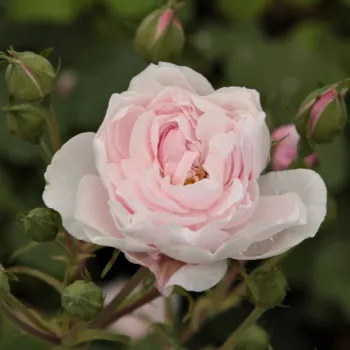
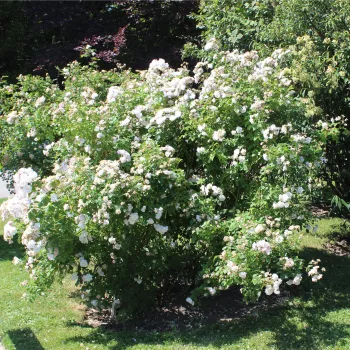
In a classic British front garden or cottage-style border, Blush Noisette offers romantic clusters of soft, powdery-pink rosette blooms that gradually pale to near white, creating a gentle, ever-changing display from early summer onwards. Its reliable repeat-flowering and strong, long-lasting honeyed, muscatel fragrance make it an easy rose to live with day to day, while the sparsely thorned canes are noticeably more friendly to handle around paths, gates and doorways. As an own-root, container-grown plant in the pharmaROSA® ORIGINAL 2‑litre size, it settles in quickly and matures steadily into a long-lived, balanced shrub or climber, well suited to typical UK gardens where good planting and simple watering help it cope with periods of heavier rain and wind. Medium maintenance needs and moderate disease resistance mean basic pruning and the occasional check-up are usually enough for neat structure and reliable flowering. Over the first seasons it roots in, then builds its framework, before reaching full ornamental character and bloom performance. Whether trained on a low arch, against a wall or grown as a free-standing shrub, its compact height and dense, mid-green, slightly glossy foliage give lasting garden presence without demanding expert care.
Usage options
| Target area |
Reasoning |
| Front garden focal shrub |
Used as a free-standing shrub near an entrance or front path, Blush Noisette’s repeat clusters of pale, powdery pink rosettes create a consistently welcoming look with a romantic historic character, suiting those who value charm without complex pruning – beginner gardeners |
| Trained against a wall or house facade |
Its upright habit, 150–220 cm height and sparse thorns make it well adapted to being loosely tied along wires or trellis against brick or rendered walls, forming a soft, flowered backdrop that stays manageable in small plots – townhouse owners |
| Small pergola, arch or gateway |
On a compact pergola or arch, its flexible stems and medium vigour allow you to cover structure gracefully without overwhelming the space, giving scented arches of bloom that work in modest family gardens – space-conscious families |
| Mixed cottage border with perennials |
Cluster-flowering, double rosette blooms and dense mid-green foliage blend naturally with perennials such as daylilies, airy grasses and verbena, adding structure and a historic touch to informal, cottage-style mixes – cottage-garden enthusiasts |
| Partially shaded side garden |
Suitable for partial shade, it performs reliably on east- or west-facing aspects where many roses struggle, extending planting options around the house and along side paths without needing specialist varieties – practical homeowners |
| Classic rose bed or small rose grouping |
Planted in small groups at the recommended spacing, the moderate maintenance needs and repeat flowering make it a sound backbone for a simple rose bed that stays attractive with basic feeding and watering – low-maintenance seekers |
| Family seating terrace or patio edge |
Placed near seating, doors or windows, the strong, long-lasting honeyed, muscatel perfume and compact size give everyday enjoyment without dominating the space, ideal where people spend time and want reliable scent – scent lovers |
| Large container or courtyard feature |
In a substantial 40–50 litre or larger container with good drainage, its own-root form and moderate vigour allow a stable, long-lived potted specimen that copes with typical UK wet spells as well as breezier conditions – urban balcony and courtyard gardeners |
Styling ideas
- Cottage-arch – Train Blush Noisette over a slim metal arch with verbena and daylilies at the base for a soft, romantic entry to a small back garden – ideal for cottage-style romantics
- Front-porch – Grow it as a free-standing shrub by the front steps with low catmint and lavender to frame the doorway in scent and gentle colour – suited to busy homeowners
- Courtyard-wall – Fan the rose along wires on a sunny courtyard wall, underplanting with airy grasses like Panicum ‘Sangria’ for texture and movement – perfect for design-conscious urban gardeners
- Heritage-bed – Combine Blush Noisette with other historic roses in a simple rectangular bed edged with box or low perennials to showcase its repeat bloom and perfume – for heritage rose collectors
- Patio-pot – Plant a single specimen in a 50 litre terracotta container with trailing thyme and dwarf lavender to enjoy fragrance close to seating – great for small-patio residents
Technical cultivar profile
| Characteristic |
Data |
| Name and registration |
Historic Noisette rose marketed as Blush Noisette – pink historic noisette rose – Noisette; American Rose Society exhibition name Blush Noisette; collection: Historic rose; shrub and climbing uses. |
| Origin and breeding |
Bred in the United States around 1814 by Philippe Noisette from ‘Champneys’ Pink Cluster’ × unknown seedling; introduced into France between 1814–1817 and widely grown in Europe thereafter. |
| Growth and structural characteristics |
Upright, medium-vigour shrub or short climber, about 150–220 cm tall and 120–190 cm wide; densely foliated, sparsely thorned stems; mid-green, slightly glossy leaves give a full, classic garden presence. |
| Flower morphology |
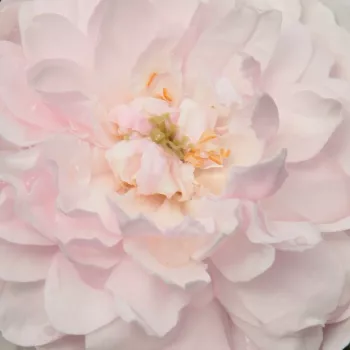
Small, double rosette blooms (0.5–1.5 in) borne in clusters; 26–39 petals per flower; repeats well through the season with abundant second flush; self-cleaning is moderate, with some spent blooms lingering on clusters. |
| Colour data and phenology |
Pale powdery pink, ARS code lp, RHS 65C outer, 65D inner; buds creamy pink with greenish tips; flowers fade significantly to near white with faint pink blush, giving a softly varied pastel effect over time. |
| Fragrance and aroma |
Strong, long-lasting perfume with honeyed, muscatel character; best appreciated near seating areas or paths; primarily ornamental, with double flowers limiting nectar access and therefore only modest pollinator interest. |
| Hip characteristics |
Forms small ornamental hips only occasionally; spherical, orange-red fruits about 6–9 mm across, adding a discreet seasonal accent without significantly affecting overall flowering performance. |
| Resistance and winter hardiness |
Moderate resistance to powdery mildew, black spot and rust; RHS H7, tolerating around −21 to −18 °C; heat tolerant, coping with moderate drought given watering in prolonged dry spells; suitable for UK climates. |
| Horticultural recommendations |
For beds, hedging or specimens, space 90–165 cm; about 0.9–1.0 plants/m² for mass plantings; medium maintenance with occasional pest and disease checks; tolerates partial shade and suits training on walls or pergolas. |
Blush Noisette offers romantic repeat flowering, strong fragrance and manageable size on a long-lived own-root framework, making it a dependable choice for anyone planning a gentle, enduring rose feature.