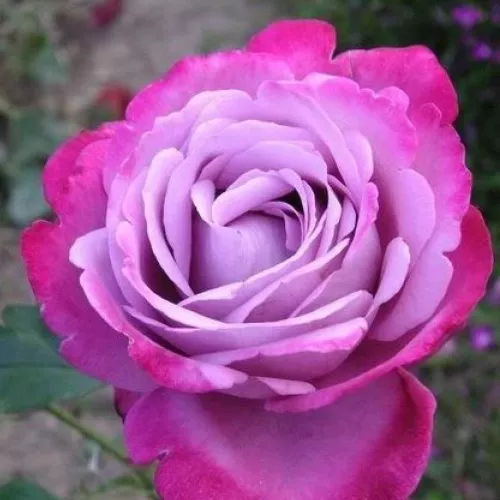
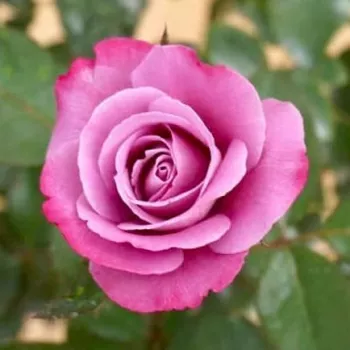
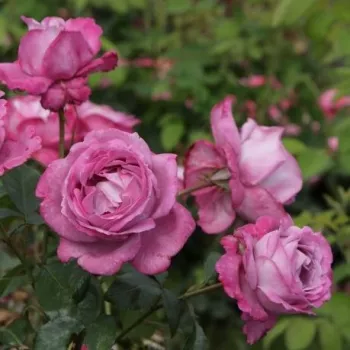
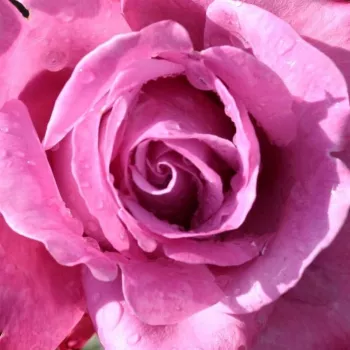
Rich lilac–mallow tone. The edges of the outer petals are more vivid, the inner surfaces are silvered. - hybrid tea rose - very strong, long-lasting scented rose - scent description not available
– Rich lilac–purple blooms with silvery tones
– Elegant high‑centred, classic hybrid tea form
– Very strong, long‑lasting fragrance
– Good heat and drought tolerance
– Award‑winning: Baden‑Baden Gold Medal 1985
– Special feature: Decorative orange‑red hips in autumn add extra seasonal interest.
Low maintenance – Eco-friendly garden design
pharmaROSA® ORIGINAL 2-litre own-root potted rose
18,70 £
Unfortunately, we are currently unable to ship to the United Kingdom; we only deliver to countries within the European Union. For more information, please contact us!
4.5(6994)
BLUE RIVER ® – purple hybrid tea rose - Kordes
Elegant and refined, BLUE RIVER ® brings cool lilac tones and classic hybrid tea form to smaller British gardens with compact stature that fits beds, borders and even larger patio containers. Its remontant flowering produces high-centred, exhibition-style blooms ideal for cutting, while the fragrance is very strong and long-lasting, adding a luxurious note near paths and seating. Own-root plants settle securely and build a durable framework over time, supporting a long garden life with stable flowering. You can expect roots to establish in the first year, shoots to fill out in the second, and full ornamental value by the third, even where careful watering is needed through drier periods to cope with summer heat.
Freshly opened bloom of Blue River® hybrid tea rose
Blue River ® zárt bimbója mély, sötétlila árnyalatban.
Usage options
Target area
Reasoning
Front garden focal point
The upright, compact habit makes this hybrid tea an excellent choice for a single statement rose by the front door or gate, where its tidy outline is easy to manage and does not overwhelm smaller spaces, suiting design-conscious beginners.
Cutting-and-display bed
High-centred, solitary blooms on strong stems lend themselves to cutting for vases and indoor arrangements, allowing you to use a small planting to supply regular house flowers while still enjoying repeat display in the garden for home-focused owners.
Scented seating corner
The very strong, long-lasting perfume is best appreciated near benches, patios or evening seating, where a short row or small group can concentrate the aroma within a confined area for those who value sensory relaxation.
Small mixed border
Moderately dense dark green foliage and a 75–105 cm height integrate well among perennials and low shrubs, adding vertical accent and refined form without dominating the planting, ideal for cottage-style mixes.
Colour-themed lilac–purple scheme
The shifting lilac, mauve and silvery-lilac tones provide a sophisticated, cool palette that pairs attractively with blues, soft pinks and silvers, helping enthusiasts create coordinated, harmonious borders in compact front gardens.
Low-maintenance rose group
Medium maintenance needs, good drought tolerance and own-root vigour support a long-lived planting that responds well to straightforward deadheading and basic feeding, delivering reliable structure for time-pressed hobby gardeners.
Large patio container (40–50 litres+)
An upright, bushy form and moderate spread suit a single plant in a 40–50 litre or larger container, concentrating colour and scent close to the house while remaining easy to water and tend for balcony and terrace users.
Feature plant in sunny, open bed
Prefers a sunny position where the remontant flowering and colour nuances show at their best, while regular watering during prolonged dry spells helps it perform steadily for style-focused front-garden owners.
Styling ideas
Lilac focus point – Plant a single BLUE RIVER ® by the front path with low evergreen edging, letting the unusual lilac blooms draw the eye – ideal for homeowners wanting a simple but striking entrance.
Cottage trio – Group 3 plants with soft pink perennials and airy grasses for a relaxed cottage border that still feels ordered – perfect for beginners seeking an easy, charming mix.
Patio perfume – Grow one plant in a 40–50 litre container beside a seating area so the strong scent can be enjoyed at close quarters – suited to busy urban gardeners with limited space.
Cutting strip – Arrange a short row along a sunny fence to provide a steady supply of exhibition-type blooms for vases – attractive for those who like bringing garden flowers indoors.
Cool-toned border – Combine BLUE RIVER ® with silver foliage and blue-purple companions for a calm, contemporary palette – appealing to design-led gardeners aiming for cohesive colour themes.
Technical cultivar profile
Characteristic
Data
Name and registration
Hybrid tea rose, registered as KORsicht, marketed as BLUE RIVER ® hybrid tea rose; ARS exhibition name Blue River, part of the Hybrid tea rose commercial group.
Origin and breeding
Bred by Reimer Kordes, W. Kordes’ Söhne, Germany, from ‘Blue Moon’ × ‘Zorina’; introduced and registered in 1984, reflecting classic German hybrid tea breeding.
Awards and recognition
Gold Medal at Baden-Baden (1985), recognising bloom quality and ornamental value in international rose trials, particularly for its exhibition-style flowers and garden performance.
Growth and structural characteristics
Upright, compact bush reaching about 75–105 cm high and 60–80 cm wide, with moderately dense dark green foliage and moderate prickliness; self-cleaning is weak so deadheading is beneficial.
Flower morphology
Double, high-centred hybrid tea blooms with 26–39 petals, medium flower size on mostly solitary stems; remontant with a notably abundant second flush under suitable care in sunny positions.
Colour data and phenology
Purple to lilac-mauve blooms, RHS 73B outer and 76D inner; colour shifts from deep crimson-purple buds to soft silvery-lilac as flowers open and may lighten further in strong sunlight.
Fragrance and aroma
Very strong, long-lasting scent of classic hybrid tea character; fragrance intensity is a key feature, making it well suited for planting near paths, entrances and outdoor seating where it can be enjoyed.
Hip characteristics
Moderate crop of ovoid, 10–14 mm orange-red hips in autumn, which can offer additional ornamental interest in mixed borders if some spent blooms are left uncut later in the season.
Resistance and winter hardiness
Hardy to around -21 to -18 °C (RHS H7, USDA 6b, Swedish Zone 3); good heat tolerance but needs watering in prolonged drought; black spot resistant, rust moderate, very susceptible to powdery mildew.
Horticultural recommendations
Best in sunny beds, borders or large containers with moderate maintenance; allow 50–90 cm spacing, water in dry spells and monitor powdery mildew, using basic care to support repeat flowering.
BLUE RIVER ® offers compact, upright growth, richly scented lilac blooms and long-term stability from its own-root form, making it a thoughtful choice for those planning a dependable, characterful garden rose.
Detailed product attributes
Product Identification Data
Product Name:
BLUE RIVER ® – purple hybrid tea rose - Kordes
Product Type:
pharmaROSA® ORIGINAL - 2-litre own-root potted rose
Foliage:
The variety has moderately dense foliage. The surface characteristics of the leaves are not clearly classifiable and their colour is a dark green shade.
Flower Colour Description:
Rich lilac–mallow tone. The edges of the outer petals are more vivid, the inner surfaces are silvered.
Closed Bud:
Deep, dark purple shade with a slight bluish sheen.
Newly Opened Flower:
Vivid purple base colour with a magenta edging along the petal margins.
Full Bloom:
Soft, silvery-lilac centre, gradually deepening to a mauve-lilac towards the outer petals.
Before Fading:
Pale silvery blue‑lilac tone with a delicate pink edge.
Colour Fading Description:
As it opens, the deep crimson-purple gradually fades to a soft, silvery-lilac tone; in strong sunlight it may lighten further.
Our product is a rose grown with pharmaROSA®’s unique cultivation technology!
2-litre, own-root, potted rose.
With a shoot system appropriate to the season.
With a root system that thoroughly permeates the growing medium.
Quality compliant with the requirements of the E.N.A. (European Nurserystock Association).
Supplied in unique packaging that prevents damage.
Can be planted during frost-free periods.
True-to-variety rose bush with a unique identifier.
The pharmaROSA® own-root potted rose is a well-rooted plant that supports reliable establishment when planted and cared for properly, so it can be planted whenever the soil is not frozen.
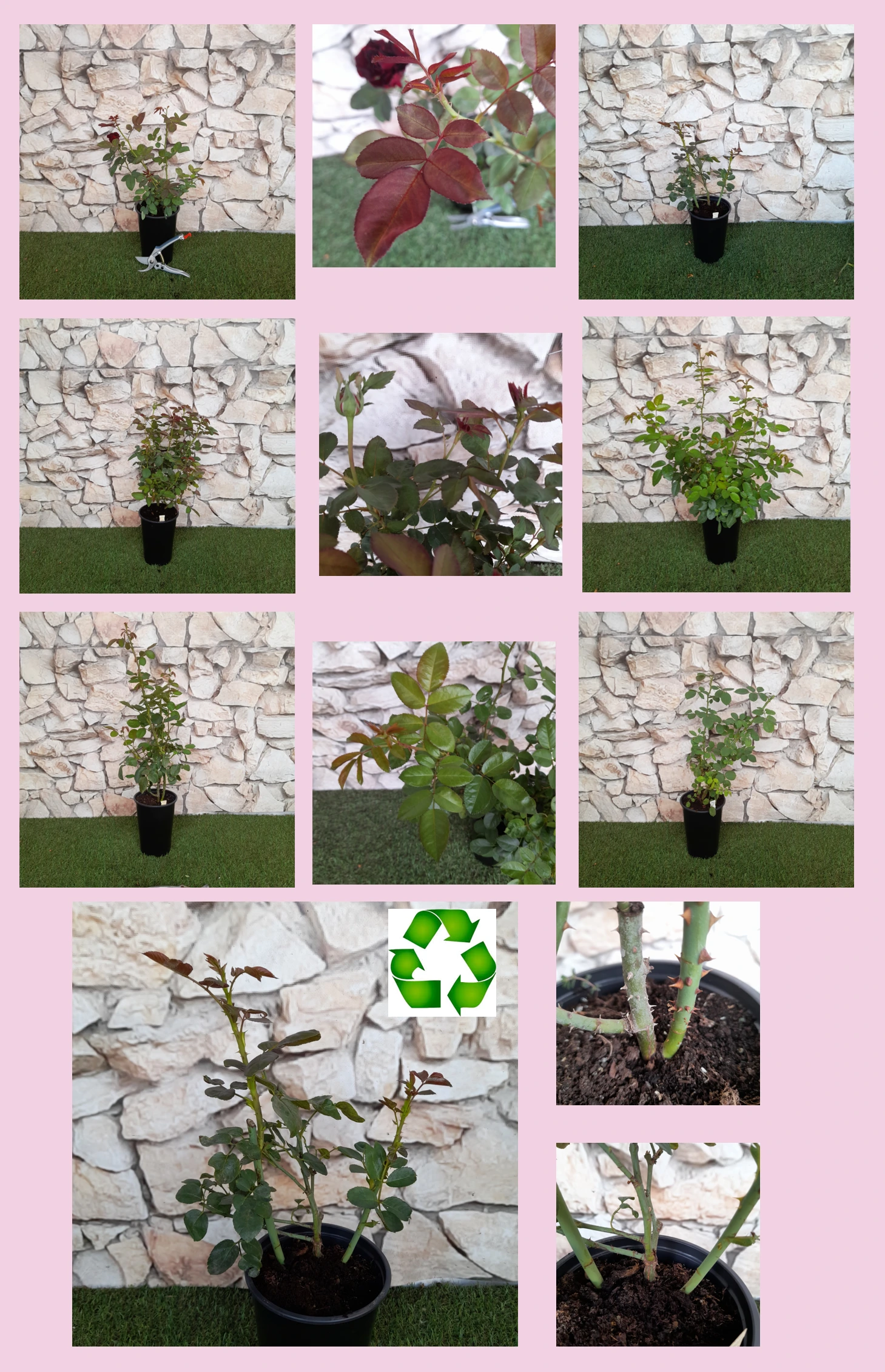
Crop overview: several varieties and growth stages in a short crop section.Shoot system: intensive growth of fresh basal shoots on a young plant.Root system: demonstration of a vigorous root system permeating the growing medium, by removing the pot.Balance: mature plant with root system and shoots in harmony with each other.
Information about the videos
The video series is not a “seasonal showcase”; it illustrates the essence of pharmaROSA® own-root cultivation in a tangible way: how the plant is built up, what the root system is like and how the shoot system regenerates. The recordings were therefore made at different times and with plants at various stages of development, so mixed foliage levels and differing stages of growth may appear in the videos. They are not a ‘sample’ of the batch dispatched, but a visual explanation of how the technology works. The current condition of the rose available to order — typical for the given period and similar to what you can expect to receive in the parcel — is shown in the upper part of the product page.
Pages for private customers Garden roses for the family garden, with minimal care → ORIGINAL® Premium garden roses – instant impact, a truly showpiece garden → EXTRA® Pages for professionals and private customers Roses for public spaces – large areas, sustainable maintenance → NATURAL® Roses for projects – hedge and row planting, fast implementation → RAPID® For professional partners only Production – propagation material for garden roses, wholesale → NEONATAL®
Company details
PharmaRosa Ltd. Company registration number: 01-09-717479 VAT number: 13075314-2-43 Plant health registration no.: HU130721 Bank account (IBAN): HU85117631891388688400000000 BIC (SWIFT): OTPVHUHB Bank name: OTP Bank Nyrt.