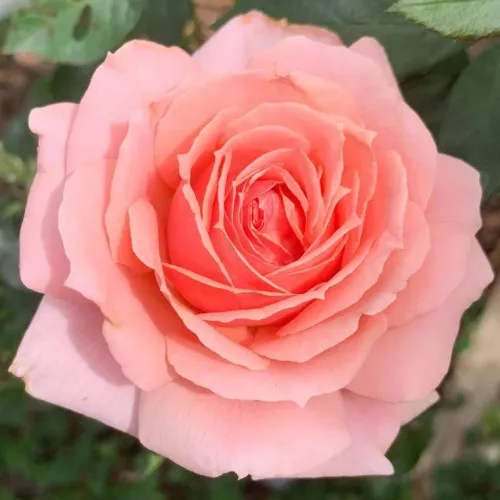
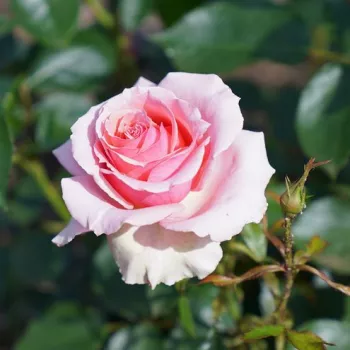
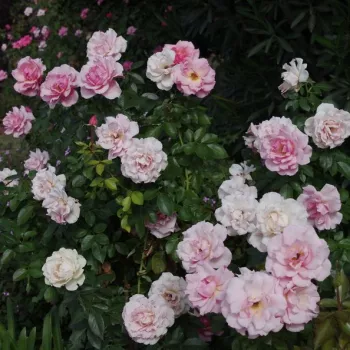
Warm salmon-pink tone, more vivid on the petal reverse and paler inside. - flowerbed grandiflora rose - mild, restrained scented rose - pleasant, soft character
– Soft salmon-pink blooms with elegant form
– Reliable remontant flowering through the season
– Upright, tall habit for striking borders
– Mild, pleasant fragrance for close seating areas
– Good heat tolerance for sunnier garden spots
– Special feature: All‑America Rose Selections award‑winning variety, valued for its decorative impact in beds and as a cut flower.
Unfortunately, we are currently unable to ship to the United Kingdom; we only deliver to countries within the European Union. For more information, please contact us!
5(7046)
BERKELEY – pink bedding grandiflora rose - Warriner
Salmon blooms in soft clusters make BERKELEY an inviting choice for relaxed, cottage-style borders where you want reliable colour rather than complex care. This grandiflora’s upright habit and dense foliage fill a bed or small hedge neatly, giving a well-structured look even when not in flower. Clustered, medium-sized double blooms repeat generously from early summer onwards, delivering extended flowering for busy gardeners who prefer to enjoy their space rather than fuss over it. Own-root plants settle gradually, building long-term stability and the capacity to regrow strongly if cut back. Over its first seasons it shifts from establishing roots, to building top growth, to full ornamental presence, so it suits patient gardeners planning their garden’s future. In typical British gardens it copes well with summer heat provided modest watering is available during longer dry spells, supporting dependable performance even in warmer, more exposed sites. Medium height and good spread allow flexible grouping in front gardens, around paths or in feature beds without overwhelming neighbouring plants, helping you create a calm, coherent planting picture.
Berkeley rose in close-up, showing its mild, soft fragrance.
Usage options
Target area
Reasoning
Front garden feature group (3–5 plants)
The medium height and generous spread create a soft, upright mass of foliage that anchors a front bed without blocking windows. Repeating clusters of salmon-pink blooms give a welcoming, traditional look that suits simple layouts and low-effort upkeep for the busy homeowner
Mixed cottage border with perennials
Clustered, medium-sized flowers sit comfortably alongside perennials such as crocosmia or ornamental alliums, adding warm pink notes without dominating the border. The neat, upright structure slots easily into cottage-style planting, offering long flowering with straightforward care for the aesthetics-focused beginner
Low rose hedge along paths or drive
The dense foliage and upright growth habit lend themselves to an informal hedge that defines boundaries yet stays visually light. Planted at hedge spacing, BERKELEY knits into a continuous line of greenery and soft colour, ideal where you want order without formality for the family-garden owner
Small specimen in a compact front bed
Used singly with generous spacing, BERKELEY reads as a tidy focal shrub, its rounded clusters drawing the eye without needing elaborate underplanting. As an own-root plant it matures steadily into a balanced shape that rewards patient, light-touch care for the long-term planner
Large decorative container (40–50 litres)
In a substantial pot, its upright framework and repeat-flowering character provide lasting interest near doors, patios or garage fronts. A large volume of compost supports root development, helping the plant cope with sun and summer warmth while remaining manageable for the urban balcony-gardener
Colour-graded rose bed with soft pink tones
The warm salmon-pink flowers, with slightly brighter reverses, blend smoothly into pastel planting schemes. Good colour retention means blooms age gracefully, so the bed keeps a harmonious look over time rather than appearing patchy or harsh, suiting the colour-conscious gardener
Park-style corner or shared front-garden strip
With its grandiflora heritage, BERKELEY copes well with being used in modest groups that read as one unified shrub mass. Regular deadheading and basic protection keep it performing, offering an attractive shared feature that rewards simple, periodic attention from the community-minded neighbour
Sunny border in warmer, exposed positions
This variety tolerates heat effectively as long as watering is available during longer dry spells, making it suitable for sunnier, more exposed borders that still fall within typical British conditions. A good option where you want confidence despite summer warmth for the weather-aware gardener
Styling ideas
Soft-hedged frontage – line BERKELEY along a drive or path and underplant with low evergreen edging for a calm, orderly boundary – ideal for homeowners wanting structure without formal topiary
Cottage harmony – mix BERKELEY with catmint, ornamental alliums and hardy geraniums for a relaxed cottage feel – suited to gardeners who favour colour blends over strict design rules
Salmon focal point – plant a single BERKELEY in a small lawn inset or circular bed, backed by light grasses, to create a gentle yet distinct focal point – perfect for smaller family gardens
Container welcome – place BERKELEY in a 40–50 litre pot by the front door with trailing seasonal bedding for an easy, long-blooming welcome – appealing to busy urban gardeners
Pastel rose patch – combine 3–5 BERKELEY plants with other soft pink or cream roses to form a colour-coordinated rose area – for enthusiasts planning a simple, harmonious rose display
Technical cultivar profile
Parameter
Data
Name and registration
Grandiflora shrub rose; registered as JACient, traded as Berkeley Bedding rose JACient; ARS exhibition name Tournament of Roses; bed rose commercial grouping.
Origin and breeding
Bred by William A. Warriner (Jackson & Perkins Co.) in the United States from ‘Impatient’ × unknown seedling; registered 1987 and introduced to commerce in 1988.
Awards and recognition
Recognised as an All-America Rose Selections Award winner in 1989, indicating strong ornamental performance and garden value under North American trial conditions.
Growth and structural characteristics
Upright grandiflora habit, 130–170 cm tall with 75–105 cm spread; dense, slightly glossy deep green foliage and moderate prickliness; weak self-cleaning, so spent blooms benefit from removal.
Flower morphology
Medium-sized, double, cupped flowers with 26–39 petals borne in clusters; remontant with a notably abundant second flush given basic care and regular deadheading to encourage repeat bloom.
Colour data and phenology
Warm salmon-pink overall; outer petals RHS 55A, inner 55C; deeper tones on petal reverses; colour holds well, paling to pastel; clustered display emphasises gradient from coral-pink centre to softer edges.
Fragrance and aroma
Mild, pleasant fragrance of restrained character, noticeable on close inspection rather than at distance; mainly grown for its colour effect and flower form rather than for strong scent in the garden.
Hip characteristics
Hip production is limited due to double, continuously repeating flowers; where set, hips are small, spherical, orange-red and around 6–10 mm in diameter, with little impact on overall appearance.
Resistance and winter hardiness
Hardy to approximately –21 to –18 °C (RHS H7; USDA 6b; Swedish Zone 3); heat tolerant but needs watering in prolonged drought; highly susceptible to major foliar diseases, so protection is advised.
Horticultural recommendations
Prefers sunny positions; avoid overcrowding for air movement. Regular plant protection recommended due to very low disease resistance. Suitable for borders, cut flowers, containers and park-style plantings.
BERKELEY offers warm salmon-pink clusters, a tidy upright habit and steady own-root development into a long-lived shrub, making it a thoughtful choice if you value colour and structure enough to give it modest seasonal care.
Detailed product attributes
Product Identification Data
Product Name:
BERKELEY – pink bedding grandiflora rose - Warriner
Product Type:
pharmaROSA® ORIGINAL - 2-litre own-root potted rose
Pollinator Attraction:
Double (26–39 petals), rounded flowers with reduced accessibility of the stamens mean it is of low attractiveness to pollinators.
Hip Comment:
Formation of rose hips is expected to be limited by the double flowers and continuous flowering; occasionally spherical, orange‑red hips 6–10 mm in diameter.
Our product is a rose grown with pharmaROSA®’s unique cultivation technology!
2-litre, own-root, potted rose.
With a shoot system appropriate to the season.
With a root system that thoroughly permeates the growing medium.
Quality compliant with the requirements of the E.N.A. (European Nurserystock Association).
Supplied in unique packaging that prevents damage.
Can be planted during frost-free periods.
True-to-variety rose bush with a unique identifier.
The pharmaROSA® own-root potted rose is a well-rooted plant that supports reliable establishment when planted and cared for properly, so it can be planted whenever the soil is not frozen.
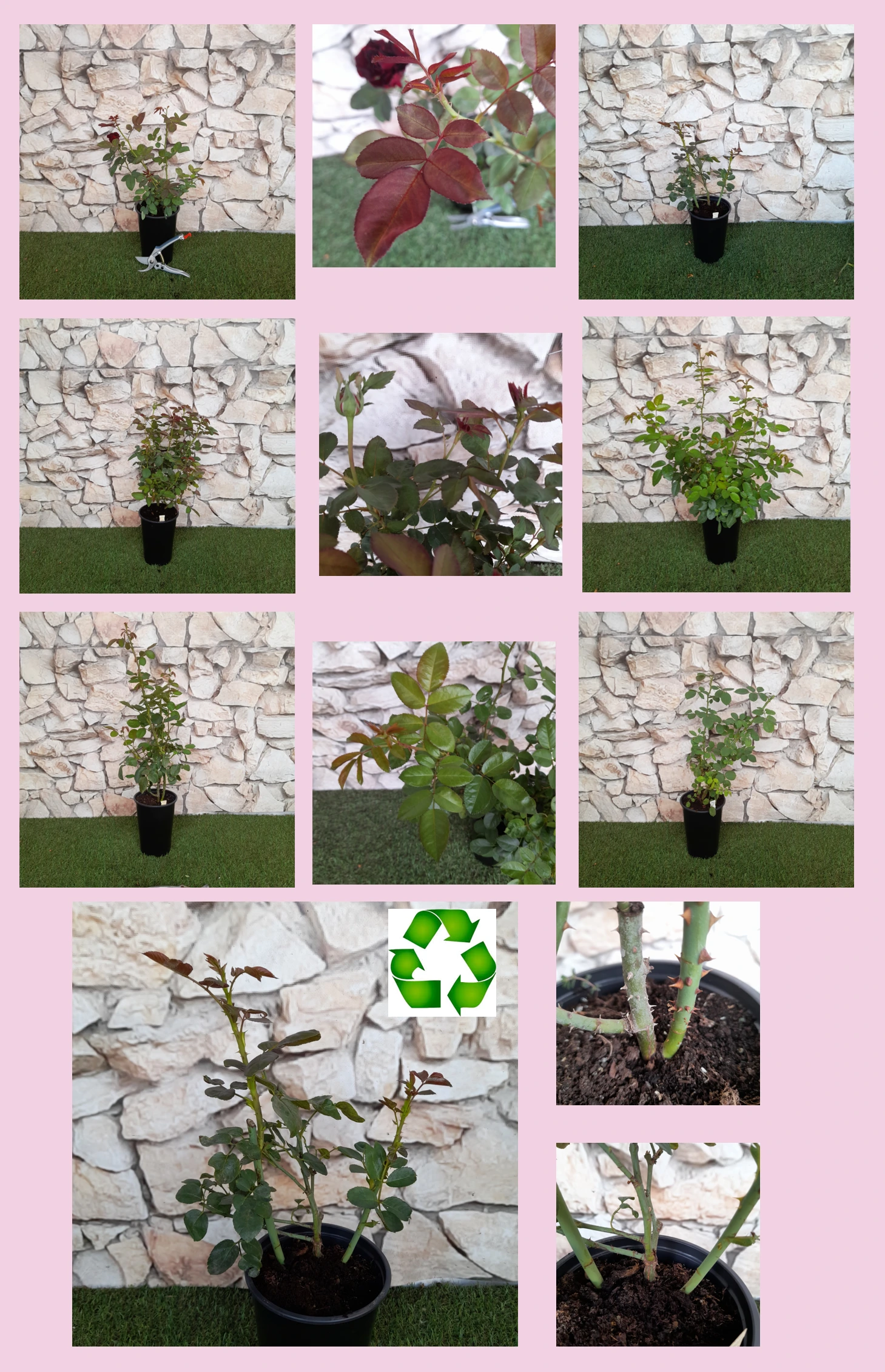
Crop overview: several varieties and growth stages in a short crop section.Shoot system: intensive growth of fresh basal shoots on a young plant.Root system: demonstration of a vigorous root system permeating the growing medium, by removing the pot.Balance: mature plant with root system and shoots in harmony with each other.
Information about the videos
The video series is not a “seasonal showcase”; it illustrates the essence of pharmaROSA® own-root cultivation in a tangible way: how the plant is built up, what the root system is like and how the shoot system regenerates. The recordings were therefore made at different times and with plants at various stages of development, so mixed foliage levels and differing stages of growth may appear in the videos. They are not a ‘sample’ of the batch dispatched, but a visual explanation of how the technology works. The current condition of the rose available to order — typical for the given period and similar to what you can expect to receive in the parcel — is shown in the upper part of the product page.
Pages for private customers Garden roses for the family garden, with minimal care → ORIGINAL® Premium garden roses – instant impact, a truly showpiece garden → EXTRA® Pages for professionals and private customers Roses for public spaces – large areas, sustainable maintenance → NATURAL® Roses for projects – hedge and row planting, fast implementation → RAPID® For professional partners only Production – propagation material for garden roses, wholesale → NEONATAL®
Company details
PharmaRosa Ltd. Company registration number: 01-09-717479 VAT number: 13075314-2-43 Plant health registration no.: HU130721 Bank account (IBAN): HU85117631891388688400000000 BIC (SWIFT): OTPVHUHB Bank name: OTP Bank Nyrt.