BENOITE GROULT – yellow nostalgic shrub rose
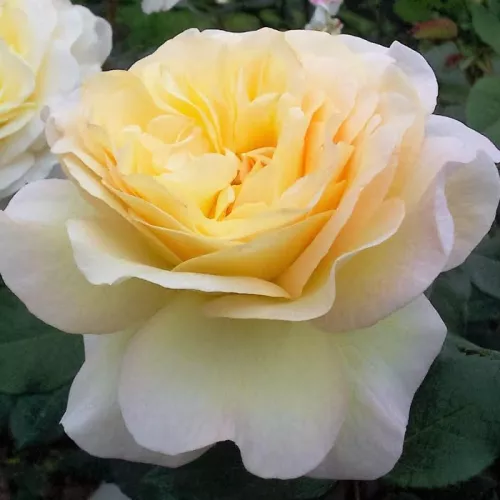
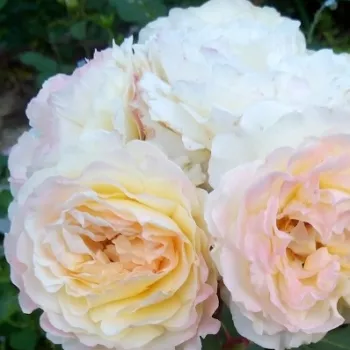
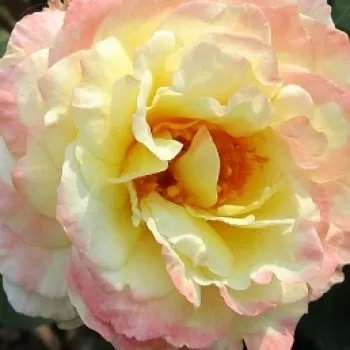
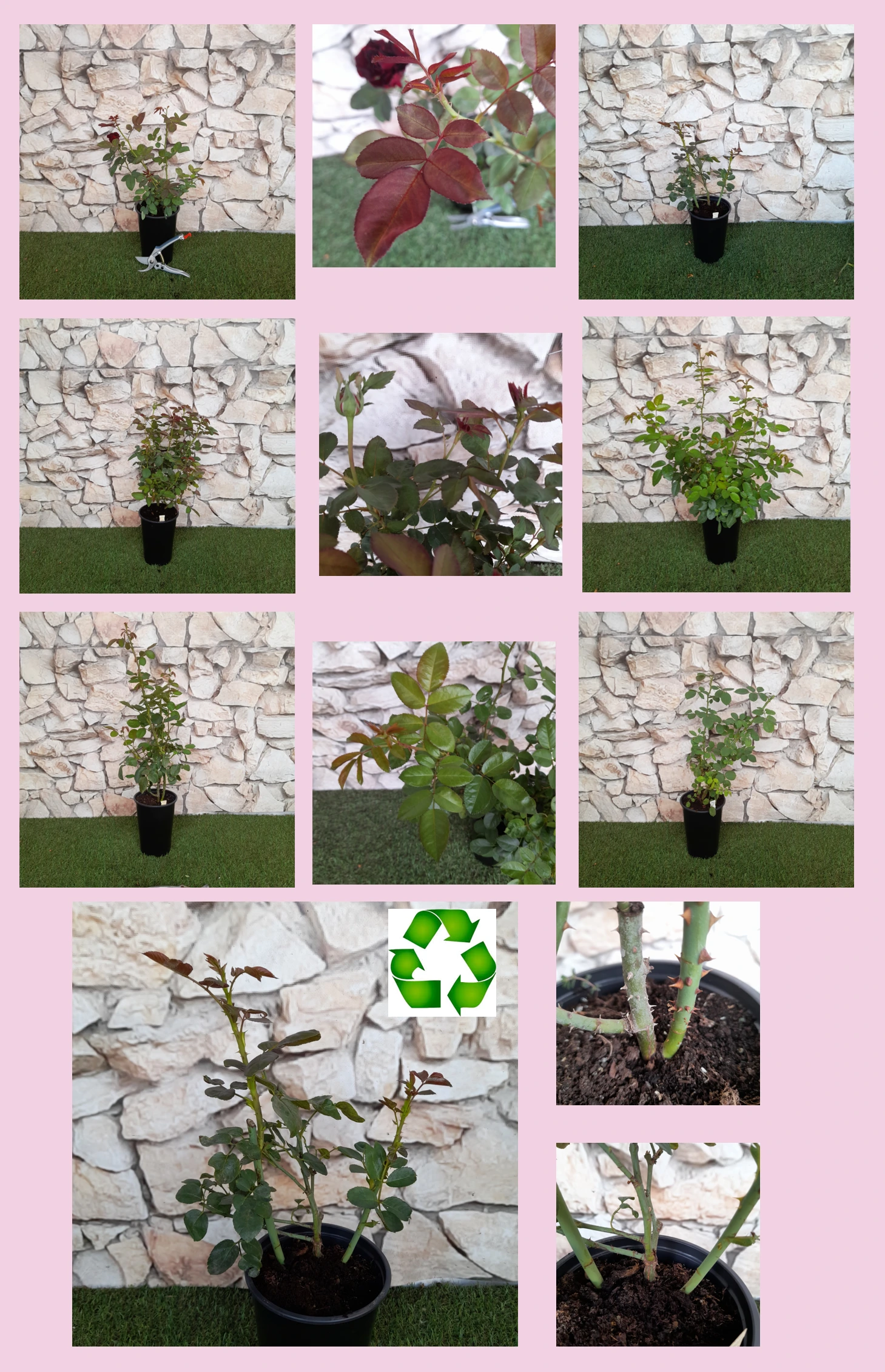
Softly cupped blooms of pale butter-yellow, edged in gentle pink, give Benoite Groult an instantly recognisable, nostalgic presence in small British gardens. Its bushy, upright habit remains compact enough for front beds and near-the-door planting, while the dense, dark green foliage sets off each flower beautifully. Strong, clearly sweet-citrus fragrance brings classic rose character to paths and seating areas without demanding elaborate care. As an own-root shrub it builds a steady, durable structure, renewing from the base and keeping its shape over many years with simple pruning. Remontant, large, double blooms repeat well through the season, rewarding regular deadheading with generous flowering. In typical British conditions it copes reliably, even where wet, heavy soils call for good drainage or raised beds to manage clay and seasonal waterlogging. Over time its balanced presence comes into its own – strong rooting in the first year, fuller shoots in the second, then a mature cottage-garden display by the third.
Usage options
| Target area | Reasoning |
|---|
| Front garden focal shrub |
The tidy, bushy, upright habit reaches around 90–130 cm, forming a well-shaped shrub that stands out by the front path without overpowering a small plot; light formative pruning keeps it neat yet relaxed for beginners. |
| Romantic cottage-style bed |
Large, double, pastel-yellow blooms with pink edging have a distinctly nostalgic character that blends effortlessly with cottage favourites, offering a soft, old-fashioned look in mixed borders that appeals strongly to aesthetes. |
| Near seating areas and terraces |
The strong, sweet, citrusy scent carries well around patios and small sitting spots; placing it near benches or pathways makes the most of its fragrance with only moderate routine care suited to urbanites. |
| Small group planting for colour impact |
Planting 3–5 shrubs at the recommended spacing creates a coherent, bushy mass of foliage and blooms; the balanced structure fills the bed evenly, giving reliable coverage and seasonal display valued by planners. |
| Mixed border with perennials |
The dark, slightly glossy foliage provides a calm backdrop for companion plants, while the pale flowers sit harmoniously among perennials, creating a stable framework that matures attractively for garden-proud homeowners. |
| Season-long flowering feature |
Remontant flowering with an abundant second flush means the shrub performs repeatedly from early summer onwards; simple deadheading and basic feeding keep flowers coming, suiting time-poor but enthusiastic families. |
| Raised beds and improved clay soils |
In wetter, heavier ground it responds well to planting in raised or well-drained beds, anchoring steadily as an own-root shrub and coping with typical British moisture patterns, which reassures cautious beginners. |
| Large containers by doors or drives |
In a 40–50 litre or larger container it forms a compact, upright bush that frames entrances with scented, nostalgic flowers; the contained rootspace simplifies maintenance for balcony users and busy city-dwellers. |
Styling ideas
- Cottage-duo – Combine with Lychnis viscaria 'Alba' for airy white spires against its pastel blooms – ideal for lovers of soft, traditional cottage borders.
- Pastel-ribbon – Line a short front path with evenly spaced shrubs for a gentle, structured flowering edge – well suited to neat, family front gardens.
- Doorway-focus – Place one specimen in a generous pot each side of the front door to frame the entrance with fragrance and colour – perfect for urban homeowners.
- Summer-frame – Mix with Echinacea 'Big Kahuna' to contrast bold coneflowers against its refined, cupped roses – appealing to design-conscious gardeners wanting depth.
- Relaxed-hedge – Plant as a loose, low hedge along a drive or boundary, keeping pruning light for a soft, romantic outline – good for those seeking privacy with charm.
Technical cultivar profile
| Parameter | Data |
|---|
| Name and registration |
Benoite Groult is a Romantica shrub rose from the Romantic rose collection; commercial nostalgia rose type with the ARS exhibition name Benoite Groult for show and garden use. |
| Origin and breeding |
Bred by Fabien Ducher at Roseraie Ducher, France, with introduction in 2012; parentage is undocumented, but selection focused on romantic flower form and garden reliability. |
| Growth and structural characteristics |
Forms a bushy, upright shrub around 90–130 cm high and 60–85 cm wide, with dense, dark green, slightly glossy foliage and moderate prickliness, suitable for beds, borders and hedging. |
| Flower morphology |
Large, cupped, double blooms with 26–39 petals, usually borne singly; remontant with a generous second flush, providing substantial decorative impact through the main growing season. |
| Colour data and phenology |
Pale butter-yellow base with pink edging; buds creamy yellow with pink blush, ageing through pastel yellow to ivory as pink margins gently fade, giving a softly changing, romantic effect. |
| Fragrance and aroma |
Clearly scented with a strong, sweet, citrusy character; best appreciated near paths, terraces or seating areas where the perfume can be enjoyed at close quarters in still conditions. |
| Hip characteristics |
Produces moderately abundant, small ovoid orange-red hips around 10–14 mm across, extending seasonal interest into autumn and offering subtle ornamental value after flowering. |
| Resistance and winter hardiness |
Hardy to approximately −21 to −18 °C (RHS H7, Swedish zone 3, USDA 6b); disease resistance is moderate, so occasional protection against black spot, mildew and rust may be helpful. |
| Horticultural recommendations |
Suited to beds, edging and larger containers; plant 40–75 cm apart depending on use, in well-drained soil with regular moisture and moderate feeding, plus light annual pruning to shape. |
Benoite Groult offers a compact, bushy shrub with season-long nostalgic blooms, strong citrus-sweet scent and the steady longevity of an own-root rose, making it a thoughtful choice for understated, lasting garden structure.