Belvedere – pink historic sempervirens rambler for romantic structures
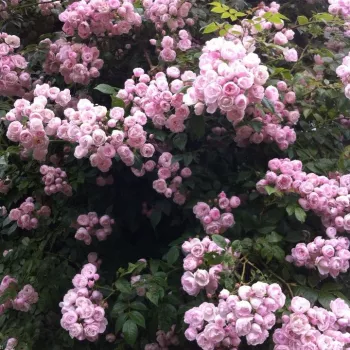
This venerable Belvedere rambler brings classic, pastel pink charm to arches, pergolas and house walls while remaining reassuringly manageable for the average family garden. Long, supple, climbing stems with dense, glossy foliage quickly clothe structures, creating a leafy screen that stays effective for many years in typical British winters. Its once-a-year mass of double, cup-shaped blooms offers a spectacular early-summer display, followed by occasional orange-red hips that enrich the garden in autumn. As an own-root rose, it develops steadily into a well-anchored, long-lived framework, settling into local soil and climate with less fuss than older, grafted ramblers. Over the first three seasons it builds roots, then height, then full ornamental impact, rewarding even time-pressed gardeners who simply keep it watered and lightly fed. Ideal where you want generous cover that copes reliably with typical British rain and strong coastal breezes, this historical climber lends instant cottage-style character to modest and larger plots alike.
Usage options
| Target area |
Reasoning |
| House walls and tall fences |
Exceptionally tall, vigorous growth provides generous vertical cover for plain brickwork or high boundary fences, creating a leafy façade and softening hard lines over time. Once established, pruning is flexible and mainly about guiding stems rather than detailed shaping – helpful for beginners. |
| Pergolas, archways and arbours |
Long, climbing stems and medium-sized, double clusters of pastel pink flowers give a romantic tunnel effect in early summer, ideal over paths or seating. Its own-root stamina builds a strong, long-lived framework that copes reliably with wet, windy seasons common in many UK gardens – reassuring for busy-owners. |
| Cottage-style mixed borders (back of bed) |
Planted at the rear of a mixed border, Belvedere forms a dense, dark green backdrop that flatters perennials such as foxgloves, salvias and hardy geraniums. Once the main flowering flush passes, the glossy foliage maintains structure and interest, so beds never look bare – appealing to style-conscious. |
| Screening between neighbouring properties |
Its height and strong lateral spread naturally create a green partition that feels softer and friendlier than solid fencing. With medium maintenance needs and own-root resilience, it is well suited to gardeners who can manage an annual tidy but do not want complex regimes – suitable for time-limited. |
| Informal rose and heritage collections |
This historic 1829 cultivar with RHS Award of Garden Merit offers period charm and genetic diversity in heritage plantings. Its once-flowering habit brings a concentrated seasonal highlight, while durable structure and hardy growth ensure it remains a long-term feature – attractive for collectors. |
| Large rural or village gardens |
Where space allows, its wide spread and tall habit can be used to ramble into mature shrubs or small trees, creating layered, naturalistic effects. Medium disease tolerance and strong cold hardiness help it thrive with straightforward care in exposed village plots – ideal for country-gardeners. |
| Front gardens with classic character |
Against a cottage façade or railings, the soft pink flower clusters and dark foliage give traditional charm without needing intricate pruning. A simple yearly tidy and guided tying-in usually suffice, and own-root regrowth helps the plant recover well if weather or mistakes cause damage – reassuring for novices. |
| Large containers for patios and courtyards |
In a substantial 40–50 litre container with a sturdy obelisk or trellis, Belvedere offers vertical colour and leafy screening where ground planting is limited. Regular watering and feeding support steady growth, but its robust, own-root constitution still provides a forgiving margin for urban-owners. |
Styling ideas
- Cottage Arch – Train Belvedere over a wooden or metal arch and underplant with foxgloves and hardy geraniums for a soft, romantic entrance – perfect for lovers of classic cottage gardens.
- Shaded Retreat – Use its dense foliage on a pergola to create a leafy summer canopy above a bench, adding scented seasonal privacy – ideal for small family seating areas.
- Historic Facade – Clothe a brick or stone house wall with its pastel pink blooms, pairing with lavender or nepeta at the base – suited to homeowners seeking period charm.
- Soft Screen – Let it form a living screen along a fence, with ornamental grasses and New Zealand flax for contrast – a good option for neighbours wanting gentle privacy.
- Patio Obelisk – Grow it in a 50-litre container around a tall obelisk, adding trailing violas or pelargoniums at the rim – ideal for balcony and courtyard gardeners needing vertical interest.
Technical cultivar profile
| Property |
Data |
| Name and registration |
Belvedere – historical Hybrid Sempervirens rambler, commercial type historic sempervirens rose, current trade name Belvedere Heritage rose Jacques; unregistered cultivar widely known in heritage collections. |
| Origin and breeding |
Bred by Henri Antoine A. Jacques in France, 1829, at the Château de Neuilly garden; parentage Rosa sempervirens × unknown; introduced by Jacques (France) and later Law, Somner Pty. Ltd. (Australia). |
| Awards and recognition |
Holds the RHS Award of Garden Merit, indicating reliable performance, solid garden worth, and dependable ornamental value under typical UK growing conditions when given reasonable care. |
| Growth and structural characteristics |
Strong climbing habit reaching about 600–850 cm high with 350–550 cm spread; dense, glossy, dark green foliage; slightly thorny canes; growth well suited to arches, pergolas, walls and tall screening uses. |
| Flower morphology |
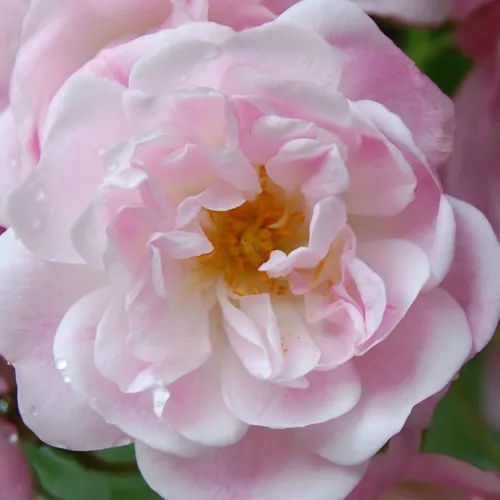
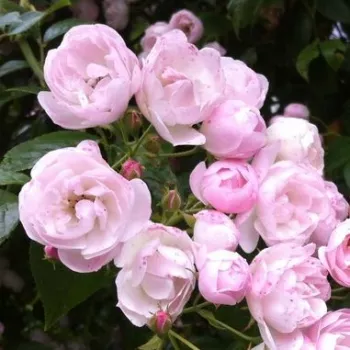
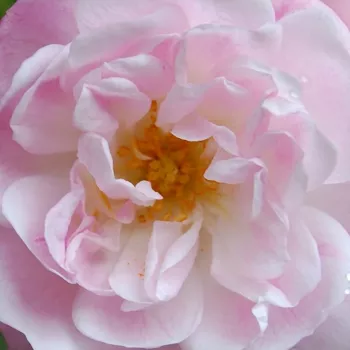
Medium-sized, double, cup-shaped flowers (26–39 petals) produced in clusters; once-flowering, with a single, abundant early-summer flush that delivers a concentrated seasonal display rather than repeat blooms. |
| Colour data and phenology |
Buds open deep carmine-red, then soften through powder pink to almost white; ARS pink, RHS 65C outer, 62C inner; colour fades in sun, giving a pastel, romantic effect during the flowering period. |
| Fragrance and aroma |
Moderately strong, slightly sweet, musky scent that is clearly noticeable in still air; perfume adds to the traditional rambler character, especially when trained near paths, doors, windows or seating areas. |
| Hip characteristics |
Occasional ellipsoid hips, about 8–12 mm, orange-red when ripe; decorative in a subtle way, contributing additional seasonal interest without creating heavy fruit loads that dominate the plant’s appearance. |
| Resistance and winter hardiness |
Hardy to approximately −26 to −23 °C (USDA 5b, RHS H7, Swedish zone 4); medium resistance to powdery mildew, black spot and rust, generally satisfactory with normal hygiene and occasional pest or disease control. |
| Horticultural recommendations |
Best planted with ample space: 420 cm for mass, 405 cm for hedges, 630 cm as specimen; prefers support structures; maintenance medium, mainly annual pruning and tying-in, plus occasional pest and disease checks. |
Belvedere offers tall, reliable cover, a single breathtaking flush of scented pastel pink blooms, and long-lived own-root resilience, making it a thoughtful choice if you seek a characterful yet undemanding climber.